Overview
- Genetic assimilation is the process by which an environmentally induced phenotype becomes genetically encoded through selection on pre-existing cryptic genetic variation, a phenomenon first demonstrated experimentally by C. H. Waddington in the 1950s using heat-shocked Drosophila.
- The Baldwin effect, proposed independently in the 1890s, describes how phenotypic plasticity can guide genetic evolution by allowing organisms to survive in novel environments long enough for selection to favour genetic variants that produce the same phenotype more reliably.
- Genetic assimilation is now understood as a special case of the broader phenomenon of genetic accommodation, in which selection adjusts the degree of plasticity — either increasing or decreasing environmental sensitivity — and it provides a mechanism by which developmental plasticity can initiate evolutionary novelty rather than merely following it.
Definition and historical context
Genetic assimilation is the evolutionary process by which a phenotype that is initially produced only in response to an environmental stimulus becomes, through natural selection, genetically fixed so that it develops even in the absence of the original environmental trigger. The concept was introduced by the British developmental biologist Conrad Hal Waddington in the 1940s and 1950s as part of his broader theory of canalization — the tendency of developmental systems to buffer phenotypic outcomes against genetic and environmental perturbation.1, 2 Genetic assimilation challenged the prevailing view that development merely executes a genetic programme, proposing instead that the interaction between genes and environment could play a creative role in evolution.
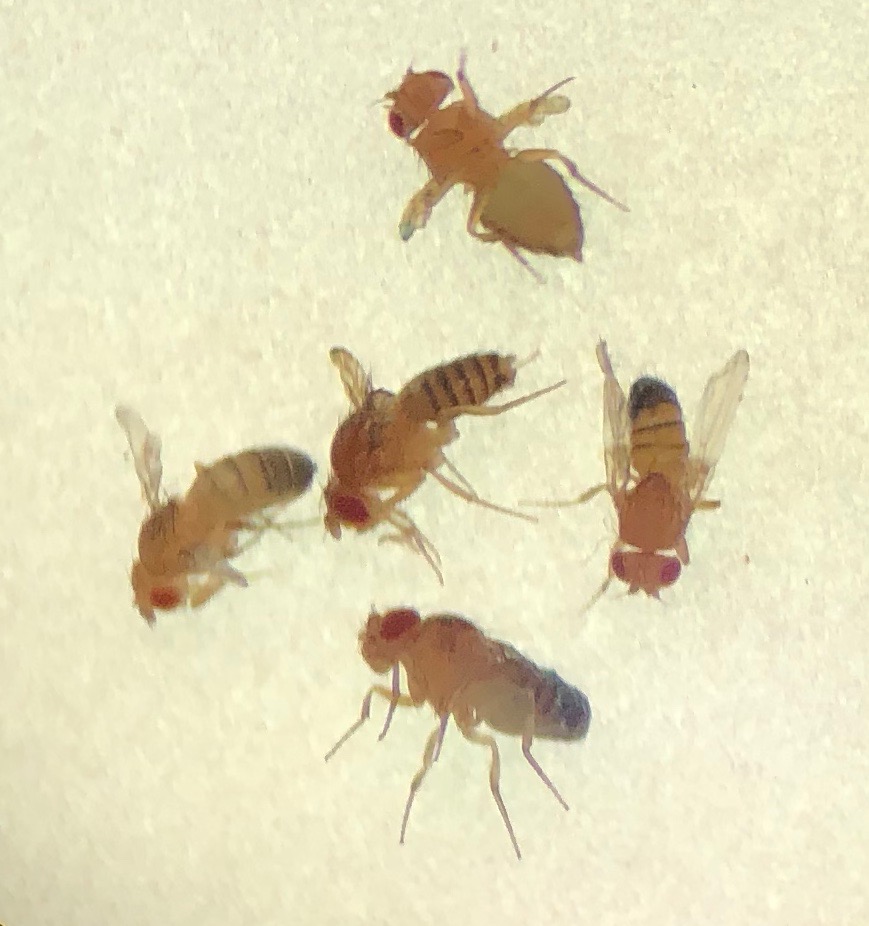

The idea that environmentally induced responses might become hereditary had a troubled history in biology, closely associated with the discredited Lamarckian doctrine of the inheritance of acquired characteristics. Waddington was careful to distinguish his proposal from Lamarckism: genetic assimilation does not require that the environment directly alters the germ line, but instead operates through entirely orthodox Darwinian mechanisms. The environmental stimulus reveals cryptic genetic variation that already exists in the population, and natural selection then enriches those genetic variants until they produce the phenotype constitutively.2, 11
Waddington's experiments
Waddington's experimental demonstrations of genetic assimilation remain among the most influential in twentieth-century evolutionary biology. In his first major experiment, published in 1953, Waddington subjected pupae of Drosophila melanogaster to heat shock at 40 degrees Celsius for four hours during a critical period of development. A small percentage of the treated flies developed a crossveinless wing phenotype — a loss of the posterior crossvein in the wing venation pattern. Waddington selectively bred these responsive individuals, selecting in each generation for the crossveinless phenotype following heat shock. After fourteen generations of selection, some flies began to exhibit the crossveinless phenotype even when raised at normal temperatures, without any heat shock treatment.2 The environmentally induced trait had become genetically assimilated.
In a parallel series of experiments, Waddington exposed Drosophila embryos to ether vapour during early development and selected for a bithorax-like phenotype in which the halteres (small balancing organs behind the wings) were partially transformed into a second pair of wings. Again, after sustained selection, the phenotype appeared without the ether stimulus.3 These results demonstrated that genetic assimilation was not restricted to a single trait or a single environmental trigger, but was a general property of developmental systems with sufficient underlying genetic variation.
The mechanism Waddington proposed was straightforward. Under normal conditions, developmental canalization masks the phenotypic effects of genetic variation segregating in the population. The environmental stress disrupts this canalization, revealing the hidden variation as phenotypic differences among individuals. Selection then acts on the now-visible variation, favouring alleles that contribute to the induced phenotype. As these alleles accumulate over generations, their combined effect becomes strong enough to produce the phenotype without the need for the environmental disruption that originally uncovered them.1, 2, 13
The Baldwin effect
The conceptual ancestry of genetic assimilation extends back to the 1890s, when the American psychologist James Mark Baldwin and, independently, the British zoologist C. Lloyd Morgan proposed what is now called the Baldwin effect. Baldwin argued in 1896 that organisms capable of learning or otherwise adjusting their phenotype to a novel environment would survive and reproduce where less plastic organisms would not. This phenotypic accommodation would shield the population from immediate extinction, buying evolutionary time during which genetic variants that more reliably produced the advantageous phenotype could arise and be favoured by selection.4 Morgan arrived at a very similar conclusion, emphasizing that the capacity for individual modification could guide the direction of evolutionary change without invoking Lamarckian inheritance.5
The Baldwin effect and genetic assimilation share a core logic: phenotypic plasticity provides the initial adaptive response to a new environment, and selection subsequently refines the genetic basis of that response. The key difference is emphasis. Baldwin focused on the role of learning and behavioural flexibility in allowing organisms to persist long enough for favourable mutations to appear, while Waddington emphasized the release of pre-existing cryptic genetic variation through the disruption of developmental buffering.9 Crispo argued that both processes represent points on a continuum, with the Baldwin effect highlighting the initial role of plasticity in survival and genetic assimilation describing the subsequent fixation of the environmentally induced phenotype.9
Genetic accommodation
In her influential 2003 book Developmental Plasticity and Evolution, Mary Jane West-Eberhard proposed the concept of genetic accommodation as a broader framework that subsumes genetic assimilation as a special case. Genetic accommodation is the process by which selection acts on a newly expressed phenotype — whether induced by environmental change, mutation, or any other perturbation — and adjusts the genetic background to alter the regulation, form, or frequency of that phenotype.7 Crucially, genetic accommodation does not always lead to the loss of plasticity. Selection may increase, decrease, or refine the environmental sensitivity of a trait, depending on the ecological circumstances. Genetic assimilation is the specific outcome in which plasticity is reduced and the trait becomes constitutively expressed.7, 8
West-Eberhard argued that developmental plasticity is a fundamental and underappreciated source of evolutionary novelty. In her framework, novel phenotypes often arise first as environmentally induced variants — a process she termed "phenotypic accommodation" — and only later become refined and stabilised by genetic change. This reverses the traditional view in which genetic mutation is the primary source of novelty and phenotypic plasticity merely adjusts the expression of pre-existing genetic programmes.8 Under genetic accommodation, the environment can play a creative role in evolution by eliciting novel phenotypic variants that selection then shapes and, in some cases, genetically fixes.
The distinction between genetic assimilation and genetic accommodation has important implications for how biologists think about the origins of adaptive traits. If genetic accommodation is common, then many features of organisms may have originated as plastic responses to environmental conditions before being refined by selection into the fixed, species-typical traits observed today.7, 10 This perspective aligns with the broader programme of evolutionary developmental biology, which emphasizes the role of developmental processes in shaping the raw material available to natural selection.
Experimental evidence beyond Waddington
Although Waddington's experiments were foundational, subsequent work has provided additional support for genetic assimilation and genetic accommodation across a range of organisms. Rutherford and Lindquist's 1998 discovery that the molecular chaperone Hsp90 acts as an "evolutionary capacitor" in Drosophila provided a molecular mechanism for the buffering and release of cryptic genetic variation. When Hsp90 function was reduced — by pharmacological inhibition or by environmental heat stress — a wide array of morphological variants appeared, and selection could rapidly assimilate these variants into the genetic background.6 The discovery that Hsp90 buffers genetic variation in both animals and plants suggested that the molecular machinery underlying genetic assimilation is ancient and phylogenetically widespread.
Suzuki and Nijhout provided direct experimental evidence for genetic accommodation in the tobacco hornworm (Manduca sexta). They showed that a heat-shock-induced change in larval body colour — from green to black — could be genetically assimilated through artificial selection in as few as thirteen generations. Moreover, by selecting in the opposite direction, they could also increase the threshold temperature required to induce the colour change, demonstrating that selection could modulate the degree of environmental sensitivity in either direction, precisely as the genetic accommodation framework predicts.15
Pigliucci, Murren, and Schlichting explored the theoretical conditions for genetic assimilation using quantitative genetic models and showed that assimilation can occur even in the absence of direct selection for the assimilated phenotype, provided that the environmental change is sustained and there is sufficient genetic variation affecting the threshold of environmental sensitivity.14 This result broadened the conditions under which genetic assimilation is expected to occur, suggesting that it may be more common in natural populations than previously appreciated.
Plasticity-first evolution
The recognition that genetic assimilation and genetic accommodation can convert environmentally induced variation into genetic adaptation has given rise to a broader hypothesis known as "plasticity-first evolution." Under this model, phenotypic plasticity is not merely a mechanism for coping with environmental variation in the short term; it is a significant driver of evolutionary diversification over longer timescales.12, 17 When a population colonises a new environment, plastic responses allow organisms to survive and function, even imperfectly, in conditions to which they are not genetically adapted. Selection then acts on the variation revealed by the novel environment, refining the plastic response and potentially assimilating it into a fixed phenotype.8, 12
Pfennig and colleagues reviewed evidence that phenotypic plasticity can promote speciation and adaptive diversification. They argued that plasticity can initiate divergence between populations inhabiting different environments by producing distinct phenotypes in each environment, and that genetic accommodation can subsequently stabilise these differences, reducing gene flow and promoting reproductive isolation.12 If plasticity-first evolution is widespread, it may help explain the paradox of rapid adaptive radiation: populations can diversify phenotypically faster than new mutations alone would allow because they draw on the phenotypic variation generated by plastic responses to novel conditions.
Levis and Pfennig further proposed that plasticity-first evolution can create developmental bias, channelling evolutionary change along certain phenotypic trajectories rather than others. Because plastic responses are structured by the organism's developmental architecture, they tend to produce phenotypic variants that are functionally integrated rather than random, increasing the probability that environmentally induced variants will be at least partially functional and therefore available for selection to refine.17
Significance for evolutionary theory
Genetic assimilation occupies an important position in contemporary evolutionary biology because it challenges a strict gene-first view of evolutionary change. In the classical Modern Synthesis, the gene is the ultimate source of evolutionary novelty: mutations produce genetic variation, natural selection sorts that variation, and phenotypic change follows. Genetic assimilation and the broader framework of genetic accommodation suggest that the causal arrow can also run in the other direction: environmental perturbation produces phenotypic variation first, and genetic change follows as selection adjusts the genome to stabilise and refine the new phenotype.7, 8, 10
This perspective is a central pillar of the Extended Evolutionary Synthesis, which seeks to expand the theoretical framework of evolutionary biology to include developmental plasticity, niche construction, and non-genetic inheritance as significant contributors to evolutionary change.10 Moczek and colleagues argued that developmental plasticity, acting through genetic accommodation, can explain the origin of novel complex traits that would be difficult to account for through gradual genetic mutation alone, because the plastic response generates a suite of coordinated phenotypic changes rather than isolated modifications.10
The concept of genetic assimilation also connects to practical questions about how organisms adapt to rapid environmental change. If populations can mount plastic responses to novel conditions and then genetically assimilate those responses, they may be able to adapt to environmental shifts — including anthropogenic changes such as climate warming or habitat alteration — more rapidly than models based on new mutation alone would predict.16 Adaptation from standing genetic variation, including cryptic variation released by environmental stress, can provide the raw material for natural selection on timescales of tens to hundreds of generations rather than the thousands or millions of generations required for beneficial de novo mutations to arise and spread.11, 16 Genetic assimilation thus bridges the gap between short-term phenotypic flexibility and long-term genetic evolution, demonstrating that these are not separate processes but interconnected facets of how organisms navigate changing environments.
References
Genetic assimilation and a possible evolutionary paradox: can macroevolution sometimes be so fast as to pass us by?
Genetic assimilation can occur in the absence of selection for the assimilating phenotype, suggesting a role for the canalization heuristic