Overview
- Cryptic genetic variation is phenotypically silent genetic diversity that accumulates in populations under normal conditions but becomes expressed — and visible to natural selection — when organisms encounter environmental stress, genetic perturbation, or the disruption of buffering mechanisms.
- The molecular chaperone Hsp90 acts as an evolutionary capacitor, suppressing the phenotypic effects of mutations during stable conditions and releasing a burst of heritable morphological variation when its buffering capacity is overwhelmed by stress.
- Cryptic variation provides a reservoir of standing genetic diversity that can fuel rapid adaptive evolution in novel environments, bridging the gap between neutral molecular evolution and the sudden appearance of complex phenotypic change.
Definition and significance
Cryptic genetic variation refers to genetic diversity within a population that has no measurable effect on phenotype under normal environmental conditions but can produce heritable phenotypic differences when organisms are exposed to novel environments, environmental stress, or genetic perturbation.5 Unlike deleterious mutations, which are rapidly purged by natural selection, and unlike neutral mutations that never affect phenotype, cryptic variants occupy a distinctive middle ground: they are conditionally neutral, invisible to selection under typical circumstances yet capable of producing significant phenotypic effects when buffering mechanisms are disrupted.5, 6

The existence of cryptic genetic variation has profound implications for evolutionary theory. It suggests that populations can harbour far more evolutionary potential than their observable phenotypic uniformity would indicate. When environmental conditions change, this hidden reservoir of variation can be rapidly exposed, providing the raw material for natural selection to act upon without waiting for new beneficial mutations to arise.12 Cryptic variation thus offers a mechanism by which populations can respond to novel selective pressures on timescales that would be difficult to explain through new mutation alone.
Waddington and genetic assimilation
The conceptual foundations of cryptic genetic variation trace to the mid-twentieth-century work of Conrad Hal Waddington. In 1942, Waddington introduced the concept of canalization — the tendency of developmental processes to produce a consistent phenotype despite underlying genetic and environmental perturbation — and proposed that development follows deeply channelled trajectories he termed the “epigenetic landscape.”2 Canalization implies that genetic variation can accumulate without phenotypic consequence, shielded from selection by the buffering properties of robust developmental systems.
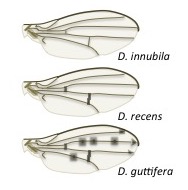
Waddington tested this idea through a series of landmark experiments on Drosophila melanogaster. When he exposed fly pupae to heat shock, a small fraction developed a crossveinless wing phenotype. By selectively breeding these responsive individuals over multiple generations, Waddington found that the crossveinless phenotype eventually appeared even without the heat shock stimulus.1 He termed this process “genetic assimilation” — an environmentally induced phenotype had become genetically encoded through selection on pre-existing cryptic variation. In a parallel experiment, Waddington demonstrated genetic assimilation of the bithorax phenotype (transformation of the haltere into a second pair of wings) following ether exposure during early development.8
Waddington’s results were initially controversial because they appeared superficially similar to Lamarckian inheritance — the discredited notion that organisms pass on acquired characteristics. In reality, the mechanism was entirely Darwinian. The heat shock did not create new mutations; it disrupted developmental buffering and revealed genetic variants that were already segregating in the population.1, 5 Selection then enriched those variants until their combined effect was strong enough to produce the phenotype without environmental perturbation. Genetic assimilation thus demonstrated that epigenetic canalization and its breakdown could serve as a bridge between environmental induction and genetic fixation.
Hsp90 as an evolutionary capacitor
The molecular reality underlying Waddington’s observations remained obscure until 1998, when Suzanne Rutherford and Susan Lindquist published their influential study on the heat-shock protein Hsp90 in Drosophila.3 Hsp90 is a molecular chaperone — a protein that assists other proteins in folding into their correct three-dimensional conformations. Because many of its client proteins are signal transduction molecules involved in development, Hsp90 effectively buffers the phenotypic consequences of mutations in these signalling pathways. When Hsp90 function is normal, variant proteins are folded correctly and produce wild-type phenotypes. When Hsp90 is impaired — whether by pharmacological inhibition, genetic reduction, or environmental heat stress that overwhelms its capacity — previously hidden mutations are expressed as morphological abnormalities.3
Rutherford and Lindquist showed that reducing Hsp90 function in Drosophila produced a wide array of morphological phenotypes affecting eyes, wings, legs, and bristles. Critically, the specific phenotypes that appeared depended on the genetic background of the fly strain, demonstrating that the variation was genetic in origin rather than a direct effect of Hsp90 impairment itself.3 Moreover, selection could enrich these phenotypes over several generations until they appeared even in flies with normal Hsp90 levels — precisely the genetic assimilation that Waddington had described decades earlier. Rutherford and Lindquist coined the term “evolutionary capacitor” for Hsp90, likening it to an electrical capacitor that stores charge (genetic variation) and releases it in a burst under specific conditions.
The capacitor model was subsequently extended to plants. Queitsch, Sangster, and Lindquist demonstrated that pharmacological inhibition of Hsp90 in Arabidopsis thaliana similarly uncovered a broad spectrum of phenotypic variation affecting root morphology, leaf shape, pigmentation, and flowering time.4 The fact that Hsp90 functions as a capacitor in both animals and plants — lineages that diverged over a billion years ago — suggests that chaperone-mediated buffering of cryptic variation is an ancient and fundamental feature of eukaryotic biology.
Mechanisms of phenotypic buffering
Hsp90 is the most thoroughly studied buffer of cryptic variation, but it is far from the only one. Phenotypic robustness arises from multiple overlapping mechanisms that together create a deep capacity for genetic variation to accumulate without phenotypic consequence.6, 7
Genetic redundancy is one such mechanism. Many genes exist as duplicated copies produced by genome duplication or smaller-scale duplication events. When one copy acquires a mutation, the other can compensate, masking the phenotypic effect.7 Similarly, redundant regulatory elements play a significant role. Frankel and colleagues showed that Drosophila possesses seemingly redundant transcriptional enhancers (“shadow enhancers”) that drive overlapping expression patterns; under normal conditions these enhancers appear superfluous, but under thermal stress they prove essential for maintaining consistent gene expression, demonstrating that their redundancy functions as a buffer against environmental perturbation.11
Network architecture provides another layer of buffering. Metabolic and gene regulatory networks are often structured with alternative pathways and feedback loops that can compensate when individual components are perturbed.6 Andreas Wagner’s theoretical work on neutral networks — sets of genotypes that produce the same phenotype — demonstrated that populations can explore vast regions of genotype space through neutral drift while maintaining phenotypic constancy, accumulating variation that becomes consequential only when the population encounters a new selective environment.6, 10
Developmental constraints and the modular organisation of development also contribute to buffering. Because developmental modules are semi-independent, a mutation affecting one module may be compensated by adjustments in others, preventing the mutation from altering the final phenotype.14 The cumulative effect of these mechanisms is that biological systems are far more robust than one would expect from their molecular complexity — and correspondingly, they harbour far more cryptic variation than surface phenotypes reveal.
Release under stress
The release of cryptic genetic variation occurs when buffering mechanisms are compromised, whether by environmental stress, novel genetic combinations, or direct perturbation of buffer molecules.5, 15 Environmental stress is the most ecologically relevant trigger. Heat shock, nutritional deprivation, toxin exposure, and other stressors can overwhelm molecular chaperones, destabilise regulatory networks, and disrupt the compensatory redundancies that ordinarily mask genetic variation. When this occurs, mutations that were previously neutral suddenly produce phenotypic effects, and the population displays a dramatic increase in phenotypic variance.3, 15
Novel genetic combinations produced by hybridisation or outcrossing can also release cryptic variation. When genomes that evolved independently are brought together, epistatic interactions between alleles from different genetic backgrounds can expose variation that was buffered within each parental population.9 Gibson and Dworkin argued that this phenomenon contributes to hybrid vigour (heterosis) as well as hybrid breakdown, depending on whether the newly expressed variants are beneficial or deleterious in combination.9
The temporal dynamics of release are significant. When stress first disrupts buffering, the population experiences a burst of phenotypic variation. Some of this variation will be deleterious, and the organisms expressing it will be removed by selection. But some variants may be beneficial in the new environment, and these will be favoured. If the stress is sustained, selection can act on the exposed variation to shift the population toward a new adaptive optimum.5, 13 If the trait becomes strongly selected, it may eventually be genetically assimilated — stabilised by modifier alleles so that it no longer depends on the disruption of buffering for its expression, exactly as Waddington demonstrated experimentally.1
Standing variation and rapid adaptation
A central question in evolutionary biology is how populations adapt to sudden environmental change. Classical theory emphasises the role of new beneficial mutations, but the rate of new mutation is often too slow to account for the rapid adaptive responses observed in nature.12 Cryptic genetic variation offers an alternative: adaptation from standing genetic variation rather than from de novo mutation.
Barrett and Schluter formalised the distinction between these two modes of adaptation and argued that standing variation — including cryptic variation — offers several advantages over new mutation.12 First, standing variants are immediately available when selection pressures change, eliminating the waiting time for a beneficial mutation to arise. Second, standing variants have already been tested in at least some genetic backgrounds, so they are less likely to carry severe pleiotropic costs than random new mutations. Third, because standing variants can be present in multiple copies, they are less susceptible to loss through genetic drift than a single new mutation.
These theoretical advantages are supported by empirical evidence. Many documented cases of rapid adaptation — including insecticide resistance, heavy-metal tolerance in plants, and adaptation to novel food sources — involve selection on alleles that were present at low frequency in ancestral populations before the selective pressure was applied.12 Cryptic variation, by definition, is a subset of standing variation that was phenotypically silent before environmental change, making it a particularly important reservoir for traits that appear to arise “suddenly” in response to novel challenges.
Implications for evolvability
The accumulation and release of cryptic genetic variation has deep implications for evolvability — the capacity of a population to generate heritable, selectable phenotypic variation.13 Draghi and colleagues demonstrated through computational models that robustness and evolvability, far from being opposites, are positively correlated: populations that evolve on robust genetic architectures accumulate more cryptic variation and consequently have a larger reservoir of potential phenotypic diversity to draw upon when conditions change.13
This insight resolves an apparent paradox. If developmental systems are highly canalised and resistant to perturbation, one might expect evolution to slow down, because mutations would rarely produce phenotypic variation for selection to act upon. But canalization does not eliminate genetic variation — it merely conceals it. The very robustness that buffers organisms against perturbation simultaneously allows cryptic diversity to accumulate. When buffering is disrupted, the population can explore a far larger region of phenotype space than would be accessible through new mutation alone.6, 13
Kirschner and Gerhart’s theory of facilitated variation provides a complementary perspective. They argued that conserved core developmental processes — including molecular chaperones, modular gene regulatory networks, and exploratory systems such as the cytoskeleton and neural connectivity — are structured in ways that channel variation into phenotypically coherent directions rather than producing random developmental noise.14 Cryptic variation, when released, is therefore not entirely random in its phenotypic effects; it is biased by the architecture of development toward forms that are at least potentially functional.
The evolutionary capacitor model also suggests that organisms may have evolved to be “pre-adapted” for environmental change in a statistical sense. Populations that maintain robust developmental systems accumulate cryptic variation as a byproduct of robustness. When environments shift, this accumulated variation provides a head start on adaptation. Whether this capacity was itself selected for, or whether it is simply a fortuitous consequence of selection for robustness, remains an open question in evolutionary theory.7, 13
Broader evolutionary context
Cryptic genetic variation connects to several major themes in contemporary evolutionary biology. It provides a mechanistic basis for the observation that population genetics models often underestimate the speed of adaptive evolution: if populations carry hidden reservoirs of relevant variation, they can respond to selection faster than models based on new mutation predict.5, 12 It also illuminates the relationship between neutral molecular evolution and adaptive phenotypic evolution, showing how mutations that are selectively neutral under one set of conditions can become the substrate for adaptation under another.
The concept further enriches the Extended Evolutionary Synthesis by highlighting the role of developmental robustness, environmental sensitivity, and genotype-by-environment interaction in shaping evolutionary trajectories.15 Schlichting emphasised that cryptic variation is not merely a laboratory curiosity but a pervasive feature of natural populations, routinely revealed by environmental perturbation across taxa from bacteria to vertebrates.15 As tools for measuring genetic and phenotypic variation continue to improve, the study of cryptic variation is likely to become increasingly central to understanding how organisms navigate the tension between developmental stability and evolutionary change.
References
Revealing cryptic genetic variation with environmental perturbation: new insights from model organisms