Overview
- Symbiosis, the persistent physical association between organisms of different species, spans a spectrum from mutualism through commensalism to parasitism, and approximately 80 percent of all eukaryotic species engage in at least one symbiotic relationship.
- Mutualisms are stabilized against exploitation by cheater-suppression mechanisms including host sanctions, partner choice, and partner fidelity feedback, while Thompson's geographic mosaic theory reveals that the strength and outcome of symbiotic interactions vary across landscapes.
- Symbiosis has driven several of the major evolutionary transitions in the history of life, from the endosymbiotic origin of mitochondria and chloroplasts to the mycorrhizal partnerships that enabled plant colonization of land and the fungus-farming mutualisms of leafcutter ants.
Symbiosis, in its broadest biological sense, refers to the persistent physical association between organisms of different species. The term was coined by the German botanist Heinrich Anton de Bary in an 1878 address to the German Association of Naturalists and Physicians, in which he defined it as "the living together of unlike organisms," a definition deliberately broad enough to encompass interactions ranging from mutually beneficial to parasitic.1 Since de Bary's original formulation, the study of symbiosis has become central to evolutionary biology, revealing that intimate interspecific associations are not rare curiosities but pervasive features of the living world. Estimates suggest that the majority of eukaryotic species participate in at least one symbiotic relationship, and many organisms depend on multiple symbiotic partners simultaneously for nutrition, defence, or reproduction.2, 6
_male_with_cattle_egret.jpg)
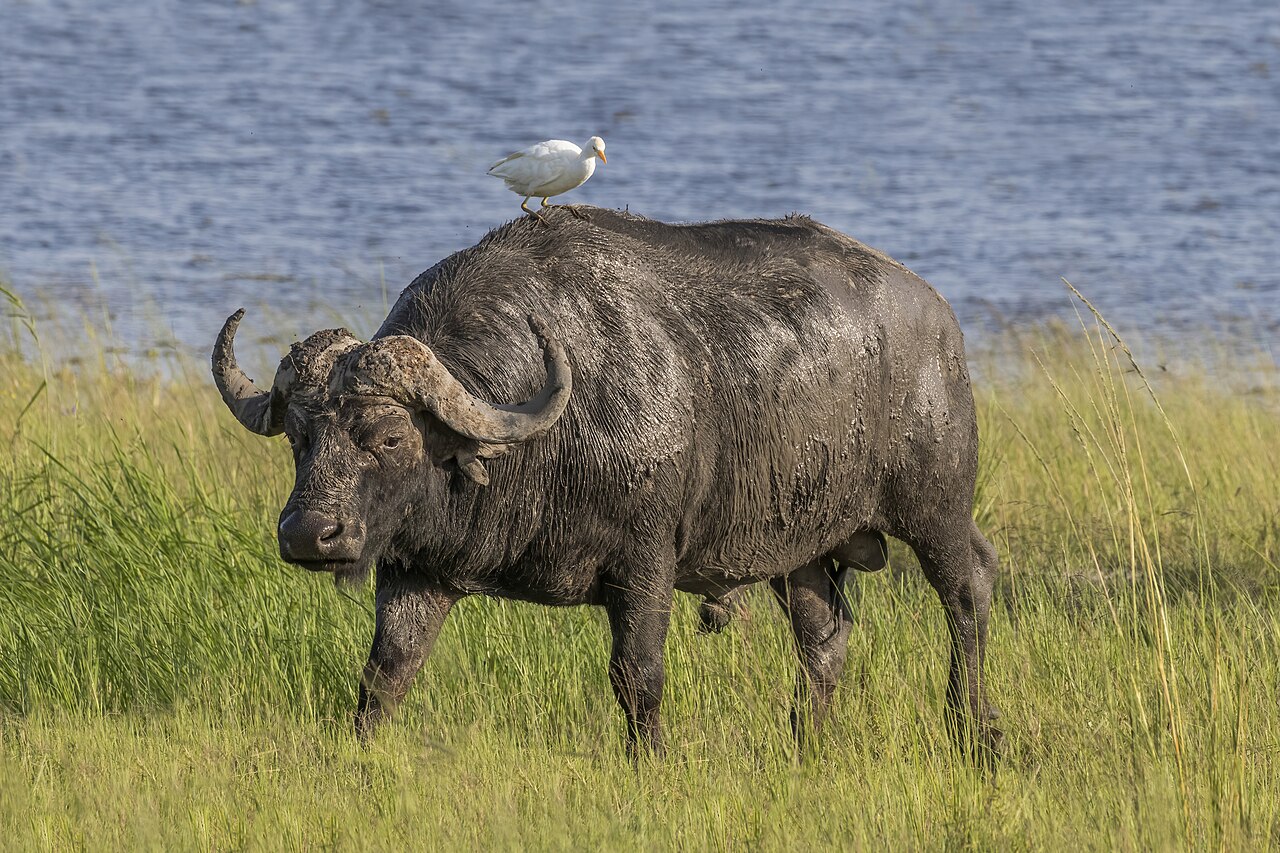
Symbiotic interactions are conventionally classified along a spectrum defined by the fitness consequences for each partner. In mutualism, both species derive a net benefit. In commensalism, one species benefits while the other is neither helped nor harmed. In parasitism, one species benefits at the expense of the other. These categories, however, are not rigid: the outcome of a given symbiosis can shift along the mutualism-parasitism continuum depending on environmental conditions, partner genotype, and community context, and a single interaction may be mutualistic under some circumstances and parasitic under others.3, 4 This article examines the spectrum of symbiotic relationships, their evolutionary origins and maintenance, the mechanisms that suppress cheating and stabilize cooperation, and the role of symbiosis in driving some of the most consequential transitions in the history of life.
The spectrum of symbiotic interactions
The traditional tripartite classification of symbiosis into mutualism, commensalism, and parasitism, while conceptually useful, obscures the reality that most symbiotic interactions are context-dependent and exist on a continuum rather than in discrete categories. Boucher, James, and Keeler, in their influential 1982 review of the ecology of mutualism, noted that the fitness effects of a symbiotic interaction on each partner depend on the costs and benefits exchanged, which themselves vary with environmental conditions, population density, and the availability of alternative partners.2 A relationship that is mutualistic when resources are scarce may become commensal or even parasitic when resources are abundant, because the costs of maintaining the partnership may outweigh the diminished benefits.
Herre and colleagues formalized this insight by arguing that all mutualisms harbour an inherent conflict of interest between the partners, because each organism would benefit from receiving more while giving less.3 The outcome of this conflict depends on the relative bargaining power of the partners, the availability of sanctions against cheating, and the degree of mutual dependence. Obligate mutualisms, in which neither partner can survive or reproduce without the other, tend to be more stable because the cost of defection is extinction. Facultative mutualisms, in which each species can survive independently, are more susceptible to exploitation and breakdown because defection carries a lower penalty.3, 15
Commensalism is often the most difficult category to demonstrate empirically, because detecting a truly zero-cost, zero-benefit effect on one partner requires measurement precision that field studies rarely achieve. Many interactions classified as commensal may in fact involve small, undetected costs or benefits to the seemingly unaffected partner. The hermit crabs that inhabit empty gastropod shells, for instance, are conventionally treated as commensals with respect to the shell-producing snail, but this classification holds only because the snail is already dead; the broader ecological consequences of shell use by hermit crabs for living snail populations remain complex.2 Parasitism, at the other end of the spectrum, is overwhelmingly common: by some estimates, parasitic species outnumber free-living ones, and virtually every multicellular organism hosts multiple parasitic species simultaneously.19
Mycorrhizal networks
Among the most ecologically significant mutualisms on Earth is the association between terrestrial plants and mycorrhizal fungi. Approximately 80 to 90 percent of all land plant species form mycorrhizal partnerships, in which fungal hyphae colonize plant roots and extend into the surrounding soil, vastly increasing the plant's access to phosphorus, nitrogen, and water in exchange for photosynthetically fixed carbon.6 This mutualism is ancient: fossil evidence of mycorrhizal-like associations dates to the earliest land plants in the Devonian period, approximately 400 million years ago, and it has been hypothesized that mycorrhizal partnerships were essential for the initial colonization of terrestrial habitats by plants, which lacked the extensive root systems needed to extract nutrients from mineral soils on their own.6
The ecological consequences of mycorrhizal symbiosis extend far beyond individual plant-fungus pairs. In a landmark 1998 experiment, van der Heijden and colleagues manipulated the diversity of arbuscular mycorrhizal fungi in experimental plant communities and found that increasing mycorrhizal fungal diversity led to significantly greater plant biodiversity, higher total plant biomass, and greater ecosystem productivity. Plant communities inoculated with 14 species of mycorrhizal fungi produced 30 percent more biomass and supported twice as many plant species as communities with only one fungal species, demonstrating that below-ground fungal diversity is a major determinant of above-ground plant community structure.7
In 1997, Simard and colleagues demonstrated that mycorrhizal networks can connect multiple trees of different species, enabling the net transfer of carbon between individuals. Using reciprocal isotope labelling with carbon-13 and carbon-14 in the field, they showed that paper birch (Betula papyrifera) and Douglas fir (Pseudotsuga menziesii) exchanged carbon bidirectionally through shared ectomycorrhizal networks, with net flow from birch to fir when fir was shaded.8 This discovery, which led the journal Nature to coin the popular term "wood wide web," revealed that forests are not merely collections of individual trees competing for resources but interconnected networks in which carbon and nutrients flow between individuals through fungal conduits. Subsequent research has shown that these networks can also transmit chemical alarm signals between plants, though the extent to which such transfer constitutes adaptive communication rather than incidental leakage remains debated.8
Prevalence of mycorrhizal associations across major plant groups6, 7
Cleaner fish mutualism
The cleaning symbiosis of coral reefs provides one of the most behaviourally complex and best-studied examples of mutualism in the animal kingdom. Cleaner fish, primarily the bluestreak cleaner wrasse (Labroides dimidiatus), establish fixed locations on the reef known as cleaning stations, where they remove ectoparasites, dead tissue, and mucus from visiting "client" fish of many different species. In a seminal 1999 field experiment, Alexandra Grutter demonstrated that cleaner fish really do reduce parasite loads: client fish deprived of access to cleaner wrasses experienced a fourfold increase in ectoparasite numbers within just twelve hours, confirming that the interaction provides a genuine and substantial benefit to clients.9
The cleaner fish mutualism is not, however, a simple exchange of services. Cleaner wrasses prefer to feed on client mucus, which is more nutritious and energetically rewarding than ectoparasites but costly to the client. This creates a conflict of interest at the heart of the mutualism: the cleaner benefits from cheating (eating mucus) rather than cooperating (eating parasites). Bshary and Grutter demonstrated in 2005 that client fish enforce cooperative behaviour through two mechanisms. First, clients can punish cheating cleaners by aggressively chasing them after a mucus-feeding bite. Second, clients can exercise partner choice by abandoning a cheating cleaner and visiting a different cleaning station. Both punishment and partner switching were shown to result in more cooperative behaviour by cleaners in subsequent interactions, effectively disciplining cheaters through a market-like mechanism in which cleaners compete for client patronage.10
The sophistication of cleaner fish decision-making is remarkable. Cleaners adjust their behaviour based on whether they are being observed by potential future clients: they are more cooperative when bystander clients are watching, because cheating in front of an audience reduces the likelihood of future client visits. This "image scoring" system constitutes a form of reputation-based cooperation that parallels mechanisms documented in human economic interactions.10 The cleaner fish mutualism thus illustrates a general principle: even in interactions where the short-term incentive is to cheat, the combination of repeated interactions, partner choice, and punishment can sustain cooperation over evolutionary time.
The fig-wasp mutualism
The obligate mutualism between figs (Ficus) and their pollinating wasps (family Agaonidae) is among the most tightly coevolved interspecific partnerships in nature. Each of the roughly 750 species of fig is pollinated by one or a few species of agaonid wasp, and the wasps in turn can reproduce only inside the enclosed inflorescences (syconia) of their specific host fig. The female wasp enters the syconium through a narrow opening called the ostiole, pollinates the internal flowers, and lays her eggs inside some of them; the developing wasp larvae consume the seeds of those flowers while the remaining pollinated flowers mature into seeds for the fig. Phylogenetic analyses reveal broadly congruent patterns of speciation in figs and their wasp pollinators, consistent with roughly 60 to 90 million years of cospeciation.11
This mutualism is inherently vulnerable to cheating. A wasp that entered a syconium, laid her eggs, but failed to pollinate the fig's flowers would gain the full reproductive benefit of the interaction while providing nothing in return. In actively pollinating fig species, where pollination requires the wasp to expend time and energy deliberately collecting and depositing pollen, such cheating does occur: pollen-free wasps have been documented in multiple species. Jander and Herre investigated whether figs impose sanctions on non-pollinating wasps by comparing the reproductive success of pollen-bearing versus pollen-free wasps across multiple fig species. They found that in actively pollinated fig species, figs selectively aborted fruits containing non-pollinating wasps, reducing the reproductive success of cheaters by up to 50 percent. In passively pollinated species, where pollination is an automatic byproduct of wasp entry, no such sanctions were detected, consistent with the prediction that sanctions evolve specifically where the cost of providing the mutualistic service creates an incentive to cheat.12
The fig-wasp system illustrates a broader principle about the evolutionary stability of mutualisms. Where both partners have aligned interests, because providing the benefit is either costless or an automatic byproduct of selfish behaviour, no enforcement mechanism is needed. But where providing the benefit is costly, and where one partner could gain by withholding it, some form of sanctions, partner choice, or partner fidelity feedback is typically required to maintain the mutualism over evolutionary time.3, 12
Cheater suppression and the stability of mutualism
The evolutionary persistence of mutualism presents a theoretical puzzle. If one partner can receive the benefits of cooperation without paying the costs, natural selection should favour such cheaters, and the mutualism should collapse. Yet mutualisms are extraordinarily common and often evolutionarily ancient. Resolving this apparent paradox has been one of the central challenges in evolutionary ecology, and research over the past two decades has identified several distinct mechanisms by which cheating is suppressed and cooperation enforced.15
Sachs and colleagues, in an influential 2004 review, identified three general categories of mechanisms that stabilize cooperation between species. The first is directed reciprocation, in which organisms preferentially cooperate with partners that cooperate in return. This category includes partner choice (selecting cooperative partners over cheaters), sanctions (punishing non-cooperative partners), and partner fidelity feedback (a mechanism in which the fates of the two partners are linked, so that helping one's partner automatically helps oneself). The second is shared genes, in which cooperation evolves because the interacting individuals share genetic material. The third is byproduct benefits, in which cooperation arises as an incidental consequence of each organism pursuing its own selfish interests.15
Host sanctions have been experimentally demonstrated in several well-studied mutualisms. In the legume-rhizobium symbiosis, plants form root nodules that house nitrogen-fixing bacteria (Rhizobium) and supply them with carbon in exchange for fixed nitrogen. Kiers and colleagues performed a decisive experiment in 2003 in which they prevented a normally mutualistic rhizobium strain from cooperating by replacing the atmospheric nitrogen with an argon-oxygen mixture, thereby creating "cheater" nodules that consumed plant carbon without providing nitrogen in return. The plants responded by reducing oxygen supply to the cheater nodules, curtailing bacterial reproduction within them by approximately 50 percent relative to cooperating nodules on the same plant. This result demonstrated that legumes can detect and punish non-cooperating rhizobia at the individual-nodule level, providing a powerful mechanism to prevent the spread of cheater strains.13
Bronstein's comprehensive review of mutualism exploitation showed that cheating is not rare: virtually every well-studied mutualism harbours exploiter species that obtain the benefits without reciprocating, or partner individuals that provide less than the full mutualistic service. Nectar robbers that extract nectar from flowers without pollinating them, mycorrhizal fungi that colonize roots but transfer little phosphorus, and non-fixing rhizobial strains that occupy root nodules without contributing nitrogen are all examples of mutualism exploitation.4 The ubiquity of exploitation indicates that the selective pressure to cheat is real and persistent, and that the mechanisms maintaining mutualism must be continuously effective to prevent cheaters from overrunning cooperators.4, 20
Leafcutter ant agriculture
The fungus-farming mutualism of leafcutter ants (tribes Attini, particularly the genera Atta and Acromyrmex) represents one of the most elaborate symbiotic systems in the animal kingdom and one of only a handful of independent origins of agriculture in the history of life. Leafcutter ants harvest fresh vegetation, which they do not eat directly, and carry it to underground chambers where they cultivate a basidiomycete fungus of the family Lepiotaceae. The ants feed the cut leaves to the fungus, which breaks down the plant cellulose and produces nutrient-rich structures called gongylidia that the ants consume. The relationship is obligate: the ants depend entirely on the fungus for nutrition, and the cultivated fungus has never been found growing independently outside ant nests. Molecular phylogenetic analyses indicate that this mutualism originated approximately 50 to 60 million years ago in South America and has been maintained through vertical transmission of fungal cultivars from parent to daughter colonies ever since.14
In 1999, Currie and colleagues discovered a remarkable third partner in this symbiosis. Leafcutter ant fungus gardens are chronically threatened by a specialized parasitic microfungus of the genus Escovopsis, which attacks the cultivated fungus and can destroy entire gardens. Currie's team found that the ants carry filamentous bacteria of the genus Streptomyces (order Actinomycetales) on their cuticle, and that these bacteria produce antibiotics specifically targeted against Escovopsis. The ant-fungus mutualism is therefore actually a tripartite symbiosis, with the ants farming the fungus, feeding and sheltering the antibiotic-producing bacteria, and deploying the bacterial antibiotics as a form of crop pest management.14 Subsequent research has shown that the association between attine ants and their Streptomyces partners is itself ancient and coevolved, with the bacteria diversifying in parallel with their ant hosts over tens of millions of years.
The leafcutter ant system is often compared to human agriculture, and the parallels are striking. Both involve the deliberate cultivation of a food organism, the preparation of substrate (leaf fragments serve as fertilizer for the fungus), the control of pathogens and competitors, and the transmission of cultivar strains across generations. The ants even engage in practices analogous to weeding, selectively removing non-cultivar fungal strains and parasites from their gardens. This convergent evolution of agriculture in ants and humans, separated by more than 500 million years of independent evolutionary history, illustrates how similar ecological problems can drive similar solutions across vastly different lineages.14, 18
The geographic mosaic of mutualism
One of the most important conceptual advances in understanding symbiotic interactions is John N. Thompson's geographic mosaic theory of coevolution, developed across two major works in 1994 and 2005. The theory addresses a fundamental observation: the outcome of an interaction between two species is rarely uniform across their geographic range. Instead, the costs and benefits of the relationship, the intensity of reciprocal selection, and even the sign of the interaction (mutualistic versus parasitic) vary from population to population depending on local ecological conditions, community composition, and the genetic structure of the interacting species.5
The geographic mosaic theory rests on three core hypotheses. First, natural selection on interacting species varies across landscapes, creating a mosaic of different selective environments. Second, some locations are coevolutionary hotspots, where reciprocal selection is strong and both species are actively coevolving, while other locations are coevolutionary coldspots, where selection is non-reciprocal or absent. Third, gene flow, genetic drift, and local extinction continually remix the genetic variation across this mosaic, so that the geographic pattern of adaptation and counter-adaptation is dynamic rather than static.5
Applied to mutualisms, the geographic mosaic framework predicts that a species pair may be mutualistic in some populations and commensal or even parasitic in others. This prediction has been confirmed in several systems. In the interaction between Greya moths and their host plants, studied extensively by Thompson's research group, the moths pollinate the flowers of their host plants during oviposition in some populations but function as parasites in others where alternative pollinators are more effective, rendering the moth's contribution redundant while its larvae still consume seeds. The outcome depends on local community context: where alternative pollinators are rare, the moth is a net mutualist; where they are abundant, the moth is a net parasite.5 This spatial variability in the sign and strength of interspecific interactions underscores why simplistic labels of "mutualist" or "parasite" can be misleading when applied to species-level relationships rather than population-level interactions.
The geographic mosaic framework also explains how mutualistic interactions can be maintained despite persistent selection for cheating. If cheater genotypes are locally favoured in some populations but globally disfavoured because they encounter sanctions or alternative partner genotypes in other populations, gene flow between hotspots and coldspots can prevent cheaters from sweeping to fixation across the entire range of the interaction.5, 19
Mutualism breakdown and evolutionary transitions to parasitism
If mutualisms can be destabilized by cheaters and their outcomes are context-dependent, a natural question is whether mutualisms commonly break down over evolutionary time. Sachs and Simms addressed this question in a 2006 review by searching for phylogenetic evidence of transitions from mutualism to parasitism or from mutualism to autonomy (free-living existence). They found that while theoretical models had emphasized the risk of mutualists evolving into parasites, such transitions appear to be relatively rare in the phylogenetic record. Instead, the more common evolutionary outcome when mutualism breaks down is a reversion to autonomy, in which one or both partners abandon the symbiotic relationship and revert to a free-living lifestyle.16
Several factors influence the vulnerability of a mutualism to breakdown. Mutualisms in which the partners are transmitted vertically, from parent to offspring, tend to be more stable than those in which partners are acquired horizontally from the environment in each generation, because vertical transmission tightly links the fitness of the two partners and reduces the opportunity for cheater invasion. Obligate mutualisms are generally more resistant to breakdown than facultative ones, because the cost of abandoning the partnership is higher when each species depends entirely on the other for survival. Environmental change can also precipitate mutualism breakdown by altering the cost-benefit balance of the interaction: if an environmental shift makes the benefit provided by one partner less valuable or the cost of providing it greater, the mutualism may become parasitic or collapse.16
Bronstein noted that the costs of mutualism are often underappreciated. Maintaining a mutualistic partnership involves direct costs (the resources provided to the partner), opportunity costs (the resources not available for other purposes), and ecological costs (the indirect consequences of the partnership, such as attracting parasites or competitors to the interaction). When these costs exceed the benefits, a species may be under selection to reduce its investment in the partnership or to abandon it altogether.20 The evolutionary trajectory of a mutualism thus depends on the continuous balance between the benefits of cooperation and the multifarious costs of maintaining it, a balance that can shift with environmental and community context over both ecological and evolutionary timescales.
Mechanisms that stabilize and destabilize mutualisms3, 13, 15, 16
| Stabilizing mechanism | Example | Destabilizing factor |
|---|---|---|
| Host sanctions | Legume oxygen restriction on non-fixing rhizobia | Inability of host to detect cheating |
| Partner choice | Client fish selecting cooperative cleaner stations | Lack of alternative partners |
| Partner fidelity feedback | Vertically transmitted endosymbionts | Horizontal transmission allowing partner switches |
| Byproduct benefits | Passive pollination in some fig species | Environmental change removing the byproduct |
| Spatial structure | Geographic mosaic maintaining diverse genotypes | Homogenization of selective environment |
Symbiosis and the major evolutionary transitions
Symbiosis has played a central role in several of the most transformative events in the history of life. Szathmary and Maynard Smith, in their influential 1995 framework of major evolutionary transitions, identified the integration of formerly independent entities into higher-level cooperative units as a recurring theme in evolution, from the origin of chromosomes to the origin of multicellularity. Several of these transitions were driven by symbiosis in the strictest sense: the merger of previously free-living organisms into a new, integrated whole.17
The most profound example is the endosymbiotic origin of mitochondria and chloroplasts. Mitochondria descended from an alphaproteobacterial endosymbiont that was incorporated into an archaeal host cell roughly 1.5 to 2 billion years ago, in a singular event that gave rise to the eukaryotic cell and enabled aerobic metabolism generating roughly 15 to 18 times more ATP per glucose molecule than anaerobic fermentation. Chloroplasts originated through a subsequent endosymbiosis in which a eukaryote that already possessed mitochondria engulfed a cyanobacterium, acquiring the capacity for oxygenic photosynthesis. These two endosymbiotic events fundamentally reorganized the energetics and ecology of life on Earth and created the cellular platform on which all subsequent complex multicellular life evolved.17, 18
Margulis and Fester, in their 1991 volume Symbiosis as a Source of Evolutionary Innovation, argued that symbiosis is not merely a mechanism for acquiring new metabolic capabilities but a generator of morphological and developmental novelty. They contended that the hereditary integration of symbionts has repeatedly created new kinds of organisms with properties that neither partner possessed alone, driving speciation and the origin of new body plans. While some of Margulis's more expansive claims about the role of symbiosis in evolution (such as the spirochete origin of flagella) have not been supported by subsequent evidence, her core insight that symbiosis can be a source of evolutionary innovation, not just ecological interaction, has been abundantly confirmed by molecular and genomic research.18
The colonization of land by plants, one of the defining events of the Phanerozoic, was itself likely enabled by a symbiosis. The earliest land plants lacked the extensive root systems that modern vascular plants use to extract water and mineral nutrients from soil. Fossil evidence indicates that mycorrhizal-like associations were present in the earliest land plant fossils from the Rhynie Chert (approximately 410 million years ago), and comparative phylogenetic analyses suggest that the common ancestor of all land plants already formed arbuscular mycorrhizal associations. The hypothesis that plants could not have colonized terrestrial habitats without fungal partners to supply mineral nutrients from rocky substrates is now widely accepted, making the mycorrhizal mutualism a key enabling factor in one of evolution's most consequential ecological transitions.6
The leafcutter ant-fungus agriculture, the lichen symbiosis between fungi and photosynthetic algae or cyanobacteria, and the coral-zooxanthellae mutualism that builds reef ecosystems are further examples of symbiotic partnerships that have generated ecological structures and organismal forms qualitatively different from what either partner could achieve alone. Leigh, in his 2010 review of the evolution of mutualism, argued that symbiotic mutualisms are most likely to become permanent and obligate when they involve complementary metabolic capabilities, when the partnership generates a product (such as a reef or a lichen thallus) that neither partner can produce independently, and when the two partners have been co-transmitted vertically for long enough that their evolutionary fates have become inseparable.19 Taken together, these examples demonstrate that symbiosis is not an evolutionary sideshow but one of the primary engines of biological innovation, responsible for creating the cellular organization, metabolic diversity, and ecological architecture that define the living world.
Quantitative prevalence of mutualism
The ecological and evolutionary importance of mutualism was historically underappreciated relative to competition and predation, which dominated ecological theory through much of the twentieth century. Boucher, James, and Keeler noted in 1982 that mutualism was "the neglected interaction" in ecology, receiving far less research attention than antagonistic relationships despite being at least as ecologically consequential.2 Since then, the quantitative prevalence of mutualistic interactions has been documented across a wide range of systems and taxonomic groups, revealing that mutualisms structure communities and ecosystems at every scale.
The numbers are striking. Approximately 85 percent of all land plant species form mycorrhizal associations, and in many ecosystems the figure exceeds 95 percent.6 An estimated 88 percent of angiosperm species depend on animal pollinators for reproduction, making plant-pollinator mutualism one of the most species-rich interaction types on the planet.2 Nitrogen-fixing mutualisms between legumes and rhizobial bacteria are responsible for an estimated 40 to 60 million tonnes of biologically fixed nitrogen per year in agricultural systems alone, a contribution to the global nitrogen cycle that dwarfs the input from lightning or volcanic activity.13 In marine ecosystems, the mutualism between reef-building corals and their photosynthetic dinoflagellate symbionts (zooxanthellae of the family Symbiodiniaceae) underpins the entire coral reef biome, which despite covering less than 0.1 percent of the ocean floor supports approximately 25 percent of all marine species.19
At the cellular level, the universality of mitochondria in eukaryotes means that every complex cell on Earth is the product of an ancient mutualistic symbiosis. The endosymbiotic partnerships that produced mitochondria and chloroplasts are so deeply integrated that they are no longer recognizable as symbioses in the ecological sense, but their origin as mutualistic associations between free-living organisms is well established by molecular evidence.17, 18 When one considers that all eukaryotic life, from unicellular protists to blue whales, descends from a single symbiotic merger, the evolutionary significance of mutualism becomes difficult to overstate.
The recognition of mutualism's prevalence has had practical consequences. Agricultural systems depend heavily on managed mutualisms, from the inoculation of crop legumes with effective rhizobial strains to the deployment of managed honeybee colonies for pollination services. Conservation biology increasingly recognizes that the loss of mutualistic partners, whether pollinators, mycorrhizal fungi, or seed dispersers, can cascade through ecosystems and drive declines in species that depend on those partners. Understanding the evolutionary dynamics of mutualism, including the conditions under which it is stable and the pathways by which it can break down, is therefore not only a question of academic interest but a matter of practical importance for the management of agricultural and natural ecosystems.7, 19
References
Mycorrhizal fungal diversity determines plant biodiversity, ecosystem variability and productivity