Overview
- Argon-argon dating improves on conventional potassium-argon dating by irradiating a sample with neutrons to convert potassium-39 into argon-39, allowing both parent and daughter isotopes to be measured as argon isotopes in a single mass-spectrometric analysis — eliminating the need for separate potassium and argon measurements on different aliquots.
- The step-heating technique incrementally releases argon from a sample at progressively higher temperatures, producing an age spectrum that reveals whether the sample has remained a closed system or has been disturbed by thermal events, metamorphism, or excess argon — a diagnostic capability absent from conventional K-Ar dating.
- Argon-argon dating has become the method of choice for precisely dating volcanic ash layers, lava flows, tektites, and impact structures, and is central to calibrating the geologic time scale, the geomagnetic polarity timescale, and the chronology of hominin evolution in East Africa.
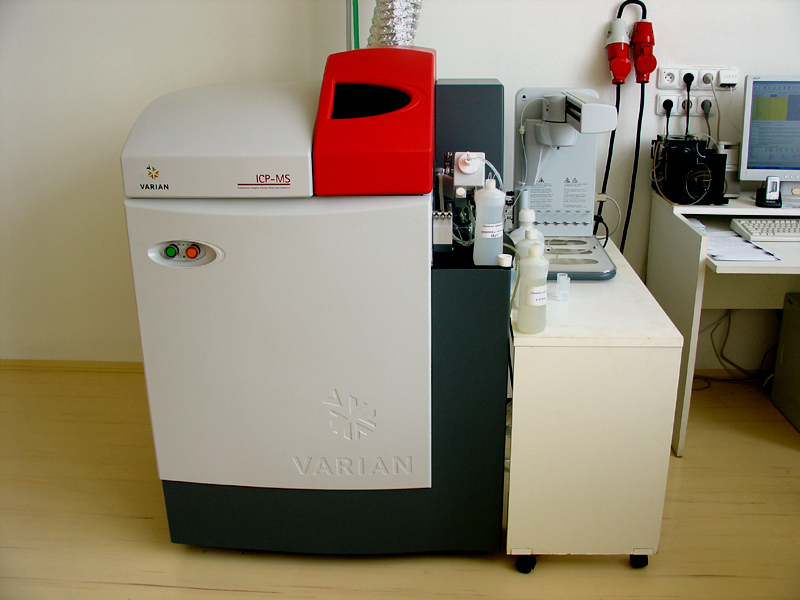
Argon-argon (40Ar/39Ar) dating is a refined geochronological technique derived from conventional potassium-argon dating. Where the older K-Ar method requires separate measurements of potassium and argon on different sample aliquots, the argon-argon method converts a portion of the sample's stable 39K to 39Ar by neutron irradiation in a nuclear reactor, enabling both the parent proxy (39Ar) and the radiogenic daughter (40Ar*) to be measured simultaneously as argon isotopes in a single mass-spectrometric analysis.1, 2 This innovation, introduced by Craig Merrihue and Grenville Turner in 1966, eliminated the principal sources of imprecision in K-Ar dating — sample heterogeneity and the need for accurate potassium concentration measurements — and opened the door to step-heating experiments capable of diagnosing open-system behavior.1, 11

Neutron irradiation and the J-parameter
The foundation of the argon-argon method is the nuclear reaction 39K(n,p)39Ar, in which a fast neutron displaces a proton from a potassium-39 nucleus, producing argon-39. Because 39Ar is radioactive with a half-life of 269 years, it is effectively absent from natural samples and its presence after irradiation is entirely a product of the reactor exposure.2, 12 The amount of 39Ar produced is proportional to the potassium content of the sample and to the neutron fluence received during irradiation. Rather than measuring neutron fluence directly, laboratories co-irradiate samples with mineral standards of independently known age — most commonly Fish Canyon sanidine or Alder Creek sanidine — and define a dimensionless irradiation parameter, J, from the standard's measured 40Ar*/39Ar ratio and its known age.3, 10 The J-parameter encapsulates all reactor-related variables, and the age of an unknown sample is then calculated directly from its 40Ar*/39Ar ratio and the J-value.2, 3
The accuracy of argon-argon ages depends critically on the calibration of these mineral standards. Paul Renne and colleagues recalibrated the Fish Canyon sanidine standard in 2010 and 2011, jointly optimizing the 40K decay constants and the standard age against astronomical tuning of marine sediment records, which improved the absolute accuracy of argon-argon ages to better than 0.25 percent.3, 5 This level of precision enables direct comparison of 40Ar/39Ar ages with those from uranium-lead dating and astronomically tuned timescales, and has been essential for synchronizing the geological record across different dating systems.5, 14
Step-heating and age spectra
The most powerful diagnostic tool of argon-argon dating is the step-heating experiment. A sample is progressively heated in a series of temperature increments, and the argon released at each step is analyzed separately. The results are plotted as an age spectrum (also called a plateau diagram), in which the apparent age of each temperature step is plotted against the cumulative fraction of 39Ar released.2, 11 If a sample has remained a closed system since its formation — neither gaining nor losing argon — the apparent ages of all temperature steps will be identical within analytical uncertainty, producing a flat plateau that represents the true crystallization or cooling age. In practice, a plateau is typically defined as three or more contiguous steps comprising at least 50 percent of the total 39Ar released, with step ages agreeing within two standard deviations.2, 4
Departures from a flat plateau are geologically informative. Low-temperature steps may yield anomalously old apparent ages if the sample contains excess 40Ar trapped during crystallization or introduced along grain boundaries by fluids — a phenomenon well documented in submarine basalts and high-pressure metamorphic minerals.8 Conversely, low-temperature steps may yield anomalously young ages if the sample has experienced partial argon loss due to reheating, weathering, or alteration. High-temperature steps approach the age of the most retentive crystallographic sites, which are the last to release their argon and are least affected by secondary disturbance.2, 13 The shape of the age spectrum thus encodes the thermal history of the sample in a way that a single K-Ar total-fusion age cannot reveal, allowing analysts to distinguish reliable ages from disturbed ones.2, 8
Advantages over conventional K-Ar dating
The argon-argon method offers several fundamental advantages over its predecessor. First, because both parent and daughter are measured on the same aliquot, the technique is insensitive to sample inhomogeneity: a single crystal a few hundred micrometres across can yield a precise age, whereas K-Ar dating requires milligrams to grams of homogeneous material.2, 4 Single-crystal dating has proven transformative in paleoanthropology, where volcanic tuffs interbedded with fossil-bearing sediments may contain only sparse phenocrysts of datable minerals like sanidine or anorthoclase.4, 9 Second, the step-heating procedure provides an internal check on closed-system behavior that is entirely absent from K-Ar analysis, which reports only a single total-fusion age with no means of detecting disturbance.2, 11
Third, the argon-argon method can achieve vastly superior analytical precision. Modern multi-collector noble gas mass spectrometers measure 40Ar/39Ar ratios with internal precisions of 0.1 percent or better on single sanidine crystals, translating to age uncertainties of a few thousand years for Quaternary samples and tens of thousands of years for Cretaceous-age materials.3, 17 Renne and colleagues demonstrated this capability by dating the 79 CE eruption of Vesuvius — the eruption witnessed and described by Pliny the Younger — obtaining an 40Ar/39Ar age of 1925 ± 94 years before present, consistent with the historical date and demonstrating the method's viability for dating events within the last few millennia.7
Applications to volcanic ash, tektites, and Earth history
Argon-argon dating has become indispensable for calibrating the geologic time scale. Volcanic ash layers (tuffs) and bentonites are widespread in the sedimentary record and frequently contain potassium-rich minerals suitable for dating. Because these ash layers are deposited essentially instantaneously over wide areas, a single precise 40Ar/39Ar age can anchor the chronostratigraphy of an entire sedimentary basin.4, 5 The technique has been pivotal in precisely dating the Cretaceous-Paleogene boundary at 66.043 ± 0.011 million years ago, establishing the temporal relationship between the Chicxulub impact and Deccan Traps volcanism with a precision that has reshaped understanding of the end-Cretaceous extinction.6
Tektites — natural glass objects formed by the melting and rapid quenching of terrestrial material during meteorite impacts — are also excellent targets for 40Ar/39Ar dating because their formation completely degasses any pre-existing argon, resetting the radiometric clock to the moment of impact. Step-heating analyses of tektites from the Australasian, North American, and Central European strewn fields have yielded precise ages that constrain the timing of their parent impact events and, in several cases, have been cross-validated against fission track and uranium-lead ages on the same or associated materials.18, 11
Concordance and cross-validation
The reliability of 40Ar/39Ar dating is underscored by its concordance with independent geochronological methods. Comparison of 40Ar/39Ar ages with uranium-lead zircon ages on the same volcanic units routinely yields agreement within analytical uncertainty, as demonstrated by Min and colleagues on 1.1 billion-year-old rhyolites and by Renne and colleagues on Cretaceous-Paleogene boundary clays.16, 6 The intercalibration of the 40Ar/39Ar system with astronomically tuned cyclostratigraphy has further tightened this agreement: Kuiper and colleagues showed that the astronomical and radiometric timescales could be reconciled to within 0.1 percent across the Cenozoic when the Fish Canyon sanidine age was adjusted to 28.201 ± 0.046 million years.5
In the context of human evolution, 40Ar/39Ar dating has provided the chronological backbone for virtually every major hominin discovery in the East African Rift. The pioneering K-Ar dates on Olduvai Gorge by Leakey, Evernden, and Curtis in 1961 first demonstrated that human ancestors extended back nearly two million years.15 Subsequent 40Ar/39Ar work has refined those dates, precisely dated the Laetoli footprint tuffs to 3.66 million years ago, constrained the age of Lucy and the First Family at Hadar, and placed the earliest known stone tools at Lomekwi in temporal context.9, 4 That these ages are internally consistent and concordant with results from other radiometric systems, magnetostratigraphy, and astronomical tuning constitutes powerful evidence for both the accuracy of the method and the reliability of radiometric dating as a whole.5, 16, 14
References
Joint determination of 40K decay constants and 40Ar*/40K for the Fish Canyon sanidine standard, and improved accuracy for 40Ar/39Ar geochronology
An astronomically dated record of Earth’s climate and its predictability over the last 66 million years
A test for systematic errors in 40Ar/39Ar geochronology through comparison with U/Pb analysis of a 1.1-Ga rhyolite