Overview
- The Great Oxygenation Event (GOE), occurring approximately 2.4 to 2.32 billion years ago, was the first sustained rise of free oxygen in Earth's atmosphere, transforming the planet's surface chemistry from a reducing to an oxidizing state and representing one of the most consequential environmental transitions in Earth history.
- The GOE was driven by cyanobacterial oxygenic photosynthesis, which had likely evolved hundreds of millions of years earlier, but oxygen accumulated permanently only after geological and biological sinks for oxygen were overwhelmed and the atmospheric methane greenhouse collapsed, triggering severe Paleoproterozoic glaciations.
- The geochemical evidence for the GOE is recorded in the disappearance of mass-independent fractionation of sulfur isotopes, the loss of detrital pyrite and uraninite from sedimentary rocks, the appearance of oxidized paleosols and red beds, and the cessation of banded iron formation deposition, collectively defining a narrow window in which atmospheric oxygen rose from negligible levels to at least 1 percent of present values.
The Great Oxygenation Event (GOE) was the first sustained accumulation of free molecular oxygen (O2) in Earth's atmosphere, occurring approximately 2.4 to 2.32 billion years ago during the Paleoproterozoic Era. Before this transition, Earth's atmosphere contained negligible oxygen — less than one hundred-thousandth of present atmospheric levels — and was instead dominated by nitrogen, carbon dioxide, and methane, with trace amounts of hydrogen and other reducing gases.1, 17 The GOE permanently transformed the planet's surface chemistry from a reducing to an oxidizing state, enabling the precipitation of new mineral phases, altering the global cycles of iron, sulfur, and carbon, triggering severe glaciations, and ultimately setting the stage for the evolution of complex aerobic life. It stands as one of the most consequential environmental transitions in the 4.56-billion-year history of the Earth.1, 4
The oxygenation of the atmosphere was driven by the biological innovation of oxygenic photosynthesis, performed by cyanobacteria, which split water molecules and released O2 as a metabolic byproduct. Yet the geological record presents a paradox: cyanobacteria likely evolved hundreds of millions of years before the GOE, raising the question of why oxygen did not accumulate immediately. The answer lies in the interplay of geological oxygen sinks, atmospheric photochemistry, and the methane greenhouse that maintained reducing conditions during the Archean, all of which had to be overcome before oxygen could permanently accumulate in the atmosphere.4, 7, 8
Geochemical evidence for the transition
The timing and reality of the GOE rest on multiple independent lines of geochemical evidence, each recording the shift from an anoxic to an oxygenated atmosphere in a different way. The most diagnostic of these is the record of mass-independent fractionation of sulfur isotopes (S-MIF). In an oxygen-free atmosphere, ultraviolet radiation penetrates to the lower atmosphere and drives photochemical reactions involving sulfur dioxide (SO2) that produce distinctive patterns of sulfur isotope fractionation not governed by mass differences alone. When atmospheric oxygen levels rise above approximately 10−5 of the present atmospheric level, an ozone layer forms that shields the lower atmosphere from the ultraviolet wavelengths required for these reactions, and S-MIF ceases.2, 14
The disappearance of S-MIF from the sedimentary record thus provides a binary signal for the rise of oxygen. Farquhar, Bao, and Thiemens demonstrated in 2000 that rocks older than approximately 2.45 billion years routinely display large S-MIF signals, while rocks younger than approximately 2.32 billion years do not, constraining the timing of the atmospheric transition to this approximately 130-million-year window.2 High-resolution studies of the Rooihoogte and Timeball Hill formations in South Africa have further narrowed the final disappearance of S-MIF to approximately 2.33 billion years ago, providing the most precise date for the irreversible oxygenation of the atmosphere.3, 9
Additional geochemical markers corroborate this timing. Prior to the GOE, detrital grains of pyrite (FeS2) and uraninite (UO2) were transported and deposited in river sediments without oxidizing — minerals that are rapidly destroyed in the presence of even small amounts of atmospheric oxygen. Their disappearance from the sedimentary record after approximately 2.4 billion years ago provides direct evidence that the atmosphere had become sufficiently oxidizing to weather these minerals during transport.1, 21 Simultaneously, the first widespread appearance of oxidized paleosols (ancient soil profiles showing iron retained in the ferric, Fe3+, state rather than leached away as ferrous, Fe2+, iron) and red beds (terrestrial sedimentary rocks reddened by hematite, Fe2O3) records the new capacity of the atmosphere to oxidize iron minerals at Earth's surface.1, 15
Banded iron formations and the iron sink
Banded iron formations (BIFs) are laminated sedimentary rocks composed of alternating layers of iron-rich minerals and silica (chert) that were deposited primarily between 3.8 and 1.8 billion years ago. They are among the most volumetrically significant Precambrian rock types and provide a direct record of the interaction between dissolved iron and oxygen in early Earth's oceans.10 In the anoxic Archean ocean, enormous quantities of dissolved ferrous iron (Fe2+) were supplied by hydrothermal vents and accumulated in the deep ocean. When this iron encountered oxygen produced by cyanobacteria in shallow waters, or was oxidized by photoferrotrophic bacteria using light energy, it precipitated as ferric iron (Fe3+) oxides and hydroxides, which settled to the seafloor and formed the iron-rich bands of BIFs.10, 4
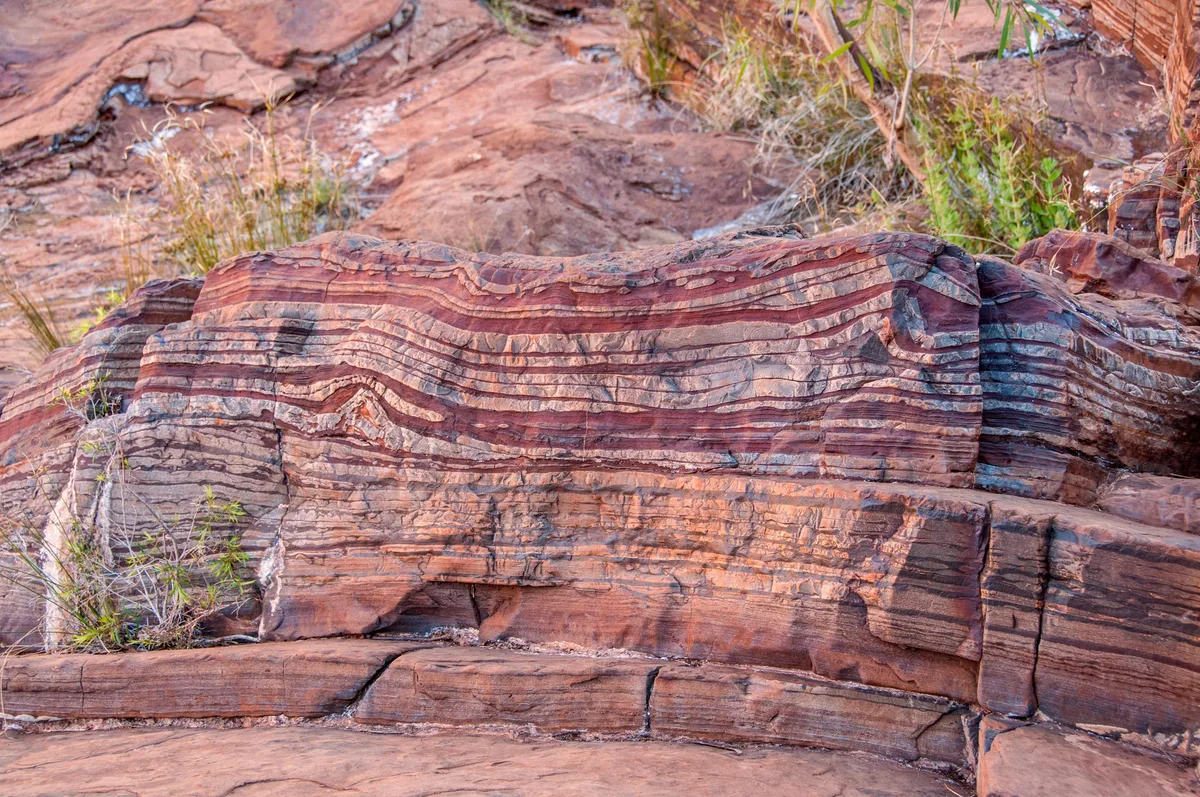

For hundreds of millions of years, this process acted as a massive oxygen sink: the oxygen produced by photosynthesis was consumed by the oxidation of dissolved iron before it could accumulate in the atmosphere. The great pulse of BIF deposition between 2.7 and 2.4 billion years ago may record a period when cyanobacterial oxygen production was increasing but was still being consumed by the iron reservoir of the deep ocean.10 Only when the oceanic iron reservoir was substantially drawn down could oxygen begin to escape the ocean and accumulate in the atmosphere. The decline and eventual cessation of major BIF deposition after approximately 1.8 billion years ago, with a brief resurgence during Snowball Earth episodes in the Neoproterozoic, is consistent with the progressive oxygenation of the deep ocean over the Proterozoic.4, 10
Major banded iron formation depositional episodes10
The role of cyanobacteria
The biological source of the oxygen that drove the GOE was oxygenic photosynthesis, a metabolic pathway in which organisms use light energy to split water molecules, releasing O2 as a byproduct while fixing carbon dioxide into organic matter. This pathway evolved in cyanobacteria, a phylum of photosynthetic prokaryotes that remain the only bacteria capable of oxygenic photosynthesis today. The antiquity of cyanobacteria is attested by stromatolite structures in rocks as old as 3.5 billion years, though the earliest unambiguous evidence for oxygenic photosynthesis, as opposed to anoxygenic photosynthesis, is more difficult to pin down.11, 13
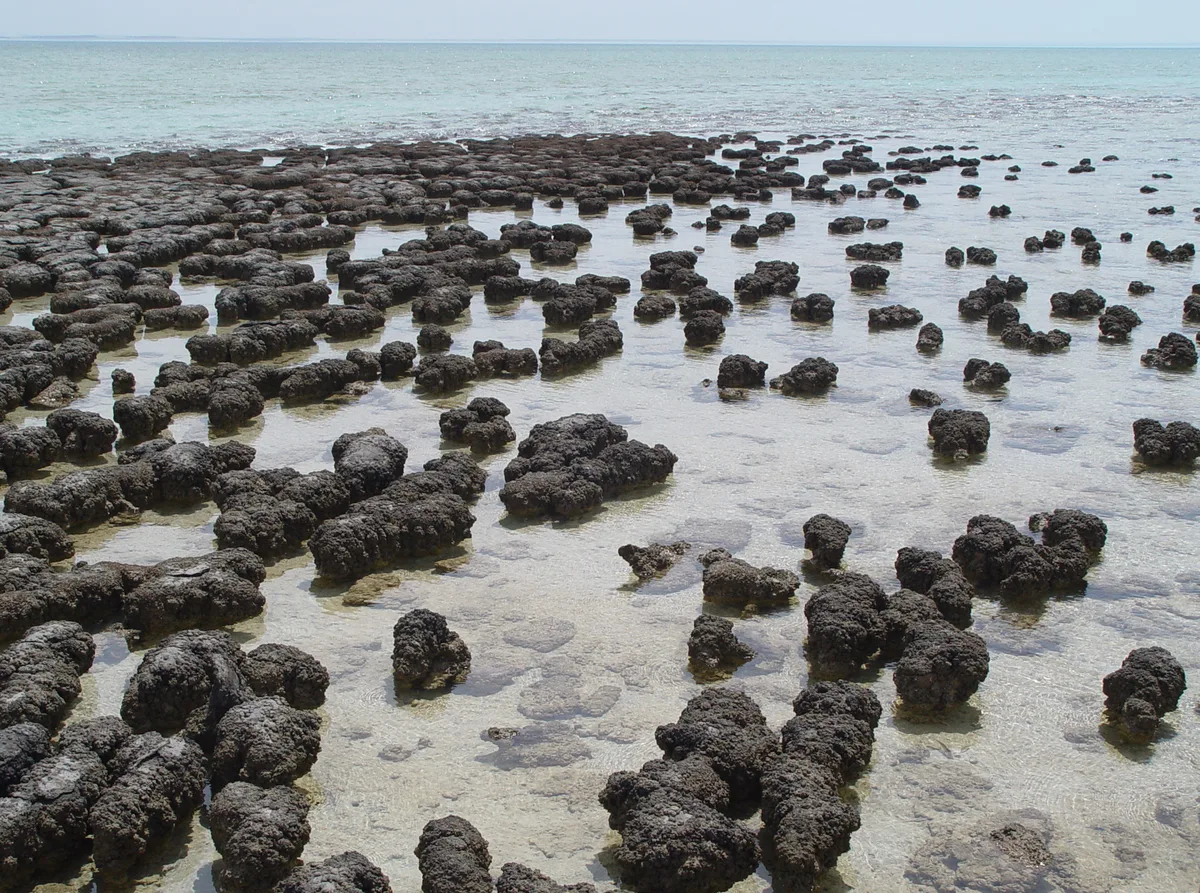

Molecular phylogenetic analyses suggest that crown-group cyanobacteria had diversified by at least 2.7 to 2.5 billion years ago, and may have originated even earlier. A major diversification of cyanobacterial lineages, including the evolution of multicellular filamentous forms, appears to coincide approximately with the GOE, suggesting a co-evolutionary relationship between biological innovation and environmental change.12 The interpretation of earlier molecular fossil evidence, particularly the detection of 2-methylhopanoids (lipid biomarkers associated with cyanobacteria) in 2.7-billion-year-old rocks from the Pilbara Craton of Australia, was initially taken as evidence for Archean oxygenic photosynthesis, but subsequent work demonstrated that these molecular fossils were likely contaminants introduced into the rocks at a later date, removing what had been considered the strongest biomarker evidence for pre-GOE cyanobacteria.11
Nevertheless, independent geological evidence supports the presence of oxygenic photosynthesis well before the GOE. The "whiff of oxygen" hypothesis, based on enrichments of the redox-sensitive trace metals molybdenum and rhenium in the 2.5-billion-year-old Mount McRae Shale of Western Australia, indicates that small amounts of O2 were transiently present in local environments more than 50 million years before the permanent rise of atmospheric oxygen.5 Additional trace metal evidence from late Archean sediments supports the occurrence of at least transient episodes of mild environmental oxygenation and oxidative continental weathering at approximately 2.5 to 2.6 billion years ago.20 These observations indicate that cyanobacteria were producing oxygen before the GOE, but that geological sinks and atmospheric chemistry prevented its permanent accumulation.
Why oxygen accumulation was delayed
The central puzzle of the GOE is the apparent delay between the evolution of oxygenic photosynthesis and the permanent rise of atmospheric oxygen. If cyanobacteria were producing O2 by at least 2.7 billion years ago, why did the atmosphere remain anoxic for another 300 to 400 million years? The answer involves multiple overlapping oxygen sinks that consumed biologically produced oxygen faster than it was generated, preventing its accumulation.4, 15
The first and largest sink was the oceanic iron reservoir. The Archean deep ocean contained enormous quantities of dissolved ferrous iron delivered by hydrothermal systems on the seafloor. Oxygen produced by cyanobacteria in shallow waters reacted with this dissolved iron, oxidizing it to ferric iron and precipitating it as the iron minerals that compose banded iron formations. This titration of oxygen by iron could have consumed the entire photosynthetic oxygen flux for hundreds of millions of years until the oceanic iron inventory was progressively depleted.10
The second sink was reducing volcanic and metamorphic gases. Volcanoes on the early Earth emitted hydrogen (H2), hydrogen sulfide (H2S), and other reduced gases at rates sufficient to react with and destroy atmospheric oxygen. As long as the flux of reducing gases from the solid Earth exceeded the net flux of oxygen from photosynthesis (after accounting for respiration and organic carbon burial), oxygen could not accumulate.15, 17 A gradual decline in the reducing gas flux over time, perhaps associated with the oxidation of the upper mantle or changes in volcanic activity, may have contributed to the eventual tipping point.22
The third factor was methane. The Archean atmosphere contained high concentrations of biogenic methane, produced by methanogenic archaea. In an oxygen-free atmosphere, methane is long-lived and acts as a potent greenhouse gas. Methane also reacts with and destroys oxygen through photochemical reactions in the upper atmosphere. Models suggest that the Archean methane concentration may have been on the order of 100 to 1,000 parts per million, compared to approximately 1.9 parts per million today.8, 17 The destruction of this methane greenhouse was both a consequence and a cause of the GOE: as oxygen levels began to rise, methane was oxidized more rapidly, reducing the greenhouse effect and triggering global cooling that may have precipitated the Huronian glaciations.6, 8
The atmospheric tipping point
The transition from an anoxic to an oxygenated atmosphere was not a gradual, linear process but appears to have involved a bistable switch — a rapid, irreversible flip between two stable atmospheric states. Goldblatt, Lenton, and Watson proposed in 2006 that the pre-GOE atmosphere existed in a low-oxygen steady state stabilized by the photochemical destruction of oxygen by methane and other reducing gases. As oxygen production slowly increased or reducing gas fluxes decreased, the system approached a critical threshold beyond which a positive feedback loop drove rapid oxygenation.7
The feedback operates through the ozone layer. At very low oxygen concentrations, ultraviolet radiation penetrates deep into the atmosphere and efficiently photodissociates oxygen and oxidizes methane, keeping oxygen levels suppressed. Once oxygen concentrations rise above a threshold of approximately 10−5 of present levels, a stratospheric ozone layer forms that shields the troposphere from ultraviolet radiation, dramatically reducing the rate of methane-mediated oxygen destruction. With this photochemical brake removed, oxygen accumulates rapidly to a new, higher steady state.7 The rapidity of this transition is consistent with geochemical data showing that the final loss of S-MIF — and thus the definitive establishment of an oxygenated atmosphere — occurred within a geologically brief interval, perhaps only a few million years, around 2.33 billion years ago.9
The collapse of the methane greenhouse at the GOE had immediate and dramatic climatic consequences. Methane and its photochemical derivative ethane had been major greenhouse gases maintaining temperate surface conditions on an early Earth that received approximately 20 percent less solar radiation than today (the faint young Sun problem). The rapid oxidation and destruction of atmospheric methane would have caused a precipitous drop in greenhouse warming, potentially driving global temperatures below freezing and initiating the Huronian glaciations — a series of at least three glacial episodes between approximately 2.45 and 2.22 billion years ago that may have included Snowball Earth conditions.6, 8
The Huronian glaciations
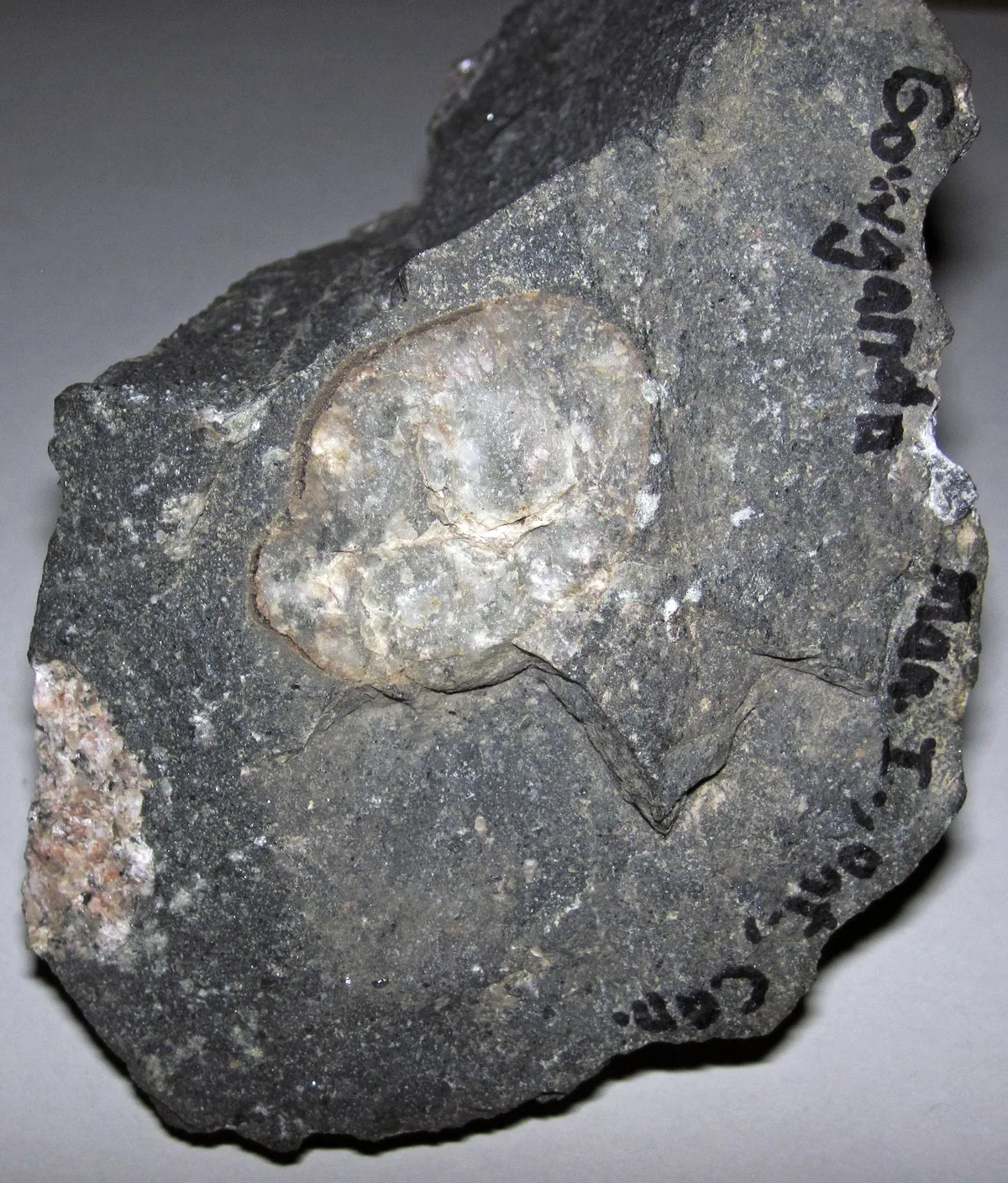
The Huronian Supergroup of Ontario, Canada, preserves evidence of three distinct glacial episodes — the Ramsay Lake, Bruce, and Gowganda glaciations — deposited between approximately 2.45 and 2.22 billion years ago. These Paleoproterozoic glaciations are among the oldest well-documented glacial episodes in the geological record and overlap temporally with the GOE. The coincidence in timing led Kopp and colleagues to propose that the glaciations were a direct consequence of the rise of oxygen: the destruction of the methane greenhouse by newly abundant atmospheric O2 removed sufficient greenhouse warming to plunge the planet into a series of ice ages.6
_(Gowganda_Formation,_Paleoproterozoic,_~2.3_Ga;_Route_6_outcrop,_north_of_Manitoulin_Island,_Ontario,_Canada)_4.jpg)
The relationship between oxygenation and glaciation is supported by the stratigraphic position of the geochemical evidence. In the Transvaal Supergroup of South Africa, which preserves a parallel record to the Huronian, the last occurrence of S-MIF — recording the definitive rise of oxygen — falls between the second and third glacial diamictites, suggesting that the atmosphere became permanently oxygenated partway through the glacial sequence.3, 9 The Makganyene glaciation, recorded in the Transvaal Supergroup and dated to approximately 2.32 to 2.22 billion years ago, has been interpreted as a Paleoproterozoic Snowball Earth event that postdates the loss of S-MIF and may represent the climatic nadir of the methane greenhouse collapse.6
The Huronian glaciations were not merely a side effect of the GOE but may have participated in a feedback cycle that influenced the pace and character of oxygenation. Global glaciation would have reduced biological productivity and therefore oxygen production, while simultaneously reducing chemical weathering and the delivery of nutrients to the ocean. The deglaciation of each episode, driven by the buildup of volcanic CO2 beneath the ice cover, would have produced a pulse of weathering and nutrient delivery that stimulated cyanobacterial productivity and potentially drove further oxygenation.6, 15
The oxygen overshoot and Lomagundi excursion
The immediate aftermath of the GOE was not a period of stable, moderate oxygen levels. Instead, geochemical evidence suggests that atmospheric oxygen underwent a transient overshoot to levels potentially higher than those that characterized most of the subsequent Proterozoic. The primary evidence for this overshoot comes from the Lomagundi-Jatuli carbon isotope excursion, the largest and longest-lived positive carbon isotope excursion in Earth history, spanning approximately 2.22 to 2.06 billion years ago.18
During the Lomagundi excursion, the carbon isotope ratio (δ13C) of marine carbonates rose to values averaging +8 per mil and reaching as high as +16 per mil in some locations, compared to the long-term average of approximately 0 per mil. Such extreme positive values indicate that an unusually large fraction of carbon entering the ocean-atmosphere system was being buried as organic matter rather than returned to the atmosphere as CO2 through respiration and decay. Because the burial of organic carbon is the net source of atmospheric oxygen (organic carbon burial removes the carbon that was split from O2 during photosynthesis, leaving the oxygen behind), the Lomagundi excursion implies a sustained period of elevated net oxygen production.18, 16
Trace metal records support the inference of elevated Paleoproterozoic oxygen levels. Uranium concentrations in marine shales show a peak during the Lomagundi interval, consistent with enhanced oxidative weathering of continental rocks and increased delivery of dissolved uranium (which is soluble only in its oxidized form) to the oceans.16 However, the Lomagundi overshoot was followed by a productivity collapse around 2.06 billion years ago, in which carbon isotope values returned sharply to near-zero and oxygen levels may have declined substantially. This post-Lomagundi deoxygenation ushered in the so-called "boring billion" — the interval from approximately 1.8 to 0.8 billion years ago characterized by relative environmental and biological stasis, low but nonzero oxygen levels, and limited evolutionary innovation.19, 4
Reconstructing Paleoproterozoic oxygen levels
Determining the actual concentration of atmospheric oxygen during and after the GOE is one of the most challenging problems in Precambrian geochemistry. The geochemical proxies provide constraints on whether oxygen was above or below certain thresholds, but translating these into quantitative atmospheric mixing ratios requires assumptions about atmospheric chemistry, ocean circulation, and the kinetics of mineral weathering.4, 15
The most robust constraint comes from the S-MIF record, which indicates that oxygen was below approximately 10−5 of present atmospheric levels (PAL) before 2.45 billion years ago and above this threshold after 2.33 billion years ago.2, 9 The disappearance of detrital pyrite and uraninite sets a somewhat higher threshold, suggesting that oxygen exceeded approximately 1 percent of PAL after the GOE, as this is the approximate level required to oxidize these minerals during fluvial transport.21 The appearance of red beds and oxidized paleosols is broadly consistent with this estimate.
Geochemical proxies for the Great Oxygenation Event1, 2, 4, 21
| Proxy | Signal | O2 threshold | Transition timing |
|---|---|---|---|
| S-MIF (sulfur isotopes) | Present before, absent after GOE | ~10−5 PAL | Disappears ~2.33 Ga |
| Detrital pyrite/uraninite | Present before, absent after GOE | ~0.01 PAL | Disappears ~2.4 Ga |
| Red beds | Absent before, present after GOE | ~0.01 PAL | Appear ~2.3 Ga |
| Oxidized paleosols | Fe retained as Fe3+ after GOE | ~0.01 PAL | Appear ~2.3–2.2 Ga |
| BIF deposition | Peak before GOE, declines after | Indirect constraint | Declines ~2.4–1.8 Ga |
| Mo/Re enrichments | Transient pre-GOE enrichments | ~10−6–10−5 PAL | ~2.5 Ga ("whiffs") |
During the Lomagundi overshoot, oxygen may have risen to as high as 10 to 40 percent of PAL, though these estimates remain highly uncertain. After the Lomagundi collapse, oxygen levels for most of the Mesoproterozoic are estimated at 1 to 10 percent of PAL — sufficient to sustain aerobic metabolism in simple organisms but far below levels needed for large, metabolically active animals. A second major oxygenation event, the Neoproterozoic Oxygenation Event (NOE), occurring between approximately 800 and 540 million years ago, was required to raise oxygen to levels approaching those of the modern atmosphere and to enable the evolution of complex animal life during the Cambrian explosion.4, 16
Biological and environmental consequences
The GOE fundamentally reshaped the biosphere. For the anaerobic microorganisms that had dominated the Archean, molecular oxygen was toxic — a potent oxidant that damages proteins, lipids, and DNA through the generation of reactive oxygen species. The rise of atmospheric oxygen forced obligate anaerobes into anoxic refugia — deep ocean sediments, hydrothermal environments, and other niches shielded from oxygen — while organisms that evolved enzymatic defenses against oxidative damage, and eventually those that could exploit oxygen as a terminal electron acceptor in aerobic respiration, gained a metabolic advantage.1, 4
Aerobic respiration extracts approximately 18 times more energy per glucose molecule than anaerobic fermentation, providing organisms that could tolerate and use oxygen with a transformative energetic advantage. The availability of free oxygen also enabled the evolution of new biosynthetic pathways, including the synthesis of sterols (essential components of eukaryotic cell membranes) and collagen (the structural protein of animal connective tissue), both of which require molecular oxygen for their biosynthesis. The appearance of the earliest unambiguous eukaryotic fossils in the geological record at approximately 1.8 to 2.1 billion years ago, following the GOE and the Lomagundi overshoot, is consistent with the hypothesis that eukaryotic evolution was contingent on the availability of environmental oxygen.4
The GOE also transformed Earth's surface mineralogy and geochemistry. The introduction of free oxygen to the atmosphere and hydrosphere enabled entirely new categories of chemical weathering reactions, producing oxidized mineral phases — including a diverse array of metal oxides, hydroxides, and sulfate minerals — that are largely absent from the Archean geological record. The oxidative weathering of continental rocks became a major process for the first time, mobilizing redox-sensitive elements such as uranium, molybdenum, and rhenium into dissolved form and delivering them to the oceans, where their enrichment in marine sediments now serves as a geochemical proxy for atmospheric oxygen levels.1, 4
Ongoing debates and recent advances
Despite decades of research, several fundamental questions about the GOE remain unresolved. The most debated is the question of causation: what ultimately tipped the balance from an anoxic to an oxygenated atmosphere? Proposed mechanisms include an increase in cyanobacterial oxygen production (through biological innovation or ecological expansion), a decrease in the flux of reducing gases from the solid Earth (through progressive oxidation of the upper mantle or a decline in volcanic outgassing), changes in the tectonic cycling of oxidants and reductants at subduction zones, and ecological dynamics in which competing microbial communities modulated the net oxygen flux.22, 15
Ozaki and colleagues proposed in 2021 that the GOE may be best understood not as a single event driven by a single cause but as the consequence of ecological dynamics among cyanobacteria, anoxygenic phototrophs, and methanogens, modulated by gradual changes in the planetary environment such as declining hydrogen outgassing. In their model, the transition occurs when the ecological balance between oxygen-producing and oxygen-consuming metabolisms shifts past a critical threshold, and the resulting change is rapid and irreversible because of the ozone-mediated bistability of the atmosphere.22
Another active area of research concerns the question of whether the GOE was a single, monotonic rise in oxygen or involved multiple oscillations. Evidence from multiple stratigraphic sections suggests that the transition may have included brief reversals — intervals during which S-MIF temporarily reappeared after its initial disappearance — suggesting that the atmosphere may have fluttered between oxic and anoxic states before settling into a permanently oxygenated condition.4, 9 The nature and duration of the post-Lomagundi deoxygenation, and whether it constituted a partial return toward Archean conditions or merely a reduction from overshoot levels to a lower but still oxygenated baseline, also remains debated.19
The question of why the GOE happened when it did — and not earlier or later — continues to motivate new research. Recent work has emphasized the role of tectonic and mantle evolution in controlling the balance between oxygen sources and sinks. As the mantle gradually became more oxidized over billions of years of volcanic outgassing and subduction of oxidized surface materials, the flux of reducing gases from the solid Earth may have progressively declined, reducing the consumption of atmospheric oxygen and eventually allowing it to accumulate. This hypothesis links the GOE to the long-term thermal and chemical evolution of Earth's interior, suggesting that it was an inevitable consequence of planetary evolution rather than a biological accident.15, 17
Planetary context
The GOE is not only a pivotal event in Earth history but also a key reference point for understanding the potential habitability of other terrestrial planets. The detection of oxygen or ozone in the atmosphere of an exoplanet is widely considered a potential biosignature — evidence of biological activity — because no known abiotic process can sustain high concentrations of atmospheric oxygen over geological timescales. Earth's own history demonstrates, however, that the relationship between biology and atmospheric oxygen is not straightforward: oxygenic photosynthesis existed for hundreds of millions of years before oxygen accumulated permanently, and the specific combination of geological, chemical, and biological conditions that enabled the GOE may not be replicated on every planet with photosynthetic life.7, 17
The Archean Earth itself would not have been identifiable as a life-bearing world from its atmospheric composition alone. An observer studying Earth's atmosphere at 3 billion years ago would have detected nitrogen, carbon dioxide, and methane, but no free oxygen — a spectrum consistent with an abiotic planet, despite the presence of a thriving biosphere of cyanobacteria and other microorganisms. This lesson informs the search for life on exoplanets: the absence of detectable oxygen does not exclude the possibility of life, and the detection of oxygen, if it occurs, may reflect a specific stage in a planet's geobiological evolution that is analogous to the post-GOE Earth.4, 17
The question of whether the GOE is a common or rare event in planetary evolution remains open. If the bistable atmospheric switch proposed by Goldblatt and colleagues is a general feature of planetary atmospheres, then any planet with sustained oxygenic photosynthesis may eventually undergo an oxygenation event once biological oxygen production exceeds the planetary reducing gas flux. Alternatively, if the GOE depended on specific geological contingencies — such as the particular tectonic regime of the Paleoproterozoic Earth or the depletion of the oceanic iron reservoir — it may be a rare or unique occurrence, with implications for the frequency of complex life in the universe.7, 22
References
The Paleoproterozoic snowball Earth: a climate disaster triggered by the evolution of oxygenic photosynthesis
The loss of mass-independent fractionation in sulfur due to a Palaeoproterozoic collapse of atmospheric methane
Iron formations: a global record of Neoarchaean to Palaeoproterozoic environmental history
Evolution of multicellularity coincided with increased diversification of cyanobacteria and the Great Oxidation Event
Transient episodes of mild environmental oxygenation and oxidative continental weathering during the late Archean
The Great Oxygenation Event as a consequence of ecological dynamics modulated by planetary change