Overview
- The Precambrian spans roughly four billion years, from Earth's formation at 4.56 Ga through the Hadean, Archean, and Proterozoic eons to the dawn of the Cambrian at 541 Ma, encompassing the origin of the planet, the emergence and diversification of life, and the transformation of the atmosphere from anoxic to oxygenated.
- The Great Oxidation Event around 2.4 Ga, driven by cyanobacterial photosynthesis, fundamentally restructured Earth's surface chemistry, enabling the precipitation of banded iron formations, the rise of eukaryotic organisms, and eventually the evolution of complex multicellular life.
- Two global Snowball Earth glaciations during the Cryogenian period (717–635 Ma) encased the planet in ice for tens of millions of years, and their termination preceded the Ediacaran radiation of large, architecturally complex organisms that set the stage for the Cambrian explosion of animal life.
The Precambrian encompasses the vast majority of Earth's history, stretching from the formation of the planet approximately 4.56 billion years ago to the beginning of the Cambrian period at 541 million years ago.1 This immense interval, comprising roughly 88 percent of Earth's total age, is conventionally divided into three eons: the Hadean (4.56–4.0 Ga), the Archean (4.0–2.5 Ga), and the Proterozoic (2.5 Ga–541 Ma). During the Precambrian, the planet accreted from the solar nebula, developed its core, mantle, crust, oceans, and atmosphere, and witnessed the origin and diversification of life from the simplest prokaryotic cells to complex multicellular organisms. The Precambrian record is fragmentary by comparison with younger geological intervals because the rocks that preserve it have been subjected to billions of years of metamorphism, erosion, and tectonic recycling, yet advances in geochronology, geochemistry, and paleobiology have progressively resolved a narrative of extraordinary transformation.21
Understanding the Precambrian is essential for interpreting every subsequent chapter in Earth's history. The chemical composition of the modern atmosphere and oceans, the distribution of economically important mineral deposits such as banded iron formations, the phylogenetic structure of the tree of life, and the very habitability of the planet are all legacies of events that occurred during this interval.12, 13
Formation of Earth and the Moon
The Earth formed through the accretion of dust and gas in the protoplanetary disk surrounding the young Sun. Lead-lead isotope dating of calcium-aluminium-rich inclusions in chondritic meteorites, the oldest solid material known in the Solar System, yields an age of 4,568.2 ± 0.4 million years, establishing the baseline for the age of the Solar System and, by extension, the approximate time of Earth's initial accretion.1 The process of planetary accretion was violent: the growing proto-Earth experienced repeated collisions with smaller planetesimals, generating immense heat that melted the planet's interior and facilitated the gravitational separation of metallic iron into a dense core surrounded by a silicate mantle.22
The most dramatic event in this early history was the giant impact that produced the Moon. Numerical simulations demonstrate that a collision between the proto-Earth and a Mars-sized impactor, conventionally named Theia, can account for the angular momentum of the Earth-Moon system, the Moon's anomalously low iron content, and the isotopic similarities between terrestrial and lunar rocks.2 The canonical model, refined through increasingly sophisticated hydrodynamic simulations, involves an oblique impact by a body with approximately 10 to 12 percent of the Earth's mass, which ejected a disk of silicate debris into orbit from which the Moon subsequently coalesced.2, 22 This event is estimated to have occurred within the first 100 million years of Solar System history, resetting the thermal and chemical state of the proto-Earth and establishing the distinctive features of the Earth-Moon system, including the relatively large size of the Moon compared to its parent planet and the high angular momentum of the pair.22
The Hadean eon
The Hadean eon, named after Hades, the Greek god of the underworld, spans from Earth's formation at approximately 4.56 Ga to 4.0 Ga. No intact Hadean rocks survive at the surface, but detrital zircon crystals eroded from ancient crust and preserved in younger sedimentary rocks have provided extraordinary windows into this earliest chapter of Earth's history. The oldest known terrestrial material is a zircon grain from the Jack Hills of Western Australia, dated by uranium-lead methods to 4.404 ± 0.008 billion years and confirmed by atom-probe tomography to be undisturbed by later lead loss.3, 4
Oxygen isotope ratios in these ancient zircons carry a remarkable implication. Many Hadean zircons exhibit elevated 18O/16O ratios relative to mantle values, indicating that the magmas from which they crystallised had interacted with liquid water at low temperatures — that is, the zircons record the existence of a hydrosphere and, by inference, surface oceans by at least 4.3 to 4.4 billion years ago.3, 4 This finding overturned earlier conceptions of the Hadean as a uniformly hellish environment of molten rock, suggesting instead that the planet's surface cooled rapidly enough for liquid water to stabilise within the first few hundred million years after accretion. The "cool early Earth" hypothesis, supported by the zircon evidence, proposes that conditions may have been habitable for microbial life far earlier than the oldest known fossils.4
The Hadean Earth was nonetheless subjected to intense bombardment by leftover planetesimals. The late heavy bombardment hypothesis, based originally on the clustering of impact-melt ages in Apollo lunar samples around 3.9 to 4.1 Ga, proposes that a spike in the impact flux occurred several hundred million years after the major planets formed, possibly triggered by a dynamical reorganisation of the giant planets' orbits that destabilised asteroid and cometary reservoirs.5 Whether this bombardment was a discrete cataclysm or a gradually declining tail of accretionary impacts remains debated, but the evidence from lunar and terrestrial cratering records confirms that the inner Solar System experienced a period of elevated bombardment that would have profoundly influenced surface environments, periodically sterilising any incipient biosphere or at least confining life to protected subsurface niches.5
The Archean eon and earliest life
The Archean eon (4.0–2.5 Ga) preserves the oldest intact crustal rocks and the earliest unambiguous evidence for life. The Archean Earth differed fundamentally from the modern planet in several respects: the Sun was approximately 20 to 25 percent less luminous than today, the atmosphere was essentially devoid of free oxygen, and the composition of the atmosphere was dominated by nitrogen with substantial concentrations of carbon dioxide and methane that provided the greenhouse warming necessary to maintain liquid water despite the fainter Sun.6 Surface oxygen levels were less than one-millionth of present atmospheric levels, as demonstrated by the presence of mass-independent fractionation of sulfur isotopes (S-MIF) in sedimentary rocks older than approximately 2.4 Ga, a signal that can only be produced by ultraviolet photochemistry of sulfur gases in an atmosphere lacking an ozone shield.10
The earliest direct evidence for life comes from putative stromatolites — laminated sedimentary structures interpreted as the product of microbial mat communities — in the 3.7-billion-year-old Isua supracrustal belt of southwestern Greenland, where low-deformation zones preserve primary sedimentary features including conical and domical structures 1 to 4 centimetres in height.9 In the Pilbara Craton of Western Australia, the 3.43-billion-year-old Strelley Pool Formation contains an extensive stromatolite reef complex that provides the most widely accepted early Archean evidence for biological activity, with multiple morphotypes distributed across a palaeoenvironmental gradient from shallow to deeper water settings.8 Cellularly preserved filamentous microfossils from the 3.465-billion-year-old Apex Basalt chert of the Pilbara have been described as possible cyanobacteria, though their biological origin has been contested, with some workers interpreting the structures as mineral artefacts of hydrothermal processes.7
Regardless of the precise antiquity of the oldest fossils, multiple independent lines of evidence — carbon isotope fractionation patterns in graphite, the morphology and distribution of stromatolites, and the geochemistry of Archean sedimentary rocks — converge on the conclusion that microbial life was established and ecologically significant by at least 3.5 billion years ago, and possibly substantially earlier.7, 8, 9, 21
The Great Oxidation Event
The single most consequential biogeochemical revolution of the Precambrian was the Great Oxidation Event (GOE), the initial irreversible rise of free oxygen in Earth's atmosphere beginning approximately 2.4 to 2.3 billion years ago.11, 14 Before the GOE, the atmosphere and surface ocean were essentially anoxic, and the metabolic waste product of oxygenic photosynthesis — molecular oxygen — was rapidly consumed by reaction with reduced gases (such as volcanic hydrogen and methane) and dissolved ferrous iron in the oceans. The GOE occurred when the rate of biological oxygen production finally exceeded the capacity of these sinks to consume it, allowing oxygen to accumulate permanently in the atmosphere.11, 12
The sharpest geochemical marker of the GOE is the disappearance of mass-independent fractionation of sulfur isotopes (S-MIF) from the sedimentary record at approximately 2.4 to 2.3 Ga. Because S-MIF requires ultraviolet photolysis of sulfur dioxide in an atmosphere with less than about one-hundred-thousandth of the present atmospheric level of oxygen, its disappearance records the crossing of a critical threshold in atmospheric oxygenation.10, 14 Additional evidence for the GOE includes the first appearance of red beds (continental sedimentary rocks coloured by ferric iron oxide cements), the cessation of detrital pyrite and uraninite transport in rivers (minerals unstable in the presence of oxygen), and changes in the redox-sensitive behaviour of elements such as chromium and molybdenum in marine sediments.11, 12
The GOE did not, however, raise atmospheric oxygen to modern levels. Geochemical evidence indicates that after the initial rise, oxygen concentrations may have stabilised at only a few percent of present atmospheric levels, and extensive regions of the deep ocean remained anoxic and ferruginous or euxinic (sulfide-rich) for more than a billion years afterward, during an interval sometimes called the "boring billion" for its apparent biogeochemical stasis.12, 24 Mid-Proterozoic atmospheric oxygen may have been as low as 0.1 percent of present levels, insufficient to support large, metabolically active organisms and potentially explaining the long delay between the GOE and the appearance of complex multicellular animal life.24
Banded iron formations
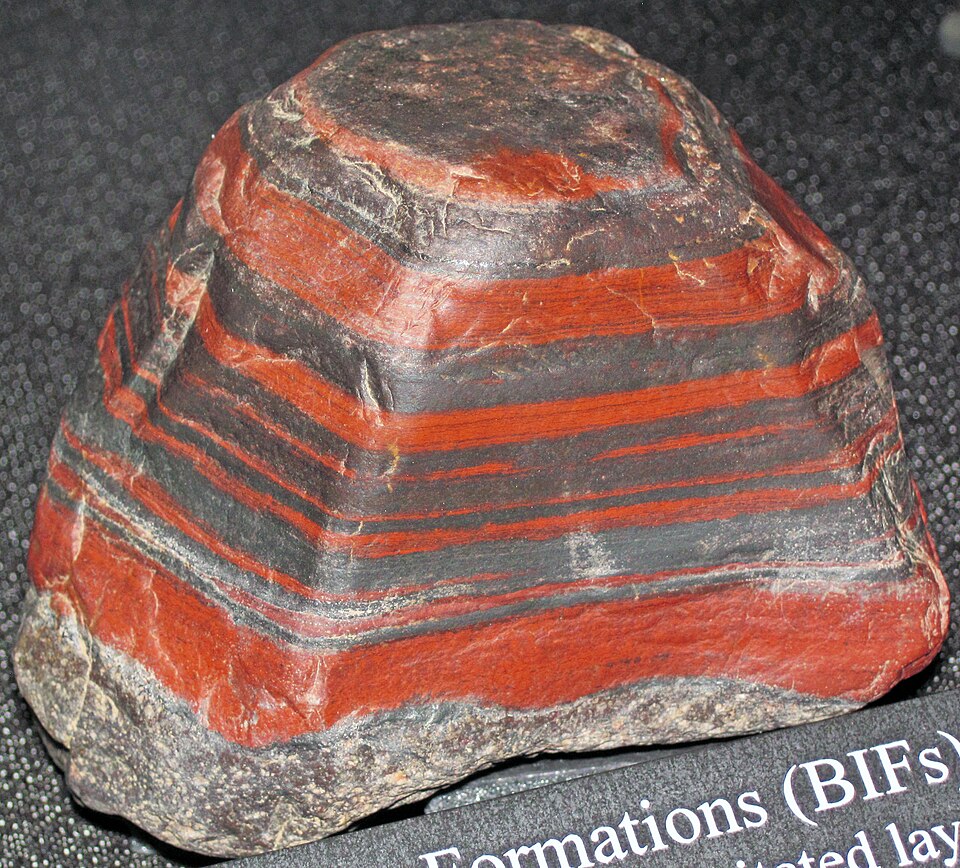
Among the most distinctive lithologies of the Precambrian are banded iron formations (BIFs), chemical sedimentary rocks composed of alternating layers of iron oxides (magnetite and hematite) and silica (chert). BIFs appear in the geological record as early as 3.8 Ga in the Isua supracrustal belt of Greenland, reach their maximum volumetric abundance between 2.5 and 2.4 Ga in the great deposits of the Hamersley Basin in Western Australia and the Transvaal Supergroup of South Africa, and largely disappear from the record after approximately 1.8 Ga, only to reappear briefly during the Neoproterozoic Snowball Earth glaciations between 0.8 and 0.6 Ga.13
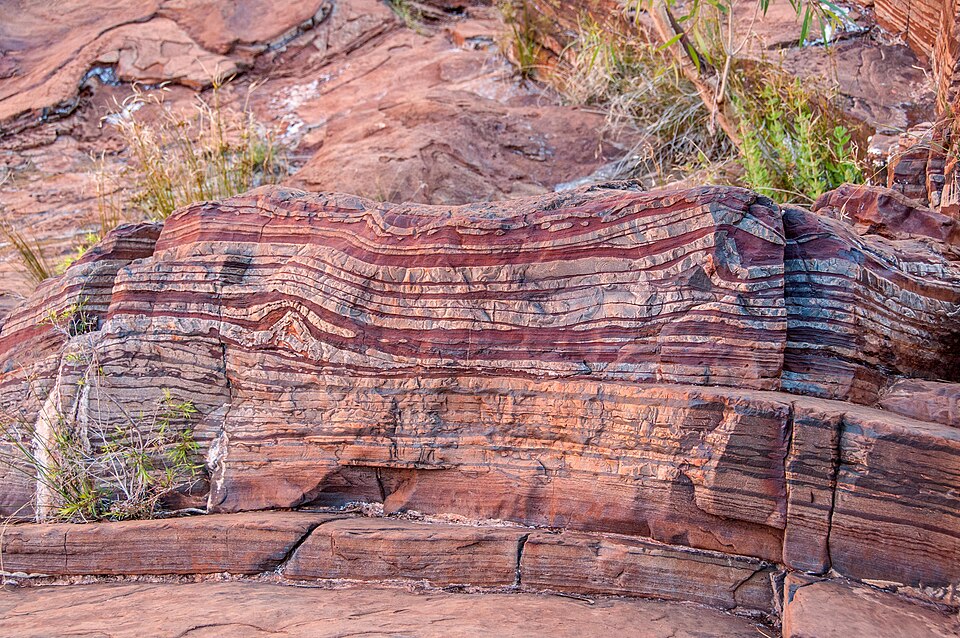

The formation of BIFs requires the transport and concentration of dissolved ferrous iron (Fe2+) in seawater, followed by its oxidation and precipitation as ferric iron (Fe3+) minerals. In an anoxic Archean ocean, ferrous iron released by hydrothermal vents and submarine weathering could accumulate to high concentrations because it is soluble under reducing conditions. The iron was then oxidised, either by reaction with dissolved oxygen produced by early oxygenic photosynthesizers, by anoxygenic iron-oxidising phototrophs that used Fe2+ as an electron donor, or by a combination of biological and abiotic processes.13 The characteristic banding in BIFs, with individual layers ranging from sub-millimetre to centimetre scale, may reflect seasonal or longer-term variations in iron supply, biological productivity, or ocean chemistry.13
The near-cessation of BIF deposition after 1.8 Ga is thought to reflect the progressive oxygenation of the deep ocean following the GOE, which oxidised dissolved ferrous iron close to its hydrothermal sources and prevented its transport to the basins where BIFs had previously accumulated.12, 13 The economic significance of BIFs is enormous: they constitute the world's principal source of iron ore and are the raw material for virtually all steel production.
Major Precambrian eons and key events1, 11, 18, 21
| Eon / Period | Time span | Key events |
|---|---|---|
| Hadean | 4,560–4,000 Ma | Planetary accretion, core formation, giant impact (Moon), magma ocean, first oceans by ~4.4 Ga |
| Eoarchean | 4,000–3,600 Ma | Oldest surviving rocks (~4.03 Ga, Acasta Gneiss), oldest putative stromatolites (~3.7 Ga, Isua) |
| Paleoarchean | 3,600–3,200 Ma | Stromatolite reefs (3.43 Ga, Strelley Pool), earliest microfossils (~3.46 Ga, Apex Basalt) |
| Mesoarchean | 3,200–2,800 Ma | Expansion of stromatolite diversity, earliest evidence for continental crustal growth |
| Neoarchean | 2,800–2,500 Ma | Peak BIF deposition, assembly of first supercontinents, likely emergence of oxygenic photosynthesis |
| Paleoproterozoic | 2,500–1,600 Ma | Great Oxidation Event (~2.4 Ga), Huronian glaciations, cessation of BIF deposition (~1.8 Ga) |
| Mesoproterozoic | 1,600–1,000 Ma | Assembly of Rodinia, earliest well-documented eukaryotes, first evidence for multicellularity (Bangiomorpha, ~1.05 Ga) |
| Neoproterozoic | 1,000–541 Ma | Breakup of Rodinia, Sturtian (~717–660 Ma) and Marinoan (~645–635 Ma) Snowball Earth glaciations, Ediacaran biota |
The rise of eukaryotes
The origin and early diversification of eukaryotes — organisms whose cells contain membrane-bound nuclei, mitochondria, and other organelles — is one of the most significant evolutionary transitions of the Precambrian. The endosymbiotic origin of mitochondria from an alpha-proteobacterial ancestor is firmly established by molecular phylogenetics, and the timing of this event is constrained by the fossil record to have occurred by at least the Mesoproterozoic, though molecular clock estimates place it substantially earlier.15, 21
The earliest unambiguous eukaryotic fossils are organic-walled microfossils (acritarchs) from rocks approximately 1.6 to 1.8 billion years old, which display morphological complexity and wall ultrastructure incompatible with prokaryotic organisms.23 The oldest widely accepted fossils of a crown-group eukaryote belong to Bangiomorpha pubescens, a multicellular red alga from the approximately 1.05-billion-year-old Hunting Formation of Arctic Canada. This organism preserves diagnostic cell-division patterns characteristic of bangiophyte red algae and provides the earliest evidence for both sexual reproduction and complex multicellularity in the fossil record.16
The long interval between the first appearance of simple eukaryotic cells and the eventual radiation of complex multicellular lineages — spanning roughly a billion years — has been attributed to persistently low atmospheric oxygen levels during the mid-Proterozoic. Chromium isotope data from mid-Proterozoic marine sediments suggest that atmospheric oxygen may have been no more than 0.1 percent of present levels, far below the threshold thought necessary to support the aerobic metabolism of large, tissue-grade organisms.24 Complex multicellularity, with cell differentiation, cell-cell communication, and programmed development, evolved independently in at least six eukaryotic lineages — animals, land plants, florideophyte red algae, laminarialean brown algae, and two groups of fungi — but all of these radiations appear to postdate the Neoproterozoic rise in atmospheric oxygen.17
Snowball Earth glaciations
The most extreme climatic events of the Precambrian were the Neoproterozoic Snowball Earth glaciations, during which geological evidence suggests that ice sheets extended to equatorial latitudes and the entire planet may have been encased in a global ice cover. Two major Cryogenian glaciations are recognised: the Sturtian glaciation (approximately 717–660 Ma) and the Marinoan glaciation (approximately 645–635 Ma), each lasting tens of millions of years.18, 19
The Snowball Earth hypothesis, as articulated by Paul Hoffman and colleagues, explains a suite of otherwise puzzling observations in Neoproterozoic sedimentary sequences worldwide: glacial diamictites (poorly sorted sedimentary rocks deposited by glaciers) bearing palaeomagnetic signatures indicating deposition at tropical latitudes; negative carbon isotope excursions in carbonates bracketing the glacial intervals, consistent with a near-total collapse of biological productivity; and the occurrence of "cap carbonates," thin but laterally continuous beds of carbonate rock deposited directly atop the glacial diamictites, interpreted as the product of extreme greenhouse warming following deglaciation.18 In the Snowball Earth scenario, the global ice cover prevented silicate weathering (the primary long-term sink for atmospheric CO2), allowing volcanic outgassing to raise carbon dioxide concentrations to perhaps 350 times present levels over millions of years until the resulting greenhouse effect overcame the high albedo of the ice and triggered rapid deglaciation.18
Geochronological constraints from volcanic ash beds and Re-Os isochrons have refined the duration and synchroneity of these glaciations. The Sturtian glaciation lasted approximately 58 million years, making it the longest glaciation in Earth's history, while the nonglacial interlude between the Sturtian and Marinoan events was comparatively brief, spanning 8 to 19 million years.19 The causes of the Snowball Earth events remain debated but are generally linked to the breakup of the supercontinent Rodinia, which placed large landmasses in the tropics where intense chemical weathering consumed atmospheric CO2 and drew down greenhouse gas concentrations below the threshold required to prevent equatorial glaciation.18, 19
The Ediacaran biota
The termination of the Marinoan glaciation at approximately 635 Ma was followed by the Ediacaran period (635–539 Ma), during which the first large, architecturally complex organisms appeared in the fossil record. The Ediacaran biota, named after the Ediacara Hills of South Australia where they were first described in detail, represent a dramatic departure from the microscopic organisms that had dominated life for the preceding three billion years.20
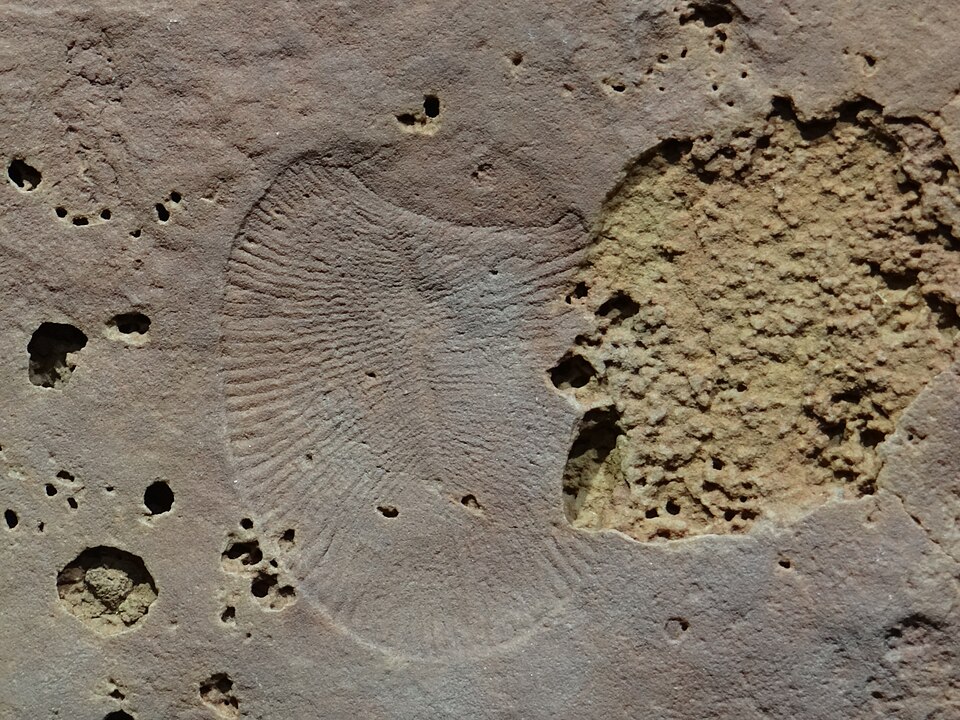

Ediacaran fossils are preserved primarily as impressions and casts in sandstone and siltstone, and they display a range of body plans unlike those of any living organisms. The assemblage includes large frond-shaped forms such as Charnia and Charniodiscus, which grew up to a metre in length and were apparently anchored to the seafloor; disc-shaped organisms such as Aspidella and Cyclomedusa; and bilaterally symmetric forms such as Dickinsonia and Kimberella, the latter of which shows evidence of a muscular foot and grazing traces that suggest animal-grade organisation.20 The phylogenetic affinities of many Ediacaran organisms remain uncertain, with proposals ranging from stem-group animals to extinct kingdoms of life with no modern descendants, but molecular and morphological analyses increasingly place at least some taxa within the Metazoa or their immediate stem lineage.20, 21
The appearance of the Ediacaran biota correlates with a second major rise in atmospheric oxygen — the Neoproterozoic Oxygenation Event — which brought oxygen levels closer to modern values and may have provided the metabolic preconditions for the evolution of large, active organisms with high oxygen demands.12, 21 The Ediacaran biota largely disappear from the fossil record near the Ediacaran-Cambrian boundary, whether through extinction, ecological replacement by the rapidly diversifying Cambrian fauna, or a change in preservation conditions that rendered their soft bodies invisible to the geological record. Their brief but spectacular flourishing provides the essential prologue to the Cambrian explosion, the dramatic radiation of animal phyla that marks the end of the Precambrian and the beginning of the Phanerozoic eon.20, 21
Atmospheric evolution through the Precambrian
The composition of Earth's atmosphere underwent a series of profound transformations across the four billion years of the Precambrian.
_1.jpg)
The earliest atmosphere, outgassed from the accreting planet and its magma ocean, was likely dominated by water vapour, carbon dioxide, and nitrogen, with trace amounts of hydrogen, carbon monoxide, and sulfur species, but essentially no free oxygen.6 As the planet cooled and the hydrosphere condensed, atmospheric CO2 became the principal greenhouse gas, supplemented by methane produced by early methanogenic archaea, and the balance between these warming agents and the reduced luminosity of the young Sun maintained surface temperatures within the range compatible with liquid water — a resolution of the "faint young Sun paradox."6
The Archean atmosphere remained anoxic for over a billion years after the origin of life, and possibly for several hundred million years after the evolution of oxygenic photosynthesis itself. The delay between the biochemical innovation of water-splitting photosynthesis and the permanent oxygenation of the atmosphere reflected the enormous capacity of reduced reservoirs — dissolved ferrous iron in the oceans, volcanic gases, and reduced minerals in the crust — to titrate away biologically produced oxygen before it could accumulate.11, 12 Only when the flux of reductants declined, possibly through progressive oxidation of the upper mantle and a decrease in volcanic outgassing of reduced gases, did the oxygen balance tip in favour of accumulation, triggering the Great Oxidation Event.11
The trajectory of oxygenation was not monotonic. After the GOE, oxygen concentrations may have risen sharply but then declined during the mid-Proterozoic to very low levels, creating a prolonged interval of intermediate redox conditions that persisted from approximately 1.8 to 0.8 Ga.12, 24 A second and more sustained rise in oxygen during the Neoproterozoic, associated with the aftermath of the Snowball Earth glaciations and increased burial of organic carbon in marine sediments, ultimately established the oxygen-rich atmosphere that characterises the Phanerozoic eon and that enabled the metabolically demanding lifestyles of animals.12, 17, 21
References
The age of the Solar System redefined by the oldest Pb–Pb age of a meteoritic inclusion
Evidence from detrital zircons for the existence of continental crust and oceans on the Earth 4.4 Gyr ago
Rapid emergence of life shown by discovery of 3,700-million-year-old microbial structures
Some Precambrian banded iron-formations (BIFs) from around the world: their age, geologic setting, mineralogy, metamorphism, geochemistry, and origins
Bangiomorpha pubescens n. gen., n. sp.: implications for the evolution of sex, multicellularity, and the Mesoproterozoic/Neoproterozoic radiation of eukaryotes
A Cryogenian chronology: two long-lasting synchronous Neoproterozoic Snowball Earth glaciations