Overview
- Detrital zircon crystals from the Jack Hills of Western Australia, dated at up to 4,404 million years old by uranium-lead geochronology, are the oldest known terrestrial materials and provide the only direct window into conditions on Earth during the Hadean eon.
- Atom-probe tomography performed by Valley and colleagues in 2014 confirmed that the 4.4 Ga age is not an artefact of lead redistribution within the crystal, establishing beyond doubt that these zircons crystallized from magma on a very young Earth.
- Oxygen isotope signatures preserved in the Jack Hills zircons indicate that liquid water and water-rock interaction existed on Earth's surface by 4.3 to 4.4 billion years ago, overturning the traditional view of the Hadean as an entirely molten, uninhabitable hellscape.
The Jack Hills zircons are detrital mineral grains recovered from ancient quartzites in the Narryer Gneiss Terrane of Western Australia. Dated at up to 4,404 million years old by uranium-lead geochronology, they are the oldest known terrestrial materials, predating the oldest intact rocks on Earth by nearly 400 million years.1, 2, 14 These tiny crystals — most no larger than a grain of sand — are the only direct physical evidence of conditions on Earth during the Hadean eon, the poorly understood interval between the planet's formation at approximately 4.54 billion years ago and the beginning of the Archean at 4.0 billion years ago.17 Chemical signatures locked within their crystal lattices have fundamentally reshaped scientific understanding of the early Earth, revealing that liquid water, continental crust, and relatively temperate surface conditions existed far earlier than previously thought.1, 3
Discovery and geological context
The Jack Hills are a low range of hills in the Murchison District of Western Australia, approximately 800 kilometres north of Perth. They form part of the Narryer Gneiss Terrane within the northwestern Yilgarn Craton, one of the oldest and most stable blocks of continental crust on Earth.6, 16 The terrane consists predominantly of Archean granitic and metamorphic rocks, including banded gneisses with protolith ages exceeding 3.6 billion years. Within this ancient basement, narrow belts of metasedimentary rocks — including quartzites, metaconglomerates, and metapelites — preserve detrital minerals eroded from still-older source rocks that no longer exist as intact outcrops.6
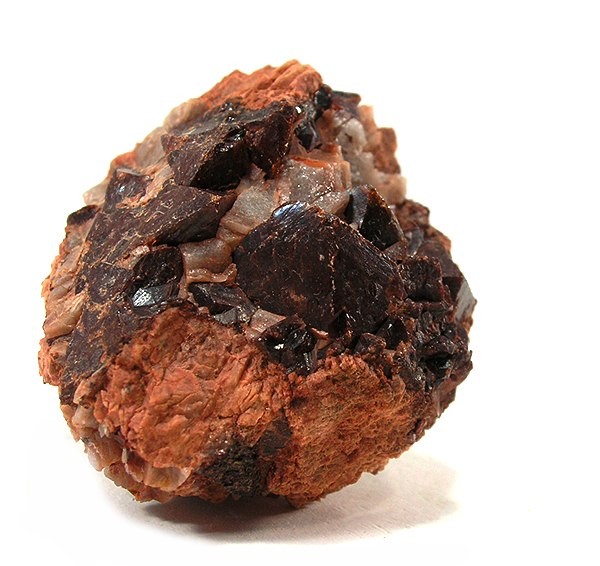

The discovery of extraordinarily ancient zircons in these metasediments proceeded in stages. In 1983, Froude and colleagues at the Australian National University used the newly developed SHRIMP ion microprobe to identify detrital zircons with uranium-lead ages of 4,100 to 4,200 million years from a metaquartzite at the nearby Mount Narryer locality.4 This was the first identification of terrestrial material older than the Acasta Gneiss of Canada. Three years later, Compston and Pidgeon (1986) reported even older zircons, with ages up to approximately 4,276 million years, from quartzite samples collected at Jack Hills itself.5 The landmark discovery came in 2001, when Wilde, Valley, Peck, and Graham identified a single zircon grain (designated W74/2-36) with a SHRIMP 207Pb/206Pb age of 4,404 ± 8 million years, establishing a new record for the oldest known piece of Earth.1
The host quartzites at Jack Hills are themselves Archean in age, estimated at approximately 3.0 to 3.06 billion years old based on the ages of the youngest detrital zircon populations they contain.6 The Hadean zircons therefore represent grains that were eroded from their original igneous source rocks, transported, and deposited as sediment more than a billion years after they first crystallized. The remarkable survival of these crystals through such prolonged geological recycling is a testament to the extraordinary physical and chemical durability of zircon, which resists weathering, dissolution, and metamorphism far better than virtually any other common mineral.12
Uranium-lead dating of the Jack Hills zircons
The ages of the Jack Hills zircons are determined by uranium-lead geochronology, the most precise and reliable radiometric dating method for deep geological time. The technique exploits two independent decay chains: uranium-238 decays to lead-206 with a half-life of 4.468 billion years, and uranium-235 decays to lead-207 with a half-life of 703.8 million years. Because zircon incorporates uranium into its crystal lattice while strongly excluding lead at the time of crystallization, virtually all lead measured in a zircon grain today is radiogenic — produced by the in situ decay of uranium since the crystal formed.8, 12
The primary analytical tool for dating the Jack Hills zircons has been the sensitive high-resolution ion microprobe (SHRIMP), developed at the Australian National University by William Compston and colleagues in the early 1980s.9 The SHRIMP focuses a beam of oxygen ions onto a spot approximately 20 to 30 micrometres in diameter on the polished surface of a zircon grain, sputtering secondary ions that are separated by mass and counted. This in situ approach is essential for the Jack Hills zircons because individual grains commonly display complex internal zoning, with Hadean-age cores surrounded by younger overgrowths produced during later metamorphic or magmatic events. By imaging the internal structure of each grain using cathodoluminescence microscopy and then targeting specific growth domains with the ion beam, analysts can date the original crystallization core independently of any subsequent overprinting.8, 9
The age of each analytical spot is typically reported as a 207Pb/206Pb date, which is the most precise age formulation for very old materials because it is insensitive to recent lead loss (which affects the 206Pb/238U and 207Pb/235U ratios equally and therefore does not change their ratio to each other). For the oldest Jack Hills zircon, Wilde and colleagues reported a concordant 207Pb/206Pb age of 4,404 ± 8 million years, with concordance between the two U-Pb systems confirming that the grain had remained a closed isotopic system since crystallization.1 Subsequent surveys of thousands of detrital zircons from Jack Hills have identified a broad population of Hadean grains with ages spanning from approximately 4,000 to 4,400 million years, with a pronounced peak around 4,100 to 4,200 million years.6
Atom-probe tomography confirmation
Despite the concordance of the original SHRIMP U-Pb data, the extreme antiquity of the 4.4 Ga Jack Hills zircon age invited scrutiny. A persistent concern was whether post-crystallization redistribution of lead atoms within the crystal — for example, by diffusion into radiation-damaged domains or along crystal defects — could produce artefactually old apparent ages in some analytical spots while yielding artefactually young ages in others, with the concordant result being coincidental rather than geologically meaningful.2
In 2014, Valley and colleagues at the University of Wisconsin-Madison addressed this question definitively using atom-probe tomography (APT), a technique that maps the three-dimensional position and chemical identity of individual atoms within a nanoscale specimen. The researchers prepared needle-shaped tips, approximately 100 nanometres in diameter, from the same 4.4 Ga zircon grain (W74/2-36) that Wilde and colleagues had originally dated. By applying high-voltage pulses to the specimen tip in an ultrahigh vacuum, individual atoms were field-evaporated from the surface and identified by time-of-flight mass spectrometry, producing a three-dimensional reconstruction of atomic positions with sub-nanometre spatial resolution.2
The atom-probe data revealed that lead atoms within the Hadean-age core of the zircon were distributed homogeneously, without the nanoscale clustering that would be expected if lead had migrated after crystallization. Some younger, radiation-damaged domains within the same grain did show lead clustering, confirming that the technique was sensitive enough to detect redistribution where it had actually occurred. The absence of clustering in the 4.4 Ga domain confirmed that the SHRIMP U-Pb age of 4,404 ± 8 million years records the time of original magmatic crystallization and is not an artefact of secondary lead mobility.2 This result placed the antiquity of the oldest Jack Hills zircon on the firmest possible analytical footing.
Oxygen isotope evidence for early oceans
_4_(17370602842).jpg)
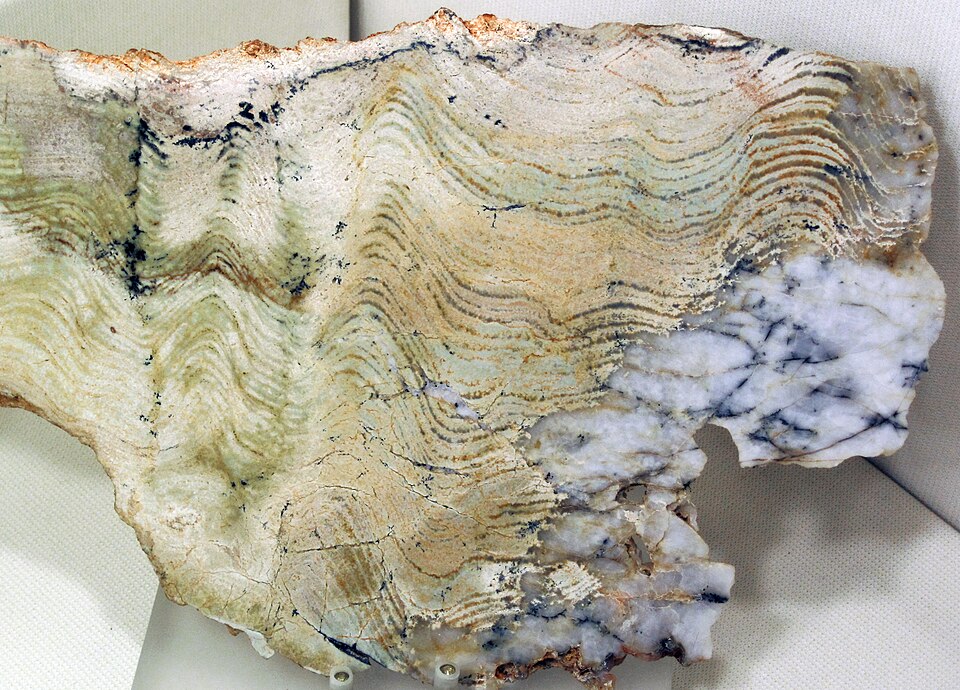
Perhaps the most consequential discovery from the Jack Hills zircons has been the evidence they preserve for the existence of liquid water on Earth's surface during the Hadean. This evidence comes from the oxygen isotope ratio (δ18O) of the zircon crystals, a geochemical tracer that records the conditions under which the host magma formed.7
Oxygen has three stable isotopes: 16O, 17O, and 18O. The ratio of 18O to 16O in a magma, and in the zircon that crystallizes from it, is sensitive to the source materials that contributed to the melt. Mantle-derived magmas that have not interacted with surface materials have a narrowly constrained δ18O value of approximately 5.3 ± 0.6 per mil (relative to the VSMOW standard). Magmas that incorporate rocks or sediments that have been altered by liquid water at low temperatures, however, inherit elevated δ18O values, because low-temperature water-rock interaction preferentially concentrates the heavier 18O isotope in the solid phase.7
Wilde and colleagues (2001) measured δ18O values of up to 7.4 per mil in Hadean Jack Hills zircons, significantly above the mantle range.1 Valley, Peck, King, and Wilde (2002) expanded this dataset and argued that the elevated oxygen isotope signatures required the involvement of materials that had interacted with liquid water at or near Earth's surface — either hydrothermally altered oceanic crust or water-deposited sediments — in the magma sources from which the zircons crystallized.3 Subsequent studies of larger populations of Hadean zircons confirmed that elevated δ18O values appear as early as 4.3 billion years ago and become progressively more common through the late Hadean, suggesting that a hydrosphere was established within the first 200 to 300 million years of Earth's history and persisted thereafter.3, 20
This finding overturned the long-standing conception of the Hadean as a hellish period dominated by magma oceans, intense bombardment, and surface temperatures too high for liquid water to exist. Valley and colleagues coined the term "cool early Earth" to describe the emerging picture of a planet that cooled rapidly after accretion and developed oceans, a water cycle, and low-temperature surface processes within its first few hundred million years.3
Oxygen isotope values (δ18O) in Jack Hills zircons by age1, 3, 20
Hafnium isotope constraints on early crust
In addition to oxygen isotopes, the Jack Hills zircons preserve hafnium isotope signatures that constrain the timing and nature of early crustal differentiation on Earth. Hafnium is a lithophile element that substitutes readily for zirconium in the zircon crystal lattice, typically at concentrations of approximately 1 to 2 weight percent. The isotope 176Hf is produced by the radioactive decay of 176Lu (half-life of approximately 37.1 billion years), and the ratio of 176Hf to 177Hf in a zircon records the degree to which the magma source had been depleted or enriched in lutetium relative to hafnium prior to zircon crystallization.10
Mantle-derived magmas have relatively high 176Hf/177Hf ratios because the mantle retains lutetium preferentially over hafnium during partial melting (lutetium is more compatible in mantle residual minerals). Crustal rocks, conversely, develop low 176Hf/177Hf ratios over time because the crust is depleted in lutetium relative to hafnium. The deviation of a sample's 176Hf/177Hf ratio from the bulk-Earth reference value at the time of crystallization is expressed as the parameter εHf, with positive values indicating a depleted-mantle source and negative values indicating reworking of older crustal material.10
Harrison and colleagues (2005) measured hafnium isotope ratios in Hadean Jack Hills zircons and found that many grains older than 4.0 billion years have negative εHf values, indicating that they crystallized from magmas that incorporated material extracted from the mantle well before the zircons themselves formed.10 These results imply that a significant volume of continental-type crust had already been produced and was available for re-melting and recycling as early as 4.4 to 4.5 billion years ago — within the first 100 to 200 million years of Earth's history. The hafnium data thus complement the oxygen isotope evidence in painting a picture of a geochemically differentiated early Earth, with distinct mantle and crustal reservoirs established very soon after planetary accretion.10, 11
Trace element geochemistry and crystallization conditions
The trace element compositions of the Jack Hills zircons provide additional constraints on the nature of the magmas from which they crystallized and, by extension, on the tectonic and thermal conditions prevailing on the Hadean Earth. Titanium concentrations in zircon are a function of crystallization temperature (the Ti-in-zircon thermometer), and application of this thermometer to Hadean Jack Hills grains yields temperatures of approximately 680 to 750 degrees Celsius, consistent with crystallization from relatively cool, water-saturated granitic magmas rather than from ultrahot, dry basaltic melts.15, 18, 20
These moderate crystallization temperatures, combined with the elevated δ18O values and the negative εHf signatures, suggest that many of the Hadean zircons formed in granitic magmas generated by the partial melting of pre-existing hydrated crust.18 Watson and Harrison (2005) argued that the minimum-melt temperatures recorded by the zircons are most consistent with a tectonic regime involving water-fluxed crustal melting, potentially analogous to modern subduction-zone or intraplate settings where wet sediments and altered basalt undergo anatexis.18
Rare earth element (REE) patterns in the Jack Hills zircons generally show the steeply positive slopes from light to heavy REEs and the positive cerium and negative europium anomalies characteristic of zircon crystallized from felsic melts in the presence of plagioclase feldspar.20 Trail, Watson, and Tailby (2011) used cerium anomalies in Hadean zircons as a proxy for the oxidation state of their host magmas and found that Hadean magmas had oxygen fugacities comparable to those of modern arc magmas, suggesting that the redox state of the mantle and crust was established early and has remained broadly similar for more than four billion years.19
Key geochemical signatures in Hadean Jack Hills zircons1, 2, 10, 18, 19
| Geochemical proxy | Measurement | Interpretation |
|---|---|---|
| U-Pb age | Up to 4,404 ± 8 Ma | Oldest terrestrial material; magmatic crystallization in the Hadean |
| δ18O | Up to 7.4‰ (mantle = ~5.3‰) | Liquid water and water-rock interaction on early Earth’s surface |
| εHf | Negative values at >4.0 Ga | Reworking of crust extracted from mantle by 4.4–4.5 Ga |
| Ti-in-zircon temperature | ~680–750 °C | Cool, water-saturated granitic magma sources |
| Ce anomaly (redox proxy) | Similar to modern arc zircons | Near-modern oxidation state in Hadean magmas |
Implications for the Hadean Earth

_2.jpg)
Taken together, the evidence preserved in the Jack Hills zircons has fundamentally transformed the scientific understanding of Earth's earliest history. Before their discovery, the Hadean was widely envisioned as a period of global magma oceans, incessant giant impacts, and surface temperatures too extreme for any geological process resembling those of the modern Earth. The very name "Hadean," derived from Hades, the Greek underworld, reflects this assumed inhospitability.3
The Jack Hills zircons tell a markedly different story. The oxygen isotope data indicate that liquid water was present at Earth's surface by at least 4.3 to 4.4 billion years ago, implying that surface temperatures had dropped below 100 degrees Celsius (at atmospheric pressure) within the first 100 to 200 million years of planetary history.1, 3 The hafnium isotope data demonstrate that continental-type crust had already been extracted from the mantle and was being recycled through melting and re-crystallization, indicating that at least some form of crustal differentiation was operating during the Hadean.10 The trace element data suggest that the magmas producing these zircons were water-saturated granitic melts formed at moderate temperatures, consistent with a tectonic and thermal regime not radically different from that of later geological eras.18 The redox data suggest that the oxidation state of the crust and upper mantle has been broadly stable for more than four billion years.19
These findings do not imply that the Hadean Earth was identical to the modern planet. The Late Heavy Bombardment, if it occurred as a discrete event around 3.9 to 4.1 billion years ago, would have periodically disrupted surface conditions, and the Hadean crust was almost certainly thinner, hotter, and more mafic on average than modern continental crust.13 Nevertheless, the Jack Hills zircons demonstrate that at least locally, and perhaps globally, conditions hospitable to liquid water and low-temperature geological processes were established on Earth far earlier than the traditional hellscape model allowed. This revised timeline has profound implications for the window of time available for the origin of life, extending the period during which prebiotic chemistry could have operated on a water-bearing planetary surface to potentially 4.3 billion years or more.3
References
Evidence from detrital zircons for the existence of continental crust and oceans on the Earth 4.4 Gyr ago
4,400-million-year-old detrital zircons from a Jack Hills quartzite, Western Australia
The oldest terrestrial mineral record: a review of 4400 to 4000 Ma detrital zircons from Jack Hills, Western Australia
U-Pb geochronology of zircons from lunar breccia 73217 using a sensitive high mass-resolution ion microprobe
Preservation of Earth-forming events in the tungsten isotopic composition of modern flood basalts
Titanium-in-zircon thermometry applied to contrasting Archean metamorphic and igneous systems
Constraints on Hadean zircon protoliths from oxygen isotopes, Ti-thermometry, and rare earth elements