Overview
- Mass wasting — the downslope movement of rock, soil, and debris under gravity — encompasses a spectrum of processes from imperceptibly slow soil creep (millimetres per year) to catastrophic rock avalanches travelling at over 100 metres per second, and is classified by material type and movement mechanism using the Varnes system updated by Hungr, Leroueil, and Picarelli in 2014 into 32 distinct landslide types.
- From 2004 to 2016, the Global Fatal Landslide Database recorded 4,862 fatal non-seismic landslide events that killed approximately 56,000 people worldwide, with over 75 percent of fatalities concentrated in southern and southeastern Asia along the Himalayan arc and in monsoon-affected regions of India, China, and the Philippines.
- Slope stability is governed by the balance between gravitational driving forces and resisting forces (primarily shear strength controlled by effective stress), with failure triggered by factors that reduce strength — such as elevated pore-water pressure from intense rainfall, permafrost thaw, or earthquake shaking — or increase driving stress through undercutting, loading, or changes in slope geometry.
Mass wasting is the downslope movement of rock, soil, and debris under the direct influence of gravity, without the primary involvement of a transporting medium such as water, wind, or ice.1, 9 It encompasses an extraordinary range of phenomena, from the imperceptible creep of soil particles at rates of millimetres per year to catastrophic rock avalanches that travel at velocities exceeding 100 metres per second and can bury entire valleys in seconds.2, 4 As the primary mechanism by which weathered material is delivered from hillslopes to river channels, mass wasting is a fundamental link in the sediment cascade that connects tectonic uplift to the erosion, transport, and deposition of earth materials within the rock cycle.9 Mass wasting is also among the most destructive of natural hazards: from 2004 to 2016, non-seismic landslides alone killed approximately 56,000 people worldwide, with global economic losses estimated at tens of billions of dollars per year.7, 8
The study of mass wasting and slope processes draws on geomorphology, geotechnical engineering, and hazard science to understand why slopes fail, how the resulting debris moves, and where and when future failures are likely to occur. The fundamental principle underlying all slope stability analysis was articulated by Karl Terzaghi in 1950: a slope fails when the gravitational shear stress acting on a potential failure surface exceeds the shear strength of the material along that surface, with the critical variable being effective stress — the total stress minus the pore-water pressure.3 Every trigger of mass wasting, whether rainfall, earthquake shaking, undercutting, or permafrost thaw, operates by either increasing the driving stress or reducing the resisting strength along a potential slip surface.
Classification of mass wasting processes
The most widely adopted framework for classifying mass wasting was established by David Varnes in 1978, who organized slope movements into a matrix defined by two parameters: the type of movement (falls, topples, slides, lateral spreads, and flows) and the type of material (rock, debris, or earth).1 This system was updated by Hungr, Leroueil, and Picarelli in 2014, who refined material definitions to align with standard geotechnical terminology and expanded the classification to 32 distinct landslide types, each with a formal definition.2 The updated Varnes classification remains the international standard and is used by geological surveys, engineering consultancies, and hazard-mapping programmes worldwide.2, 10
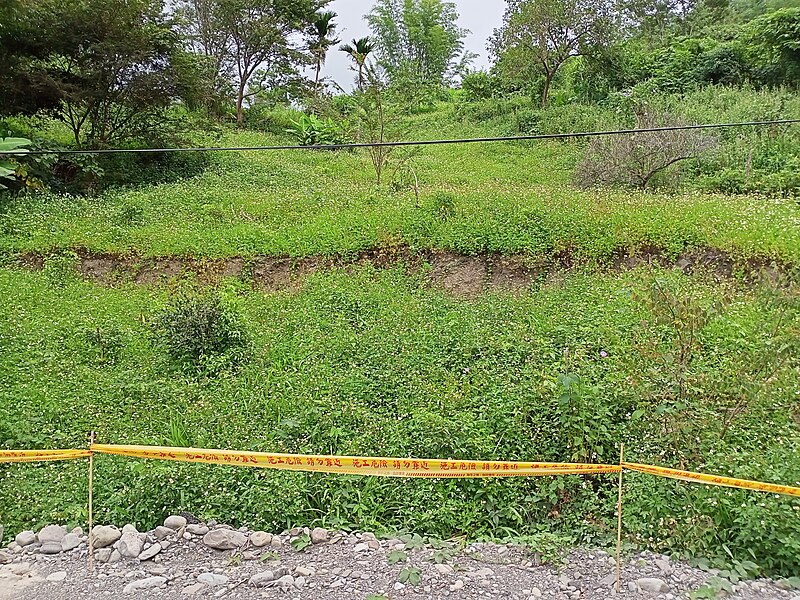

Falls involve the detachment of rock or soil from a steep slope along a surface on which little or no shear displacement occurs, followed by free fall, bouncing, and rolling.1, 2 Rockfalls are among the most common mass wasting events in mountainous terrain, often triggered by frost wedging, root growth, or seismic shaking. Individual blocks may range from pebble-sized fragments to masses of millions of cubic metres; at the extreme end, rock avalanches — catastrophic disintegrations of entire mountain flanks — can travel distances of tens of kilometres at speeds exceeding 50 metres per second, entraining additional debris and devastating areas far from the source.2, 6
Slides are movements of a coherent mass of material along one or more discrete shear surfaces. Rotational slides (slumps) move along a curved, concave-upward failure surface, producing a characteristic backward-tilted head scarp and a bulging toe; they are common in thick, relatively homogeneous clay-rich soils and weathered rock.1, 10 Translational slides move along planar surfaces, typically at the contact between soil and underlying bedrock or along a weak geological layer such as a clay seam or bedding plane. Translational slides predominate on slopes where a well-defined discontinuity controls the failure geometry.2
Flows are continuous movements in which the displaced mass behaves as a viscous fluid rather than a rigid body. Debris flows — fast-moving mixtures of water-saturated rock, soil, and organic debris — are among the most hazardous slope processes, capable of traveling kilometres down confined channels at velocities of 5 to 20 metres per second while carrying boulders weighing many tonnes.4 Earthflows are slower, lobate masses of fine-grained saturated material that move at rates of metres per day to metres per year. Creep, the slowest form of mass wasting, involves the gradual downslope displacement of soil and regolith at rates typically below 10 millimetres per year, driven by repeated cycles of wetting and drying, freezing and thawing, and biological disturbance.9, 17
Lateral spreads involve the lateral extension of a coherent mass of rock or soil over an underlying layer that has liquefied or deformed plastically, often triggered by earthquake shaking in areas underlain by saturated, loose sandy or silty soils.1, 2 Topples are forward rotations of a mass of rock or soil about a point or axis at or near the base of the displaced block, common in columnar-jointed rock and steep road cuts.2
Mechanics of slope failure
The stability of any slope is governed by the ratio of resisting forces (shear strength along a potential failure surface) to driving forces (the component of gravity acting parallel to that surface). This ratio, known as the factor of safety, must exceed 1.0 for a slope to remain stable; failure occurs when it falls to or below 1.0.3, 9 The shear strength of earth materials is described by the Mohr-Coulomb failure criterion, which expresses strength as the sum of cohesion and the frictional resistance proportional to the effective normal stress on the failure surface.3
The single most important variable controlling slope stability is pore-water pressure. Water filling the voids in soil and rock exerts an upward pressure that reduces the effective normal stress on potential failure surfaces, directly diminishing frictional resistance. This is why the majority of landslides worldwide are triggered by intense or prolonged rainfall: as water infiltrates into the ground, pore pressures rise, effective stress drops, and the factor of safety decreases toward unity.3, 15 Guzzetti and colleagues compiled global data on rainfall thresholds for landslide initiation and found that the critical combination of rainfall intensity and duration varies by climate and geology, but that in general, lower-intensity rainfall sustained over longer durations is sufficient to trigger deep-seated slides, while shallow slides and debris flows require shorter bursts of higher-intensity precipitation.15
Earthquake shaking is the second major trigger of mass wasting, acting through two distinct mechanisms: transient inertial forces that temporarily increase the driving stress on potential failure surfaces, and the generation of excess pore pressures in saturated, loosely packed sediments (liquefaction) that can catastrophically reduce shear strength.6 Keefer's 1984 analysis of 40 historical earthquakes established that the area susceptible to earthquake-triggered landslides increases exponentially with earthquake magnitude, from near zero at magnitude 4.0 to approximately 500,000 square kilometres at magnitude 9.2.6 Rockfalls, disrupted soil slides, and rock slides are triggered by the weakest shaking, while deep-seated coherent slides and lateral spreads require progressively stronger ground motion.6, 14
Other factors that promote slope failure include the removal of lateral or basal support (by river erosion, wave action, or human excavation), the addition of weight to the upper part of a slope (by fill placement, construction, or volcanic loading), the progressive degradation of material strength through weathering and chemical alteration, and changes in groundwater conditions caused by deforestation, irrigation, or altered drainage patterns.3, 20
Debris flows and rapid mass movements
Debris flows occupy a critical position in the spectrum of mass wasting processes because they combine the high velocity and long runout of fluid flows with the enormous density and impact force of solid-rich mixtures. Richard Iverson's 1997 analysis established the physical framework for understanding debris flow behaviour: these flows are neither purely granular (like dry rock avalanches) nor purely viscous (like muddy water), but are two-phase mixtures in which the interaction between solid grains and interstitial fluid governs flow dynamics.4 Pore-fluid pressure is the controlling variable: when pore pressure rises to nearly equal the total normal stress (a condition called liquefaction), the granular skeleton loses its frictional strength and the mixture flows readily; when pore pressure dissipates, the mixture stiffens and decelerates.4, 5

.jpg)
Debris flows are typically initiated by one of three mechanisms: the mobilization of a shallow landslide into a flow as pore pressures build during failure, the entrainment and bulking of channel sediment by runoff during intense storms, or the sudden release of water from a natural dam (glacial lake, landslide-dammed lake, or volcanic ice melt).5 Once initiated, debris flows can travel for kilometres down confined mountain channels, growing in volume by eroding and incorporating material from the channel bed and banks. Peak velocities of 5 to 20 metres per second are typical, and individual surges within a flow can carry boulders several metres in diameter at the flow front, producing devastating impact forces on any structure in their path.4
Rock avalanches represent the most catastrophic end of the rapid mass movement spectrum. These events involve the sudden disintegration of a large rock mass (typically exceeding one million cubic metres) from a steep mountain face, followed by extremely rapid flow of the fragmented debris across the valley floor.2 The anomalous mobility of large rock avalanches — their ability to travel distances many times their fall height — has been attributed to mechanisms including acoustic fluidization, frictional heating, and entrainment of saturated substrate, though the precise physics remains debated.9 Historical examples include the 1970 Huascarán rock avalanche in Peru, which buried the town of Yungay and killed approximately 18,000 people, and the 1903 Frank slide in Alberta, Canada, which deposited 30 million cubic metres of limestone across the valley floor in less than 100 seconds.16
Creep, solifluction, and slow slope processes
At the opposite end of the velocity spectrum from debris flows and rock avalanches are the slow, continuous slope processes that operate across virtually every hillslope on Earth. Soil creep is the imperceptible downslope movement of soil and regolith driven by repeated small-scale disturbances: the expansion and contraction of clay minerals during wetting and drying cycles, the heave and settling of soil particles during freeze-thaw cycles, and the churning activity of burrowing animals, root growth, and tree throw.9 Each disturbance moves particles slightly outward from the slope surface; when gravity returns them, they settle at a slightly lower position, producing a net downslope displacement over time. McKean and colleagues used cosmogenic 10Be accumulations to measure creep rates on a California hillslope, finding a diffusion coefficient of approximately 360 cm³ per year per centimetre of contour length and an average soil production rate of 0.026 centimetres per year.17
Global compilations of soil creep rates show typical surface velocities of 0.5 to 10 millimetres per year in temperate environments, with weak dependence on climate and somewhat stronger dependence on slope angle, soil thickness, and biological activity.19 Although individually negligible, the cumulative effect of creep over geological time is enormous: on soil-mantled hillslopes, creep is often the dominant mechanism of sediment transport, feeding material into stream channels at rates that balance the tectonic uplift of the landscape.9
Solifluction is a specific form of slow mass wasting characteristic of periglacial environments, where the annual freeze-thaw cycle creates a saturated, thawed active layer above permanently frozen ground (permafrost). Because the frozen substrate is impermeable, meltwater accumulates in the active layer during spring thaw, reducing effective stress and allowing the saturated soil to flow slowly downslope at rates of 1 to 10 centimetres per year, producing the characteristic lobed and terraced terrain of periglacial landscapes.9, 12 Needle-ice creep, driven by the growth of ice lenses that heave surface particles perpendicular to the slope, contributes significantly to solifluction in some settings, with measured surface velocities of 3.5 to 9 centimetres per year.19
Global impact and human toll
_3.jpg)
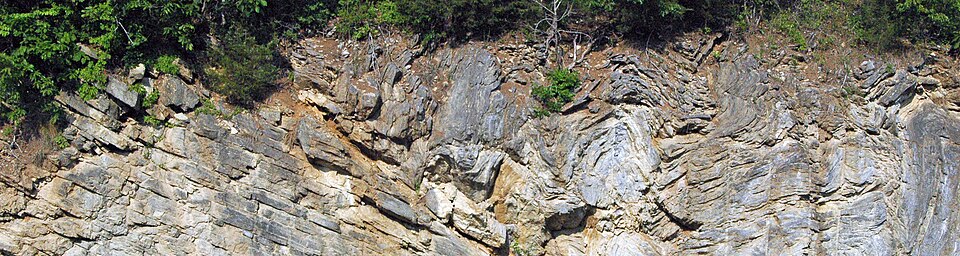
Mass wasting is among the deadliest and costliest of natural hazards. Petley's 2012 analysis of the Global Fatal Landslide Database established that non-seismic landslides kill an average of 4,600 people per year, a figure that substantially exceeds earlier estimates derived from emergency databases that systematically undercount landslide fatalities by factors of two to twenty.21 The comprehensive update by Froude and Petley covering 2004 to 2016 recorded 4,862 distinct fatal landslide events causing 55,997 deaths, with the highest fatality concentrations in southern and southeastern Asia, particularly along the Himalayan arc and in the monsoon-affected regions of India, Nepal, China, the Philippines, and Indonesia.7
Economic losses from landslides are more difficult to quantify but are substantial. Schuster and Fleming estimated in 1986 that annual landslide losses exceeded one billion dollars each in the United States, Japan, Italy, and India, and global losses are now estimated at approximately 20 billion dollars per year.8, 16 These figures capture only direct costs (property destruction, infrastructure damage, emergency response) and substantially undercount the total burden, which includes loss of agricultural land, disruption of transportation networks, reservoir sedimentation, and long-term displacement of communities.16
Global fatal landslide events by region, 2004–20167
The geographic concentration of landslide fatalities in Asia reflects the convergence of several risk factors: steep, tectonically active mountain terrain generated by the ongoing collision of the Indian and Eurasian plates; intense monsoonal rainfall that saturates slopes annually; high population densities in mountainous areas; and widespread deforestation and land-use change that remove stabilizing vegetation and alter hillslope hydrology.7, 21 Human activities — including road construction, mining, deforestation, and urbanization on unstable slopes — have made humans the dominant geomorphic agent on the modern Earth11 and are directly implicated as contributing causes in a growing proportion of fatal landslides: Froude and Petley found that human activity was a contributing factor in approximately 700 of the 4,862 events in their database, and that the proportion of human-caused landslides has increased over time.7
Triggers and predisposing factors
The distinction between triggers and predisposing factors is fundamental to understanding mass wasting. Predisposing factors are the long-term geological, topographic, and environmental conditions that make a slope susceptible to failure: rock type, joint spacing and orientation, slope angle, weathering depth, soil thickness, and hydrological setting.20 Triggers are the short-term events that push a marginally stable slope past its threshold of failure. The most common trigger globally is intense or prolonged rainfall, which accounts for the majority of non-seismic landslides recorded in the Froude and Petley database.7, 15
Rainfall triggers operate through two distinct hydrological pathways. Shallow landslides and debris flows are typically triggered by short-duration, high-intensity rainstorms that rapidly saturate the upper soil mantle and generate positive pore pressures at the soil-bedrock interface. Deep-seated landslides respond to longer-duration, lower-intensity rainfall or cumulative seasonal precipitation that slowly raises the regional water table and increases pore pressures along deep failure surfaces.15 Guzzetti and colleagues compiled empirical rainfall thresholds for landslide initiation from studies across the globe, finding that intensity-duration thresholds for shallow failures typically follow a power-law relationship, with critical intensities ranging from approximately 2 to 10 millimetres per hour sustained over 12 to 48 hours in most climatic settings.15
Earthquakes are the second most important trigger. The 2008 Wenchuan earthquake (magnitude 7.9) in Sichuan Province, China, triggered approximately 60,000 individual landslides across an area of 110,000 square kilometres, killing roughly 20,000 people through landslide impacts alone — more than a third of the total earthquake death toll.14 Seismic shaking is particularly effective at triggering rockfalls and shallow disrupted slides, which require only weak to moderate ground accelerations to initiate.6
Other significant triggers include rapid snowmelt, volcanic eruptions (which generate lahars — volcanic debris flows — by melting summit ice and mixing meltwater with loose volcanic sediment), the erosive undercutting of slopes by rivers and waves, and human excavation and loading of slopes during construction activities.10, 16
Climate change and slope instability
Climate change is altering the frequency, distribution, and character of mass wasting processes worldwide through several interconnected mechanisms. Changes in precipitation intensity and seasonality are the most direct pathway: as global temperatures rise, the atmosphere holds more moisture (approximately 7 percent more per degree Celsius of warming, following the Clausius-Clapeyron relation), increasing the intensity of extreme rainfall events that trigger shallow landslides and debris flows.13 Gariano and Guzzetti reviewed the impact of global change on landslide hazard and documented increasing landslide activity in several regions, noting that the observed trend reflects both changing climate and expanding human occupation of unstable terrain.13
In permafrost regions, warming is destabilizing ice-rich hillslopes through two primary mechanisms: the deepening of the active layer (the seasonally thawed surface zone) and the complete degradation of permafrost at its margins.12 As ground ice melts, it leaves behind saturated, low-strength sediment that is highly susceptible to failure. Retrogressive thaw slumps — distinctive horseshoe-shaped failures that progressively enlarge as the exposed ice-rich headwall melts and collapses — have increased dramatically in frequency and size across the Arctic, with individual slumps growing from areas of hundreds of square metres to several square kilometres in a few decades.18 Active-layer detachment failures, in which the thawed surface layer slides over the still-frozen substrate, are similarly increasing in frequency as summers warm and the active layer deepens beyond its historical range.12, 18
In high-mountain environments, warming is degrading the permafrost that bonds fractured rock masses, contributing to an increase in large rockfalls and rock avalanches from steep alpine faces. Glacial retreat is also destabilizing slopes by removing the buttressing support of valley glaciers, exposing over-steepened and debuttressed rock walls to failure, and leaving behind unconsolidated glacial sediment (moraine) that is highly susceptible to debris flow initiation when saturated by rainfall or glacial lake outburst floods.12, 13
Hazard assessment and mitigation
Landslide hazard assessment aims to identify where slope failures are likely to occur, how large and fast they will be, and how frequently they will recur. Modern approaches combine geological mapping, geotechnical analysis, statistical susceptibility modelling, and increasingly, remote sensing techniques including satellite-based interferometric synthetic aperture radar (InSAR), which can detect ground surface displacements of millimetres per year over areas of thousands of square kilometres.20 Susceptibility maps, which delineate areas prone to landslides based on geological, topographic, and land-use factors, are widely used for land-use planning and building regulation in countries with established landslide programmes, including Italy, Japan, Switzerland, and Hong Kong.20
Landslide early warning systems represent one of the most effective mitigation strategies for rainfall-triggered mass wasting. These systems use real-time rainfall monitoring (from rain gauges and weather radar) combined with empirically derived intensity-duration thresholds to issue warnings when critical rainfall levels are approached or exceeded.15 National-scale operational systems exist in Italy, Japan, Norway, and several other countries. In Hong Kong, where dense urban development abuts steep, deeply weathered hillslopes, an integrated programme of slope stabilization, drainage improvement, and real-time warning has reduced landslide fatalities from an average of approximately 30 per year in the 1970s to near zero in recent decades, despite continued population growth and urbanization.20
Engineering mitigation measures include retaining walls, slope regrading, drainage systems (both surface and subsurface) to reduce pore-water pressures, soil and rock anchoring, debris flow barriers and catch basins, and bioengineering approaches that use vegetation to reinforce shallow soils and intercept rainfall.20 The selection of appropriate mitigation depends on the type and scale of the mass wasting hazard, the value of the assets at risk, and the economic resources available. In many developing countries, where the majority of landslide fatalities occur, the most effective interventions are non-structural: improved land-use planning to avoid building on unstable slopes, community-based early warning systems, and education programmes to raise awareness of landslide hazards and safe evacuation procedures.7, 16
References
Quantification of soil production and downslope creep rates from cosmogenic 10Be accumulations on a hillslope profile
Permafrost mass wasting in ice-rich landscapes: recent advances (2013 to 2024) on mechanisms, dynamics and impacts