Overview
- The high-coverage Denisovan genome, sequenced to 30-fold coverage from a single finger bone, revealed an archaic population with extremely low genetic diversity — only about 20% of that observed in modern Africans — indicating a persistently small effective population size.
- Denisovans interbred with modern humans on multiple occasions, contributing 4–6% of the genome of present-day Melanesians, approximately 5% in Philippine Ayta Magbukon, and smaller but detectable amounts across South and East Asia, with at least two deeply divergent Denisovan lineages contributing to these admixture signals.
- Adaptively introgressed Denisovan DNA has shaped modern human biology in measurable ways, including the EPAS1 high-altitude adaptation in Tibetans, HLA immune alleles that now constitute more than half of Eurasian HLA class I diversity, and the TBX15/WARS2 locus associated with body fat distribution and cold adaptation.
The Denisovans are unique in the annals of paleoanthropology: an entire branch of the human family tree identified not from a diagnostic skull or skeleton but from sequences of ancient DNA extracted from a tiny finger bone fragment. Since the initial mitochondrial DNA analysis in 2010 and the publication of a high-coverage nuclear genome in 2012, genomic data have revealed far more about the Denisovans than their meagre fossil record ever could. That genome has illuminated the population history of an archaic group characterised by remarkably low genetic diversity, documented repeated episodes of interbreeding with both Neanderthals and modern humans, and exposed a lasting genetic legacy that continues to shape the biology of living people across Asia and Oceania.1, 2, 3 From the EPAS1 gene that enables Tibetans to thrive at extreme altitude to immune system alleles carried by billions of Eurasians, the Denisovan contribution to modern humanity is far larger than the handful of bone fragments that represent them in the physical fossil record.
Sequencing the Denisovan genome
The genomic characterisation of the Denisovans proceeded in three stages, each built on advances in ancient DNA extraction and library preparation. In March 2010, Johannes Krause and colleagues at the Max Planck Institute for Evolutionary Anthropology published the complete mitochondrial genome of a small distal finger phalanx (Denisova 3) recovered from the East Gallery of Denisova Cave in the Altai Mountains of southern Siberia. The mtDNA sequence diverged from both modern humans and Neanderthals by roughly twice the distance that separates the latter two groups, suggesting that the individual belonged to a lineage that had last shared a common ancestor with them approximately one million years ago.1 This deep divergence immediately signalled the existence of a previously unrecognised hominin population.
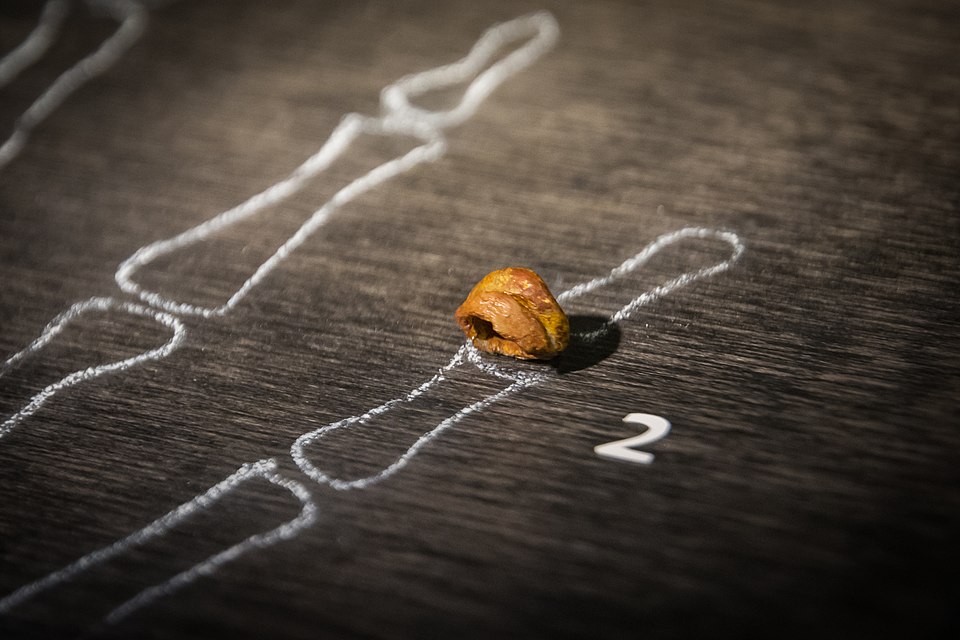

Later that year, David Reich and colleagues published a low-coverage nuclear genome (approximately 1.9-fold) from the same specimen. The nuclear DNA told a different story from the mitochondrial sequence: rather than being equidistant from Neanderthals and modern humans, Denisovans proved to be a sister group to Neanderthals, having diverged from them substantially more recently than from the modern human lineage. The nuclear genome also revealed the first evidence of Denisovan gene flow into present-day Melanesians, estimated at 4 to 6 percent of their total genome.2
The decisive advance came in 2012, when Matthias Meyer and colleagues published a high-coverage genome sequenced to approximately 30-fold coverage, using an innovative single-stranded DNA library preparation method that dramatically improved the yield of endogenous ancient DNA from the tiny bone fragment. The resulting genome was comparable in quality to a modern human reference sequence, enabling precise estimates of heterozygosity, demographic history, and archaic admixture into living populations.3 This extraordinary genome remains one of the highest-quality ancient genomes ever produced and has served as the primary reference for all subsequent studies of Denisovan population genetics and introgression.
Population genetics and demographic history
One of the most striking findings from the high-coverage genome was the extremely low genetic diversity of the Denisovan individual. The heterozygosity of Denisova 3 was approximately 0.022 percent, only about 20 percent of the heterozygosity observed in present-day African populations, 26 to 33 percent of that in present-day Eurasians, and 36 percent of that in the Karitiana, a South American population with some of the lowest genetic diversity among living humans.3 This low diversity was not caused by recent inbreeding: the genome showed no evidence of unusually long runs of homozygosity that would indicate consanguinity among the individual's immediate ancestors. Instead, the pattern was consistent with a population that had maintained a small effective size over an extended period.3
Comparisons with the high-coverage Altai Neanderthal genome, published in 2014, revealed that Neanderthals also had low genetic diversity, though the Altai Neanderthal showed additional signatures of recent inbreeding superimposed on low population-level diversity.4 Demographic modelling by Alan Rogers and colleagues estimated that the Neanderthal-Denisovan ancestral lineage experienced a severe population bottleneck shortly after separating from the modern human lineage, and that the two archaic groups diverged from each other relatively soon thereafter, approximately 300,000 to 400,000 years ago.23 These analyses suggest that small population sizes were a persistent feature of archaic hominin demography in Eurasia, in contrast to the larger effective population sizes inferred for contemporaneous African populations ancestral to modern humans.3, 23
Heterozygosity comparison across hominin genomes3, 4
| Genome | Heterozygosity | Relative to Africans |
|---|---|---|
| Present-day Africans (Yoruba) | ~0.104% | 100% |
| Present-day Europeans | ~0.070% | ~67% |
| Karitiana (South America) | ~0.061% | ~59% |
| Denisova 3 | ~0.022% | ~21% |
| Altai Neanderthal | ~0.017% | ~16% |
Sediment DNA and the Denisova 11 hybrid
The extreme rarity of identifiable hominin fossils at Denisova Cave prompted researchers to develop methods for detecting ancient DNA directly from cave sediments, bypassing the need for skeletal material entirely. In 2017, Viviane Slon and colleagues demonstrated that targeted enrichment of mitochondrial DNA from sediment samples could reliably detect the presence of both Neanderthals and Denisovans in archaeological layers, even where no hominin bones had been found. At Denisova Cave, they recovered Denisovan mtDNA from a Middle Pleistocene layer near the base of the stratigraphy, establishing that the technique could extend the temporal reach of ancient DNA far beyond what bone-based methods alone could achieve.5

A far more comprehensive sediment DNA study followed in 2021, when Elena Zavala and colleagues analysed 728 sediment samples spanning the full Pleistocene sequence at Denisova Cave. They recovered ancient faunal mitochondrial DNA from 685 samples and hominin mtDNA from 175 samples. The results provided an unprecedented continuous record of occupation over approximately 300,000 years. Denisovan mtDNA appeared earliest, associated with Middle Palaeolithic stone tools deposited between roughly 250,000 and 170,000 years ago. Neanderthal mtDNA first appeared toward the end of this period. The researchers also detected a turnover in Denisovan mtDNA lineages coinciding with changes in the faunal community, suggesting that different Denisovan populations occupied the cave at different times. Both Denisovans and Neanderthals appear to have used the site repeatedly until at least 45,000 years ago, when modern human mtDNA first appeared in the sediments.18
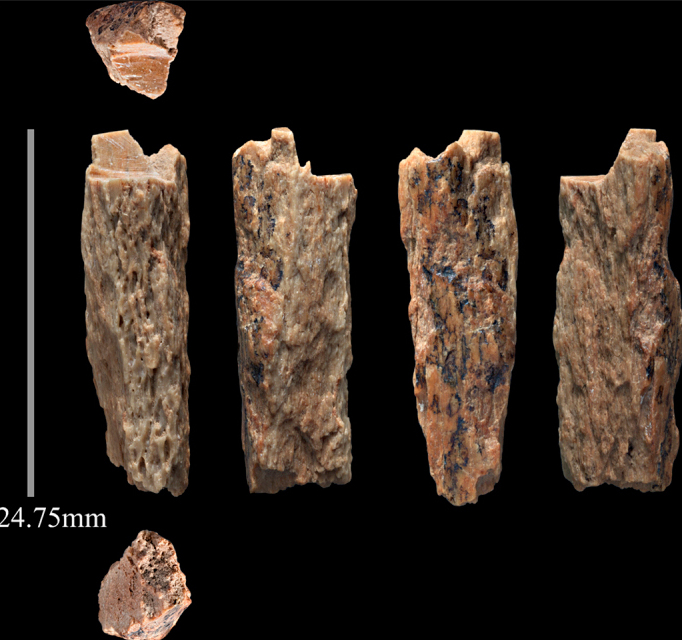
Among the most remarkable discoveries from Denisova Cave was the identification of Denisova 11, a small bone fragment recovered from among thousands of visually unidentifiable splinters. In 2018, Slon and colleagues published the genome of this individual, revealing that she was a first-generation hybrid: her mother was a Neanderthal and her father was a Denisovan. Radiocarbon dating placed her at approximately 90,000 years ago.6 Further analysis showed that her Denisovan father carried traces of Neanderthal ancestry in his own genome, indicating at least one prior episode of interbreeding between the two groups. Her Neanderthal mother was genetically closer to later western European Neanderthals than to an earlier Neanderthal from Denisova Cave itself, implying migrations between eastern and western Eurasia after about 120,000 years ago.6 The discovery of a first-generation hybrid among the tiny sample of sequenced archaic individuals strongly implied that interbreeding between Neanderthals and Denisovans was a relatively common occurrence when the two populations came into contact.6, 20
The Xiahe mandible and geographic range
For nearly a decade, all confirmed Denisovan specimens came from a single cave in Siberia, raising questions about whether this lineage was geographically widespread or merely a local population. That changed in 2019, when Fahu Chen and colleagues reported on a mandible from Baishiya Karst Cave on the Tibetan Plateau, located at an elevation of 3,280 metres in Xiahe County, Gansu Province, China. The mandible had been found in 1980 by a Buddhist monk but was not subjected to molecular analysis until decades later. DNA extraction failed, but the team successfully recovered ancient collagen proteins from the dentine of one molar. The protein sequence placed the Xiahe individual closer to Denisovans than to any other known hominin, making it the first Denisovan identified through paleoproteomics and the first confirmed outside Denisova Cave. Uranium-series dating of an adhering carbonate crust yielded a minimum age of 160,000 years.7
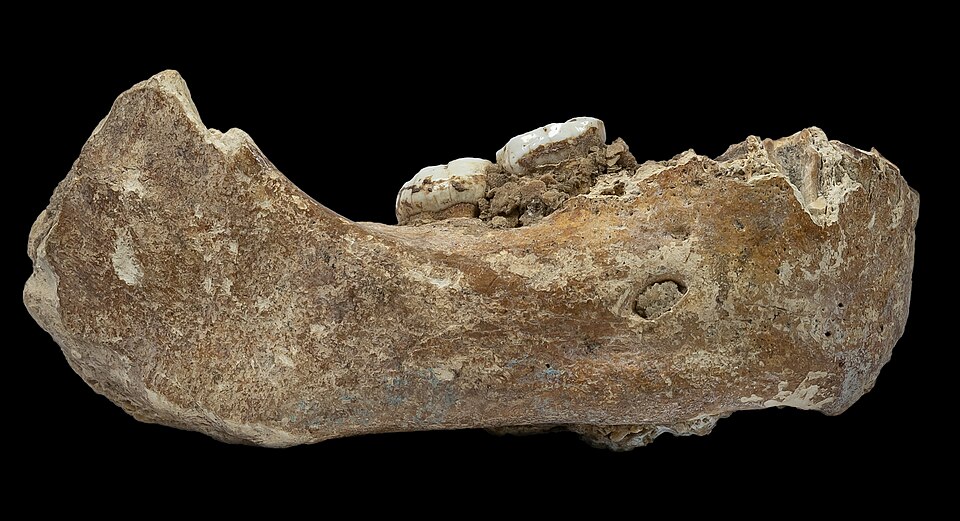

Subsequent work extended the record of Denisovan occupation at Baishiya. In 2020, Dongju Zhang and colleagues recovered Denisovan mitochondrial DNA from sediment layers dated to approximately 100,000 and 60,000 years ago, confirming prolonged habitation of this high-altitude site across multiple climatic cycles.19 The presence of Denisovans on the Tibetan Plateau, where atmospheric oxygen levels are roughly 40 percent lower than at sea level, demonstrated that this population had successfully adapted to one of the most challenging environments on Earth long before modern Homo sapiens arrived in the region. This adaptation has direct relevance to the EPAS1 high-altitude gene found in present-day Tibetans, discussed below.7, 9
The geographic distribution of Denisovan ancestry in modern populations further implies that the Denisovans ranged far beyond the two sites where their physical remains have been found. The highest proportions of Denisovan DNA occur not in populations near Siberia or the Tibetan Plateau but in Island Southeast Asia and Oceania, suggesting that Denisovans were once widespread across East and Southeast Asia and that the ancestors of Melanesians, Aboriginal Australians, and Philippine Negritos encountered them somewhere along the southern dispersal route out of Africa.2, 8, 20
Admixture with modern humans
The discovery that Denisovans interbred with modern humans was made simultaneously with the first nuclear genome analysis. Reich and colleagues found in 2010 that present-day Melanesians carry approximately 4 to 6 percent Denisovan-derived DNA, while mainland Asian and European populations carry much smaller or negligible proportions.2 Subsequent studies using whole-genome data from diverse populations have substantially refined and complicated this initial picture, revealing multiple episodes of admixture involving genetically distinct Denisovan source populations.
Benjamin Vernot and colleagues analysed whole-genome sequences from 1,523 individuals in 2016, including 35 Island Melanesian genomes. They recovered approximately 303 megabases of Denisovan sequence in aggregate, confirming that a substantial Denisovan component was present only in Melanesian and related Oceanian populations among the groups studied. Their reconstruction suggested that Denisovan admixture occurred once in the ancestors of Melanesians.13 However, later analyses by Sharon Browning and colleagues in 2018, using a reference-free method for detecting archaic introgression in 5,639 whole-genome sequences from Eurasia and Oceania, identified two distinct components of Denisovan ancestry that differed in their genetic similarity to the Altai Denisovan reference genome. This finding indicated that at least two separate Denisovan populations, which had diverged from each other substantially, contributed DNA to modern humans through independent admixture events.15
Guy Jacobs and colleagues extended these findings in 2019, analysing 161 new genomes from 14 island groups in Island Southeast Asia and New Guinea. They identified high-confidence archaic haplotypes that were inconsistent with a single Denisovan source and instead supported at least two deeply divergent Denisovan lineages, estimated to have separated from each other more than 350,000 years ago. One of these lineages contributed DNA primarily to populations east of the Wallace Line, and the introgression continued until near the end of the Pleistocene. A third, distinct Denisovan lineage was detected in modern East Asians.8
Sriram Sankararaman and colleagues mapped the combined landscape of Denisovan and Neanderthal ancestry across 257 high-coverage genomes from 120 populations in 2016. They found that the average length of Denisovan ancestry segments in Oceanians was larger than that of Neanderthal segments, indicating that the Denisovan admixture occurred more recently on average. They also detected more Denisovan ancestry in South Asian populations than existing models predicted, reflecting previously undocumented archaic contact. Notably, both Denisovan and Neanderthal ancestry were depleted near genes and in functional regions of the genome, indicating that much of the introgressed archaic DNA was mildly deleterious on a modern human genetic background and was progressively removed by purifying selection.14
The highest levels of Denisovan ancestry reported to date belong to the Ayta Magbukon, a Negrito group in the Philippines. In 2021, Maximilian Larena and colleagues analysed approximately 2.3 million genotypes from 118 Philippine ethnic groups and found that the Ayta Magbukon carry roughly 5 percent Denisovan DNA, approximately 30 to 40 percent more than Papuans and Aboriginal Australians. This elevated proportion likely reflects both an independent admixture event and the Ayta Magbukon's minimal subsequent admixture with East Asian agricultural migrants who carried little Denisovan ancestry, thereby preserving the archaic signal that was diluted in neighbouring populations.16
Denisovan ancestry in modern human populations2, 8, 14, 16
EPAS1 and high-altitude adaptation
The most celebrated example of adaptive introgression from Denisovans involves the EPAS1 gene, which encodes a transcription factor in the hypoxia-inducible factor pathway that regulates the body's response to low oxygen levels. Tibetans, who have inhabited elevations above 4,000 metres for thousands of years, carry a distinctive variant of EPAS1 that prevents the overproduction of red blood cells at altitude. In most human populations, chronic hypoxia triggers erythrocytosis, an excessive increase in haemoglobin and red blood cell concentration that leads to thickened blood, hypertension, and chronic mountain sickness. The Tibetan EPAS1 variant dampens this response, maintaining haemoglobin levels closer to those of lowland populations and conferring a substantial survival advantage.9
In 2014, Emilia Huerta-Sanchez and colleagues demonstrated that the Tibetan EPAS1 haplotype has a highly unusual structure that can only be convincingly explained by introgression from Denisovans or a closely related archaic population. The haplotype is present at high frequency in Tibetans (approximately 78 percent), at very low frequency in Han Chinese (less than 1 percent), and is virtually absent from all other modern human populations worldwide, yet it matches the Denisovan reference genome nearly perfectly across the approximately 32.7-kilobase core region.9 The five single-nucleotide polymorphisms that distinguish the Tibetan haplotype from other modern human variants are all shared with the Denisovan genome, a pattern that cannot be explained by incomplete lineage sorting and instead points to direct introgression.9
Xinjun Zhang and colleagues refined the chronology of this adaptive event in 2021. They estimated that the Denisovan EPAS1 haplotype was introduced into the modern human gene pool approximately 48,700 years ago (with a confidence interval spanning 16,000 to 59,500 years ago), and that strong positive selection for the variant began around 9,000 years ago, a timing that coincides with archaeological evidence for permanent settlement of the high Tibetan Plateau.17 The discovery of the Xiahe mandible, a Denisovan living at 3,280 metres at least 160,000 years ago, provided independent physical evidence that Denisovans had been adapted to high-altitude hypoxia for hundreds of thousands of years before transferring the relevant genetic variant to modern humans through interbreeding.7, 17
Immune gene introgression
Beyond altitude adaptation, some of the most consequential Denisovan genetic contributions to modern humans involve the immune system. The human leukocyte antigen (HLA) system encodes the major histocompatibility complex class I proteins, which present intracellular peptide fragments on the cell surface for recognition by cytotoxic T cells and natural killer cells. HLA genes are among the most polymorphic in the human genome, and this diversity is maintained by balancing selection driven by the need to recognise a wide range of pathogens.10
In 2011, Laurent Abi-Rached and colleagues demonstrated that modern humans acquired HLA class I alleles from both Denisovans and Neanderthals through admixture. By virtually genotyping the Denisovan and Neanderthal reference genomes, they identified archaic HLA haplotypes carrying functionally distinctive alleles. Five of the six Denisovan HLA-A, -B, and -C alleles proved identical to alleles found in present-day populations. Several of these encode unique or strong ligands for natural killer cell receptors, and the archaic-derived alleles now constitute more than half of the HLA class I alleles carried by modern Eurasians.10 Particularly notable is the HLA-A*11 allele, which was traced to a Denisovan origin and subsequently rose to a frequency of approximately 20 percent across Asia, making it nearly as common as HLA-A*02, one of the most prevalent HLA alleles worldwide. The Denisovan-derived HLA haplotypes are common in Asian and Oceanian populations but absent or extremely rare in sub-Saharan Africans, consistent with their introduction through archaic admixture after the dispersal from Africa.10
Adaptive introgression at immune loci extends beyond HLA to the innate immune system. Michael Dannemann, Aida Andres, and Janet Kelso reported in 2016 that a cluster of three Toll-like receptor genes (TLR6, TLR1, and TLR10) in modern humans carries three distinct archaic-derived haplotypes, two most similar to the Neanderthal genome and one most similar to the Denisovan genome. These receptors serve as a first line of defence against bacteria, fungi, and parasites. The archaic-like haplotypes have reached high frequencies in non-African populations that are difficult to explain by neutral drift alone, suggesting positive selection since the admixture event. However, the same variants are also associated with increased susceptibility to allergic disease, illustrating the potential trade-offs of adaptive introgression.11
More recently, Daniela Vespasiani and colleagues conducted a systematic analysis of Denisovan introgression in present-day Papuans in 2022, finding that Denisovan-derived variants are enriched in cis-regulatory elements and transcribed regions active in immune-related cells. Their analysis confirmed that immune function represents one of the strongest signatures of adaptive Denisovan introgression across the genome, second only to the well-documented signals at EPAS1.21
TBX15/WARS2 and body fat distribution
A third major example of adaptive introgression from Denisovans involves the genomic region containing the genes TBX15 and WARS2, which has been associated with adipose tissue differentiation and body fat distribution in genome-wide association studies. In 2017, Fernando Racimo and colleagues demonstrated that the region displaying the second most extreme signal of positive selection in Greenlandic Inuit carries a deeply divergent haplotype that is closely related to the Denisovan genome sequence, strongly suggesting introgression from an archaic source.12
The TBX15/WARS2 locus is associated with changes in gene expression in multiple tissues, including the adrenal gland and subcutaneous adipose tissue, and with regional changes in DNA methylation at TBX15.12 TBX15 is involved in the differentiation of brown and beige (brite) adipocytes, specialised fat cells that produce heat through lipid oxidation when stimulated by cold temperatures. This function makes TBX15 a compelling candidate gene for adaptation to cold climates, and the Denisovan-derived haplotype may have facilitated survival in Arctic and subarctic environments.12
Notably, the adaptively introgressed haplotype is not restricted to Arctic populations. Its frequency is highest among Native Americans and Greenlandic Inuit but is also found at intermediate frequencies across Central and East Asian populations, consistent with a broader pattern of selection favouring Denisovan-derived variants in cold or variable environments across northern Eurasia and the Americas.12 Together with EPAS1 and the HLA system, the TBX15/WARS2 locus demonstrates that Denisovan introgression has contributed functionally important genetic variation to modern humans across multiple adaptive domains, from hypoxia tolerance to immune defence to thermoregulation.22
Denisovans and Late Pleistocene hominin diversity
The Denisovan genome has fundamentally reshaped the understanding of hominin diversity in Late Pleistocene Asia. Before the discovery of Denisovans, the dominant narrative of the last several hundred thousand years featured two principal characters: Neanderthals in western Eurasia and Homo sapiens in Africa, with the vast expanse of eastern Eurasia occupied by populations loosely attributed to late Homo erectus or the taxonomically ambiguous Homo heidelbergensis. The Denisovan genome revealed that eastern Asia harboured its own major archaic lineage, genetically distinct from Neanderthals despite being their sister group, and capable of both surviving in extreme environments and contributing significantly to the genetic makeup of modern populations.2, 3
The detection of at least two or three deeply divergent Denisovan lineages in the genomes of modern populations implies that the Denisovans were not a single homogeneous group but a geographically structured metapopulation spanning thousands of kilometres and hundreds of thousands of years. These lineages diverged from one another more than 350,000 years ago, a timescale comparable to the separation between some recognised hominin species.8, 15 The geographic structure suggests that Denisovan populations in different parts of Asia were partially isolated from one another, evolving independently while maintaining enough contact with other hominin groups, including Neanderthals and modern humans, to produce the complex admixture patterns observed in present-day genomes.20
The Denisovan story also illustrates a broader principle: that the Late Pleistocene of eastern Eurasia was far more diverse in its hominin inhabitants than was previously appreciated. Alongside the Denisovans, small-bodied hominins such as Homo floresiensis on Flores and Homo luzonensis in the Philippines persisted into the Late Pleistocene, overlapping in time with both Denisovans and dispersing modern humans.20 The emerging picture is one of a complex mosaic, in which multiple hominin lineages coexisted, interacted, and interbred across Asia for much of the past half-million years. Denisovan genomics has been central to revealing this complexity, demonstrating that ancient DNA can illuminate populations and processes that left virtually no trace in the conventional fossil record.20, 22
The lasting significance of the Denisovan genome lies not only in what it reveals about an extinct population but in what it tells us about ourselves. The adaptive introgression of Denisovan alleles into modern human populations shows that interbreeding with archaic hominins was not merely a demographic curiosity but a source of functional genetic variation with real consequences for survival and adaptation. From the oxygen-sensing pathways of Tibetan highlanders to the pathogen-recognition receptors of Eurasian immune systems, the Denisovan genetic legacy is woven into the biology of billions of living people.9, 10, 22
References
The shaping of modern human immune systems by multiregional admixture with archaic humans
Introgression of Neandertal- and Denisovan-like haplotypes contributes to adaptive variation in human Toll-like receptors
Denisovan DNA in Late Pleistocene sediments from Baishiya Karst Cave on the Tibetan Plateau