Overview
- Sauropods were the largest land animals in Earth's history, with titanosaurs such as Patagotitan and Argentinosaurus reaching estimated body masses of 50–70 tonnes and lengths exceeding 30 metres, surpassing the largest terrestrial mammals by an order of magnitude.
- Their extraordinary size was enabled by a unique combination of biological innovations including an avian-style respiratory system with skeletal pneumaticity, rapid growth rates exceeding 2 tonnes per year in the largest species, no oral processing of food, and oviparity that decoupled reproductive output from body size.
- Originating in the Late Triassic around 230 million years ago, sauropods diversified into dozens of families spanning every continent, dominated terrestrial herbivore communities for over 140 million years, and persisted until the end-Cretaceous mass extinction 66 million years ago.
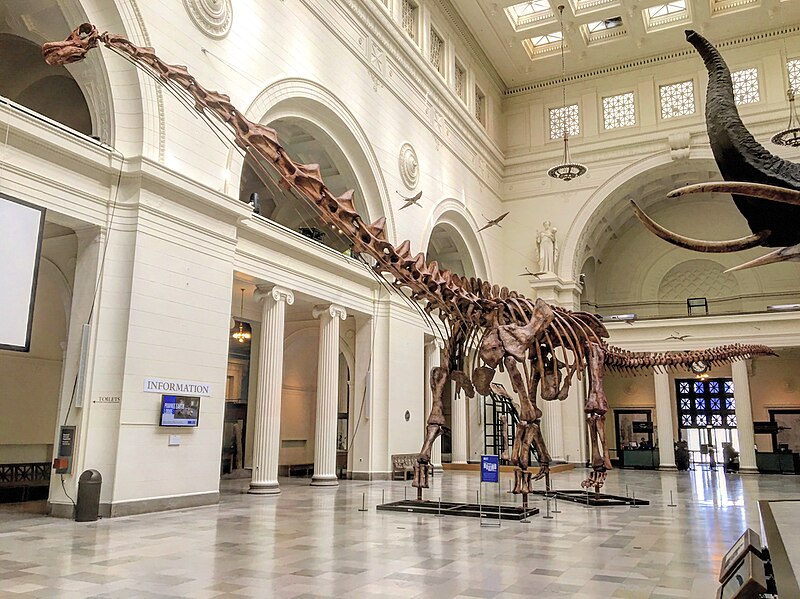
Sauropods were a clade of saurischian dinosaurs that include the largest terrestrial animals ever to have lived. Characterised by their enormous body size, columnar limbs, long necks, small heads, and elongate tails, these herbivorous giants first appeared in the Late Triassic approximately 230 million years ago and persisted until the end-Cretaceous mass extinction 66 million years ago.3, 4 Multiple lineages independently evolved body masses exceeding 50 tonnes — surpassing the largest land mammals by an order of magnitude — with the most massive titanosaurs such as Argentinosaurus and Patagotitan potentially reaching 60–70 tonnes.1, 7 Sauropods achieved a near-global distribution, with fossils recovered from every continent including Antarctica, and they constituted the dominant large-bodied herbivores in most terrestrial ecosystems throughout the Jurassic and much of the Cretaceous.4, 5
The evolution of such extreme body size was not the product of any single adaptation but arose from the convergence of multiple biological innovations: an avian-style respiratory system that lightened the skeleton and improved gas exchange, rapid growth rates driven by elevated metabolism, the absence of oral processing (no chewing), and egg-laying reproduction that freed body size from the constraints imposed by live birth.1, 2 Understanding how these traits interacted to produce the largest land animals in Earth's history has been a central question in vertebrate palaeontology for over a century.
Origins and evolutionary history
Sauropoda belongs to the larger clade Sauropodomorpha, one of the two major divisions of Saurischia (the "lizard-hipped" dinosaurs). The earliest sauropodomorphs were small, bipedal or facultatively bipedal omnivores that appeared in the Late Triassic of South America around 230 million years ago.3 Over the course of the Late Triassic and Early Jurassic, sauropodomorph lineages progressively increased in body size and shifted toward obligate quadrupedality and herbivory. Basal forms such as Plateosaurus and Massospondylus, often termed "prosauropods," already displayed the elongated necks and small heads that would become hallmarks of the clade, though they retained grasping hands and more generalised dentitions.3, 4
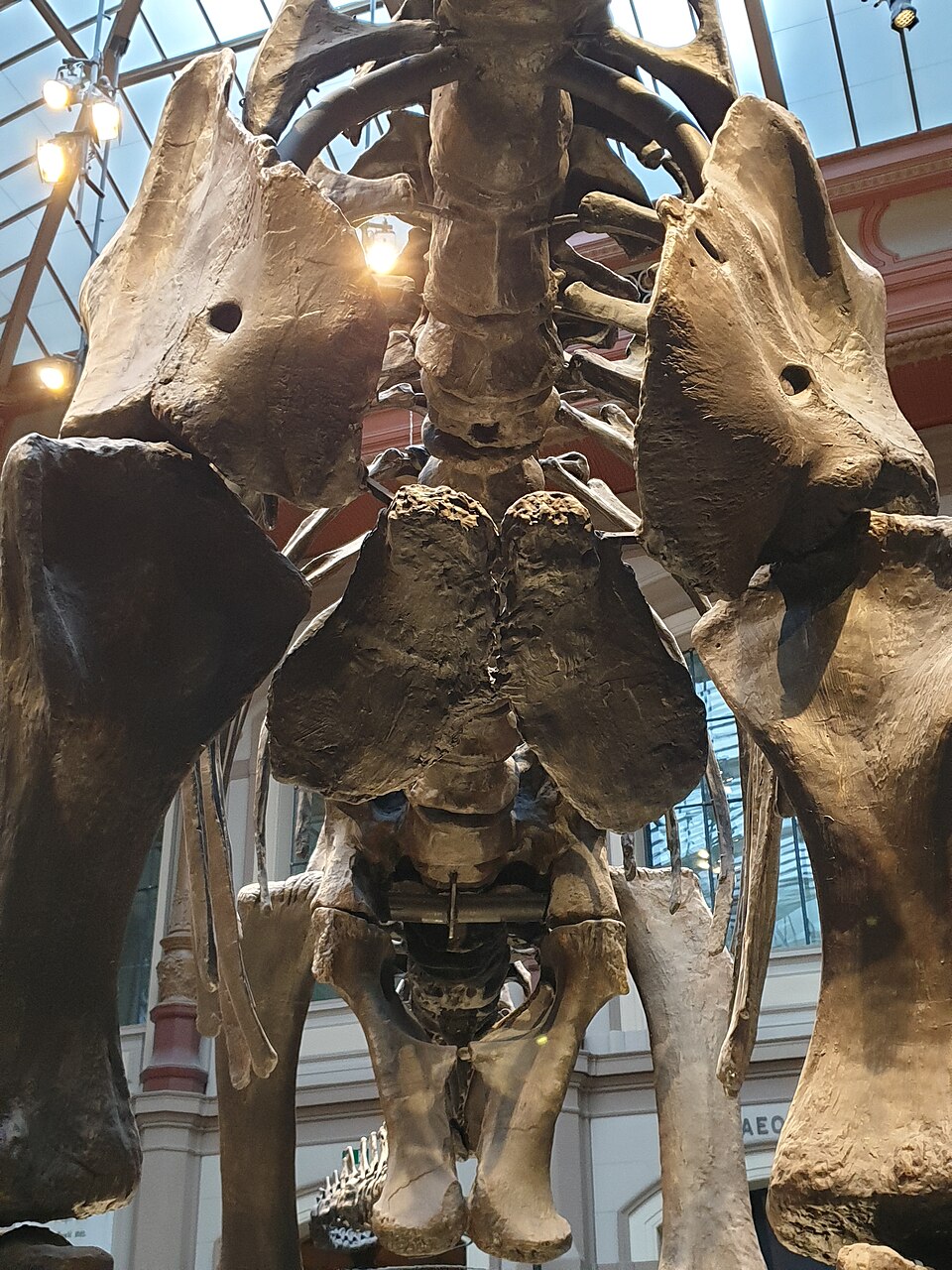

True sauropods — defined by their columnar, graviportal limbs and fully quadrupedal stance — had emerged by the Early Jurassic, with genera such as Vulcanodon from Zimbabwe and Tazoudasaurus from Morocco representing some of the earliest known members.4, 5 By the Middle Jurassic, sauropods had diversified into several major lineages and attained enormous body sizes. The Late Jurassic, particularly the Kimmeridgian and Tithonian stages (approximately 157–145 million years ago), represents the zenith of sauropod diversity in the Northern Hemisphere, with faunas such as the Morrison Formation of western North America preserving iconic genera including Diplodocus, Apatosaurus, Brachiosaurus, and Camarasaurus.4, 10
During the Cretaceous, the earlier diplodocid and brachiosaurid lineages declined in diversity across much of the world, while Titanosauria — a subclade of Macronaria — underwent a spectacular radiation that made them the dominant sauropod group on most continents from the mid-Cretaceous until the end-Cretaceous extinction.5, 13 Titanosaurs proved remarkably adaptable, occupying environments ranging from coastal floodplains to arid inland basins, and their fossils have been found on every continent.7, 14
Classification and major groups
The internal phylogeny of Sauropoda has been refined substantially through cladistic analyses over the past three decades. The clade Neosauropoda, which encompasses the vast majority of sauropod diversity, is divided into two principal branches: Diplodocoidea and Macronaria.5
Diplodocoidea includes three main families. Diplodocidae comprised some of the longest known dinosaurs, with Diplodocus reaching lengths of 25 metres and Supersaurus potentially exceeding 33 metres; they are characterised by elongate, whip-like tails, pencil-shaped teeth restricted to the front of the jaw, and relatively horizontal neck postures suited to low and mid-level browsing.4, 16 Dicraeosauridae were smaller diplodocoids distinguished by tall neural spines and relatively short necks. Rebbachisauridae, predominantly a Cretaceous group, are known mainly from South America and Africa and possessed broad, squared-off snouts adapted for ground-level grazing.5
Macronaria ("large nostrils") includes Camarasauridae, Brachiosauridae, and the enormously diverse Titanosauria. Brachiosaurids such as Brachiosaurus and Giraffatitan were characterised by forelimbs longer than their hindlimbs, giving them an upward-sloping body profile well suited for high browsing at canopy level.4, 10 Titanosauria was the most species-rich and longest-lived sauropod clade, spanning from the Late Jurassic to the terminal Cretaceous and including both the largest known sauropods (such as Patagotitan, Argentinosaurus, and Dreadnoughtus) and a number of insular dwarfs that evolved on Cretaceous island platforms.7, 13 Within Titanosauria, the derived clade Saltasauridae included armoured forms bearing osteoderms — bony scutes embedded in the skin — a feature unique among sauropods.4
Estimated body mass of selected sauropod genera1, 7
Anatomy and the long neck
The sauropod body plan is among the most distinctive of any vertebrate group. The head was disproportionately small relative to body size — in Diplodocus, the skull was barely 60 centimetres long on a body exceeding 25 metres — reducing the mass that the neck had to support and eliminating the need for heavy jaw musculature associated with oral processing.1, 4 Teeth varied considerably between lineages: diplodocids bore narrow, pencil-like teeth clustered at the front of the jaw, suited for raking and stripping vegetation, while camarasaurids and brachiosaurids had broader, spatulate teeth capable of generating greater bite forces for cropping tougher plant material.10
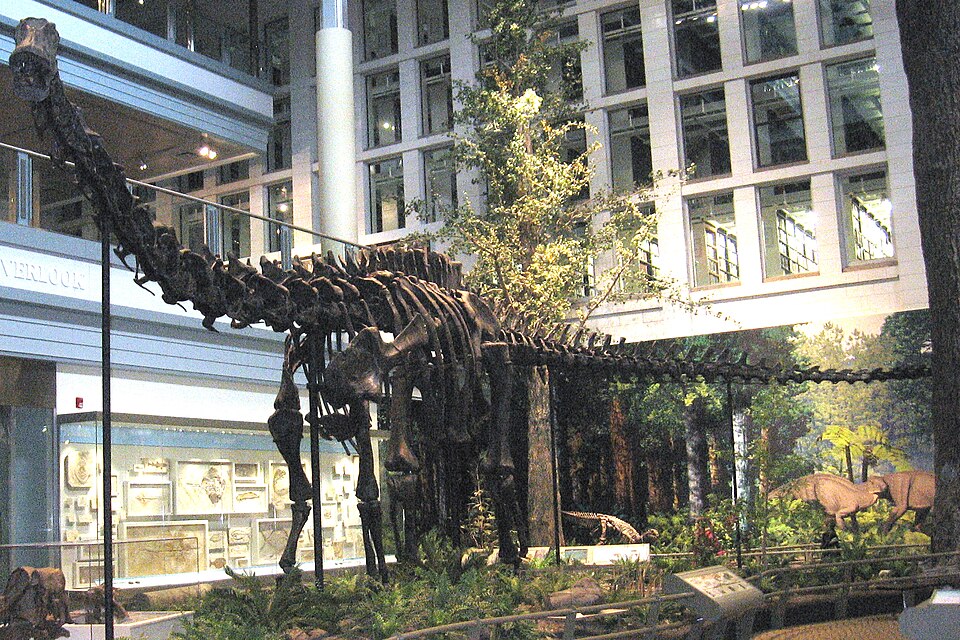
The neck is the most iconic element of sauropod anatomy. Cervical vertebral counts ranged from 12 in some basal forms to as many as 19 in Mamenchisaurus, which possessed a neck exceeding 9 metres in length — the longest of any known animal.16 Individual cervical vertebrae were extensively pneumatised: air-filled chambers, diverticula of the pulmonary air sac system, invaded the vertebral centra and neural arches, dramatically reducing bone density while maintaining structural rigidity.6 This pneumatisation was critical to making such extreme neck lengths biomechanically feasible; a solid-boned neck of equivalent dimensions would have been prohibitively heavy.1, 6
The habitual posture of sauropod necks has been a matter of prolonged debate. Biomechanical analyses of Mamenchisaurus youngi suggest a near-horizontal, gently inclined neck posture, with the animals browsing at low to moderate heights.16 In contrast, the skeletal proportions of brachiosaurids — with their elongated forelimbs elevating the shoulder above the hip — indicate that these animals held their necks at a steep angle and browsed at canopy level, analogous to modern giraffes but at far greater heights.4, 10 Niche partitioning through different feeding heights and bite mechanics likely allowed multiple sauropod species to coexist in the same ecosystems, as demonstrated by biomechanical studies of the Morrison Formation fauna.10
_1_(15396317462).jpg)
The trunk was barrel-shaped and massive, housing an enormous gut necessary for fermenting large quantities of plant material without chewing. The vertebral column continued into a long tail — in diplodocids, the caudal series could contain more than 80 vertebrae and end in a thin, whip-like structure that may have been used for defence or intraspecific signalling.4 The limbs were columnar and held in a near-vertical, graviportal posture, supporting the animal's weight much as the pillars of a bridge support a span. Recent three-dimensional geometric morphometric analysis of titanosauriform hindlimbs has revealed that the wide-gauge stance characteristic of titanosaurs — in which the limbs were held further apart than in more basal sauropods — evolved as an exaptation that later facilitated the attainment of even greater body masses.18
The evolution of gigantism
Sauropods are unparalleled among terrestrial animals in their body size, with multiple lineages independently exceeding 30 tonnes and the largest titanosaurs conservatively estimated at 50–70 tonnes.1, 7 Explaining how and why these animals achieved such dimensions has been a central focus of palaeobiological research. The prevailing framework is the evolutionary cascade model, which proposes that sauropod gigantism resulted not from any single "key innovation" but from the synergistic interaction of multiple primitive and derived traits, each of which removed a constraint on maximum body size.2
The model identifies five interacting cascades. First, reproduction: unlike the largest mammals, which are constrained to small litter sizes and long gestations, sauropods were egg-layers. Oviparity allowed them to produce many small offspring per clutch without the metabolic cost of carrying large foetuses, meaning that fecundity did not decline with increasing adult body size.2, 11 Second, feeding without oral processing: sauropods did not chew their food. The absence of mastication eliminated the need for large, heavy jaw muscles and a massive skull, which in turn permitted the evolution of extremely long necks — the head could be small and light because it was merely a cropping device, not a processing apparatus.1, 2
Third, the long neck itself conferred an enormous energetic advantage. By sweeping across a wide feeding arc from a stationary body position, a sauropod could harvest far more vegetation per unit of locomotor energy than any animal obliged to walk to each mouthful, and it could access food at heights unreachable by competing herbivores.1, 16 Fourth, the avian-style respiratory system — with its unidirectional airflow, voluminous air sacs, and skeletal pneumaticity — reduced the mass of the axial skeleton, lowered the cost of breathing, and likely assisted with thermoregulation by dissipating excess metabolic heat.6, 15 Fifth, an elevated basal metabolic rate, intermediate between the ectothermic reptilian grade and the fully endothermic avian grade, powered rapid growth rates that allowed sauropods to pass through vulnerable juvenile size classes quickly.1, 8
Bone histological studies have confirmed that sauropods grew far faster than any living reptile and at rates comparable to or exceeding those of large mammals. Growth ring analysis indicates that the largest species added more than two tonnes of body mass per year during peak growth phases, reaching near-adult size within two to three decades.8 This rapid passage through small body sizes reduced the window of vulnerability to predation and enabled populations to sustain themselves despite the high mortality rates inherent in an r-selected reproductive strategy.2, 12
Respiratory system and skeletal pneumaticity
One of the most remarkable features of sauropod biology is their avian-style respiratory system, evidence for which is preserved directly in the skeleton. Like modern birds, sauropods possessed an extensive system of air sacs — large, thin-walled, non-respiratory structures that acted as bellows to drive a unidirectional flow of air through rigid, parabronchial lungs.6, 19 Diverticula extending from these air sacs invaded the bones of the vertebral column, creating internal chambers that are visible as fossae, foramina, and complex internal architectures in fossil vertebrae. This condition, termed postcranial skeletal pneumaticity (PSP), is ubiquitous among sauropods and varies systematically across the clade.6
In basal sauropods, pneumatisation was confined to the presacral vertebrae — the cervical and dorsal series — presumably reflecting invasion by cervical air sac diverticula analogous to those found in extant birds.6 In more derived neosauropods, pneumatisation extended into the sacral vertebrae, and in both Diplodocidae and Titanosauria the proximal caudal vertebrae were independently pneumatised as well, indicating parallel evolutionary elaboration of the air sac system.6, 15 Histological examination of pneumatised bone tissue — termed "pneumosteum" — reveals a distinctive fibrous microstructure markedly different from regions of muscle attachment, providing a diagnostic signature for identifying air-sac-invaded bone even in fragmentary specimens.19
The physiological consequences of this respiratory architecture were profound. By reducing the density of the axial skeleton by 30–50 percent compared to solid bone, pneumaticity lightened the neck and trunk considerably, making extremely long necks energetically feasible.1, 6 The unidirectional lung ventilation system was also more efficient than the tidal ventilation of mammals, extracting a higher proportion of oxygen per breath — a critical advantage for animals whose tracheal dead space would have been enormous given neck lengths of 6–15 metres.6 Additionally, the extensive air sac system likely functioned as a heat exchanger, helping to dissipate the substantial metabolic heat generated by animals of such body mass, a function that remains important in large modern birds.1, 15
Reproduction and growth
Sauropods reproduced by laying eggs — a primitive (plesiomorphic) trait shared with all non-avian dinosaurs — and this mode of reproduction played a surprisingly central role in enabling their gigantic body size.2, 12 Fossil egg sites from Argentina, India, France, and Spain have revealed that sauropod eggs were relatively small for such enormous animals, typically 15–25 centimetres in diameter, with clutch sizes estimated at 15–40 eggs depending on the species.11, 12

The mismatch between egg size and adult size is significant: a 50-tonne titanosaur hatched from an egg weighing roughly 5 kilograms, requiring a roughly 10,000-fold increase in mass to reach adult size.12
Allometric modelling based on extant bird and crocodilian incubation data suggests that sauropod eggs required approximately 65–82 days to hatch.11 This prolonged incubation period exposed eggs to significant predation risk, and the relatively small clutch sizes — smaller than would be predicted by simple body-size scaling — may reflect an adaptive strategy of distributing eggs across multiple nesting sites to reduce the probability of total clutch loss.11 The combination of high fecundity (many eggs per breeding season), small egg size, and rapid post-hatching growth constitutes a classic r-selected reproductive strategy, fundamentally different from the K-selected approach of large mammals, which invest heavily in few, large offspring.2, 12
Once hatched, sauropods grew at extraordinary rates. Bone histological analysis — the study of growth marks (lines of arrested growth, or LAGs) in thin-sectioned long bones — demonstrates that sauropods deposited highly vascularised, fibrolamellar bone tissue, the same fast-growing bone type found in birds and mammals.8 Growth curve reconstructions suggest that many large sauropods achieved sexual maturity within 15–20 years and approached maximum body size within 30–40 years, growth rates far exceeding those of any living reptile and comparable to those of the largest land mammals.8 This rapid growth was essential for passing through small, predation-vulnerable size classes as quickly as possible, given that hatchlings weighed four to five orders of magnitude less than their parents.1, 2
Locomotion and biomechanics
Supporting body masses of tens of tonnes on land required a suite of biomechanical adaptations that are visible throughout the sauropod skeleton. The limbs were held in a near-vertical, columnar posture — analogous to the pillars of a building — minimising the muscular effort needed to resist gravitational loads during standing and locomotion.4, 9 The femur was straight and robust, the knee joint was held nearly extended, and the ankle was a simple hinge, reflecting a strictly parasagittal gait with minimal lateral deviation of the limbs during the stride cycle.4
Trackway evidence indicates that most sauropods walked with a narrow-gauge gait, in which the left and right footprints fall close to the midline of the body. Titanosaurs, however, are consistently associated with wide-gauge trackways in which the prints are spaced well apart on either side of the midline.18 Recent three-dimensional morphometric analysis has shown that this wide-gauge posture originated early in the titanosauriform lineage, well before the evolution of the most extreme body sizes, and therefore likely served as an exaptation — a pre-existing trait that was subsequently co-opted to support the unprecedented masses achieved by derived titanosaurs.18
The feet were also highly modified for weight-bearing. The manus (forefoot) bore a single claw or no claws at all in derived forms, with the metacarpals arranged in a vertical, horseshoe-shaped configuration that distributed loads evenly across the foot. A major recent discovery is the confirmation of a thick, fleshy pedal pad — analogous to the heel pad of elephants — underlying the hindfoot of sauropods.9 Biomechanical modelling and fossil footprint analysis demonstrate that this soft-tissue pad appeared by the Late Triassic to Early Jurassic, predating the evolution of truly giant body sizes, and it likely served as a critical shock-absorbing structure that distributed peak stresses during locomotion and prevented skeletal damage.9
Feeding ecology and niche partitioning
The co-occurrence of multiple sauropod species in single fossil assemblages — as many as five or six genera in the Morrison Formation — poses a fundamental ecological question: how did such enormous herbivores partition resources sufficiently to coexist?10 Comparative biomechanical analyses of skull structure, tooth morphology, and neck kinematics have provided compelling evidence for niche partitioning along multiple axes.
Finite-element analysis of the skulls of Camarasaurus and Diplodocus demonstrates that these two sympatric genera occupied distinct feeding niches despite broadly overlapping body sizes. Camarasaurus possessed a robust skull with broad, spatulate teeth capable of generating substantially greater bite forces, permitting the consumption of harder, woodier plant material.10 Diplodocus, by contrast, had a more gracile skull with pencil-shaped teeth restricted to the anterior portion of the jaw, consistent with a branch-stripping feeding behaviour in which lateral sweeps of the neck raked the dentition through softer foliage.10 Brachiosaurids, with their elevated shoulder girdle and steeply inclined necks, accessed the highest vegetation tiers and thus avoided direct competition with the low-browsing diplodocids sharing their habitat.4, 16
Because sauropods did not chew, the enormous volumes of plant material they ingested were processed entirely through gut fermentation in an exceptionally long digestive tract.1 Energy budgets estimated from body mass scaling suggest that a 30-tonne sauropod would have needed to consume roughly 200–400 kilograms of vegetation daily, depending on metabolic rate assumptions.1, 2 The long neck was the key to making such intake feasible: by sweeping a broad feeding arc from a single standing position, a sauropod could harvest a much larger volume of vegetation per unit of locomotor energy than a comparably sized animal with a short neck, analogous to how a crane on a fixed platform can reach across a wider work area than a worker who must walk to each task.1
Decline and extinction
The trajectory of sauropod diversity through the Cretaceous is more complex than a simple narrative of gradual decline. In North America, sauropod fossils become exceedingly scarce in deposits spanning much of the Late Cretaceous — a pattern termed the "sauropod hiatus" — leading early workers to conclude that the group had been largely replaced by ornithischian herbivores such as hadrosaurs and ceratopsians.14, 20 However, re-evaluation of the fossil record has demonstrated that this apparent absence is at least partly a sampling artefact: sauropod-bearing sediments are preferentially preserved in inland depositional environments, and the mid-Cretaceous of North America is dominated by coastal deposits that are inherently unlikely to preserve inland faunas.14 The discovery of derived titanosaurs such as Alamosaurus in the Maastrichtian (latest Cretaceous) of North America confirms that sauropods returned to, or persisted in, the continent until the very end of the Mesozoic.20
Globally, titanosaurs remained diverse and ecologically prominent throughout the Late Cretaceous. In South America, Europe, Africa, and India, titanosaur-dominated faunas showed no consistent signal of declining diversity in the final millions of years before the Cretaceous-Paleogene boundary.13 Analyses of latest Cretaceous assemblages in the Ibero-Armorican island system of southwestern Europe reveal a taxonomic succession of titanosaur species extending right up to the boundary, with no evidence of a pre-impact diversity decline.13
The end came abruptly. The Chicxulub asteroid impact 66 million years ago triggered a global environmental catastrophe — characterised by prolonged darkness from ejecta and soot, collapse of photosynthesis, and severe cooling followed by greenhouse warming — that exterminated all non-avian dinosaurs, including every remaining sauropod lineage.17 As obligate herbivores of enormous body size dependent on vast quantities of plant material, sauropods would have been acutely vulnerable to the collapse of terrestrial primary productivity that followed the impact.13, 17 No sauropod fossils have been found above the Cretaceous-Paleogene boundary anywhere in the world, confirming their complete extinction at this horizon.17
References
An evolutionary cascade model for sauropod dinosaur gigantism — overview, update and tests
Adaptive radiation in sauropod dinosaurs: bone histology indicates rapid evolution of giant body size through acceleration
Softening the steps to gigantism in sauropod dinosaurs through the evolution of a pedal pad
Incubation time as an important influence on egg production and distribution into clutches for sauropod dinosaurs
New insights into non-avian dinosaur reproduction and their evolutionary and ecological implications: linking fossil evidence to allometries of extant close relatives
The diversity of sauropod dinosaurs and their first taxonomic succession from the latest Cretaceous of southwestern Europe: clues to demise and extinction
A re-evaluation of the 'mid-Cretaceous sauropod hiatus' and the impact of uneven sampling of the fossil record on patterns of regional dinosaur extinction
Biomechanical reconstructions and selective advantages of neck poses and feeding strategies of sauropods with the example of Mamenchisaurus youngi
The Chicxulub asteroid impact and mass extinction at the Cretaceous-Paleogene boundary
Evolution of hind limb morphology of Titanosauriformes analyzed via 3D geometric morphometrics reveals wide-gauge posture as an exaptation for gigantism
Bone histological correlates for air sacs and their implications for understanding the origin of the dinosaurian respiratory system