Overview
- Tyrannosaurus rex was the largest known tyrannosaurid and one of the largest terrestrial predators in Earth's history, reaching body lengths of 12 to 13 metres and body masses of 8,000 to 9,500 kilograms during the latest Cretaceous of western North America.
- Biomechanical analyses have revealed that T. rex possessed the most powerful bite of any known terrestrial animal, generating forces of 35,000 to 57,000 newtons at a single posterior tooth, enabling a unique capacity among dinosaurs for extreme osteophagy — the habitual crushing and consumption of bone.
- Bone histology indicates that T. rex achieved its enormous adult size through a dramatic adolescent growth spurt, gaining as much as 2.1 kilograms per day between the ages of approximately 14 and 18, before reaching skeletal maturity and a maximum lifespan of roughly 28 to 33 years.
Tyrannosaurus rex is a species of large theropod dinosaur that lived during the latest Cretaceous period, approximately 68 to 66 million years ago, in what is now western North America. First described by Henry Fairfield Osborn in 1905 on the basis of fossils collected by Barnum Brown in eastern Montana, it has since become the most intensively studied non-avian dinosaur and the single most recognisable prehistoric animal in popular culture.1, 12 With an estimated body length of 12 to 13 metres and a body mass of 8,000 to 9,500 kilograms in the largest known individuals, T. rex was among the largest terrestrial carnivores to have ever existed, exceeded in length only by certain carcharodontosaurids and spinosaurids but unrivalled among theropods in the sheer robustness of its skull and the power of its jaws.2, 13
The scientific importance of Tyrannosaurus rex extends far beyond its popular fame. More than 50 partial to substantially complete specimens have been recovered, making it one of the best-sampled non-avian dinosaurs in the fossil record and providing an unusually detailed window into tyrannosaur anatomy, growth, sensory biology, feeding ecology, and population structure.12, 16 Research on T. rex has yielded insights that reshaped understanding of dinosaur biology more broadly, from the discovery of preserved soft tissues in 68-million-year-old bone to biomechanical analyses demonstrating the most powerful bite force of any known terrestrial animal.4, 9
Discovery and naming
The first fossils of Tyrannosaurus rex were collected in 1902 by Barnum Brown, a palaeontologist working for the American Museum of Natural History, from exposures of the Hell Creek Formation near the town of Jordan in Garfield County, eastern Montana. Brown recovered a partial postcranial skeleton (AMNH 973, later transferred to the Carnegie Museum of Natural History as CM 9380) that included vertebrae, a partial pelvis, and hindlimb elements of an enormous predatory dinosaur unlike anything previously known. In a letter to the museum that August, Brown described his find as a "large Carnivorous Dinosaur" and called it "the find of the season."1
Henry Fairfield Osborn, president of the American Museum of Natural History, formally described and named the animal in 1905, erecting the genus Tyrannosaurus ("tyrant lizard") and the species T. rex ("tyrant lizard king"). In the same paper, Osborn also named a second specimen as Dynamosaurus imperiosus, but he subsequently recognised in 1906 that this material belonged to the same species as the holotype; because Tyrannosaurus had page priority in the original publication, it was retained as the valid name.1 Brown continued his fieldwork in Montana and in 1908 discovered a substantially more complete T. rex skeleton (AMNH 5027) at Big Dry Creek, Montana, which for decades served as the primary basis for skeletal reconstructions and museum mounts of the species.
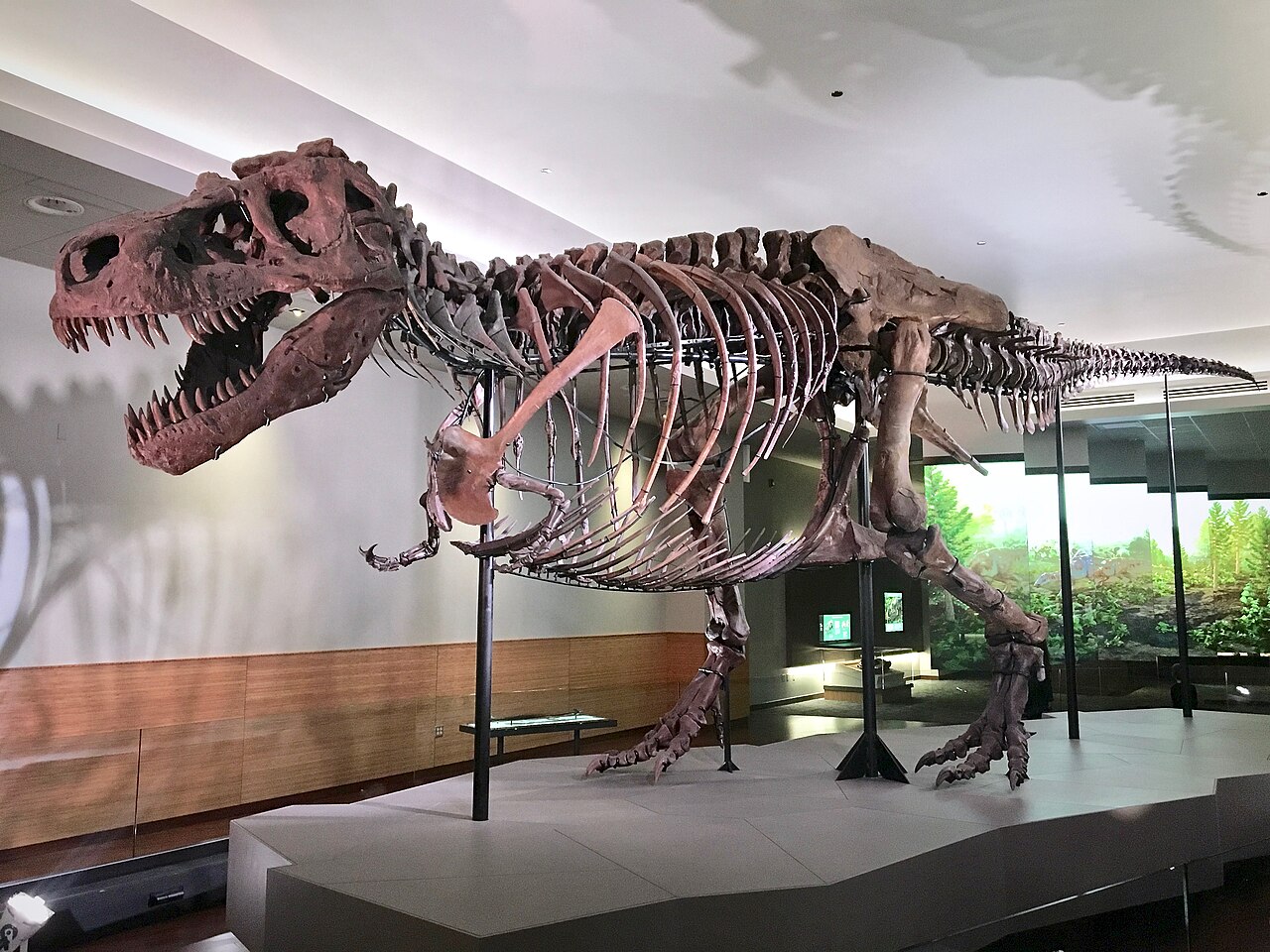

Since Brown's initial discoveries, dozens of additional T. rex specimens have been found across the western interior of North America, from Montana, Wyoming, and South Dakota to Alberta, Saskatchewan, Colorado, New Mexico, and Texas. The most celebrated of these is FMNH PR 2081, nicknamed "Sue," discovered by fossil collector Sue Hendrickson in the Hell Creek Formation of South Dakota in 1990. At over 90 percent complete by volume, Sue is the most extensively preserved T. rex skeleton ever found and was purchased by the Field Museum of Natural History in Chicago at auction in 1997 for 8.4 million US dollars, then the highest price ever paid for a fossil.2 Another exceptionally important specimen is RSM P2523.8, known as "Scotty," recovered from the Frenchman Formation of Saskatchewan, Canada, which bone histology has shown to be the oldest and largest known individual of the species.13
Phylogenetic relationships
Tyrannosaurus rex belongs to the family Tyrannosauridae, a clade of large-bodied coelurosaurian theropod dinosaurs that dominated the apex predator niche in the Northern Hemisphere during the Late Cretaceous. Within Tyrannosauridae, the genus Tyrannosaurus is classified in the subfamily Tyrannosaurinae, which also includes Daspletosaurus, Tarbosaurus, and Zhuchengtyrannus, as distinct from the Albertosaurinae, which includes Albertosaurus and Gorgosaurus. Phylogenetic analyses consistently recover Tarbosaurus bataar of Late Cretaceous Mongolia as the closest known relative of Tyrannosaurus rex, and some studies have considered the two genera synonymous, though most systematists retain them as separate taxa based on cranial differences including the degree of orbital exposure, lacrimal morphology, and the extent of nasopharyngeal pneumaticity.2, 18
The broader evolutionary history of Tyrannosauroidea — the superfamily encompassing Tyrannosauridae and its more basal relatives — reveals that tyrannosauroids spent most of their evolutionary history as small to mid-sized predators. Basal tyrannosauroids such as Dilong, Guanlong, and Proceratosaurus were modest animals, typically 1 to 3 metres in length and weighing less than 100 kilograms. It was not until the Campanian stage of the Late Cretaceous, roughly 80 million years ago, that tyrannosaurids evolved the extreme body sizes that characterise the family, apparently filling ecological niches vacated by the extinction of other large theropod groups (allosaurs and carcharodontosaurs) in North America and Asia.12, 15
A comprehensive phylogenetic analysis by Loewen and colleagues in 2013, incorporating the newly described Lythronax argestes from the Campanian of southern Utah — the oldest known tyrannosaurine — suggested that tyrannosaurid diversification in North America tracked fluctuations in the Western Interior Seaway, with the transgression and regression of this epicontinental sea driving periods of isolation and subsequent dispersal among tyrannosaur populations along the Laramidian landmass.14 The most comprehensive species-level phylogenetic analysis of Tyrannosauroidea, by Brusatte and Carr in 2016 using 366 characters scored across 28 tyrannosauroid taxa, corroborated the monophyly of Tyrannosauridae and the Albertosaurinae-Tyrannosaurinae split, and demonstrated a pattern of progressive acquisition of the derived cranial features — deep skulls, wide postorbital bars, incrassate teeth — that reached their most extreme expression in Tyrannosaurus rex itself.15
Anatomy and body plan
The skeleton of Tyrannosaurus rex is characterised by an extraordinary combination of a massive skull, powerful hindlimbs, and dramatically reduced forelimbs that together produce a body plan unique among large theropods. The most complete osteological description of the species is Brochu's 2003 monograph on the "Sue" specimen, which documented every element of the skeleton using both direct observation and high-resolution computed tomography (CT) of the skull, providing the definitive anatomical reference for the species.2
.jpg)
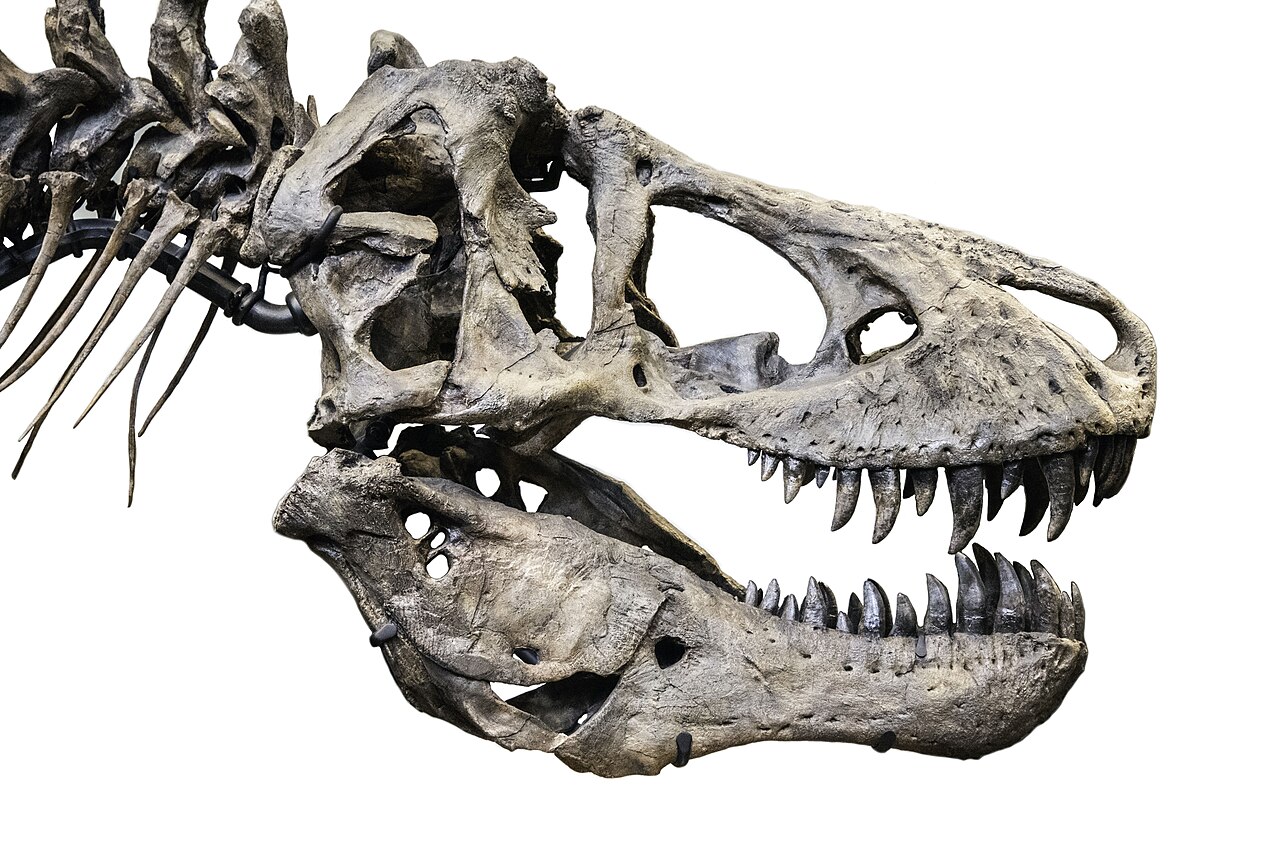
The skull of T. rex is deep, robust, and broad posteriorly, tapering to a narrower but still heavily built snout. In the largest individuals, the skull exceeds 1.5 metres in length. Unlike the laterally compressed, blade-like skulls of most other large theropods, the tyrannosaur skull is reinforced by extensive interdigitation of cranial sutures, fusion of the nasals into a single arched strut, broad postorbital bars, and a locking articulation between the palate and braincase that limited cranial kinesis — features collectively interpreted as adaptations for withstanding the enormous stresses generated during forceful biting.2, 8 The teeth are heterodont by position: the premaxillary teeth are D-shaped in cross-section and relatively small, while the maxillary and dentary teeth are massive, robust, and incrassate (subcircular in cross-section rather than blade-like), with pronounced serrations on both anterior and posterior carinae. The largest teeth can exceed 30 centimetres in total length including the root, with crowns measuring up to 15 centimetres.2
The postcranial skeleton reflects the animal's enormous mass. The vertebral column includes 10 cervical, 12 dorsal, 5 sacral, and approximately 40 caudal vertebrae. The hindlimbs are powerfully built, with a femur length of approximately 1.3 metres in the largest specimens. The foot is functionally tridactyl, with three weight-bearing digits and a small vestigial first metatarsal. The forelimbs, by contrast, are strikingly small relative to body size, measuring only approximately 1 metre in length and bearing just two functional digits. The functional significance of these diminutive forelimbs has been debated for over a century; proposals have ranged from sexual display, to close-quarters slashing weapons, to functionally vestigial structures, but no consensus has emerged.2, 17
Body size and mass estimates
Tyrannosaurus rex is among the largest known terrestrial predators, though body mass estimates have varied considerably depending on the methodology employed. Early estimates often placed adult mass at 5,000 to 7,000 kilograms, but more recent volumetric and allometric approaches have converged on higher figures. Hutchinson and colleagues' 2011 computational analysis of limb and body dimensions, using laser-scanned skeletal mounts and digital volumetric modelling, estimated that a typical large adult T. rex had a body mass of approximately 6,000 to 8,000 kilograms, with plausible upper bounds exceeding 9,000 kilograms depending on assumed soft-tissue densities.17
The largest known individual is "Scotty" (RSM P2523.8), described by Persons, Currie, and Erickson in 2020 from the Frenchman Formation of Saskatchewan. Based on femoral circumference measurements — the single most reliable proxy for body mass in bipedal dinosaurs — the authors estimated Scotty's body mass at approximately 8,870 kilograms, making it the most massive T. rex and the largest known theropod for which a reasonably confident mass estimate can be calculated. Bone histology revealed that Scotty was also the oldest known individual, having survived well beyond the age at which most T. rex specimens died, and its bones bore numerous pathologies including broken ribs, a jaw infection, and a tail vertebra with an impacted bite mark, suggesting a long and violent life.13
Estimated body mass of notable Tyrannosaurus rex specimens13, 17
Bite force and feeding ecology
The feeding apparatus of Tyrannosaurus rex has been the subject of extensive biomechanical research, and the results have established that T. rex possessed the most powerful bite of any known terrestrial animal. The first quantitative estimates of tyrannosaur bite force came from Erickson and colleagues in 1996, who examined puncture marks in a Triceratops pelvis (ilium) made by T. rex teeth and estimated that the forces required to produce such marks ranged from approximately 6,410 to 13,400 newtons.19 These early figures were subsequently shown to be substantial underestimates.
In 2012, Bates and Falkingham used multi-body dynamics modelling — constructing a digital musculoskeletal model of the T. rex skull based on the BHI 3033 ("Stan") specimen — to estimate maximum bite force at a single posterior tooth position. Their model predicted sustained bite forces of 35,000 to 57,000 newtons at a single posterior tooth, by far the highest values calculated for any terrestrial animal and exceeding the bite force of the largest living crocodilians by an order of magnitude.4 A slight correction in 2018 reduced these estimates by approximately 6 percent due to an error in muscle cross-sectional area calculations, but the corrected values remained dramatically higher than those of any other measured terrestrial vertebrate.4
Gignac and Erickson's 2017 analysis went further by examining not just total bite force but tooth pressure — the force concentrated at the tip and margins of individual teeth during contact with bone. Their modelling demonstrated that the combination of enormous bite force and the relatively blunt, conical cross-section of tyrannosaur teeth produced tooth pressures sufficient to penetrate, fragment, and pulverise bone, a behaviour they termed "extreme osteophagy." Coprolite evidence corroborated these findings: large coprolites attributed to T. rex contain abundant fragments of crushed bone, confirming that the animal routinely ingested and digested skeletal material from its prey — a capacity otherwise known only among certain mammals (hyenas) and reptiles (crocodilians).8
The debate over whether T. rex was primarily a predator or a scavenger has a long history in palaeontology, but most contemporary assessments regard it as an opportunistic apex predator that both hunted live prey and consumed carrion when available, analogous to the feeding ecology of large extant predators such as lions. The Hell Creek dinosaur census conducted by Horner and colleagues found that Tyrannosaurus was the second most abundant large dinosaur in the formation, comprising 24 percent of identifiable large-dinosaur specimens — an unusually high proportion for an apex predator and consistent with a partially scavenging feeding strategy.16
Sensory biology and intelligence
High-resolution CT scanning of Tyrannosaurus rex skulls has revealed details of the brain, inner ear, and cranial nerve canals that provide direct evidence for the animal's sensory capabilities. Witmer and Ridgely's 2009 analysis of digital endocasts from three T. rex specimens and a juvenile Gorgosaurus demonstrated that tyrannosaurs possessed relatively large olfactory bulbs, even after correcting earlier overestimates of bulb size. The corrected olfactory bulb dimensions are still proportionally larger than those of most other theropods, indicating that olfaction was of particular importance in tyrannosaur behaviour — consistent with a predator that used scent to locate carrion, track prey, or navigate large home ranges.6
The inner ear morphology of T. rex, also reconstructed from CT data, reveals elongate cochleae and extensive tympanic pneumaticity (air-filled sinuses surrounding the middle ear cavity), features that together indicate sensitivity to low-frequency sounds. The semicircular canals are elongate and oriented in a configuration associated with enhanced gaze stabilisation during rapid head movements, suggesting that T. rex could maintain steady visual focus while turning its head quickly — an adaptation characteristic of active predators.6
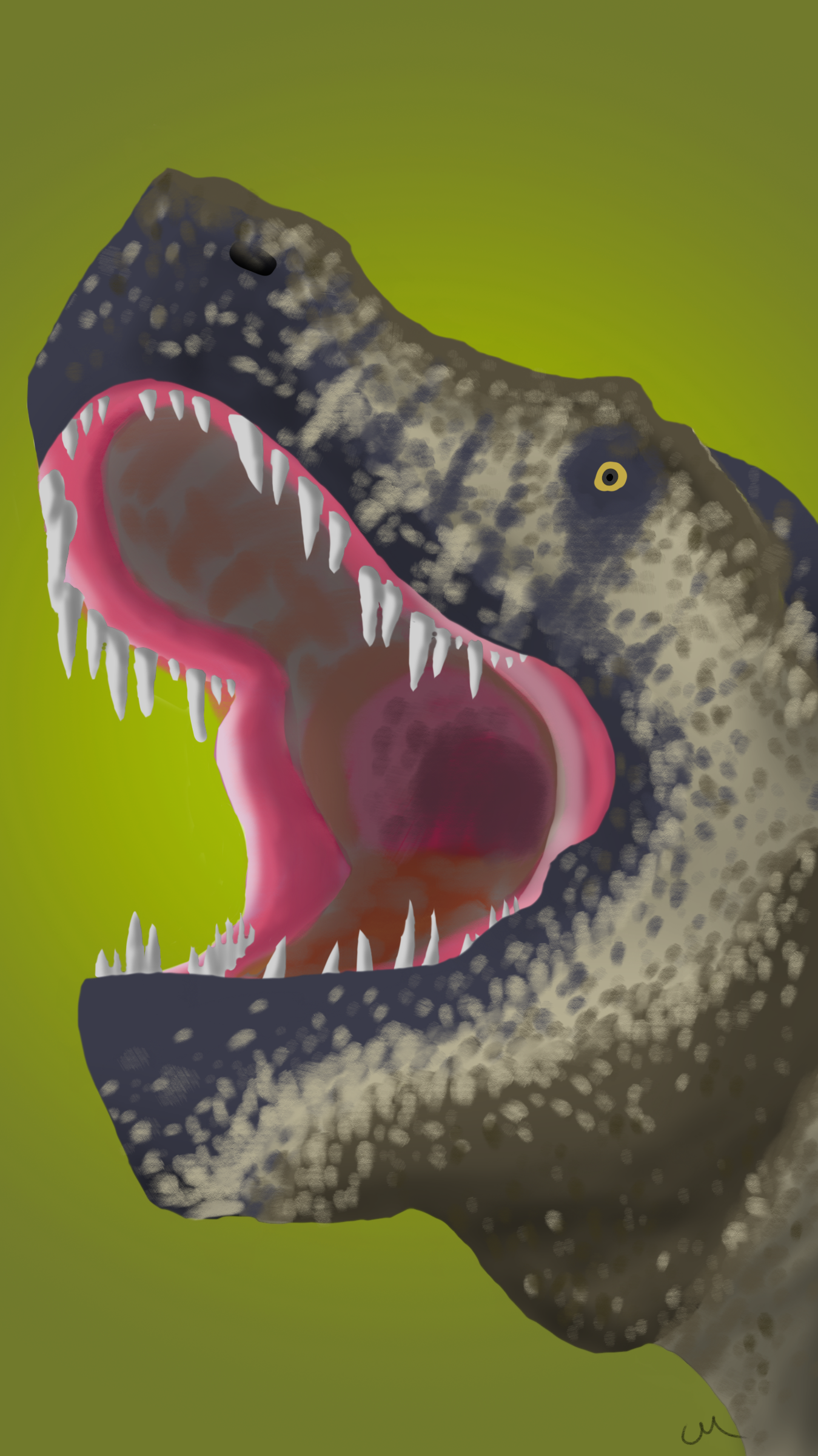

The visual system of T. rex has been investigated through analysis of orbital orientation and binocular overlap. Stevens's 2006 study of binocular vision across Theropoda demonstrated that T. rex possessed forward-facing orbits that produced a binocular field approximately 55 degrees wide, broader than that of modern hawks and substantially exceeding the binocular overlap of most other large theropods, including Allosaurus (approximately 20 degrees) and Carcharodontosaurus. This degree of binocular overlap provides the stereoscopic depth perception essential for accurately judging distances to moving targets, and its magnitude in T. rex constitutes strong evidence for an actively predatory mode of life.7
The overall encephalisation quotient (EQ) of T. rex, calculated from the ratio of brain volume to body mass, falls within the range observed in living non-avian reptiles but toward the upper end of that range — broadly consistent with the cognitive demands of an active, visually oriented predator. The combination of large olfactory bulbs, elongate cochleae, enhanced binocular overlap, and gaze-stabilising semicircular canals collectively indicates a sensory apparatus well adapted for detecting, tracking, and ambushing prey in the subtropical environments of the Late Cretaceous western interior.6, 7
Locomotion and speed
The locomotor capabilities of Tyrannosaurus rex have been the subject of vigorous scientific debate, centring on the question of whether this multi-tonne predator was capable of running — that is, achieving a suspended phase in which all feet are simultaneously off the ground — or was restricted to a fast walk. The influential 2002 analysis by Hutchinson and Garcia addressed this question by estimating the minimum extensor muscle mass required to support T. rex during fast locomotion. Their biomechanical model demonstrated that running at high speeds would have required an impractically large proportion of the animal's total body mass to be devoted to hindlimb extensor muscles — far exceeding the proportion observed in any living animal. Even under the most generous assumptions about muscle efficiency and limb geometry, the required muscle mass remained biomechanically implausible for a 6,000-kilogram biped. The authors concluded that fast running was almost certainly beyond the capacity of adult T. rex.5
Subsequent analyses have refined but broadly confirmed this conclusion. Hutchinson and colleagues' 2011 computational study, which used three-dimensional musculoskeletal models built from CT-scanned skeletal data, estimated that maximum speed for an adult T. rex was likely in the range of 5 to 11 metres per second (18 to 40 kilometres per hour), with a preferred estimate near the lower end of this range. The study also demonstrated that locomotor capability changed dramatically during ontogeny: juvenile T. rex, being lighter and possessing relatively longer distal limb elements (longer metatarsals relative to femur length, a feature associated with cursoriality), were likely substantially faster and more agile than the multi-tonne adults.17
These findings carry implications for predatory strategy. An adult T. rex walking at 5 to 8 metres per second would still have been faster than the probable top speeds of its largest prey animals, the ceratopsian Triceratops and the hadrosaur Edmontosaurus, both of which were quadrupedal herbivores with estimated top speeds of 5 to 9 metres per second. Speed alone, therefore, does not rule out active predation; the decisive advantages of T. rex in a predator-prey encounter would have been its massive skull, powerful bite, and stereoscopic vision rather than sustained pursuit speed.5, 12
Growth and life history
The growth dynamics of Tyrannosaurus rex have been reconstructed in detail through bone histology — the microscopic analysis of growth lines (lines of arrested growth, or LAGs) preserved in cross-sections of long bones, analogous to the annual rings of a tree. The foundational study by Erickson and colleagues in 2004 sampled long bones from seven T. rex individuals of different body sizes and used femoral circumference as a proxy for body mass, constructing a growth curve that revealed one of the most dramatic examples of accelerated growth known in any terrestrial animal.3
The growth curve demonstrates that T. rex experienced a prolonged juvenile phase of relatively slow growth, followed by a steep adolescent growth spurt between approximately 14 and 18 years of age, during which the animal gained as much as 2.1 kilograms per day and increased its body mass from roughly 1,000 kilograms to approximately 5,000 kilograms. Growth then decelerated sharply, with skeletal maturity reached at approximately 18 to 20 years. The maximum lifespan was estimated at approximately 28 years, based on the oldest individual (Sue) known at the time of the study.3
Subsequent histological work by Woodward and colleagues in 2020 expanded the dataset to include additional specimens and refined the growth model, broadly confirming the pattern of rapid adolescent growth followed by an extended plateau, though with some variation in the precise timing and rate of the growth spurt among individuals. Their analysis of two juvenile specimens previously attributed to the putative pygmy tyrannosaur "Nanotyrannus lancensis" indicated that these animals were histologically immature individuals aged 13 to 15 years, which the authors interpreted as placing them on the T. rex growth curve.10 However, a 2025 study by Zanno and Napoli, based on detailed anatomical analysis of a nearly mature tyrannosaur specimen from the Hell Creek Formation, presented evidence that Nanotyrannus is a valid genus distinct from Tyrannosaurus, possessing a higher tooth count, proportionally larger forelimbs, a shorter tail, and a unique pattern of cranial sinuses incompatible with juvenile T. rex morphology. This study placed Nanotyrannus outside Tyrannosauridae entirely, and the taxonomic status of small Hell Creek tyrannosaurs remains an active area of investigation.21 Additional analysis published in the same year using multiple lines of evidence including CT scanning and long-bone microstructure produced the highest-resolution growth series yet achieved for any non-avian dinosaur, demonstrating that growth was responsive to resource availability: well-nourished individuals grew faster and larger than those experiencing nutritional stress, a pattern observed in modern archosaurs including crocodilians and birds.20
The combination of rapid growth, early mortality, and late onset of reproductive maturity creates a life-history profile strikingly similar to that of large modern mammals and unlike the pattern typically assumed for reptiles. Most T. rex individuals appear to have died before reaching full adult size, and specimens representing the oldest age classes are rare in the fossil record, suggesting that survivorship curves for T. rex declined sharply after the onset of sexual maturity — a pattern consistent with high adult mortality from intraspecific combat, disease, or other causes.3, 16
Population structure and palaeoecology
Tyrannosaurus rex inhabited the coastal and alluvial plain environments of the western interior of North America during the Maastrichtian stage of the Late Cretaceous, approximately 68 to 66 million years ago. Its fossils are most abundant in the Hell Creek Formation of Montana and the Dakotas, the Lance Formation of Wyoming, the Frenchman Formation of Saskatchewan, and equivalent units in Alberta, Colorado, New Mexico, and Texas. These formations record subtropical to warm-temperate floodplain, delta, and coastal environments, with a diverse fauna including the ceratopsian Triceratops, the hadrosaur Edmontosaurus, the pachycephalosaur Pachycephalosaurus, the ankylosaurid Ankylosaurus, and the dromaeosaurid Dakotaraptor, among many others.16
Marshall and colleagues' 2021 study in Science attempted to estimate the total population abundance of T. rex using the well-established ecological relationship between population density and body mass in living carnivores. Using a body mass of approximately 5,200 kilograms, a generation time of approximately 19 years, a species duration of approximately 2.4 million years (corresponding to roughly 127,000 generations), and a geographic range spanning the western Maastrichtian formations, the authors estimated that approximately 20,000 T. rex individuals lived at any given time and that the total number of T. rex that ever lived was approximately 2.5 billion, with a fossil preservation rate of approximately one individual per 80 million. The substantial uncertainties in these calculations — the 95 percent confidence interval for standing population ranged from 1,300 to 328,000 individuals — reflect the difficulty of extrapolating ecological parameters from living animals to extinct species, but the central estimates provide the first quantitative framework for understanding tyrannosaur population biology.11
The Hell Creek dinosaur census by Horner and colleagues revealed an unusual taxonomic structure: Tyrannosaurus constitutes 24 percent of identifiable large-dinosaur specimens in the formation, a proportion that is remarkably high for an apex predator. In modern terrestrial ecosystems, top predators typically represent less than 5 percent of the total large-vertebrate biomass. The authors suggested that the elevated abundance of T. rex relative to herbivores reflects an ecology in which adults functioned as opportunistic predators that supplemented their diet with carrion, while juveniles and subadults — which were rare in the census, likely because they occupied different habitats or were preserved differently — occupied distinct ecological niches as faster, more agile mesopredators.10, 16
Soft tissue preservation
One of the most remarkable discoveries in the history of Tyrannosaurus rex research — and in palaeontology as a whole — was the recovery of apparently original soft tissues from a 68-million-year-old T. rex femur. In 2005, Schweitzer and colleagues reported that demineralisation of a limb bone from specimen MOR 1125, collected from the Hell Creek Formation of Montana, revealed transparent, flexible, hollow structures resembling blood vessels, together with small round microstructures with cell-like morphology. The demineralised bone matrix itself retained fibrous texture and elasticity, properties not expected in fully fossilised material.9
The initial report generated intense scrutiny and scepticism, with critics suggesting that the structures might represent microbial biofilms rather than endogenous dinosaurian tissue. Subsequent analyses by Schweitzer's group using immunohistochemistry, mass spectrometry, and synchrotron X-ray techniques provided additional lines of evidence supporting the endogenous origin of the preserved material, identifying protein fragments consistent with collagen and detecting haem-derived iron compounds within the vessel-like structures. A 2019 study proposed that the cross-linking of proteins by iron in the Fenton reaction may have played a role in stabilising the tissue against degradation over geological time.9
The discovery has had profound implications for understanding the limits of biomolecule preservation in the fossil record and has stimulated a broader search for soft tissue and molecular remnants across a wide range of fossil taxa. It has also attracted attention from those seeking to extract DNA from dinosaur fossils, though no reproducible recovery of dinosaur DNA has been achieved, and most molecular biologists consider the probability of intact DNA surviving for 66 million years to be vanishingly small given the known kinetics of DNA degradation.9
Extinction and geological context
Tyrannosaurus rex was among the last non-avian dinosaurs to have lived, and its disappearance coincides precisely with the end-Cretaceous mass extinction event 66 million years ago, triggered by the impact of a large asteroid at what is now the Chicxulub crater on the Yucatan Peninsula of Mexico. In the Hell Creek Formation, T. rex fossils are found up to within a few metres of the Cretaceous-Paleogene boundary clay, and the species shows no evidence of declining diversity or abundance in the time immediately preceding the extinction, suggesting that the end came suddenly rather than as the culmination of a gradual decline.16
The ecological consequences of the loss of T. rex and its fellow non-avian dinosaurs were profound. In the immediate aftermath of the extinction, the apex predator niche that T. rex had occupied remained vacant for millions of years before being filled by a succession of mammalian and avian predators, none of which approached the body size of Tyrannosaurus. The adaptive radiation of mammals that followed the extinction ultimately produced the large terrestrial predators of the Cenozoic, but the largest — bears, great cats, and the hyaenodonts and creodonts of the Paleogene — never exceeded approximately 1,000 kilograms, an order of magnitude smaller than a large T. rex.12
The totality of available evidence portrays Tyrannosaurus rex as an animal of extraordinary biological achievement: the culmination of over 100 million years of theropod evolution, possessing a uniquely powerful feeding apparatus, sophisticated sensory capabilities, and a life-history strategy that enabled rapid growth to enormous body size within a relatively short lifespan. Its position as the most thoroughly studied non-avian dinosaur continues to make it the primary model organism for understanding the biology, ecology, and evolution of large predatory dinosaurs.12
References
Osteology of Tyrannosaurus rex: insights from a nearly complete skeleton and high-resolution computed tomographic analysis of the skull
New insights into the brain, braincase, and ear region of tyrannosaurs (Dinosauria, Theropoda), with implications for sensory organization and behavior
Growing up Tyrannosaurus rex: osteohistology refutes the pygmy “Nanotyrannus” and supports ontogenetic niche partitioning in juvenile Tyrannosaurus
Dinosaur census reveals abundant Tyrannosaurus and rare ontogenetic stages in the Upper Cretaceous Hell Creek Formation (Maastrichtian), Montana, USA
A computational analysis of limb and body dimensions in Tyrannosaurus rex with implications for locomotion, ontogeny, and growth
A high-resolution growth series of Tyrannosaurus rex obtained from multiple lines of evidence