Overview
- Mammals were ecologically diverse throughout the Mesozoic, occupying burrowing, swimming, gliding, and insectivorous niches, but remained constrained in body size and trophic breadth by the dominance of non-avian dinosaurs for over 100 million years.
- The end-Cretaceous mass extinction 66 million years ago removed the non-avian dinosaurs and triggered an explosive ecological and morphological diversification of mammals, with most modern ordinal-level lineages appearing within the first 10 to 15 million years of the Cenozoic.
- Molecular clock analyses indicate that many placental orders diverged in the Late Cretaceous, but the fossil record shows that the ecological radiation into large-bodied, ecologically specialized forms occurred overwhelmingly after the K-Pg boundary, a pattern best explained by models of ecological release following mass extinction.
The radiation of mammals following the end-Cretaceous mass extinction 66 million years ago is one of the most dramatic examples of ecological opportunity driving evolutionary diversification. For more than 150 million years, mammals coexisted with dinosaurs, yet remained overwhelmingly small-bodied, rarely exceeding the size of a domestic cat.1, 20 The Chicxulub asteroid impact and its cascading environmental consequences eliminated approximately 75 percent of all species, including all non-avian dinosaurs, and vacated a vast landscape of ecological niches.9 Within the first 10 to 15 million years of the Cenozoic Era, mammals diversified explosively in body size, diet, locomotion, and habitat occupation, ultimately producing the whales, bats, elephants, primates, and ungulates that define the modern fauna.2, 3
The mammalian radiation is central to understanding how mass extinctions reshape the biosphere: not merely by destroying, but by clearing ecological space that permits surviving lineages to explore evolutionary possibilities previously foreclosed to them. The interplay between molecular and fossil evidence for the timing of this radiation, the biogeographic patterns that shaped its course, and the adaptive innovations that enabled mammals to dominate terrestrial ecosystems collectively illuminate the contingent, opportunistic nature of macroevolution.4, 11
Mesozoic mammal diversity
The traditional portrayal of Mesozoic mammals as uniformly small, shrew-like insectivores living in the shadow of dinosaurs has been comprehensively overturned by discoveries from the past three decades, particularly from exceptionally preserved Jurassic and Cretaceous fossil beds in China and Mongolia. The Mesozoic mammalian fauna was far more ecologically diverse than previously appreciated, including forms adapted to swimming, gliding, burrowing, and climbing.1
Castorocauda lutrasimilis, a docodont from the Middle Jurassic of China (approximately 164 million years ago), possessed a flattened, beaver-like tail, webbed feet, and dense fur adapted for a semi-aquatic lifestyle analogous to that of modern otters or platypuses. Its discovery demonstrated that mammals had invaded aquatic niches more than 100 million years earlier than previously recognized.7 Volaticotherium antiquum, from the same Chinese deposits, had a fur-covered gliding membrane stretched between its limbs, indicating that mammalian flight predated the origin of bats by roughly 100 million years.6 Burrowing forms such as Fruitafossor windscheffeli from the Late Jurassic of Colorado convergently evolved tubular teeth and robust forelimbs resembling those of modern armadillos, suggesting specialization for digging and feeding on colonial insects.1
Despite this ecological breadth, Mesozoic mammals were constrained in body size. The largest known Mesozoic mammal, Repenomamus giganticus from the Early Cretaceous of China, weighed an estimated 12 to 14 kilograms, and one specimen was preserved with the remains of a juvenile dinosaur in its stomach, confirming that some Mesozoic mammals were active predators of small vertebrates.20 Nevertheless, the overwhelming majority of Mesozoic mammals weighed less than one kilogram. This size ceiling appears to have been imposed by competition with and predation by dinosaurs, which occupied the medium- to large-bodied herbivore and carnivore niches throughout the Mesozoic.1, 20
The K-Pg boundary and ecological release
The end-Cretaceous mass extinction was triggered by the impact of a roughly 10-kilometre asteroid at Chicxulub on the Yucatan Peninsula, approximately 66.04 million years ago. The impact generated massive tsunamis, triggered global wildfires, and ejected vast quantities of dust and sulfate aerosols into the stratosphere, producing a prolonged period of darkness and cooling known as an impact winter that devastated photosynthesis-dependent food webs on land and in the oceans.9 Approximately 75 percent of all species went extinct, including all non-avian dinosaurs, most large-bodied terrestrial vertebrates, the marine reptiles (mosasaurs, plesiosaurs), the pterosaurs, and the ammonites.
Mammals survived the extinction differentially. Multituberculates, a diverse clade of rodent-like herbivores, persisted across the boundary in North America and underwent a burst of diversification in the earliest Paleocene.20 Among therian mammals, both metatherians (the clade containing marsupials) and eutherians (the clade containing placentals) survived, though metatherians suffered disproportionately heavy losses in North America, where many larger-bodied marsupial lineages were eliminated.8 The survivors were predominantly small-bodied generalists and omnivores, consistent with the hypothesis that dietary flexibility and small body size conferred survival advantages during the collapse of primary productivity in the aftermath of the impact.2
The concept of ecological release is central to understanding what followed. With the removal of dinosaurs and other large-bodied competitors and predators, the surviving mammalian lineages had access to a vast range of previously occupied niches. The fossil record of the earliest Paleocene shows a rapid increase in mammalian body size, dietary specialization, and morphological disparity within the first few hundred thousand years after the boundary, a pattern consistent with rapid adaptive radiation into vacated ecological space.2, 4
Diversification in the Paleocene and Eocene
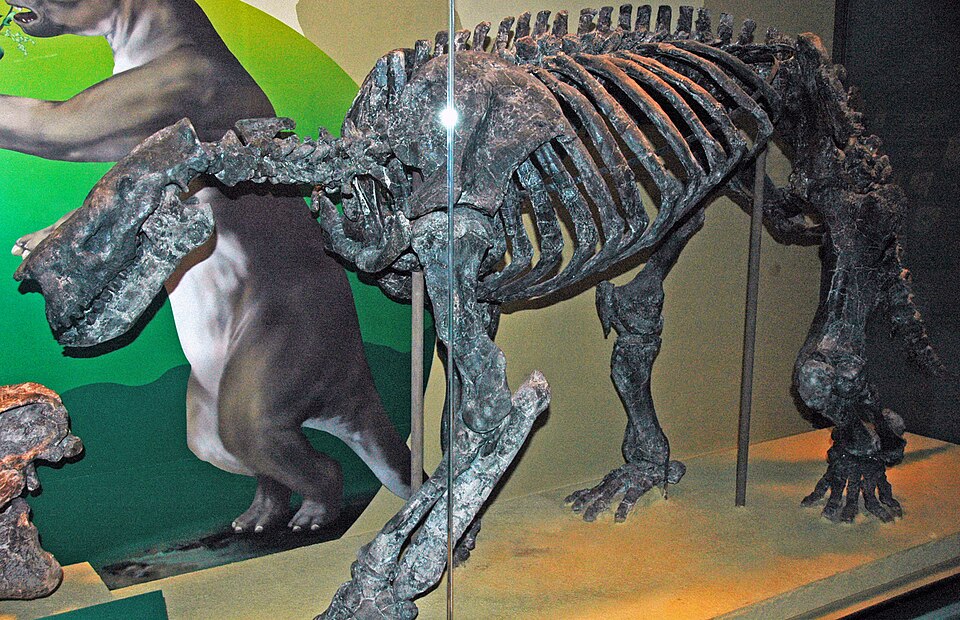

The Paleocene epoch (66 to 56 million years ago) witnessed the initial radiation of mammals into ecological roles previously dominated by dinosaurs. Within the first 300,000 years after the K-Pg boundary, mammals had already evolved body masses exceeding 10 kilograms, a tenfold increase over the Mesozoic maximum. By the middle Paleocene, mammals weighing more than 100 kilograms had appeared, and by the late Paleocene, the largest terrestrial mammals approached 500 kilograms.2 This rapid increase in body size is one of the most striking features of the post-extinction recovery.
The Paleocene fauna included several groups that would later go extinct without modern descendants. The "condylarths," an informal grouping of archaic ungulate-like mammals, were the dominant herbivores of the Paleocene, and the creodonts and mesonychids occupied the large-carnivore niche before the rise of modern carnivorans. Multituberculates remained abundant and diverse throughout the Paleocene before declining during the Eocene.20
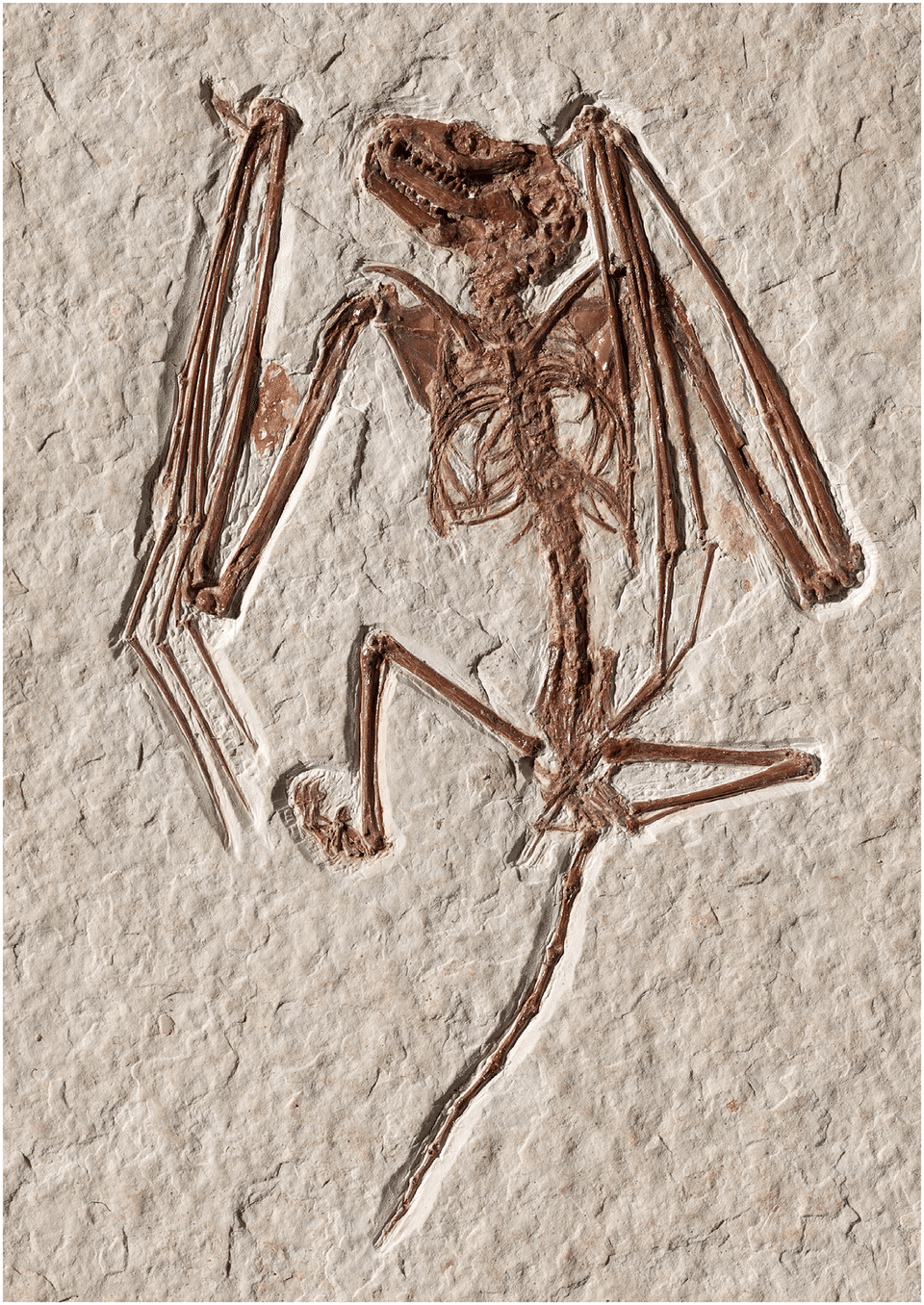
The Eocene epoch (56 to 34 million years ago) saw the appearance of the first recognizable members of most modern mammalian orders. The earliest known bats (Onychonycteris finneyi) appear in the early Eocene, already possessing fully developed flight apparatus, indicating that the evolution of powered flight in mammals occurred rapidly.21 Early whales (archaeocetes) transitioned from terrestrial to fully aquatic life during the Eocene, with the complete sequence from the limbed Pakicetus to the fully marine Basilosaurus documented within a span of approximately 15 million years. The earliest primates, perissodactyls (horses, rhinos, tapirs), and artiodactyls (even-toed ungulates) all appear at or near the Paleocene-Eocene boundary.14, 20
The Paleocene-Eocene Thermal Maximum (PETM), a brief but intense global warming event approximately 56 million years ago driven by a massive release of carbon into the atmosphere, had a profound effect on mammalian biogeography and evolution. Global temperatures rose by 5 to 8 degrees Celsius over approximately 20,000 years, and the resulting expansion of tropical forests facilitated the dispersal of mammalian lineages between North America, Europe, and Asia across high-latitude land bridges. Many modern mammalian orders, including the perissodactyls and artiodactyls, appear abruptly in the fossil records of multiple continents at the onset of the PETM, suggesting rapid intercontinental dispersal during this warm interval.14, 16
Molecular versus fossil evidence for timing
One of the most contentious issues in mammalian evolutionary biology concerns the timing of the initial divergences among the major placental orders. Molecular phylogenetic analyses, which estimate divergence times by calibrating rates of DNA sequence evolution with fossil reference points, have consistently indicated that many interordinal divergences occurred in the Late Cretaceous, well before the K-Pg extinction. Estimates from large-scale molecular studies place the basal split among placental superorders (Afrotheria, Xenarthra, Laurasiatheria, and Euarchontoglires) at approximately 95 to 105 million years ago, and many ordinal-level divergences at 80 to 90 million years ago.3, 11, 15
The fossil record, by contrast, yields essentially no unambiguous crown-group placental mammals from the Cretaceous. The oldest definitive crown placentals appear in the earliest Paleocene, and the fossil-based morphological analysis by O'Leary and colleagues estimated the ancestor of all crown placentals to have lived at or very near the K-Pg boundary, approximately 65 to 66 million years ago.2 This discrepancy between molecular and fossil timescales has generated decades of debate.
The most widely accepted resolution is the long-fuse model, which proposes that placental stem lineages diverged genetically in the Late Cretaceous (as molecular clocks suggest) but remained ecologically constrained, small-bodied, and morphologically conservative, leaving a sparse fossil record. The ecological and morphological radiation into recognizably modern forms occurred only after the K-Pg extinction removed the dinosaurian competitors, producing the explosive appearance of diverse placental orders in the Paleocene fossil record.4, 15 The competing explosive model holds that both interordinal divergences and intraordinal radiation occurred entirely after the K-Pg boundary, while the short-fuse model proposes that both occurred in the Cretaceous; neither is as well supported by the combined molecular and fossil evidence as the long-fuse model.2, 12
Estimated divergence times for major placental superorders3, 11, 15
Major lineages: placentals, marsupials, and monotremes
The three living groups of mammals — placentals (Eutheria), marsupials (Metatheria), and monotremes (Prototheria) — diverged deep in the Mesozoic. Molecular estimates place the split between monotremes and therian mammals (the clade containing placentals and marsupials) at approximately 166 to 186 million years ago, in the Middle Jurassic, while the placental-marsupial divergence is estimated at approximately 160 to 190 million years ago.18, 20
Placental mammals constitute the vast majority of living mammalian diversity, with approximately 6,400 species arranged in roughly 20 orders. Molecular phylogenetics has organized these orders into four superordinal clades: Afrotheria (elephants, hyraxes, tenrecs, aardvarks, manatees), Xenarthra (sloths, anteaters, armadillos), Laurasiatheria (carnivorans, ungulates, bats, whales, shrews, hedgehogs), and Euarchontoglires (primates, rodents, rabbits, treeshrews, flying lemurs).18 This molecular classification has overturned many traditional groupings based on morphological similarity, revealing that apparently convergent body plans evolved independently on different continents.
Marsupials today number approximately 380 species, concentrated in Australasia and the Americas. Their post-K-Pg history is intimately tied to the breakup of Gondwana. Marsupials reached Australia from South America via Antarctica during the late Cretaceous or early Paleocene, when these continents were still connected or closely adjacent, and subsequently radiated into the extraordinary diversity of modern Australian forms, including kangaroos, koalas, wombats, and the Tasmanian devil.13 In South America, marsupials diversified into carnivorous forms such as the borhyaenids and the sabre-toothed Thylacosmilus, paralleling placental carnivorans on other continents.
Monotremes, represented today by only the platypus and four species of echidna, are the sole surviving members of a lineage that branched from other mammals deep in the Mesozoic. Despite their reduced modern diversity, monotremes retain ancestral features including egg-laying and a cloaca, providing a living window into the reproductive biology of early mammals. Fossil monotremes from the Cretaceous of Australia, including Steropodon galmani, indicate that the group was once more diverse than its five living species suggest.20
Adaptive innovations
The mammalian radiation was enabled by a suite of anatomical and physiological innovations, many of which had evolved during the Mesozoic but were elaborated and diversified during the Cenozoic.

Specialized dentition is perhaps the most diagnostic mammalian feature and was central to the ecological diversification that followed the K-Pg extinction. Unlike reptiles, which typically possess uniform, continuously replaced teeth (homodonty), mammals have a single set of permanent teeth (diphyodonty) differentiated into incisors, canines, premolars, and molars with complex occlusal surfaces (heterodonty).20 This dental complexity permitted fine-grained specialization for different diets: the high-crowned, ridged molars of horses for grazing on abrasive grasses; the carnassial shearing blades of carnivorans; the broad, flat molars of primates for processing fruit and leaves; and the elaborate selenodont molars of ruminants.22
Endothermy, the maintenance of a high, stable body temperature through metabolic heat production, was already present in Mesozoic mammals, but Cenozoic lineages refined the system with more efficient insulation (fur, blubber), improved cardiovascular regulation, and higher basal metabolic rates. High metabolic rates permitted sustained aerobic activity, enabling mammals to exploit ecological strategies dependent on endurance locomotion, such as long-distance migration in ungulates and continuous powered flight in bats.21 The evolution of a fully divided four-chambered heart, more efficient lungs, and a muscular diaphragm further enhanced oxygen delivery and supported the high metabolic demands of large body sizes.20
The development of the mammalian middle ear, in which the articular and quadrate bones of the ancestral reptilian jaw were repurposed as the malleus and incus of the middle ear, produced a hearing apparatus of exceptional sensitivity and frequency range. This transformation, documented in exquisite detail by Mesozoic fossils from China, enabled acoustic communication, nocturnal predator detection, and echolocation in bats and toothed whales.5 Extended parental care and lactation, features shared by all living mammals, allowed offspring to develop in a protected environment, with milk providing a nutritionally complete and immunologically active food source during the critical early stages of growth.20
Biogeographic patterns
The geographic distribution of mammalian lineages was shaped by the fragmentation of Gondwana and Laurasia, the opening and closing of seaways and land bridges, and the climatic shifts of the Cenozoic. The four placental superorders correspond roughly to the continents on which they originated: Afrotheria diversified in Africa during its Paleogene isolation, Xenarthra in South America, and the two northern clades (Laurasiatheria and Euarchontoglires) across Laurasia.17, 18
The isolation of South America as an island continent for much of the Cenozoic (from the breakup of its connection with Antarctica approximately 34 million years ago until the formation of the Isthmus of Panama approximately 3 million years ago) produced a remarkable experiment in independent evolution. South American mammals included endemic ungulate groups (notoungulates and litopterns), giant ground sloths, glyptodonts, and a diverse assemblage of marsupial carnivores. When the Isthmus of Panama formed in the Pliocene, the resulting Great American Biotic Interchange brought North American placentals south and South American mammals north, with the northern immigrants generally outcompeting the southern endemic fauna.20
Madagascar's mammalian fauna illustrates the role of sweepstakes dispersal in shaping biogeography. The island's lemurs, tenrecs, carnivorans (the euplerid family), and nesomyid rodents each represent a single colonization event, most likely by rafting across the Mozambique Channel on floating vegetation during periods of favorable ocean currents in the Eocene and Oligocene. Oceanographic modeling has shown that surface currents in the Eocene flowed eastward from Africa to Madagascar, facilitating these rare dispersals.13
The mammalian colonization of Australia followed a different path. Monotremes and marsupials reached Australia via the Gondwanan connection through Antarctica in the Late Cretaceous to early Paleocene, before Australia separated from Antarctica approximately 45 million years ago. Placental mammals, represented by bats and later by rodents, arrived much later by overwater dispersal from Southeast Asia. The prolonged isolation of Australia allowed marsupials to radiate into ecological niches occupied by placentals elsewhere, producing convergent body forms such as the marsupial mole (Notoryctes), the thylacine (a marsupial analogue of the wolf), and gliding possums paralleling flying squirrels.20
The rise and fall of megafauna
A striking feature of the Cenozoic mammalian radiation was the repeated evolution of very large body size across multiple lineages, a macroevolutionary pattern sometimes attributed to Cope's rule — the tendency for body size to increase over evolutionary time within a lineage.23 The largest terrestrial mammal ever documented, Paraceratherium (an Oligocene rhinoceros relative from Central Asia), stood approximately 5 metres at the shoulder and weighed an estimated 15 to 20 tonnes, rivaling the mass of many sauropod dinosaurs.20 In the oceans, cetacean body size increased steadily through the Cenozoic, culminating in the blue whale (Balaenoptera musculus), which at up to 30 metres and 150 tonnes is the largest animal known to have lived.
_4_(15440400011).jpg)
The evolution of large body size in herbivorous mammals was linked to the expansion of grasslands during the late Eocene and Oligocene, driven by declining atmospheric CO2 concentrations. Grasses are nutritionally poor and highly abrasive, favoring large-bodied herbivores capable of fermenting cellulose in enlarged guts and possessing high-crowned (hypsodont) teeth resistant to wear.22 The diversification of grass-adapted ungulates, including horses, bovids, and elephants, accelerated during the Miocene (23 to 5 million years ago) as grasslands expanded across every continent except Antarctica.
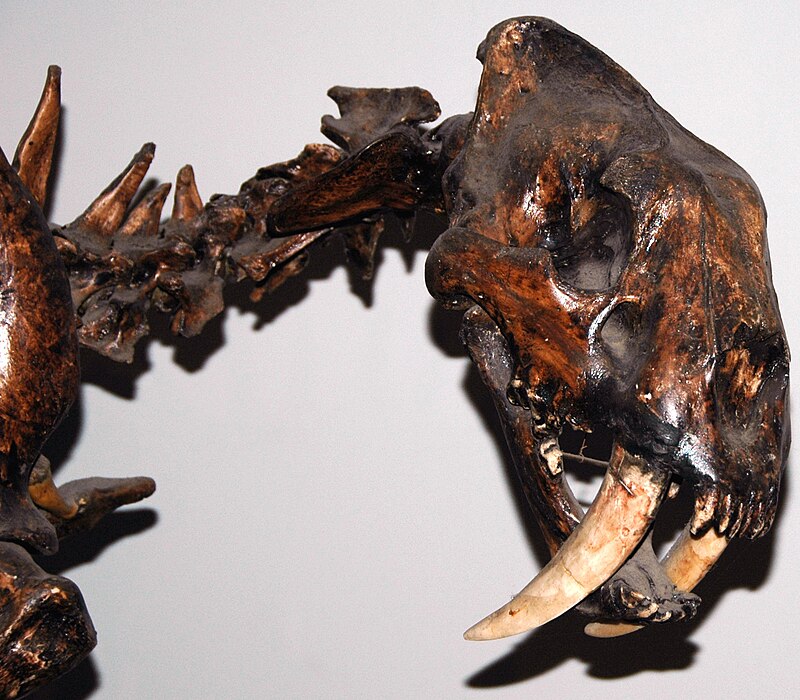
The Pleistocene epoch (2.6 million to 11,700 years ago) was characterized by a global fauna of extraordinarily large mammals, including mammoths, mastodons, giant ground sloths, sabre-toothed cats, cave bears, and giant wombats. The subsequent extinction of most of this megafauna, which occurred asynchronously across different continents between approximately 50,000 and 10,000 years ago, removed a large fraction of the ecological diversity produced by the Cenozoic mammalian radiation. The causes of the late Pleistocene megafaunal extinction remain debated, with climate change, human hunting, and the interaction between these factors all supported by varying lines of evidence across different regions.10
Body mass evolution in mammals across the Cenozoic2, 20, 23
| Time interval | Largest known mammal | Estimated mass | Ecological context |
|---|---|---|---|
| Early Cretaceous (~125 Ma) | Repenomamus giganticus | ~12–14 kg | Dinosaur-dominated ecosystems |
| Early Paleocene (~64 Ma) | Ectoconus (condylarth) | ~50–100 kg | Post-extinction recovery |
| Late Paleocene (~57 Ma) | Barylambda (pantodont) | ~500 kg | First large mammalian herbivores |
| Middle Eocene (~45 Ma) | Uintatherium (dinocerate) | ~1,500 kg | Diversification of archaic orders |
| Oligocene (~30 Ma) | Paraceratherium | ~15,000–20,000 kg | Open woodlands, early grasslands |
| Pleistocene (~0.1 Ma) | Palaeoloxodon namadicus | ~22,000 kg | Glacial-interglacial megafauna |
Significance for understanding macroevolution
The mammalian radiation after the end-Cretaceous extinction provides one of the clearest case studies of how mass extinctions restructure the biosphere. The pattern is not simply one of destruction followed by recovery; rather, the extinction selectively removed incumbents, creating ecological opportunity that channeled the subsequent diversification of survivors along new trajectories.4 The mammals that radiated in the Paleocene and Eocene were not predestined to dominate terrestrial ecosystems; they did so because the extinction of dinosaurs and other large-bodied competitors removed the ecological barriers that had constrained mammalian body size and niche occupation for more than 100 million years.1, 2
The tension between molecular and fossil evidence for the timing of placental divergences has driven important methodological advances in both molecular clock calibration and the interpretation of the fossil record.15 The biogeographic history of mammals, shaped by continental drift, land-bridge connections, and rare overwater dispersals, demonstrates how geography constrains and channels evolution, producing the convergent body forms seen in isolated faunas on separate continents.13, 18 And the repeated evolution of large body size across multiple lineages, followed by the Pleistocene megafaunal collapse, illustrates both the ecological advantages of gigantism and the vulnerability of large-bodied species to rapid environmental change.10, 23
The parallel radiation of birds, which underwent their own explosive diversification after the K-Pg extinction and now outnumber mammal species by roughly a factor of two, further reinforces the conclusion that the end-Cretaceous event was the single most important ecological inflection point for the vertebrate fauna of the modern world.19
References
Impacts of the Cretaceous Terrestrial Revolution and KPg extinction on mammal diversification
A new Cretaceous mammal from China and the early development of the mammalian middle ear
A swimming mammaliaform from the Middle Jurassic and ecomorphological diversification of early mammals
A large carnivorous mammal from the Late Cretaceous and the North American origin of marsupials
The eutherian mammal Maelestes gobiensis from the Late Cretaceous of Mongolia and the phylogeny of Cretaceous Eutheria
The Paleocene–Eocene Thermal Maximum: a perturbation of carbon cycle, climate, and biosphere with implications for the future
Phylogenomic datasets provide both precision and accuracy in estimating the timescale of placental mammal phylogeny
Earliest Eocene mammalian fauna from the Paleocene–Eocene Thermal Maximum at Sand Creek Divide, southern Bighorn Basin, Wyoming
A new estimate of afrotherian phylogeny based on simultaneous analysis of genomic, morphological, and fossil evidence