Overview
- Abductive reasoning, or inference to the best explanation (IBE), is the form of reasoning in which one infers a hypothesis because it provides the best available explanation of the observed evidence — as formulated by C. S. Peirce in the late nineteenth century and refined by Gilbert Harman, Peter Lipton, and others in the twentieth.
- The criteria for evaluating competing explanations include explanatory scope, simplicity (parsimony), predictive power, consistency with background knowledge, and avoidance of ad hoc modifications — though the relative weighting of these criteria is itself a matter of philosophical dispute.
- Abductive reasoning plays a central role in scientific methodology, everyday cognition, and philosophy of religion, where theistic arguments such as the fine-tuning argument and the cumulative case for theism are structured as inferences to the best explanation of observed features of the universe.
Abductive reasoning is the form of inference in which a hypothesis is accepted because it provides the best available explanation of the observed evidence. Unlike deduction, which guarantees the truth of the conclusion given true premises, and unlike enumerative induction, which generalizes from observed instances to unobserved ones, abduction moves from evidence to a hypothesis that, if true, would explain why that evidence obtains. The term was coined by the American logician Charles Sanders Peirce in the late nineteenth century, and the concept was later refined under the label “inference to the best explanation” (IBE) by Gilbert Harman in 1965 and given its most thorough philosophical treatment by Peter Lipton in 2004. Abductive reasoning is pervasive in science, medicine, law, everyday cognition, and philosophy, including the philosophy of religion, where it structures arguments both for and against the existence of God.1, 2, 3
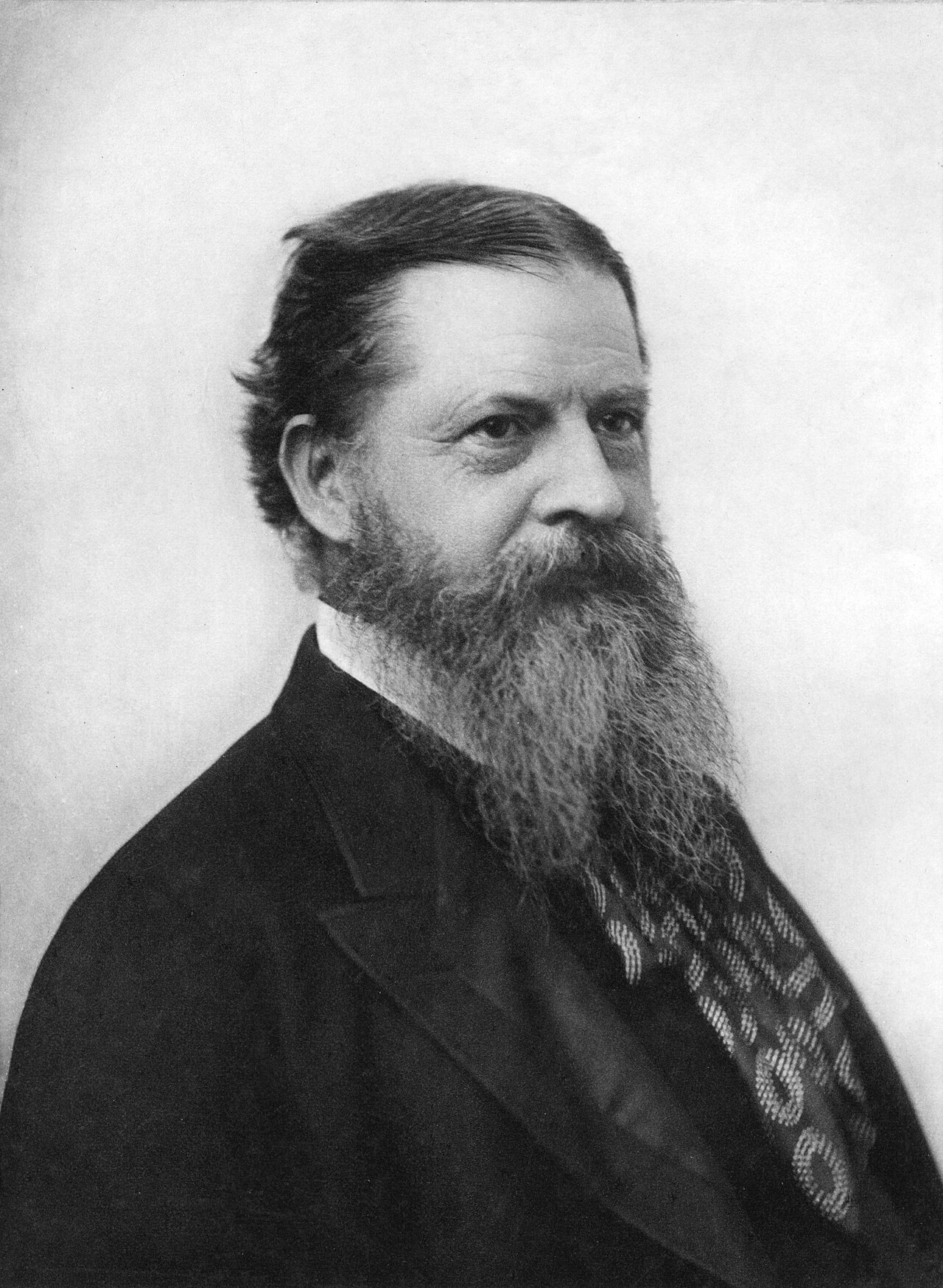

Peirce’s formulation
Peirce introduced abduction as a third mode of reasoning alongside deduction and induction. He initially characterized it with a simple logical schema: the surprising fact C is observed; but if hypothesis H were true, C would be a matter of course; hence, there is reason to suspect that H is true. Peirce was careful to distinguish abduction from deduction (which derives necessary conclusions from premises) and from induction (which tests hypotheses against further experience). Abduction is the logic of discovery — the process by which explanatory hypotheses are first suggested — while induction is the logic of confirmation — the process by which hypotheses are tested and evaluated against evidence.1, 6
P1. The surprising fact C is observed.
P2. If hypothesis H were true, C would be expected.
C. Therefore, there is reason to think H is true.
Peirce’s formulation is deliberately weak: abduction provides reason to entertain a hypothesis, not conclusive grounds for accepting it. In his later work, Peirce increasingly restricted abduction to the generative phase of inquiry and assigned the evaluative phase to induction. But subsequent philosophers, particularly Harman and Lipton, expanded abduction into a full-fledged pattern of inference in which the quality of the explanation bears directly on the rational acceptability of the hypothesis, not merely on its worthiness of further investigation.1, 2
Inference to the best explanation
Gilbert Harman’s “The Inference to the Best Explanation” (1965) reframed abduction as a pattern of ampliative inference that pervades both scientific and everyday reasoning. Harman argued that when we reason from evidence to a hypothesis, we do not simply generalize from instances (as traditional induction would have it) but infer the hypothesis that would best explain the evidence. A detective who infers that the butler committed the murder does so not by enumerating instances of butler-committed murders but by determining that the butler hypothesis best explains the totality of the evidence — the fingerprints, the motive, the opportunity, and the absence of other plausible suspects.2
Peter Lipton provided the most comprehensive philosophical treatment of IBE. Lipton distinguished between the likeliest explanation (the one most probably true given the evidence) and the loveliest explanation (the one that, if true, would provide the deepest understanding). He argued that IBE at its best aims at loveliness: we infer the hypothesis that, if true, would make the evidence most intelligible, and we use this explanatory virtue as a guide to truth. Lipton also addressed the question of how IBE relates to Bayesian confirmation theory. Bayesians hold that rational belief revision follows Bayes’s theorem, updating prior probabilities in light of new evidence. Lipton argued that IBE is compatible with Bayesianism: explanatory considerations can guide the assignment of prior probabilities and likelihoods, serving as heuristics for Bayesian reasoning rather than as rivals to it.3
Criteria for theory selection
A central question for abductive reasoning is what makes one explanation better than another. Philosophers of science have identified several criteria, though there is no consensus on their precise formulation or relative weighting. Explanatory scope favors hypotheses that explain a wider range of phenomena: a theory that accounts for many diverse observations is better than one that accounts for only a few. Simplicity (or parsimony) favors hypotheses that posit fewer entities, causes, or ad hoc assumptions: Occam’s razor, understood as a criterion for theory selection, is a component of abductive reasoning. Predictive power favors hypotheses that make novel, testable predictions, especially predictions that are confirmed by subsequent observation. Consistency with established background knowledge and fruitfulness — the capacity to suggest new lines of inquiry — are also commonly cited as explanatory virtues.4, 3
Thomas Kuhn influentially argued that theory selection in science is guided by a cluster of values — accuracy, consistency, scope, simplicity, and fruitfulness — but that these values underdetermine theory choice. Different scientists may weight the values differently, and the same values may point in different directions in specific cases. Kuhn did not conclude that theory choice is irrational; rather, he argued that it involves a kind of judgment that cannot be reduced to an algorithm. This observation applies equally to abductive reasoning in general: the criteria for “best explanation” provide rational guidance but do not mechanically determine a unique conclusion in every case.4
Karl Popper resisted the idea that inference to the best explanation is a genuine form of inference, arguing instead that the logic of science is hypothetico-deductive: scientists propose hypotheses and then attempt to falsify them through testing. On Popper’s view, the fact that a hypothesis explains the evidence well is not a reason to believe it is true; at best, it is a reason to subject it to rigorous testing. Corroboration through survived attempts at falsification, not explanatory virtue, is what rationally supports a hypothesis. However, most contemporary philosophers of science regard Popper’s strict falsificationism as too restrictive and accept some form of IBE as a legitimate component of scientific reasoning.5, 6
Objections to abductive reasoning
The most sustained philosophical critique of IBE comes from Bas van Fraassen. In The Scientific Image (1980) and Laws and Symmetry (1989), van Fraassen raised two principal objections. First, he argued that IBE is an unreliable form of inference because it is restricted to hypotheses that have actually been conceived. We infer the best of the available explanations, but the true explanation may not be among the candidates we have thought of. Unlike deduction, which is truth-preserving, and unlike induction, which has at least a rough track record, IBE provides no guarantee that the best available explanation is even close to the truth. Second, van Fraassen argued that the connection between explanatory virtue and truth has not been established: there is no reason to think that the universe is obliged to be simple, elegant, or explanatorily tidy, and the criteria we use to evaluate explanations may reflect our cognitive preferences rather than the structure of reality.8, 11
Defenders of IBE have responded in several ways. Lipton argued that the track record of IBE in science provides inductive support for its reliability: the hypotheses selected by IBE have, over the course of scientific history, proved remarkably successful in predicting novel phenomena and unifying diverse observations. Ian Hacking and others have argued that the success of science itself is best explained by the approximate truth of scientific theories selected by abductive reasoning, producing a “no-miracles argument” for scientific realism that is itself an instance of IBE. More recently, Igor Douven has argued that computational simulations and empirical studies of human reasoning confirm that IBE performs well as a cognitive heuristic, often outperforming purely probabilistic approaches in realistic reasoning environments.3, 9, 15
Role in philosophy of religion
Abductive reasoning features prominently in the philosophy of religion, where arguments for and against the existence of God are frequently structured as inferences to the best explanation. Richard Swinburne’s cumulative case for theism is explicitly framed in abductive terms: the existence of God, Swinburne argues, is the best explanation of the totality of evidence, including the existence of the universe, its orderly laws, the fine-tuning of physical constants for life, the existence of conscious beings, and the occurrence of religious experiences. Each piece of evidence is, on its own, more probable given theism than given naturalism, and their conjunction makes the cumulative explanatory case for theism compelling. Swinburne uses a Bayesian framework in which explanatory virtues — particularly simplicity — determine the prior probability of theism.7, 12
Critics have challenged the application of abductive reasoning to the God hypothesis on several grounds. Some argue that the theistic hypothesis is not genuinely explanatory because it invokes an entity whose properties (omniscience, omnipotence, necessary existence) are insufficiently understood to generate specific predictions. Others, drawing on van Fraassen’s critique, argue that the explanatory virtues (especially simplicity) that theists attribute to the God hypothesis are contested and may not apply to a being of infinite complexity. The debate over parsimony and theism turns precisely on whether positing a single divine being is genuinely simpler than accepting the observed features of the universe as brute facts.8, 7
Naturalistic arguments also employ abductive reasoning. The argument from evil, in its evidential form, contends that the distribution of suffering in the world is better explained by the absence of a benevolent creator than by the existence of one. Scientific explanations of cosmological fine-tuning (such as the multiverse hypothesis), of consciousness (such as functionalism or emergentism), and of religious experience (such as cognitive science of religion) are offered as explanatory competitors to theistic explanations. The quality of these competing explanations — their scope, simplicity, predictive power, and consistency with background knowledge — is assessed by the same abductive criteria that govern theory selection in science and everyday reasoning, making abductive reasoning the common inferential framework within which both theistic and naturalistic arguments operate.7, 13, 10