Overview
- The argument from religious experience reasons from the occurrence of experiences perceived as encounters with God or a transcendent reality to the probable existence of that reality, contending that the best explanation for the global prevalence, phenomenological consistency, and life-transforming effects of such experiences is that they are at least sometimes veridical.
- Richard Swinburne’s formulation introduces the principle of credulity — that in the absence of specific reasons for doubt, things are probably as they seem to be — and the principle of testimony — that in the absence of specific reasons for distrust, the testimony of others about their experiences is probably reliable — placing the burden of proof on those who deny the evidential value of religious experience.
- Major objections include the diversity objection (that incompatible religious experiences from different traditions undermine their collective evidential force), neurological reduction (that the experiences can be fully explained by brain states), and the argument from non-experience (that the absence of religious experience among sincere seekers is itself evidence against theism), each of which has generated substantive philosophical responses in the ongoing debate.
The argument from religious experience reasons from the occurrence of experiences that subjects describe as encounters with God, the divine, or a transcendent reality to the conclusion that such a reality probably exists. It is among the most phenomenologically grounded of the theistic arguments — rather than reasoning from abstract principles about causation, contingency, or design (see cosmological arguments), it begins with a type of human experience reported across cultures, historical periods, and religious traditions. William James documented the global prevalence and characteristic features of such experiences in The Varieties of Religious Experience (1902), cataloguing mystical states, conversion experiences, and numinous encounters that subjects consistently describe as among the most significant events of their lives.3
The philosophical question is not whether people have such experiences — their occurrence is empirically well-documented — but whether these experiences constitute evidence for the existence of what they purport to be about. The argument has been developed in several forms: Richard Swinburne’s argument from the principles of credulity and testimony, William Alston’s argument from the analogy between religious perception and sense perception, Alvin Plantinga’s argument from proper function, and various cumulative case arguments that treat religious experience as one strand in a larger evidential web. Each formulation faces characteristic objections, and the debate over the evidential value of religious experience remains one of the most active areas in contemporary philosophy of religion.1, 4
Historical background
Philosophical reflection on the significance of religious experience has ancient roots, but the systematic treatment of such experience as evidence for God’s existence is largely a modern development. The Hebrew Bible records theophanies — encounters with God experienced by Abraham, Moses, Isaiah, and Ezekiel — and the New Testament describes Paul’s Damascus road experience and the disciples’ encounters with the risen Jesus. In the Christian mystical tradition, figures such as Augustine, Teresa of Ávila, and John of the Cross described direct experiential knowledge of God. Evelyn Underhill’s Mysticism (1911) provided one of the first comprehensive surveys of the mystical tradition, identifying characteristic stages of mystical development: awakening, purification, illumination, the “dark night of the soul,” and union with the divine.7
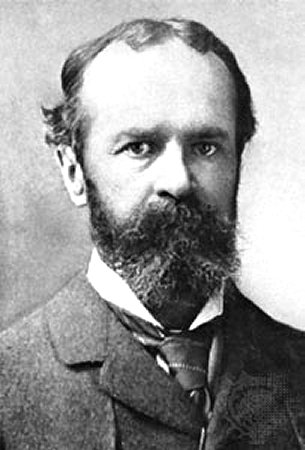

William James transformed the study of religious experience by treating it as an empirical phenomenon amenable to psychological and philosophical analysis. In his Gifford Lectures (1901–1902), James identified four marks of mystical experience: ineffability (the experience defies adequate expression in language), noetic quality (the experience carries a sense of insight into deep truths), transiency (the experience is temporally limited), and passivity (the subject feels acted upon rather than acting). James argued that while mystical experiences do not establish their content as true for non-mystics, they “break down the authority of the non-mystical or rationalistic consciousness” by demonstrating that ordinary waking consciousness is only one form of awareness.3
W. T. Stace advanced the philosophical study of mysticism by distinguishing two fundamental types of mystical experience: extrovertive mysticism, in which the subject perceives the world as unified and pervaded by the divine, and introvertive mysticism, in which the subject withdraws from all sensory content and encounters a “pure consciousness” described as undifferentiated unity. Stace argued that introvertive mysticism is strikingly consistent across traditions — Hindu, Buddhist, Christian, Muslim, and Jewish mystics describe strikingly similar phenomenology despite radically different theological interpretations. This cross-cultural consistency, he contended, supports the view that the experiences access a genuine reality rather than being mere cultural artifacts.6
The argument from credulity
Richard Swinburne presents the most formally developed version of the argument from religious experience in The Existence of God (1979; 2nd ed. 2004). His argument rests on two epistemological principles. The principle of credulity states that if it seems to a subject that x is present, then probably x is present — in the absence of special considerations that defeat the prima facie evidence. The principle of testimony states that if a subject reports having an experience of x, then probably the subject did have that experience — in the absence of special reasons for doubting the testimony.1
P1. If it seems (epistemically) to a subject S that x is present, then probably x is present, unless there are special considerations to the contrary (principle of credulity).
P2. Many people have had experiences in which it seems to them that God is present.
P3. There are no adequate special considerations that defeat the prima facie evidential force of these experiences.
C. Therefore, probably God exists.
Swinburne argues that the principle of credulity is a fundamental epistemological principle without which no knowledge is possible. Sense perception operates on the same principle: we trust that the world is approximately as it appears unless we have specific reasons for doubt (hallucination, optical illusion, intoxication). To reject the principle for religious experience while accepting it for sense perception requires identifying a relevant disanalogy — a specific reason why religious experiences are less reliable than sensory ones. Swinburne maintains that the burden of proof lies with the skeptic to provide such reasons, not with the believer to prove that religious experience is veridical.1
Swinburne identifies four types of “special considerations” that could defeat a religious experience: (1) the subject was unreliable (under the influence of drugs, suffering from a known psychiatric condition, or demonstrably dishonest), (2) the experience occurred under circumstances known to produce unreliable results (extreme sensory deprivation, hypnotic suggestion), (3) strong independent evidence that God does not exist (making the experience improbable regardless of how it seems), or (4) the experience can be fully explained without supposing its object exists (a complete naturalistic explanation). Swinburne argues that none of these defeaters applies to the totality of religious experiences: while some individual reports may be explained by pathology or deception, there is no general defeater that covers the entire range of experiences across diverse subjects and circumstances.1
Alston’s perceptual model
William Alston developed an alternative approach in Perceiving God (1991) that treats religious experience not as a premise in an argument for God’s existence but as a form of perception analogous to sense perception. Alston argues that mystical perception (which he calls “the perception of God” or “M-perception”) constitutes a “doxastic practice” — a socially established way of forming beliefs on the basis of experience — that is as rationally entitled to prima facie trust as sense perception, memory, or introspection.2
Alston’s key argument is that the standard objections to the reliability of religious experience apply equally to sense perception. Sense perception cannot be shown to be reliable without circularity — any attempt to verify the reliability of the senses must ultimately rely on the senses themselves. The same epistemic circularity afflicts every basic doxastic practice. If we accept sense perception despite its inability to provide a non-circular justification of its own reliability, consistency requires extending the same prima facie trust to other established doxastic practices, including mystical perception. The Christian mystical perceptual practice (CMP) has a long history, wide acceptance within its community, internal consistency, and integration with other belief systems — all marks shared by sense perception.2
Alston acknowledges that this argument does not demonstrate that God exists or that religious experiences are veridical. Rather, it shows that participants in the mystical perceptual practice are rationally justified in trusting their experiences in the absence of strong overriding reasons to the contrary. The argument is epistemological rather than ontological: it concerns the rationality of beliefs formed on the basis of experience, not the truth of those beliefs.2
Reformed epistemology and proper function
Alvin Plantinga’s reformed epistemology offers a related but distinct approach. In Warrant and Proper Function (1993), Plantinga argues that if God exists, then belief in God is probably “properly basic” — warranted without being inferred from other beliefs, in the same way that perceptual beliefs, memory beliefs, and beliefs about other minds are properly basic. On Plantinga’s model, God has designed human cognitive faculties with a sensus divinitatis — a cognitive mechanism that, when functioning properly in appropriate circumstances, produces belief in God directly. Religious experiences are the occasions on which this faculty operates, producing immediate, non-inferential awareness of God.8
Plantinga’s approach differs from Swinburne’s and Alston’s in a crucial respect. Swinburne uses religious experience as a premise in a probabilistic argument for God’s existence. Alston argues that mystical perception is a rational doxastic practice. Plantinga argues that if theism is true, religious experience probably produces warranted belief — and therefore the question of whether religious experience justifies belief in God cannot be settled independently of whether God exists. The epistemological question (is belief in God warranted?) and the ontological question (does God exist?) are not separable in the way that Enlightenment epistemology assumed. Critics note that this conditional structure — “if God exists, then belief in God is probably warranted” — means the argument does not provide independent evidence for God’s existence and may appear circular to those who do not already accept theism.8, 4
The diversity objection
The diversity objection is among the most discussed challenges to arguments from religious experience. Different religious traditions report experiences of different and apparently incompatible ultimate realities: Christians experience a personal God; Hindus experience Brahman as an impersonal absolute; Buddhists report experiences of sunyata (emptiness) with no divine object at all; Jewish, Muslim, and Sikh mystics describe encounters with God that differ in their theological content. If all these experiences are treated as veridical under the principle of credulity, they collectively support mutually contradictory metaphysical claims. The diversity of religious experience thus appears to undermine rather than support any particular theological conclusion.9, 10
Defenders of the argument have responded in several ways. Swinburne argues that the diversity of interpretations does not show that all the experiences are non-veridical — it may show that some are veridical and some are misinterpreted or partially accurate. The fact that witnesses to an event give conflicting testimony does not show that the event did not occur. Swinburne proposes that theistic experiences (encounters with a personal God) should be given greater evidential weight than non-theistic experiences because theism is better confirmed by other arguments (cosmological, teleological, moral) than impersonalism or non-theism, making theistic experiences more antecedently probable.1
Alston takes a different approach, acknowledging that the existence of multiple incompatible mystical practices creates a genuine epistemic problem. A Christian practitioner is aware that Hindu, Buddhist, and Muslim practitioners engage in equally well-established doxastic practices that yield different results. Alston argues that this situation is not unique to religious experience — disagreements between equally well-established epistemic practices arise in other domains as well — but concedes that religious diversity reduces the degree of rational confidence that any particular mystical practice is veridical. The best a Christian practitioner can do, Alston maintains, is to continue engaging in her own practice while remaining open to correction and acknowledging the epistemic significance of disagreement.2
The constructivist position, advanced by Steven Katz, argues that all experience is shaped by the conceptual frameworks, expectations, and training of the experiencer. There are no “raw” or “unmediated” mystical experiences — the Christian mystic experiences what her tradition has prepared her to experience, and the Buddhist meditator experiences what Buddhist practice cultivates. If this is correct, the cross-cultural similarity that Stace identified is illusory: the experiences are similar in description only because the descriptive categories are vague enough to accommodate very different underlying states. Robert Forman has challenged this constructivist thesis, arguing that “pure consciousness events” — experiences devoid of all conceptual content — occur across traditions and cannot be explained as cultural constructions, since they contain no content for culture to construct.14, 13
Naturalistic explanations
Naturalistic explanations of religious experience aim to provide complete accounts of the experiences in terms of neuroscience, psychology, or sociology, without reference to any transcendent object. If such explanations succeed, the principle of credulity is defeated: the experiences can be fully explained without supposing that their object exists.4
Andrew Newberg’s neuroimaging research has identified neural correlates of meditative and mystical states, including decreased activity in the posterior superior parietal lobe (associated with the sense of spatial boundaries between self and world), increased activity in the prefrontal cortex (associated with focused attention), and alterations in the limbic system (associated with emotional valence). Newberg does not claim that these findings disprove the reality of mystical experience — he explicitly argues that identifying the neural substrate of an experience does not settle whether the experience has an external cause — but the research demonstrates that religious experiences are associated with identifiable brain states that can be induced through meditation, prayer, drugs, temporal lobe stimulation, and other means.11
Ann Taves proposes a “building-block approach” that decomposes religious experiences into basic psychological processes — absorption, dissociation, heightened emotion, pattern detection — that are not themselves religious but become religious when embedded in religious frameworks of interpretation. On this account, the experiences are real psychological events but their religious character is a function of cultural framing rather than an intrinsic property of the experience itself.12
Defenders of the argument respond that identifying the neural correlates of an experience does not explain it away. Visual perception has neural correlates — specific patterns of neural activity in the visual cortex — but this does not show that what we see does not exist. If God exists and interacts with human minds, one would expect such interaction to have neural manifestations. The question is not whether religious experiences have neurological substrates (they do, as do all experiences) but whether the neurological account is sufficient to explain the occurrence and character of the experiences without reference to any transcendent cause. Swinburne argues that the existence of a naturalistic mechanism does not by itself constitute a defeater unless it can be shown that the mechanism operates independently of any divine cause.1, 11
The argument from non-experience
J. L. Mackie argued that the evidential force of religious experience is undermined by the existence of many people who sincerely seek God but never have any experience of the divine. If God exists and desires relationship with human beings, the absence of religious experience among genuine seekers is itself evidence against theism. Mackie contended that the principle of credulity, if applied consistently, should give evidential weight to non-experience as well: if it seems to someone that God is absent, then probably God is absent.9
Swinburne responds that the principle of credulity applies asymmetrically to positive and negative experiences. Seeming to perceive something provides evidence that it exists, but failing to perceive something does not provide equivalent evidence that it does not exist — unless the conditions are such that one would expect to perceive it if it were there. Whether one would expect everyone to experience God if God exists depends on contested theological assumptions about the nature and purposes of divine self-revelation. If God has reasons for maintaining a degree of hiddenness — for example, to preserve the freedom and moral seriousness of human response — then the absence of universal religious experience is compatible with theism.1
Michael Martin argues more broadly that the argument from religious experience fails because it conflates the occurrence of an experience with the existence of its intentional object. People have experiences of ghosts, alien abduction, past lives, and out-of-body travel, yet these experiences are not generally taken as evidence for the existence of ghosts, aliens, or astral planes. What distinguishes religious experience from these cases, Martin contends, is not any epistemological difference in the nature of the evidence but rather the social respectability of religious claims. The principle of credulity, applied consistently, would require accepting the evidential force of all such experiences — an outcome that Swinburne’s argument seeks to avoid by invoking background evidence and prior probabilities that favor theism over ghost theory or alien theory.15
Cumulative case arguments
Gary Gutting develops a more modest version of the argument in The Evidential Force of Religious Experience (1982). Gutting argues that while ordinary religious experiences (a sense of God’s presence during prayer, a feeling of being guided) do not have much evidential force individually, the experiences of the great mystics — sustained, intense, and transformative encounters reported by individuals of exceptional intelligence, moral character, and psychological stability — provide significant evidence for the existence of some sort of “prehuman, good, and powerful being.” Gutting does not claim that mystical experience establishes the existence of the God of orthodox theism with all the traditional attributes, but argues that it provides evidence for a reality that is more than natural and more than human.5
This cumulative approach is characteristic of much contemporary work on the epistemology of religious experience. Rather than treating religious experience as a standalone proof, philosophers increasingly assess its evidential contribution within a larger body of evidence that includes cosmological, teleological, and moral arguments, as well as considerations from the existence of consciousness, the applicability of mathematics to the physical world, and the fine-tuning of the cosmos. On this approach, religious experience may not be sufficient on its own to establish theism, but it increases the probability of theism when combined with other evidence, and the cumulative case may reach a threshold that individual arguments do not.4, 1
Cross-cultural phenomenology
Empirical research on the phenomenology of religious experience has sought to determine whether there is a common core to mystical experience across cultures. Stace’s common-core thesis holds that the introvertive mystical experience — characterized by the absence of all empirical content, a sense of unity, a noetic quality, a feeling of bliss, and a sense of the sacred — is cross-culturally universal, occurring in Hindu, Buddhist, Christian, Muslim, Jewish, and Taoist contexts. The interpretive overlay differs (the Christian calls it “union with God,” the Hindu calls it “realization of Brahman,” the Buddhist calls it “emptiness”) but the underlying experience, Stace argues, is the same.6
Katz’s constructivist critique challenges this thesis on philosophical grounds. Katz argues that there is no such thing as an unmediated experience. All experience is shaped by the beliefs, expectations, practices, and conceptual categories that the subject brings to it. The Christian who practices lectio divina and the Buddhist who practices vipassana are not engaging in the same activity, and there is no reason to suppose they arrive at the same experiential destination. What looks like cross-cultural commonality is an artifact of vague description: terms like “unity,” “bliss,” and “transcendence” are broad enough to accommodate very different phenomenological states.14
Forman’s response to Katz focuses on what he calls “pure consciousness events” (PCEs) — experiences in which all conceptual and sensory content drops away, leaving only contentless awareness. Forman argues that PCEs cannot be explained by the constructivist model because they contain no content for cultural categories to shape. Meditators from multiple traditions report achieving states of contentless awareness, and these reports converge on a description that is strikingly similar across traditions: awareness without object, without subject-object distinction, and without temporal succession. If such experiences occur, they constitute a counterexample to the constructivist thesis and evidence for a form of consciousness that transcends cultural conditioning.13
Major approaches to the argument from religious experience4
| Approach | Key proponent | Central claim | Main objection |
|---|---|---|---|
| Principle of credulity | Swinburne (1979) | Experience is probably veridical unless defeated | Diversity of incompatible experiences |
| Perceptual model | Alston (1991) | Mystical perception is a rational doxastic practice | Multiple incompatible practices |
| Reformed epistemology | Plantinga (1993) | If God exists, belief from experience is warranted | Conditional structure appears circular |
| Cumulative case | Gutting (1982) | Great mystics provide evidence for a transcendent being | Falls short of establishing orthodox theism |
| Common core | Stace (1960) | Cross-cultural consistency suggests a shared object | Constructivist critique of unmediated experience |
| Naturalistic | Newberg, Taves | Experiences are fully explained by brain states | Neural correlates do not explain away the object |
Contemporary assessment
The argument from religious experience occupies a distinctive position among theistic arguments. Unlike the cosmological or teleological arguments, which reason from publicly observable features of the world, the argument from religious experience depends on private, first-person reports of subjective states. This makes it both more personally compelling to those who have had such experiences and less persuasive to those who have not. The asymmetry is not easily resolved: the principle of credulity grants prima facie evidential weight to the experiencer but provides no direct evidence to the non-experiencer.4
The philosophical debate has clarified several important points. First, the mere existence of naturalistic explanations for religious experience does not defeat the argument, since all experience has naturalistic (neural) substrates and the question is whether the naturalistic account is sufficient or whether it requires supplementation by a transcendent cause. Second, the diversity of religious experience creates a genuine epistemological problem that defenders of the argument have addressed with varying degrees of success — Swinburne by appealing to background probability, Alston by acknowledging reduced confidence, and Plantinga by arguing that the question cannot be resolved independently of the truth of theism.1, 2, 8
Third, the argument’s evidential force depends significantly on the prior probability one assigns to theism. If theism is antecedently probable (supported by cosmological, teleological, and moral considerations), then religious experience substantially increases that probability. If theism is antecedently improbable, religious experience may not raise the probability above the threshold required for rational belief. This Bayesian dimension means that the argument from religious experience functions most effectively as part of a cumulative case rather than as a standalone proof. The argument does not demonstrate that God exists; it argues that certain widespread, persistent, and phenomenologically distinctive human experiences are best explained by the existence of a transcendent reality — a claim whose plausibility depends on what else one takes to be true about the world.1, 10
References
Religious Experience Reconsidered: A Building-Block Approach to the Study of Religion and Other Special Things