Overview
- The doctrine of divine simplicity holds that God is absolutely without composition of any kind — God has no spatial parts, no temporal parts, no matter-form composition, no essence-existence distinction, and no real distinction between any of the divine attributes, such that God does not merely possess goodness, power, or knowledge but rather is identical with each of them.
- Historically affirmed by Augustine, Anselm, Avicenna, Maimonides, and most systematically by Thomas Aquinas (who placed it at the foundation of his treatment of God in the Summa Theologiae), divine simplicity was the consensus position in classical theism across the Christian, Jewish, and Islamic philosophical traditions throughout the medieval period.
- Contemporary analytic philosophers including Alvin Plantinga and Nicholas Wolterstorff have raised influential objections — that simplicity collapses God into an abstract object, renders predication of distinct attributes unintelligible, and produces a modal collapse in which everything God does becomes necessary — while defenders such as Jeffrey Brower, Eleonore Stump, and James Dolezal have responded using truthmaker theory, constituent ontology, and reinterpretations of the underlying medieval metaphysics.
The doctrine of divine simplicity is the claim that God is absolutely without composition — that there are no parts, divisions, or real distinctions of any kind within the divine being. On this view, God does not merely possess attributes such as goodness, power, and knowledge; God is identical with each of them. God’s essence is not distinct from God’s existence; God’s knowing is not distinct from God’s willing; and God’s justice is not a different feature of God from God’s mercy. This doctrine, which may appear startling to contemporary readers, was the standard position in classical theism across the Christian, Jewish, and Islamic philosophical traditions for well over a millennium, affirmed by figures as diverse as Augustine, Anselm, Avicenna, Maimonides, and Thomas Aquinas.1, 2 In the twentieth century, analytic philosophers of religion — most prominently Alvin Plantinga — raised a series of objections that brought the doctrine under sustained scrutiny, prompting both vigorous defenses and significant revisions of the classical position.3
The debate over divine simplicity is not merely a technical exercise in philosophical theology. It touches the most fundamental questions about the nature of God: whether God is a being among beings or something categorically different from every created thing, whether human language about God succeeds in describing a divine reality or merely approximates one that transcends conceptual categories, and whether the God of classical theism can be reconciled with the personal, responsive God of religious practice. This article examines the doctrine’s historical development, the arguments offered in its support, the major objections it faces, and the contemporary philosophical responses to those objections.
Historical development
The roots of divine simplicity extend to ancient Greek philosophy. Parmenides held that ultimate reality is undivided and without internal distinctions, and Plato’s conception of the Form of the Good as transcending the other Forms pointed toward a supreme principle beyond composition. Aristotle’s unmoved mover, the pure actuality (actus purus) that moves all things without being moved, is a form without matter and therefore without the composition that characterises material substances.2, 11
Within the Neoplatonic tradition, Plotinus (c. 204–270 CE) developed the most radical account of divine simplicity in antiquity. The One, the first principle from which all reality emanates, is absolutely simple — so thoroughly beyond composition that it cannot even be said to be in the ordinary sense, since being implies a distinction between a thing and its existence. Plotinus argued that any composite entity depends on its parts and therefore cannot be the ultimate ground of reality; only something absolutely simple can serve as the first principle.2
Augustine (354–430) brought simplicity into Christian theology, asserting that in God there is no difference between what God is and what God has: “God is what he has” (Deus est quod habet). God’s wisdom is not something God acquires or possesses as a distinct property; it is identical with God’s being.2, 11 Anselm (1033–1109) linked simplicity to the concept of maximal perfection: a being that is composed of parts would be dependent on those parts and therefore would not be the greatest conceivable being. The maximally perfect being must therefore be simple.2
In the Islamic philosophical tradition, Avicenna (Ibn Sina, 980–1037) argued that the Necessary Existent — the being whose essence entails existence — must be simple, since any composition in such a being would require a cause to hold the parts together, and a being that requires a cause for its unity is not truly necessary in itself. Maimonides (1138–1204) affirmed that in God, “existence and essence are perfectly identical,” and he developed a rigorous negative theology according to which the only safe claims about God are claims about what God is not.2, 11
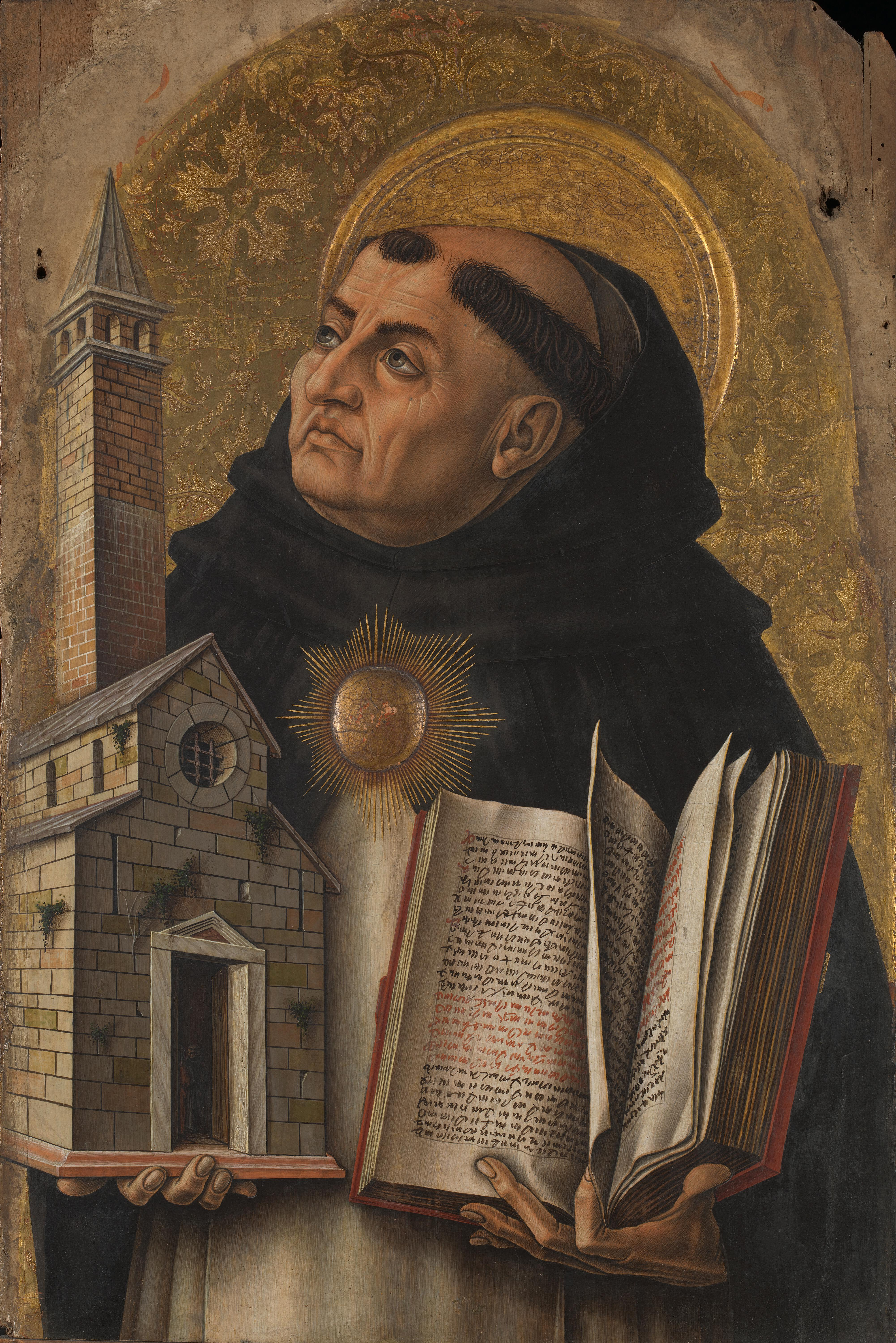

The most systematic and influential treatment of divine simplicity was provided by Thomas Aquinas (1225–1274). Aquinas placed the doctrine at the very beginning of his discussion of the divine nature in the Summa Theologiae, treating it in Question 3 of the Prima Pars — immediately after demonstrating God’s existence in Question 2 — before proceeding to any other divine attribute. This positioning was deliberate: for Aquinas, simplicity is not one divine attribute among many but the foundational feature that shapes the entire account of what God is. He argued that God is not composed of matter and form, that God’s essence (what God is) and God’s existence (that God is) are identical, that God is not a member of any genus, that there are no accidents (contingent properties) in God, and that God cannot enter into composition with anything else as a part.1
The doctrine stated
Divine simplicity, in its classical formulation, denies every form of composition that might be attributed to God. This includes, at minimum, the following claims.1, 2
No matter-form composition. Material objects are composed of matter (the underlying substrate) and form (the organising principle that makes them what they are). God, being immaterial, has no matter, and therefore lacks this basic kind of composition.
No potency-act composition. Created things have unrealised potentialities — they can change, develop, and become what they are not yet. Aquinas held that God is pure actuality (actus purus), with no unrealised potentialities whatsoever. Everything God can be, God already is.1
No essence-existence distinction. In all created beings, what something is (its essence) is distinct from the fact that it is (its existence). A horse’s nature does not include its own existence; horses can fail to exist. In God, however, essence and existence are identical: God’s nature just is to exist, and God’s existence just is God’s nature. Aquinas expressed this by saying that God is ipsum esse subsistens — subsistent being itself.1, 9
No distinction between God and the divine attributes. The most controversial claim of the doctrine is that there is no real distinction between God and any of the attributes predicated of God. God’s goodness is not a property that God exemplifies; God is goodness. God’s power is not a feature God happens to have; God is power. And since each attribute is identical with God, each attribute is identical with every other: God’s goodness, God’s power, God’s knowledge, and God’s justice are all one and the same reality, differing only in the way finite human minds conceptualise that single, undivided reality.1, 2
No accidents. Created beings can have accidental properties — features that they happen to have but could have lacked. God, on the doctrine of simplicity, has no accidental properties; everything true of God is essential to God. If God knows that the Earth exists, this is not a contingent addition to God’s nature but is somehow contained in what God necessarily is.1
Arguments for simplicity
Defenders of divine simplicity have offered several lines of argument for the doctrine. These arguments do not function as independent proofs but rather as interlocking considerations that, taken together, aim to show that simplicity follows naturally from other widely accepted attributes of God.2, 8
P1. God is the absolutely independent being (a se) — God depends on nothing external to God for God’s existence or nature.
P2. If God possessed properties as entities distinct from God, God would depend on those properties for being the kind of being God is.
P3. A being that depends on entities distinct from itself is not absolutely independent.
C. Therefore, God does not possess properties as entities distinct from God; God must be identical with whatever is predicated of God.
This argument from aseity (divine self-existence) is perhaps the most widely cited reason for affirming simplicity. If God is a se — existing from and through Godself alone, dependent on nothing — then nothing can be logically or metaphysically prior to God. But if God’s properties were distinct entities that God exemplified, then those properties would be logically prior conditions for God’s being what God is: God would be good in virtue of instantiating goodness, which would make goodness something on which God depends. To preserve divine independence, God must be identical with, rather than a participant in, each of the divine attributes.2, 8, 14
The argument from divine necessity proceeds from the widely held premise that God, if God exists, exists necessarily rather than contingently. A maximally perfect being cannot be the sort of thing that might not have existed. Defenders of simplicity argue that the deepest ground of this necessity is simplicity itself: a composite being depends on its parts and on whatever holds those parts together, and a being with such dependencies could in principle fail to exist if the relevant conditions were not met. A truly necessary being, one whose non-existence is impossible in every metaphysically possible scenario, must lack all internal composition.2, 8
A related argument holds that simplicity is the ground of immutability and eternity. A being with unrealised potentialities can change — it can actualise one potential rather than another. But classical theism holds that God is immutable (changeless) and eternal (outside of temporal sequence). If God is pure actuality with no potency, God cannot change, because change requires the transition from potency to act. Simplicity, by denying all potency-act composition, provides the metaphysical basis for immutability, which in turn grounds eternity.1, 2
Finally, the argument from the first cause draws on cosmological reasoning. If God is the uncaused cause of all that exists, then nothing can account for God’s existence or properties. A composite being, however, requires an explanation for why its parts are unified in the way they are — something must account for the composition. An absolutely first cause, requiring no external explanation, must therefore be uncomposed.2, 11
Plantinga’s objections
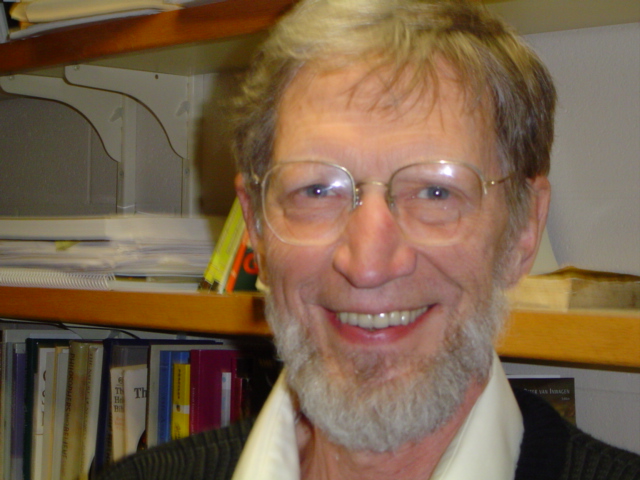

The modern critique of divine simplicity was launched by Alvin Plantinga in his 1980 Aquinas Lecture, Does God Have a Nature? Plantinga raised a battery of objections that have shaped the subsequent debate. His critique does not deny that God is independent or necessary; rather, it argues that the doctrine of simplicity, as classically formulated, generates serious philosophical difficulties that outweigh whatever advantages it provides.3
The abstractness objection. Plantinga argued that if God is identical with the divine properties (such as omniscience, omnipotence, and perfect goodness), and if properties are abstract objects (as Plantinga’s Platonist ontology holds), then God is an abstract object. But abstract objects are causally inert — they do not act, create, love, or respond to prayer. The God of classical theism, however, is a concrete, personal agent who acts in the world. Therefore, the identity of God with the divine properties renders God an abstract entity incapable of the personal agency that theism requires.3, 2
The property-collapse problem. If God is identical with each divine property, and identity is transitive, then each divine property is identical with every other. God’s omniscience is identical with God’s omnipotence, which is identical with God’s perfect goodness, which is identical with God’s eternity. But these appear to be genuinely different properties: knowing everything is not the same thing as being able to do everything, and neither is the same as being perfectly good. Collapsing these distinct attributes into a single reality renders divine predication unintelligible — there would be no difference between saying “God is good” and saying “God is powerful,” since both would refer to the same undifferentiated reality.3
The single-property problem. If all divine properties collapse into one, then God has exactly one property (or, equivalently, is identical with exactly one property). But a being with only one property is, Plantinga contended, an extraordinarily impoverished entity. It is difficult to see how a being identical with a single property could be a person, an agent, or the maximally great being of theistic worship.3
Plantinga concluded that divine simplicity, despite its venerable pedigree, should be rejected. In its place, he proposed that God’s sovereignty over abstract objects could be preserved through other means — for instance, by holding that properties exist necessarily and that God’s independence is not threatened by the existence of necessary abstract objects.3
Further objections and complications
Plantinga’s critique opened the door to further objections from analytic philosophers of religion. Nicholas Wolterstorff argued in 1991 that the doctrine of simplicity is not merely difficult to defend but incoherent. He pressed the point that medieval proponents of simplicity operated within a radically different metaphysical framework from that of contemporary analytic philosophy, and that when their claims are translated into the idiom of modern property theory, they produce absurdities.4
William Lane Craig and J. P. Moreland have argued that divine simplicity “makes God unintelligible.” On their view, the identification of God’s essence with God’s existence — the claim that God is ipsum esse subsistens, subsistent being itself — empties the concept of God of all determinate content. Being itself, abstracted from every particular kind of being, is the most general and therefore the most vacuous of concepts. A God who is pure being, without any distinguishing properties, is a God about whom nothing informative can be said.13
The modal collapse objection is perhaps the most technically pressing difficulty for the doctrine. If God is absolutely simple, then God cannot harbour unrealised potentialities — everything in God is fully actual. But God’s act of creating the world appears to be contingent: God could have refrained from creating, or could have created a different world. If God’s creative act is identical with God’s simple essence, and God’s essence is necessary, then God’s creative act is necessary — which means the created world exists necessarily rather than contingently. This would eliminate the contingency of creation, a result that classical theists themselves reject.2, 7
The problem of divine knowledge of contingent truths is closely related. God, being omniscient, knows that the Earth exists. If God’s knowledge is identical with God’s simple essence, and God’s essence is necessary, then God’s knowledge of contingent truths is necessary. But necessary knowledge of a contingent truth seems to entail that the truth in question is not genuinely contingent. If God necessarily knows that the Earth exists, it appears to follow that the Earth necessarily exists — again producing modal collapse.2, 7
Christopher Hughes, in On a Complex Theory of a Simple God (1989), provided a detailed examination of Aquinas’s arguments for simplicity and concluded that they are unsuccessful when measured against modern logical standards. Hughes did not argue that simplicity is incoherent but rather that Aquinas’s specific arguments fail to establish it.7
Major objections to divine simplicity2, 3
| Objection | Principal proponent(s) | Core claim |
|---|---|---|
| Abstractness | Plantinga (1980) | If God is identical with properties, God is an abstract object and cannot be a personal agent |
| Property collapse | Plantinga (1980) | Identifying all divine properties with one another renders distinct predications meaningless |
| Modal collapse | Hughes (1989), Mullins (2016) | If God’s contingent acts are identical with God’s necessary essence, creation is necessary |
| Unintelligibility | Craig & Moreland (2003) | Identifying God with “being itself” empties the concept of determinate content |
| Framework mismatch | Wolterstorff (1991) | Medieval simplicity presupposes an ontology incompatible with modern property theory |
| Contingent knowledge | Various | Necessary divine knowledge of contingent truths threatens the contingency of creation |
Contemporary defenses
The force of Plantinga’s objections prompted a substantial revival of interest in divine simplicity among analytic philosophers sympathetic to the classical tradition. Several distinct strategies of defense have emerged.5, 6
The constituent ontology response. Plantinga’s abstractness objection presupposes a “relational” or Platonist ontology in which properties are abstract objects that exist independently of the things that instantiate them. But medieval proponents of simplicity operated within a “constituent” ontology in which properties (or, more precisely, forms and natures) are ontological constituents of concrete particulars rather than separately existing abstract entities. In a constituent ontology, the claim that God is identical with the divine nature does not entail that God is an abstract object, because the nature is not abstract in the first place — it is a concrete constituent of a concrete being. Wolterstorff acknowledged this point: the medieval framework treats essences as “as concrete as that of which it is the nature.” If this framework is adopted, the abstractness objection does not arise.4, 5
The truthmaker approach. Bergmann and Brower (2006) argued that the defender of simplicity should abandon the claim that God is identical with abstract properties and instead hold that God is a truthmaker for predications about God. When we say “God is omniscient,” the truth of this statement is not grounded by an abstract property of omniscience that God exemplifies but by God himself — the concrete divine being is what makes the predication true. On this view, the nominalization “God’s omniscience” refers to God (the truthmaker) rather than to a distinct abstract entity. This approach avoids the abstractness objection entirely while preserving the core intuition of simplicity: there is nothing in God distinct from God.6
The property instance strategy. William Mann (1982) proposed a subtler reading of the doctrine. Rather than claiming that God is identical with the universal property of omniscience, Mann suggested that God is identical with God’s instance of omniscience — the particular way omniscience is realised in the divine case. This avoids the implication that God is an abstract universal while preserving the claim that there is no distinction between God and what is predicated of God. Critics, however, have objected that Mann’s strategy introduces a complexity it was designed to eliminate: distinguishing between the universal and the instance of a property is itself a form of composition within the framework of predication.10, 2
Brower’s neo-Aristotelian defence. In a series of articles culminating in his 2008 paper “Making Sense of Divine Simplicity,” Jeffrey Brower developed a defence that draws on Aristotelian metaphysics rather than Platonism. Brower argued that the standard objections to simplicity succeed only against a Platonist interpretation of the doctrine and that when the doctrine is formulated in Aristotelian or neo-Thomistic terms, the objections lose their force. On his account, God’s simplicity means that God is a being whose nature is fully actual and whose existence is identical with that nature — a claim that can be maintained without treating God as an abstract entity or collapsing genuinely distinct attributes into a single property. The appearance of distinctness in the divine attributes reflects the limitations of human cognition, not real divisions in God.5, 14
Simplicity and predication
A central challenge for defenders of divine simplicity is explaining how multiple, apparently distinct predicates can be true of a being that has no internal distinctions. If God’s goodness, power, and knowledge are all identical, what distinguishes the claim “God is good” from the claim “God is powerful”? If these claims have no distinct content, then our language about God is uninformative; if they do have distinct content, then there are real distinctions in God, and simplicity is compromised.3, 7
Aquinas addressed this problem through the doctrine of analogical predication. He held that when we say “God is wise,” we do not mean the same thing as when we say “Socrates is wise” (univocal predication), nor do we mean something entirely different (equivocal predication). Rather, the predicate “wise” is used analogically: it points to a real feature of God but in a way that reflects the limitations of creatures’ understanding. The multiple predicates we apply to God differ in their ratio (conceptual content) but refer to one and the same simple reality. “Our intellect knows him by diverse conceptions,” Aquinas wrote, because human thought is inherently discursive and cannot grasp a simple reality except by breaking it into conceptually distinct aspects.1, 9
Eleonore Stump has offered a contemporary reconstruction of Aquinas’s position. She argues that the divine attributes are not properties in the modern sense but rather different descriptions of one and the same concrete reality, each highlighting a different way that reality relates to created things. God’s goodness is the divine reality insofar as it is the standard of perfection for creatures; God’s power is the same divine reality insofar as it is the source of causal efficacy. The descriptions are genuinely different — they have different conceptual content and different extension in the created realm — but the reality they describe is simple and undivided.9
Critics respond that this strategy merely relocates the problem. If the divine attributes are genuinely different descriptions, what grounds the difference between them? If the ground is something in God, then there is a real distinction in God; if the ground is something in creatures, then our language about God describes creatures rather than God. Plantinga pressed this point: either the terms “good” and “powerful” pick out genuinely different features of God, in which case simplicity is false, or they do not, in which case we are saying the same thing twice when we call God good and powerful.3
The modal collapse problem
The modal collapse objection has attracted particularly intense discussion because it threatens to undermine the contingency of creation — a commitment shared by classical theists and their critics alike. The argument can be stated precisely.2, 7
P1. God is simple: every feature of God is identical with God’s necessary essence.
P2. God’s act of creating the actual world is a feature of God.
P3. If God’s act of creating is identical with God’s necessary essence, then God’s act of creating is necessary.
P4. If God’s act of creating is necessary, then the created world exists necessarily.
C. The created world exists necessarily (modal collapse).
Several responses have been proposed. One strategy, favoured by Dolezal and some other Reformed theologians, is to accept that God’s creative act is necessary while maintaining that the product of that act — the created world itself — is contingent. On this view, God necessarily wills to create, but the world that results from God’s willing is not necessary because contingency is a feature of the creature, not the creator. The world depends on God for its existence at every moment and could cease to exist if God withdrew sustaining power; this dependence is sufficient for contingency regardless of whether God’s creative act is itself necessary.8
A second strategy appeals to the classical distinction between God’s necessary will and God’s free will. Aquinas distinguished between what God wills necessarily (God’s own goodness) and what God wills freely (the existence of creatures). The divine act of willing is one simple act, but it is directed toward its primary object (God’s own goodness) necessarily and toward secondary objects (creatures) freely. Whether this distinction can be maintained consistently with strict simplicity is a matter of ongoing debate.1, 9
A third response, developed by Steven Nemes (2020), rejects what he calls the “Difference Principle” — the assumption that different effects require different features in their cause. On Nemes’s view, God can produce different effects (or no effects) without any difference in the divine nature. The same simple God is equally compatible with creating the actual world, creating a different world, or creating no world at all. This response is radical in its implications: it means that there is no intrinsic difference between a God who creates and a God who does not, which some critics find counterintuitive.2
Simplicity and the Trinity
For Christian thinkers, divine simplicity faces the additional challenge of reconciliation with the doctrine of the Trinity. The Trinity holds that God exists as three distinct persons — Father, Son, and Holy Spirit — who are each fully God but are not identical with one another. If God is absolutely simple, with no real distinctions of any kind, how can there be three genuinely distinct persons within the one divine being?2, 11
Aquinas addressed this by distinguishing between the divine essence (which is simple) and the divine relations (which are the persons). The Father, the Son, and the Holy Spirit are not parts or properties of God but subsistent relations — the relation of begetting, the relation of being begotten, and the relation of procession. Each relation is identical with the divine essence but opposed to the other relations. Aquinas held that relational opposition (fatherhood versus sonship, for instance) does not introduce composition into the divine nature because relations, in his Aristotelian framework, do not add being to their subjects. This solution depends heavily on the Aristotelian theory of relations and has been contested by those who find it obscure or question whether subsistent relations are coherent entities.1, 2
Contemporary analytic philosophers have offered various assessments. Some, such as Brian Leftow, have argued that simplicity and the Trinity can be reconciled if the persons are understood not as distinct individuals but as distinct ways in which the one God exists — a position sometimes called “Latin Trinitarianism.” Others have argued that the tensions between simplicity and the Trinity are severe enough to warrant abandoning or substantially weakening one or both doctrines. Craig and Moreland, for instance, reject classical simplicity in part because they find it irreconcilable with a robust account of Trinitarian personhood.12, 13
Simplicity and the Euthyphro dilemma
One area where divine simplicity has been invoked as offering a distinctive philosophical advantage is in addressing the Euthyphro dilemma, the ancient question of whether something is good because God wills it (voluntarism) or God wills it because it is good (rationalism). On the first horn, morality appears arbitrary — God could have willed that cruelty be good. On the second horn, God appears subordinate to an independent standard of goodness, undermining divine sovereignty.2, 11
The doctrine of simplicity offers a way between the horns. If God is goodness — if the divine nature just is the standard of moral perfection, not because God arbitrarily makes it so but because God’s nature, which is identical with existence itself, is the ultimate ground of all value — then goodness is neither external to God nor an arbitrary creation of God’s will. God does not conform to an independent standard of goodness; God is that standard. Nor does God arbitrarily decree what counts as good; God’s nature, which God did not choose, is the non-arbitrary ground of moral reality. On this view, divine simplicity dissolves the dilemma by collapsing the distinction between God and the good.2, 8
This application of simplicity has been influential but faces its own objections. Critics argue that identifying God with goodness rather than explaining why God is good merely pushes the question back one step: why is the divine nature the standard of goodness? Furthermore, if divine simplicity entails that all divine attributes are identical, then God is not merely identical with goodness but also with power, knowledge, and existence — and it is unclear why a being identical with power or existence should serve as the standard of moral perfection rather than the standard of causal efficacy or ontological necessity.3, 15
Contemporary assessment
The debate over divine simplicity remains one of the most active areas of contemporary philosophical theology. The doctrine occupies a distinctive position in the landscape of philosophy of religion: it is almost universally affirmed by the historical tradition of classical theism, yet it faces sustained and formidable criticism from analytic philosophers, including some who are themselves theists.2, 16
The disagreement is not merely about whether a particular argument succeeds or fails. It reflects a deeper tension between two approaches to philosophical theology. One approach, exemplified by Aquinas and his contemporary followers, operates within a metaphysical framework in which existence is the foundational concept, properties are constituents of things rather than abstract objects, and the language we use about God is inherently analogical — pointing toward a reality that exceeds our conceptual grasp. The other approach, exemplified by Plantinga and the analytic tradition, operates within a framework in which properties are abstract universals, predication attributes properties to subjects in a uniform way, and philosophical claims must be evaluated by the standards of contemporary logic and semantics.5, 16
Each framework generates its own assessment of the doctrine. Within the Thomistic framework, simplicity is the natural and almost inevitable conclusion of thinking through what it means for God to be the self-existent source of all reality. Within the analytic framework, simplicity appears to generate paradoxes — property collapse, modal collapse, and the threat of unintelligibility — that are difficult or impossible to resolve. Whether these objections are genuinely decisive or whether they rest on importing assumptions foreign to the classical framework is itself a question that the two traditions answer differently.5, 9, 16
The revival of interest in divine simplicity among analytic philosophers in the early twenty-first century — driven by the work of Brower, Bergmann, Stump, Dolezal, and others — suggests that the doctrine is far from a historical curiosity. Whether these defenses ultimately succeed or fail, the debate over divine simplicity continues to illuminate fundamental questions about the relationship between God and the categories of human thought, the limits of philosophical language, and the proper methodology for reasoning about a being that, if the classical tradition is right, transcends every framework we might use to understand it.5, 6, 8, 14
References
A Theistic Argument Against Platonism (and in Support of Truthmakers and Divine Simplicity)
On a Complex Theory of a Simple God: An Investigation in Aquinas’ Philosophical Theology
Thomistic Divine Simplicity and its Analytic Detractors: Can One Affirm Divine Aseity and Goodness without Simplicity?