Overview
- William Paley’s watchmaker argument (1802) reasons by analogy: just as a watch’s complexity implies a watchmaker, the far greater complexity of biological organisms implies a cosmic designer — an argument that was the most influential version of the argument from design in biology before Darwin.
- David Hume had anticipated the argument’s weaknesses in his Dialogues Concerning Natural Religion (1779), objecting that the analogy between human artefacts and organisms is weak, that the argument cannot establish the designer’s attributes, and that an organised world might arise from natural processes without a designer.
- Darwin’s theory of natural selection (1859) provided the mechanism Hume lacked — a process of cumulative selection that produces the appearance of design without foresight or intention — while modern molecular biology has revealed that biological “design” includes errors, redundancies, and broken components inconsistent with intelligent engineering.
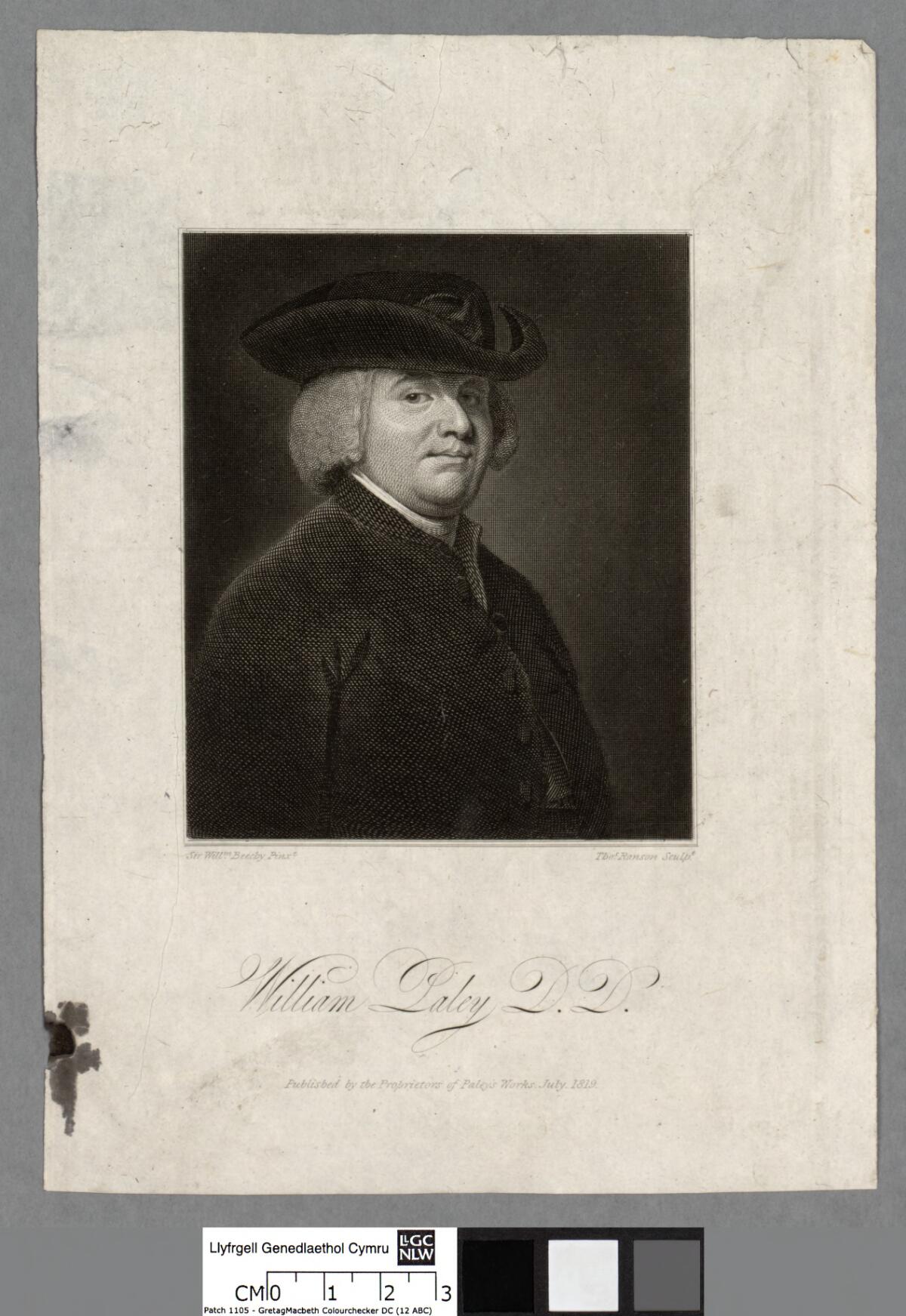
The watchmaker argument is an argument for the existence of God based on the analogy between the purposive complexity of human artefacts and the far greater complexity of biological organisms. Its most famous formulation appears in William Paley’s Natural Theology; or, Evidences of the Existence and Attributes of the Deity (1802), which opens with one of the most celebrated thought experiments in the history of philosophy: if one were crossing a heath and found a stone, one might suppose it had always been there; but if one found a watch, the intricacy of its mechanism would compel the inference that it had been designed by an intelligent maker. Paley then argued that biological organisms display complexity and purposive arrangement far exceeding that of any watch, and that they therefore imply a designer of correspondingly greater intelligence.1
.jpg)
Paley’s argument
Paley developed his case with meticulous attention to biological detail, devoting hundreds of pages to the anatomy of the human eye, the structure of feathers, the hinge mechanism of bivalve shells, and the skeletal adaptations of various animals. Each example was presented as exhibiting the same hallmarks that lead us to infer design in human artefacts: the arrangement of parts toward a purpose, the fitness of means to ends, and the absence of any plausible alternative explanation for such arrangements other than intelligent contrivance.1
The argument can be formalised as follows:
P1. Human artefacts that exhibit complex, purposive arrangement (such as a watch) are known to be products of intelligent design.
P2. Biological organisms exhibit complex, purposive arrangement to an even greater degree than human artefacts.
P3. Like effects imply like causes.
C. Therefore, biological organisms are probably the products of intelligent design.
Paley’s work was enormously influential. It became standard reading at Cambridge, where the young Charles Darwin encountered it and was deeply impressed. Darwin later recalled that Paley’s Natural Theology gave him “as much delight as did Euclid” and that the logic of the argument, as he understood it at the time, seemed irresistible.5 The watchmaker argument represented the culmination of the natural theology tradition in Britain, and it set the terms for the debate about biological design that would shape the next two centuries of discussion.
Hume’s prior critique
David Hume had anticipated and undermined the logic of the design argument more than two decades before Paley published. In his Dialogues Concerning Natural Religion (written by 1776, published posthumously in 1779), Hume advanced several objections through the character Philo that remain potent today.2
First, Hume challenged the strength of the analogy. The universe (or a biological organism) is not very much like a watch. The argument’s force depends on the degree of similarity between the two cases, and Hume argued that the dissimilarities are at least as striking as the similarities: organisms grow, reproduce, and develop in ways that no artefact does. An argument from analogy is only as strong as the analogy itself, and Hume contended that this one is weak.2
Second, Hume argued that even if the analogy held, the argument could not establish the attributes traditionally ascribed to God. A watch implies a watchmaker of finite skill; it does not imply an infinite, omnipotent, or morally perfect being. By Hume’s reasoning, the most the argument could establish is a designer of abilities proportional to the product — and the imperfections of the natural world would imply an imperfect designer.2, 13
Third, Hume pointed out that we have experience of watches being made by watchmakers, but we have no experience of universes being made by gods. The design inference works for watches because we have independent knowledge that watches are made by intelligent agents. We have no corresponding background knowledge about universe-making. The argument, therefore, is an extrapolation beyond the bounds of experience.2
Finally, Hume suggested alternative explanations for apparent order in nature: the universe might be self-organising; order might arise from natural processes without a designer; or the present order might be the survivor of many random arrangements, with disordered configurations having been eliminated. This last suggestion anticipates, in a general way, the logic of natural selection.2
Darwin’s solution
Hume’s objections weakened the design argument logically but did not provide an alternative explanation for biological complexity. That explanation came with Charles Darwin’s On the Origin of Species (1859), which proposed a mechanism — natural selection acting on heritable variation — capable of producing precisely the kinds of complex adaptation that Paley had catalogued, without any need for foresight, planning, or intelligent direction.3
The key insight is cumulative selection. A single random change is unlikely to produce a complex functional structure. But natural selection is not a single random event; it is a cumulative process in which each small improvement is preserved and built upon. Organisms with slightly better vision, slightly more efficient metabolism, or slightly more effective camouflage leave more offspring, and their advantageous traits accumulate over generations. Given sufficient time — and the geological record provides billions of years — this process can produce structures of extraordinary complexity from simple beginnings.3, 4
Richard Dawkins developed this point in The Blind Watchmaker (1986), whose title directly inverts Paley’s metaphor. Dawkins argued that natural selection is a “blind watchmaker” — a process that achieves the appearance of purposive design through an entirely mechanistic, unguided procedure. The watchmaker is “blind” because it has no foresight, no intention, and no goal; it is a “watchmaker” because it produces results that, viewed after the fact, look exactly as though they were designed. Dawkins demonstrated this principle with computer simulations showing that cumulative selection, operating on random variation, can rapidly generate complex patterns that single-step random processes could never produce.4 In Climbing Mount Improbable (1996), Dawkins extended the metaphor: the evolution of a complex organ like the eye is not a leap to the summit of an impossibly steep cliff, but a gradual ascent up the gently sloping back of the mountain, with each step representing a small, selectively advantageous modification.14
Molecular evidence against intelligent engineering
Modern molecular biology has added a further dimension to the critique of the watchmaker argument by revealing that biological “design” contains features that are inconsistent with intelligent engineering but entirely consistent with an unguided evolutionary process. Stephen Jay Gould drew attention to this with his essay on the panda’s thumb: the giant panda’s “thumb” is not a true digit but an enlarged wrist bone co-opted for grasping bamboo — a clumsy solution that no competent engineer would design from scratch but that makes perfect sense as the modification of an existing structure under the constraints of evolutionary history.11
At the molecular level, the evidence is even more striking. The human genome contains approximately 20,000 pseudogenes — broken copies of formerly functional genes that have been disabled by mutations and no longer produce functional proteins. Humans and other primates share a broken copy of the gene for synthesising vitamin C (the GULO gene), with the same disabling mutations in the same locations, indicating that the gene was broken in a common ancestor and inherited in its non-functional state.12 The genome is littered with endogenous retroviruses, transposable elements, and other “genomic fossils” that serve no current function but record the history of past infections and genetic accidents. A designed genome would not contain these features; an evolved genome inevitably does.10
The recurrent laryngeal nerve provides another well-known example. In mammals, this nerve takes a circuitous route from the brain to the larynx, looping down around the aortic arch before ascending back to the throat — a detour that is several inches long in humans and up to fifteen feet long in giraffes. The route is a consequence of the nerve’s evolutionary origin in fish, where the direct path made anatomical sense; as the mammalian body plan evolved, the nerve was carried along by the descent of the aortic arch, producing an absurdly inefficient pathway that no engineer would choose but that evolution, constrained by existing structures, could not easily correct.11
Legacy in modern design arguments
Despite Darwin’s solution, the watchmaker argument has proven remarkably persistent. The intelligent design movement, which emerged in the 1990s, revived the argument in updated form. Michael Behe’s concept of “irreducible complexity” — the claim that certain biochemical systems cannot function if any component is removed, and therefore could not have been built incrementally by natural selection — is a molecular-scale version of Paley’s reasoning.7 William Dembski’s “specified complexity” framework attempts to provide a mathematical criterion for detecting design in biological systems.8 In Kitzmiller v. Dover (2005), both concepts were evaluated and found by the court to fail as scientific arguments: Behe’s examples of irreducible complexity were shown to have plausible evolutionary precursors, and Dembski’s framework was found to lack empirical application.9
Richard Swinburne has defended a modified version of the design argument that avoids Paley’s specific biological claims. Swinburne argues that the existence of natural laws themselves — the orderly, mathematically describable regularities that govern the universe — is better explained by a divine lawgiver than by brute fact. This version of the argument shifts the focus from biological complexity to the existence of the natural order within which evolution operates, and it is less vulnerable to the Darwinian response, since natural selection explains biological complexity but does not explain why the laws of nature take the form they do.15
The watchmaker argument thus occupies a pivotal position in the history of the design argument. It represents the high point of the biological version of the argument — the most detailed and persuasive case ever made for inferring a designer from the structure of organisms. Its refutation by Darwin marks one of the most consequential transitions in the history of ideas: the moment when a class of phenomena that had seemed to require intelligent causation was brought within the scope of natural explanation. The teleological argument did not die with Paley, but it could never again rest on biological complexity with the confidence that Paley had enjoyed.6
References
Genomic Decay of a Photochemical Pathway: The Broken Vitamin C Gene in Guinea Pigs and Humans