Overview
- The biological design argument reasons from the complex, functional organization of living organisms to the existence of an intelligent designer — a tradition extending from Plato and Galen through William Paley’s watchmaker analogy (1802) to the contemporary intelligent design movement, which identifies ‘irreducible complexity’ and ‘specified complexity’ as features that natural selection cannot produce
- Charles Darwin’s theory of evolution by natural selection (1859) provided the first mechanistic alternative to biological design arguments, demonstrating that the cumulative action of selection on random heritable variation can generate complex adaptations without foresight or intention — a challenge that prompted the design argument’s shift from biology to cosmological fine-tuning in mainstream philosophy of religion
- The contemporary debate centers on whether any biological features genuinely exceed the explanatory reach of evolutionary theory: critics argue that every proposed example of irreducible complexity has been explained by evolutionary pathways involving co-option and scaffolding, while defenders contend that the origin of biological information, the genetic code, and the first self-replicating systems remain open to design-based explanations
The argument from design in biology contends that the complex, functional organization of living organisms — the intricacy of the eye, the precision of protein folding, the information content of DNA — constitutes evidence for the existence of an intelligent designer. This is one of the oldest arguments in the philosophy of religion, with roots in ancient Greek thought and its most famous pre-Darwinian expression in William Paley’s Natural Theology (1802). Charles Darwin’s theory of natural selection (1859) provided the first mechanistic alternative capable of producing biological complexity without intelligent direction, and the ensuing debate over whether any biological features genuinely exceed the explanatory reach of evolutionary theory continues in the contemporary intelligent design movement. This article traces the biological design argument from its ancient origins through its Darwinian challenge, its modern revival, and the philosophical and scientific responses it has generated.7, 1
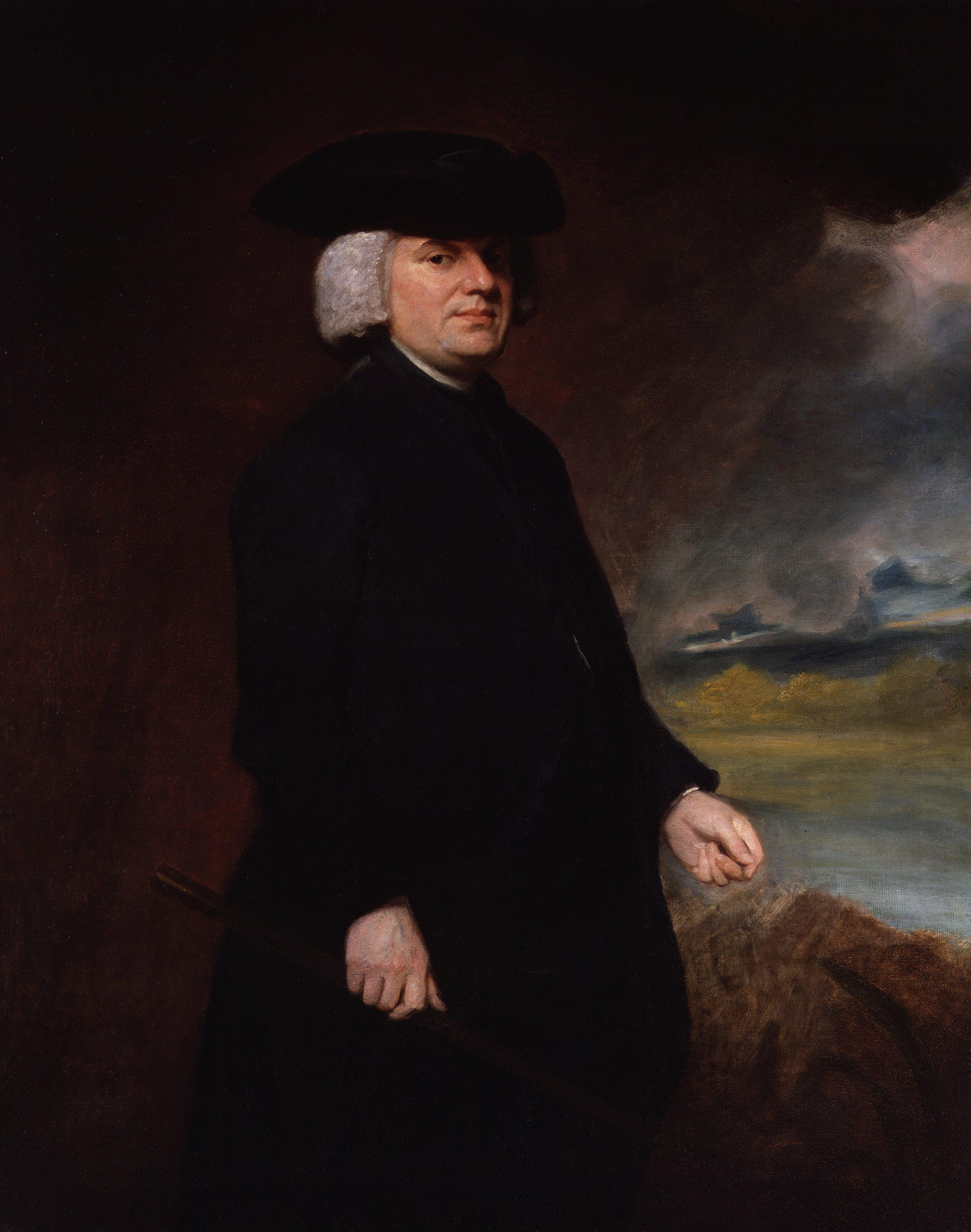

Ancient and medieval roots
The inference from biological organization to a designing intelligence appears early in the Western tradition. Plato’s Timaeus (c. 360 BCE) describes a divine craftsman (Demiurge) who fashions the cosmos and its living inhabitants according to rational patterns. The Stoics, particularly Chrysippus (c. 279–206 BCE), argued that the functional design of living creatures — the sharp teeth of predators, the protective shells of mollusks, the intricate anatomy of the human hand — could not be the product of chance and must reflect a rational principle (logos) pervading nature.7
The physician Galen (c. 129–216 CE) produced the most detailed biological design argument of antiquity in De Usu Partium (On the Usefulness of the Parts of the Body). Across seventeen books, Galen catalogued the functional anatomy of the human body — the arrangement of muscles, the structure of the hand, the optics of the eye, the valves of the heart — arguing that each structure exhibits a fitness for purpose that demonstrates the wisdom of a divine creator. Galen explicitly contrasted his teleological explanation with the Epicurean view that biological structures arose by chance, arguing that the precise correspondence between anatomical form and biological function could not be accidental.10
Thomas Aquinas incorporated biological teleology into his Fifth Way, arguing that natural bodies that lack intelligence nonetheless act for an end — “as the arrow is shot to its mark by the archer” — and must therefore be directed by an intelligent being. While Aquinas’s argument operated within an Aristotelian framework of final causation rather than the mechanistic framework of later design arguments, it drew on the same intuition: the goal-directedness of biological processes points to an intelligent source.7
Paley’s watchmaker
The biological design argument reached its most influential formulation in William Paley’s Natural Theology; or, Evidences of the Existence and Attributes of the Deity (1802). Paley’s opening chapter presents the watchmaker analogy: if one found a stone on a heath, one might suppose it had lain there forever, but if one found a watch — with its interlocking springs, gears, and hands cooperating to indicate the time — one would infer that the watch had a maker. The inference holds, Paley argued, even if one had never seen a watch being made, even if the watch sometimes went wrong, and even if one did not understand every part of the mechanism. What compels the inference is not prior experience with watches but the functional arrangement of parts toward a purpose.1
Paley then devoted several hundred pages to cataloguing biological adaptations that he argued exhibited complexity and fitness for purpose far exceeding any human artifact. The human eye received the most detailed treatment: its adjustable lens, light-sensitive retina, self-cleaning tear mechanism, and protective socket all cooperate to produce vision in a way that, Paley contended, precisely parallels the cooperation of parts in a telescope. Other examples included the structure of feathers, the hinge mechanism of bivalve shells, the circulatory system, and the reproductive anatomy of plants and animals. In each case, Paley argued that the correspondence between structure and function was too precise and too complex to be the product of chance, and that the same reasoning that leads us to infer a designer from a watch should lead us to infer a designer — God — from the vastly more complex machinery of living organisms.1
Paley’s Natural Theology was widely influential. It was required reading at Cambridge for decades and shaped the intellectual formation of Charles Darwin himself, who later wrote that he had been “charmed and convinced by the long line of argumentation” in Paley’s work. The book represented the high point of biological natural theology in the English-speaking world.1, 2
Hume’s philosophical challenge
David Hume raised objections to the biological design argument before Paley wrote, through the character Philo in Dialogues Concerning Natural Religion (published posthumously in 1779). Philo challenged the strength of the analogy between human artifacts and natural organisms: the universe, Philo argued, is not sufficiently similar to a watch or a house to sustain the inference. A machine is a known product of human intelligence, but the universe is a unique object whose cause we have no independent way of determining.9
Philo raised further objections. Even if the analogy held, it would establish at most a designer proportional to the effect — not an infinite, omnipotent, or morally perfect God. The evidence equally supports a committee of designers, an incompetent designer, or a designer who has since died. The organic world might possess its own inherent organizing principles — a “vegetation” or self-organization that produces order without external direction. And the existence of suffering, disease, and predation in the biological world sits uneasily with the inference to a benevolent designer.9
Hume’s objections were philosophical rather than scientific: he did not offer an alternative mechanism for the production of biological complexity. That task fell to Darwin.7
Darwin’s alternative
Charles Darwin’s On the Origin of Species (1859) provided the first scientific mechanism capable of producing the biological adaptations Paley had catalogued. Darwin’s theory rests on three observations and one inference: organisms vary in heritable traits; more offspring are produced than can survive; those individuals with traits better suited to their environment tend to survive and reproduce; therefore, favorable traits accumulate in populations over time. The result is the gradual modification of populations through the differential survival and reproduction of variant individuals — a process Darwin called natural selection.2
Natural selection is a non-teleological process: it has no foresight, no goals, and no intention. It is a consequence of the interaction between random heritable variation and environmental pressures. Yet it is capable of producing functional complexity — the eye, the wing, the immune system — through the cumulative accumulation of small, individually advantageous modifications over vast stretches of time. Each step in the process is favored by selection because it confers a reproductive advantage on its possessor, and the cumulative result is a structure that appears designed for a purpose.2, 3
Darwin recognized the challenge this posed for Paley. In the Origin, he directly addressed the eye — Paley’s paradigm case of design — acknowledging that “to suppose that the eye, with all its inimitable contrivances for adjusting the focus to different distances, for admitting different amounts of light, and for the correction of spherical and chromatic aberration, could have been formed by natural selection, seems, I freely confess, absurd in the highest possible degree.” But he immediately argued that the absurdity is only apparent: if a series of gradations can be found from a simple light-sensitive spot to a complex camera eye, each step providing a functional advantage, then natural selection can account for the entire series. Such gradations, Darwin noted, are found across living species, from the simple photoreceptor patches of flatworms to the compound eyes of insects to the camera eyes of vertebrates and cephalopods.2
Richard Dawkins elaborated Darwin’s response in The Blind Watchmaker (1986), arguing that natural selection is a “blind watchmaker” — a process that achieves the appearance of design through an algorithm that has no foresight and no intentions. Dawkins contended that the cumulative power of selection is sufficient to bridge the gap between simple self-replicating molecules and the most complex biological structures, provided enough time and enough variation are available. The appearance of design in biology is genuine in the sense that organisms are functionally organized, but the process that produced that organization is not intelligent design — it is the differential survival of variants in a competitive environment.3
The intelligent design movement
The intelligent design (ID) movement, which emerged in the late 1980s and 1990s, attempted to revive the biological design argument on new scientific and philosophical grounds. ID proponents argue that certain biological features cannot be explained by natural selection and require the intervention of an intelligent agent. The two principal concepts are irreducible complexity, developed by Michael Behe, and specified complexity, developed by William Dembski.4, 5
Behe introduced the concept of irreducible complexity in Darwin’s Black Box (1996). A system is irreducibly complex if it consists of multiple interacting parts, each of which is individually necessary for the system’s function — the removal of any single part causes the system to cease functioning entirely. Behe’s paradigm example is the bacterial flagellum, a molecular motor consisting of approximately forty protein components that rotate a whip-like filament to propel the bacterium through liquid. Behe argued that because the flagellum requires all of its parts to function, it cannot have been assembled by natural selection acting one step at a time: each intermediate stage would lack function and therefore would not be favored by selection. The irreducibly complex system, Behe contended, is better explained as the product of intelligent design.4
Dembski developed the concept of specified complexity as a general criterion for detecting design in biological systems. In The Design Inference (1998) and No Free Lunch (2002), Dembski argued that when an event or structure exhibits both high complexity (low probability) and specification (conformity to an independently identifiable pattern), it can reliably be attributed to intelligent agency. Dembski proposed an “explanatory filter” that sequentially eliminates regularity (law) and chance as explanations before inferring design. Applied to biology, the argument holds that certain molecular structures — the DNA-based genetic code, the protein synthesis machinery, the immune system — exhibit specified complexity that exceeds what natural selection and chance can produce.16, 5
In The Edge of Evolution (2007), Behe refined his position, accepting common descent and the effectiveness of natural selection for producing small-scale changes but arguing that selection is limited to modifying existing structures and cannot generate the complex molecular machines observed at the biochemical level. Behe analyzed the evolution of drug resistance in the malaria parasite Plasmodium falciparum to estimate the probabilistic limits of what unguided evolution can achieve, concluding that the probability of certain multi-step adaptive changes is so low as to require design.13
Scientific responses
The scientific community has responded to irreducible complexity with detailed evolutionary accounts of the systems Behe identified as unevolvable. Kenneth Miller, a biologist and Catholic, has been among the most prominent critics. In “The Flagellum Unspun” (2004), Miller argued that the bacterial flagellum is not irreducibly complex in the sense required by Behe’s argument. Several flagellar components are homologous to components of the type III secretion system (T3SS), a molecular syringe that bacteria use to inject proteins into host cells. This demonstrates that flagellar subsets have functions other than propulsion — they were co-opted (exapted) from systems that served different purposes. The evolutionary pathway need not have proceeded by adding one flagellar part at a time with each intermediate functioning as a motor; instead, components were assembled from pre-existing functional modules.6
This pattern of co-option — also called exaptation, following Gould and Vrba (1982) — is the standard evolutionary explanation for the emergence of complex systems. The components of a complex system may have originated for different functions and been recruited into a new system, with subsequent natural selection refining the integrated whole. Gould documented numerous examples of exaptation across the history of life, including the evolution of bird feathers (originally for thermoregulation, later co-opted for flight), the mammalian middle ear bones (derived from reptilian jaw bones), and the vertebrate lens crystallins (recruited from metabolic enzymes).11
The collective volume Why Intelligent Design Fails (2004), edited by Young and Edis, assembled scientific responses to ID across multiple disciplines. Contributors demonstrated evolutionary pathways for the immune system (a key Behe example), showed that Dembski’s probability calculations contained mathematical errors, and argued that the concept of “specified complexity” lacks a rigorous definition that would allow it to function as a reliable design-detection criterion. Critics noted that Dembski’s explanatory filter conflates the probability of a particular outcome with the probability of any outcome of comparable complexity — a distinction that, if respected, undermines the inference from low probability to design.8
Philosophical assessment
The philosophical evaluation of the biological design argument depends on whether any biological features genuinely exceed the explanatory resources of evolutionary theory. The mainstream position in both biology and philosophy of science is that they do not: natural selection, supplemented by mechanisms such as genetic drift, gene duplication, horizontal gene transfer, and exaptation, provides a sufficient explanation for the biological complexity Paley, Behe, and Dembski identified as evidence of design.7, 12
The Kitzmiller v. Dover Area School District trial (2005) brought the scientific and philosophical issues into a legal setting. Judge John E. Jones III, ruling on whether intelligent design could be taught as science in public schools, found that ID “is not science and cannot be adjudged a valid, accepted scientific theory,” that it relies on the same flawed reasoning as earlier creationist arguments, and that it is essentially religious in nature. The decision drew on extensive expert testimony about the evolutionary pathways for irreducibly complex systems and the absence of peer-reviewed scientific research supporting intelligent design.14
Alvin Plantinga has defended a more philosophically sophisticated version of the biological design argument. In Where the Conflict Really Lies (2011), Plantinga argues that the real conflict is not between science and theism but between science and naturalism. Plantinga accepts evolutionary biology but argues that the process of evolution, if guided by God, is entirely compatible with theism — and that evolutionary theory, stripped of its naturalistic philosophical interpretation, does not rule out divine guidance. On this view, the biological design argument is not a scientific claim about the inadequacy of natural selection but a philosophical claim about the ultimate explanation for why natural selection produces the results it does.15
This distinction between biological design as a scientific hypothesis and biological design as a philosophical interpretation is central to the contemporary debate. As a scientific hypothesis — the claim that certain biological systems cannot be produced by evolutionary mechanisms and require the direct intervention of an intelligent agent — the design argument has been rejected by the overwhelming majority of biologists and philosophers of science. As a philosophical interpretation — the claim that the capacity of natural selection to produce complex, functional organisms is itself a feature that calls for teleological explanation — the argument intersects with the fine-tuning argument and remains a live topic in philosophy of religion.7, 15
The origin of life
One area where the biological design argument retains some philosophical traction is the origin of life — the transition from non-living chemistry to the first self-replicating system. Natural selection, by definition, requires replication with heritable variation; it cannot operate before replication exists. The origin of the first replicator therefore falls outside the scope of natural selection and requires an independent explanation. ID proponents have argued that the information content of even the simplest self-replicating systems (the minimum genome, the genetic code, the translation apparatus) represents specified complexity that is best explained by design.4, 5
Scientists researching the origin of life have proposed several naturalistic hypotheses, including the RNA world hypothesis (self-replicating RNA preceded DNA-based life), the iron-sulfur world hypothesis (metabolism preceded replication), and the lipid-first hypothesis (self-assembling membranes provided the first compartmentalization). None of these hypotheses has achieved the status of established theory — the origin of life remains one of the major unsolved problems in biology. However, researchers in the field note that the absence of a complete naturalistic explanation does not constitute evidence for design; it constitutes an open scientific question. Invoking design at the point where current understanding ends is, critics argue, a “god of the gaps” strategy that has historically retreated as scientific knowledge advances.8, 12
Relationship to the fine-tuning argument
The decline of the biological design argument in mainstream philosophy of religion has coincided with the rise of the fine-tuning argument, which shifts the evidential base from biology to physics. The fine-tuning argument reasons from the precise calibration of the fundamental constants of nature to the existence of an intelligent designer — a move that sidesteps the Darwinian objection entirely, since natural selection presupposes a universe with the right laws and constants. If the fine-tuning argument succeeds, it establishes a designer at the cosmological level, and the biological complexity that Paley celebrated becomes a consequence of the designed physical framework rather than an independent argument for design.7, 15
Plantinga has argued that the real force of the design intuition in biology is not that natural selection is insufficient but that the existence of a universe in which natural selection can operate — with the right chemistry, the right physics, and the right initial conditions — is itself a remarkable fact that calls for explanation. On this view, the biological design argument and the fine-tuning argument are not competitors but layers of the same insight: the universe is structured to produce complex, functionally organized life, and this structuring is best explained by intelligent agency.15
Major positions on biological design7
| Position | Key proponent | Claim | Status of natural selection |
|---|---|---|---|
| Classical design | Paley (1802) | Biological complexity requires a designer | Pre-Darwinian; no alternative mechanism known |
| Irreducible complexity | Behe (1996) | Some molecular systems cannot evolve by selection | Selection insufficient for multi-part systems |
| Specified complexity | Dembski (1998) | Biological information exceeds chance and law | Selection cannot generate specified complexity |
| Evolutionary theism | Plantinga (2011) | Evolution is compatible with divine guidance | Selection is the mechanism God employs |
| Blind watchmaker | Dawkins (1986) | Selection fully explains biological complexity | Selection is sufficient without design |
| Exaptation and co-option | Gould (2002) | Complex systems evolve by recruiting existing parts | Selection plus co-option explains “irreducible” systems |
Current state of the debate
The biological design argument occupies a distinctive position in the landscape of natural theology. As a scientific hypothesis, it has been largely abandoned in mainstream biology and philosophy of science. The evolutionary mechanisms of natural selection, genetic drift, gene duplication, co-option, and horizontal gene transfer provide a comprehensive framework for explaining the origin and diversification of biological complexity. Every specific example proposed by ID proponents as a case of irreducible complexity has been met with detailed evolutionary explanations, and no peer-reviewed research program has established the scientific viability of intelligent design.8, 14
As a philosophical argument, however, the design intuition in biology has not been entirely eliminated. The question of why the universe contains creatures capable of exhibiting complex functional organization — why natural selection produces the results it does — remains a legitimate philosophical question that evolutionary biology, as a natural science, does not address. Whether this question is best answered by theistic design, by appeal to brute contingency, or by the fine-tuning argument at the cosmological level is a matter of ongoing debate in philosophy of religion.7, 15
The trajectory of the biological design argument illustrates a broader pattern in the history of natural theology: arguments from biology have been progressively displaced by arguments from physics and cosmology as scientific knowledge has advanced. Paley’s watchmaker has been replaced by the cosmic fine-tuner, and the question of design has moved from the eye of the organism to the constants of the universe.7