Overview
- Theological noncognitivism holds that religious statements such as “God exists” are cognitively meaningless — not false, but literally without truth-value, because the term “God” has not been given sufficient empirical or logical content to function as a genuine proposition.
- The position draws on logical positivism’s verification principle (A. J. Ayer) and Antony Flew’s falsification challenge, both of which argue that claims immune to empirical confirmation or disconfirmation fail the basic conditions for meaningful discourse — a standard that theological claims appear unable to meet.
- Critics argue that the verification principle is self-defeating (it cannot itself be empirically verified), that religious language functions differently from scientific language (Wittgenstein’s language games), and that theological terms can be given coherent content through analogy, metaphor, or ostensive definition — noncognitivists respond that these defenses either change the subject or fail to rescue theological claims from semantic vacuity.
Theological noncognitivism is the position that religious language — particularly the central claim “God exists” — is cognitively meaningless. On this view, the sentence “God exists” does not express a proposition that is either true or false; it is not a factual claim that fails to be true but a purported claim that fails to mean anything determinate enough to have a truth-value at all. The term “God,” as used in classical theism, is held to lack sufficient empirical content, logical coherence, or operational definition to function as a genuine referring expression. Theological noncognitivism differs from atheism in an important respect: the atheist says “God does not exist” (a substantive denial), while the noncognitivist says that the term “God” has not been given enough content for “God exists” or “God does not exist” to be meaningful assertions.4, 8, 12
The position has roots in the logical positivism of the Vienna Circle and the British analytic tradition of the mid-twentieth century, particularly the work of A. J. Ayer, Antony Flew, and the later Wittgenstein. While logical positivism as a philosophical program is widely regarded as having failed on its own terms, the specific challenge it posed to religious language remains a live issue in philosophy of religion. The question of whether theological terms have determinate content is prior to the question of whether God exists: if “God” is semantically empty, the arguments of natural theology are not merely unsound but unintelligible.1, 4, 17
The verification principle
The philosophical foundations of theological noncognitivism lie in the verificationist criterion of meaning developed by the logical positivists, particularly as formulated by A. J. Ayer in Language, Truth and Logic (1936; second edition 1946). Ayer argued that a synthetic (non-tautological) statement is meaningful if and only if it is at least in principle empirically verifiable — that is, if there is some possible observation that would count for or against its truth. Statements that are neither tautologies (true by definition) nor empirically verifiable are, in Ayer’s terminology, “pseudo-propositions” — sentences with the grammatical form of assertions but no factual content.1, 17
Ayer applied this criterion directly to theological claims. The statement “there exists a transcendent God” is, he argued, neither a tautology nor an empirical hypothesis. It is not a tautology because theists intend it as a claim about reality, not as a definition. It is not an empirical hypothesis because no possible observation could verify it — God is defined as transcendent, immaterial, and not subject to empirical detection. Since the statement is neither a tautology nor empirically verifiable, it is, on the verification principle, meaningless. Ayer was careful to note that this does not make the theist wrong; it makes the theist’s claim empty. The atheist who says “God does not exist” is, on this analysis, equally guilty of making a meaningless assertion, since the negation of a meaningless claim is itself meaningless.1
The verification principle also targeted metaphysical claims more generally — claims about the nature of substance, the existence of universals, and the structure of reality that are not reducible to empirical observations. Ayer regarded all of traditional metaphysics as meaningless in the same sense, and his critique of theology was part of a broader program of eliminating non-empirical discourse from philosophy. The theological application, however, attracted disproportionate attention because it challenged not merely an academic discipline but a set of beliefs held by most of humanity.1, 17
Flew’s falsification challenge
Antony Flew’s 1950 symposium paper “Theology and Falsification” reframed the noncognitivist challenge in a way that proved more durable than Ayer’s verification principle. Flew did not argue that theological statements fail the criterion of verification; he argued that they fail the weaker criterion of falsification. A genuine assertion, Flew contended, must exclude something — it must be incompatible with at least some conceivable state of affairs. If nothing could count against the truth of a claim, then the claim asserts nothing, because it is compatible with every possible observation.2, 3
Flew illustrated the point with John Wisdom’s parable of the gardener. Two explorers come upon a clearing in the jungle with flowers and weeds. One suggests that a gardener tends the clearing; the other disagrees. They set watches, but no gardener is seen. The believer suggests an invisible gardener, so they set up electric fences and bloodhounds — still nothing. At each stage, the believer qualifies the claim: the gardener is invisible, intangible, insensible to electric fences, has no scent. Flew asks: “What remains of your original assertion? Just how does what you call an invisible, intangible, eternally elusive gardener differ from an imaginary gardener or even from no gardener at all?”2
Flew applied this analysis to theological claims. The theist asserts that God loves his children, but when confronted with a child dying of inoperable cancer, does not withdraw the claim. Instead, the theist qualifies it: God’s love is inscrutable, God’s purposes are beyond human comprehension, suffering is compatible with divine love for reasons we cannot grasp. Each qualification protects the claim from falsification, but each also drains it of content. Flew argued that theological claims “die the death of a thousand qualifications” — they are progressively emptied of meaning as the believer insulates them from every conceivable counterexample.2, 3
The falsification challenge is less ambitious than the verification principle. It does not claim that only empirically verifiable statements are meaningful. It claims only that a meaningful assertion must be incompatible with some state of affairs. If the theist can specify what would count against the existence of God — what observations, if made, would lead the theist to conclude that God does not exist — then the theist’s claim is a genuine assertion, regardless of whether it has been verified. But Flew’s contention was that most theists cannot specify such conditions, and that this inability reveals the emptiness of the original claim.2, 9
Responses from theistic philosophy
The verification principle faced devastating internal criticism even before its theological implications were fully explored. The most telling objection is that the principle is self-defeating: the statement “a synthetic statement is meaningful only if it is empirically verifiable” is itself neither a tautology nor an empirical statement. It is a philosophical thesis about the conditions of meaningfulness, and it cannot be empirically verified. If the principle is correct, it is meaningless by its own standard. Ayer attempted to address this objection in the second edition of Language, Truth and Logic (1946) by weakening the criterion — requiring not conclusive verification but possible evidence for or against — but the weakened version was shown to be either too permissive (admitting too many statements as meaningful) or still self-defeating, and logical positivism was largely abandoned as a systematic program by the 1960s.1, 17
Richard Swinburne responded to the noncognitivist challenge by arguing that the concept of God can be given coherent content through a combination of analogical predication and the logical analysis of divine attributes. In The Coherence of Theism (1977; revised 1993), Swinburne undertook a systematic defense of the claim that each of the traditional divine attributes — omnipotence, omniscience, perfect goodness, incorporeality, eternity — can be given a logically coherent definition, and that the conjunction of these attributes is itself coherent. Swinburne’s project is to show that “God exists” is at least a meaningful claim, even if one goes on to deny its truth. If Swinburne’s analysis succeeds, theological noncognitivism fails at the first step: the concept of God is coherent, and the statement “God exists” has a determinate truth-value.7
John Hick responded specifically to Flew’s falsification challenge with the concept of “eschatological verification.” In his parable of the Celestial City, Hick described two travelers on a road, one of whom believes the road leads to a celestial city and the other of whom does not. Their experiences along the way are identical, so the journey does not settle the dispute. But when they arrive at the end of the road, the existence or nonexistence of the city will be verified. Hick argued that theological claims are verifiable in principle, even if not in practice during earthly life: the claim “God exists” will be verified eschatologically, after death, if it is true. This makes the claim asymmetrically verifiable — its truth could in principle be confirmed by post-mortem experience, even though its falsity could not be confirmed (since the nonexistent do not have experiences).6
Critics have questioned whether eschatological verification genuinely answers the challenge. Flew noted that asymmetric verifiability is a significant concession: a claim that can be confirmed but never disconfirmed is precisely the kind of claim his falsification challenge targets. Michael Martin argued that Hick’s parable assumes that post-mortem experiences would be unambiguous enough to constitute verification, when in fact the interpretation of any experience — including a post-mortem one — depends on prior theoretical commitments. The traveler who arrives at a city after death might still wonder whether the city is divine or merely an artifact of a dying brain, an alien simulation, or a delusion.8, 9
Wittgensteinian responses
.jpg)
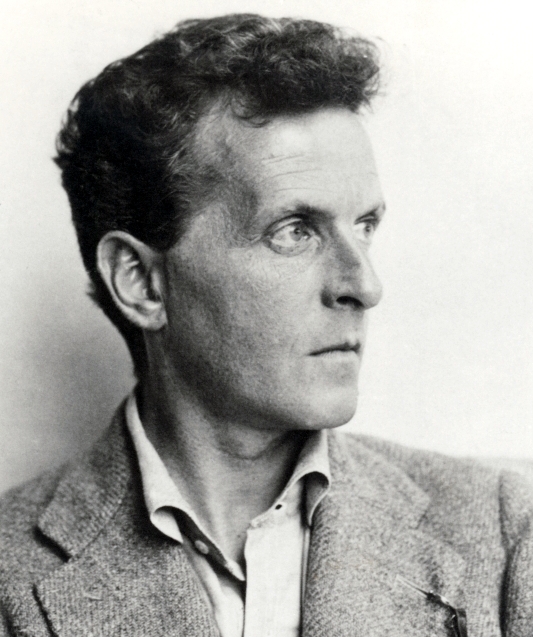
A fundamentally different response to theological noncognitivism comes from the later philosophy of Ludwig Wittgenstein. In Philosophical Investigations (1953) and his lectures on religious belief, Wittgenstein argued that the meaning of language is determined by its use in particular forms of life, not by its relationship to empirical verification. Different types of discourse — science, ethics, aesthetics, religion — constitute different “language games,” each with its own rules, purposes, and criteria of sense. To evaluate religious language by the standards of empirical science is, on this view, to commit a category error — like judging a poem by the standards of a chemistry textbook.5, 4
Wittgensteinian philosophers of religion, including D. Z. Phillips and Peter Winch, developed this insight into a non-realist account of religious discourse. On their view, the statement “God exists” is not a factual claim about the presence of a cosmic entity; it is an expression of a religious orientation toward the world, a way of living under the aspect of eternity, a commitment to seeing the world as meaningful. Religious belief is not a hypothesis about the furniture of the universe but a form of life with its own internal coherence. On this reading, the noncognitivist’s demand for empirical content is misplaced because it assumes that all meaningful discourse must function as empirical description, which is precisely what Wittgenstein denied.5, 4, 14
This response, however, faces objections from both theists and atheists. Many religious believers insist that their claims are factual — that they really do believe in an actually existing, personal God who created the universe and intervenes in history. The Wittgensteinian reinterpretation, which reduces “God exists” to a non-factual expression of a form of life, is not what most theists mean by their claims, and many theistic philosophers — including Swinburne, Plantinga, and William Lane Craig — have explicitly rejected it. From the atheistic side, if religious language is genuinely non-cognitive — if it does not make truth-claims — then it is not in competition with scientific or philosophical claims about reality, but it is also not the kind of thing that can be rationally evaluated as true or false, which is precisely the noncognitivist’s original point.7, 11, 18
The content challenge: what does “God” mean?
A strand of theological noncognitivism that persists independently of the verification principle focuses on the specific content of the term “God.” Theodore Drange, in Nonexistence of God (1998), argued that the concept of God as used in orthodox Christianity is internally incoherent — not because we lack empirical evidence for God’s existence, but because the conjunction of attributes traditionally ascribed to God (omnipotence, omniscience, perfect goodness, incorporeality, timelessness, personhood) generates logical contradictions. A timeless being cannot also be a person who acts in history, because action requires temporal sequence. An omnipotent being who is also perfectly good cannot be truly omnipotent, since it cannot do evil. An incorporeal being cannot literally speak, see, or hear, yet scripture routinely attributes such activities to God.12
Drange distinguished between two forms of the noncognitivist challenge. The first is semantic: the term “God” has not been given a clear enough definition for claims about God’s existence to be evaluable. The second is logical: the attributes ascribed to God are mutually contradictory, rendering the concept incoherent in the same way that “married bachelor” is incoherent. On either form, the appropriate response to “God exists” is not “that’s false” but “that claim needs to be clarified before it can be assessed.”12, 16
The classical theistic tradition, dating back to Aquinas, addressed the problem of theological language through the doctrine of analogy. On this view, terms like “good,” “wise,” and “powerful” are applied to God neither univocally (with the same meaning as when applied to creatures) nor equivocally (with entirely different meanings), but analogically. God’s goodness bears an analogical relationship to human goodness — similar enough to convey real information, different enough to preserve divine transcendence. Whether the doctrine of analogy succeeds in giving determinate content to theological terms has been debated for centuries, with critics arguing that analogical predication reduces to either univocity (in which case God is knowable but not transcendent) or equivocity (in which case God is transcendent but unknowable), with no stable middle ground.4, 13
Contemporary status
Theological noncognitivism occupies an unusual position in contemporary philosophy of religion. The verification principle on which Ayer based his version is widely regarded as having failed, and logical positivism is no longer a living philosophical program. Yet the challenges that noncognitivism raised have not been entirely resolved. Flew’s falsification challenge continues to be discussed, and the question of whether theological claims are genuinely falsifiable remains contested. The success of Swinburne’s project in The Coherence of Theism is debated: some philosophers regard him as having shown that the concept of God is logically coherent, while others (including Oppy and Mackie) argue that significant incoherences remain, particularly concerning the conjunction of timelessness with personhood and omniscience with libertarian free will.7, 10, 11
Most philosophers of religion today treat “God exists” as a meaningful (cognitive) claim and proceed to debate its truth, rather than its meaningfulness. This represents a partial victory for the theistic side: the conversation has moved past the noncognitivist challenge to engage directly with arguments for and against God’s existence. But the noncognitivist tradition has left a lasting mark on the debate by making explicit the semantic prerequisites for meaningful theological discourse. Any theist who wants to claim that “God exists” is true must first provide a coherent account of what the term “God” means — and this task, while often taken for granted, is philosophically nontrivial.4, 15
For the counter-apologetics tradition, theological noncognitivism serves as a reminder that the question “does God exist?” presupposes a prior question: “what do you mean by ‘God’?” If the concept of God is defined so broadly as to be unfalsifiable, or so narrowly as to be incoherent, the existence question does not arise in a meaningful form. The noncognitivist does not claim that God certainly does not exist; the claim is that until the theist provides a clear, consistent, and contentful definition of the term, the debate over God’s existence has not properly begun.8, 12, 16
References
The Presumption of Atheism and Other Philosophical Essays on God, Freedom, and Immortality