Overview
- Biblical inerrancy is the doctrine that the original manuscripts of the Bible are entirely free from error in all they affirm — a position formalized in the 1978 Chicago Statement on Biblical Inerrancy, signed by nearly 300 evangelical scholars
- The doctrine rests on a qualification that no surviving manuscript can be tested against: inerrancy applies only to the original autographs, none of which exist, while the approximately 5,800 Greek New Testament manuscripts that do survive contain an estimated 300,000 to 400,000 textual variants
- Scholarly positions range from unlimited inerrancy (no errors of any kind in the originals) to limited inerrancy (trustworthy in faith and practice but not in scientific or historical details) to those who reject the category entirely as a modern construct foreign to the biblical writers’ own self-understanding
Biblical inerrancy is the doctrine that the Bible, in its original manuscripts, is entirely free from error in everything it affirms. In its strongest form, the doctrine holds that the original autographs contain no errors of any kind — not only in matters of theology and ethics but also in statements touching on history, geography, chronology, and the natural world.1, 4 The doctrine became a defining boundary marker in twentieth-century American evangelicalism, particularly after the publication of Harold Lindsell’s The Battle for the Bible in 1976 and the adoption of the Chicago Statement on Biblical Inerrancy in 1978.3, 4
This article traces the historical development of the inerrancy doctrine, examines the biblical texts cited in its support, surveys the major positions in the scholarly debate, and considers the textual and historical questions that inform the discussion. All biblical quotations are from the English Standard Version unless otherwise noted.14
Definition and scope
The term “inerrancy” as applied to Scripture refers to the claim that the Bible makes no false assertions. The Chicago Statement on Biblical Inerrancy, the most widely cited formal definition, states: “Being wholly and verbally God-given, Scripture is without error or fault in all its teaching, no less in what it states about God’s acts in creation, about the events of world history, and about its own literary origins under God, than in its witness to God’s saving grace in individual lives.”4
The doctrine is typically distinguished from a related but broader concept, infallibility. In common theological usage, infallibility refers to the Bible’s trustworthiness as a guide in matters of faith and practice — its inability to fail in its salvific purpose. Inerrancy extends this claim to include all factual assertions in the text. Some theologians affirm infallibility while denying inerrancy, holding that the Bible is reliable in its theological teaching without being error-free in every historical or scientific detail.5, 13
A further distinction exists within inerrancy itself. Unlimited inerrancy (sometimes called “strict” or “absolute” inerrancy) holds that the Bible is without error in all matters it addresses, including science and history. Limited inerrancy restricts the error-free claim to matters of faith and salvation while allowing for inaccuracies in peripheral historical or scientific statements. The Chicago Statement rejects limited inerrancy, affirming in Article XII: “We deny that Biblical infallibility and inerrancy are limited to spiritual, religious, or redemptive themes, exclusive of assertions in the fields of history and science.”4
Historical development
The question of whether the Bible contains errors has a long history. Church fathers including Augustine of Hippo (354–430 CE) wrote extensively on apparent contradictions in the Gospels, generally attributing them to limitations of human understanding rather than faults in the text. Augustine’s position — that Scripture, properly understood, contains no falsehood — is frequently cited by inerrancy proponents as evidence that the doctrine is not a modern invention.6, 7
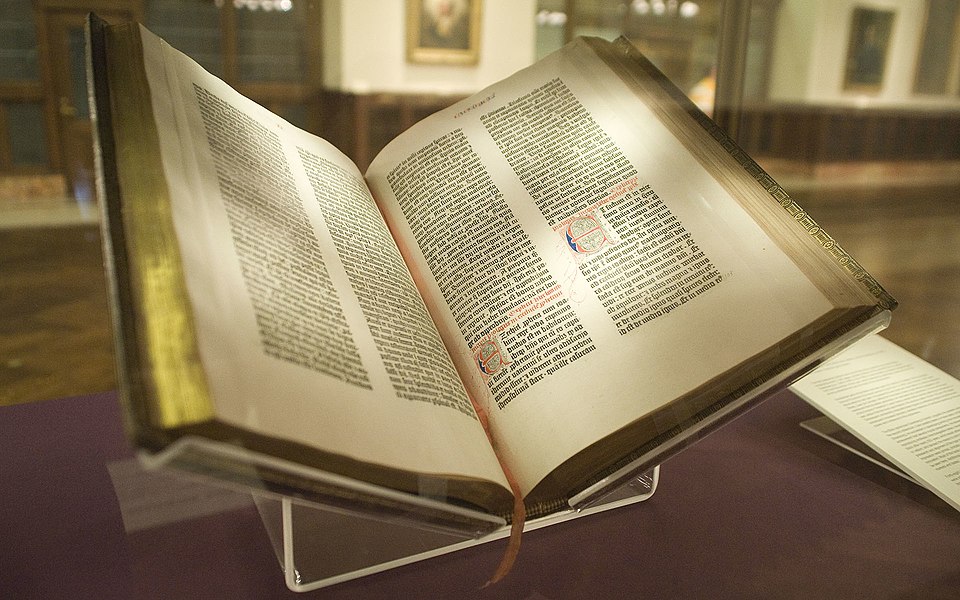

The Reformation intensified focus on Scripture’s authority. Martin Luther and John Calvin both affirmed the Bible’s supreme authority, though scholars debate whether their views correspond to the modern inerrancy doctrine. Rogers and McKim argued in 1979 that the Reformers held a functional view of biblical authority focused on its salvific purpose rather than a commitment to factual accuracy in all details.5 Woodbridge contested this reading in 1982, arguing that the Reformers did affirm the truthfulness of Scripture in all its assertions.6
The doctrine received its most systematic articulation in the late nineteenth century at Princeton Theological Seminary. Archibald Alexander Hodge and Benjamin Breckinridge Warfield published their joint article “Inspiration” in The Presbyterian Review in 1881, which stated: “All the affirmations of Scripture of all kinds, whether of spiritual doctrine or duty, or of physical or historical fact, or of psychological or philosophical principle, are without any error, when the ipsissima verba of the original autographs are ascertained and interpreted in their natural and intended sense.”2 This formulation introduced two qualifications that have remained central to the doctrine: inerrancy applies to the original autographs (not to copies or translations), and to statements interpreted in their intended sense (allowing for figures of speech, phenomenological language, and literary conventions).1, 2
Warfield’s subsequent writings developed the Princeton doctrine further. He argued that verbal, plenary inspiration — the view that the Holy Spirit superintended the biblical writers in the selection of every word — logically entails inerrancy: if God cannot err and God directed the writing of Scripture, then Scripture as originally given cannot contain errors.1
The fundamentalist-modernist controversy
The rise of historical criticism in the nineteenth century — including source criticism of the Pentateuch, questioning of traditional authorship attributions, and the application of evolutionary thought to the history of Israelite religion — provoked a conservative response. Between 1910 and 1915, a series of pamphlets titled The Fundamentals: A Testimony to the Truth was published, defending doctrines including biblical inerrancy against modernist challenges. Approximately three million individual volumes were distributed free of charge.15, 16
The term “fundamentalist” originally derived from this publication series. George Marsden has documented how inerrancy became a litmus test within American Protestantism during the 1920s, with denominational splits over the authority of Scripture reshaping the institutional landscape of American Christianity.16
The twentieth-century inerrancy debate
The modern inerrancy debate intensified in the 1970s. In 1976, Harold Lindsell, then editor of Christianity Today, published The Battle for the Bible, in which he argued that inerrancy was the essential test of evangelical identity and documented cases of scholars and institutions he believed had departed from it. Lindsell contended that any compromise on inerrancy would inevitably lead to the erosion of other doctrines.3
The book generated immediate controversy within evangelicalism. David Hubbard, president of Fuller Theological Seminary, publicly rejected Lindsell’s definition of inerrancy as “unbiblical,” arguing instead for a view that affirmed the Bible’s trustworthiness in matters of salvation without requiring factual precision in all details.3, 16
In response to the controversy, a group of approximately fifteen scholars formed the International Council on Biblical Inerrancy (ICBI) in 1977. The council convened a summit in Chicago in October 1978, where nearly 300 evangelical leaders signed the Chicago Statement on Biblical Inerrancy. The statement included a preface, a short summary, and nineteen articles, each structured as an affirmation and a corresponding denial. Signatories included J. I. Packer, R. C. Sproul, Norman Geisler, Francis Schaeffer, and Carl F. H. Henry.4
The ICBI produced two additional statements — on biblical hermeneutics (1982) and biblical application (1986) — before disbanding in 1988, having judged its mission accomplished.4
Biblical texts cited in support
Proponents of inerrancy cite several biblical passages as evidence that the Bible claims divine authorship and therefore perfect truthfulness. The most frequently cited is Paul’s second letter to Timothy:
2 Timothy 3:16, ESV“All Scripture is breathed out by God and profitable for teaching, for reproof, for correction, and for training in righteousness.”
The Greek term theopneustos (θεόπνευστος), translated “breathed out by God” or “God-breathed,” is a hapax legomenon — it appears only once in the New Testament. Warfield argued that the term refers to the product of divine breathing, meaning that Scripture is God’s own speech set down in writing.1 Others note that the term describes a quality of Scripture (“useful for teaching”) rather than making a claim about factual accuracy in historical or scientific matters.10, 13
A second key passage appears in 2 Peter:
2 Peter 1:21, ESV“For no prophecy was ever produced by the will of man, but men spoke from God as they were carried along by the Holy Spirit.”
This passage attributes prophetic speech to the impulse of the Holy Spirit. Inerrancy proponents extend the principle to all of Scripture, arguing that divine oversight prevents any error from entering the text.1, 7 Critics observe that the passage speaks specifically of prophecy and does not make a claim about the historical or scientific accuracy of the entire biblical corpus.10
Jesus’s statement in the Gospel of John is also cited:
John 10:35, ESV“Scripture cannot be broken.”
Warfield regarded this as a decisive affirmation of Scripture’s unbreakable authority, arguing that if Jesus treated the Old Testament as incapable of error, Christians must do the same.1 Scholars who question this reading note that the statement affirms the authority and permanence of Scripture — that it cannot be set aside — without necessarily asserting that every historical detail is factually accurate.5, 13
Additional passages frequently cited include Psalm 19:7 (“The law of the LORD is perfect”), Psalm 119:160 (“The sum of your word is truth”), Proverbs 30:5 (“Every word of God proves true”), and Matthew 5:18 (“Until heaven and earth pass away, not an iota, not a dot, will pass from the Law until all is accomplished”).1, 14
The original autographs qualification
A defining feature of the inerrancy doctrine since Hodge and Warfield is its restriction to the original autographs — the texts as first written by the biblical authors. No original manuscript of any biblical book is known to survive. The earliest substantial witnesses to the Hebrew Bible are the Dead Sea Scrolls (c. 250 BCE–68 CE), which date from centuries after the latest books of the Hebrew Bible were composed. The earliest New Testament manuscript fragment, Papyrus 52 (a portion of the Gospel of John), dates to approximately 125 CE, nearly a century after the original was written.8
The approximately 5,800 Greek manuscripts of the New Testament that survive contain an estimated 300,000 to 400,000 textual variants — more individual points of variation than there are words in the New Testament itself. The vast majority of these variants are minor (spelling differences, word-order changes, scribal slips), but a meaningful number affect the content of theologically significant passages.8, 17
Bart Ehrman has framed this as a challenge to the practical relevance of the inerrancy doctrine: “How does it help us to say that the Bible is the inerrant word of God if in fact we don’t have the words that God inerrantly inspired, but only the words copied by the scribes — sometimes correctly but sometimes (many times!) incorrectly?”9 Defenders of inerrancy respond that the high number of manuscripts allows textual critics to reconstruct the original text with a very high degree of confidence, and that the doctrine describes what God produced, not what scribes transmitted.7, 12
Textual and historical challenges
The inerrancy debate is shaped by specific textual and historical phenomena in the biblical text. Scholars on all sides of the debate engage with these data, though they draw different conclusions.
Numerical and narrative discrepancies between parallel biblical accounts have been discussed since antiquity. The census of David in 2 Samuel 24:9 reports 800,000 fighting men in Israel and 500,000 in Judah; the parallel account in 1 Chronicles 21:5 gives 1,100,000 in Israel and 470,000 in Judah. The Gospels record differing details in their accounts of the same events: the number of angels at the empty tomb (one in Mark and Matthew, two in Luke and John), the last words of Jesus on the cross (different in each Gospel), and the genealogies of Jesus in Matthew 1 and Luke 3, which diverge significantly after David.8, 14
Inerrancy proponents address such cases through harmonization — the practice of constructing a composite account that accommodates all the variant details. The Chicago Statement allows for this approach, affirming in Article XIII that “differences between literary conventions in Bible times and in ours” do not constitute errors. Critics argue that harmonization sometimes requires implausible reconstructions (such as Lindsell’s proposal that Peter denied Jesus six times to reconcile the differing Gospel accounts) and that treating discrepancies as puzzles to be solved rather than evidence of distinct authorial perspectives distorts the individual character of each biblical text.3, 4, 10
Historical and archaeological questions also bear on the discussion. Several events described in the Hebrew Bible — including a global flood, the exodus of millions of Israelites from Egypt, and the military conquest of Canaan — lack corroborating evidence in the archaeological record and in some cases conflict with it. The presence of anachronisms in the biblical text (references to Philistines, camels, and place names that did not exist in the periods described) presents additional challenges to historical accuracy claims.10, 11
Scholarly positions
The inerrancy debate encompasses a spectrum of positions within Christian scholarship.
Classical inerrancy. Represented by the Chicago Statement and defended by scholars including D. A. Carson, John Woodbridge, and Kevin Vanhoozer, this position holds that the original autographs are without error in all they affirm, including historical and scientific matters, when interpreted according to their intended literary genre and the conventions of the ancient world. Carson and Woodbridge’s Scripture and Truth (1983) argues that inerrancy has deep roots in church history and is a necessary implication of the doctrine of divine inspiration.7, 12
Limited inerrancy. Rogers and McKim argued in 1979 that the Bible is inerrant in its salvific and theological teaching but may contain incidental errors in historical, geographical, or scientific matters. They contended that unlimited inerrancy was a post-Reformation innovation of the Princeton theologians, not the historic Christian position. This view is sometimes called “purpose inerrancy” or “functional inerrancy.”5
Incarnational model. Peter Enns proposed an analogy between the Bible and the incarnation of Christ: just as Jesus was fully divine and fully human, the Bible is a fully divine and fully human product. On this view, the Bible reflects the cultural assumptions, cosmology, and historical limitations of its human authors — including factual errors — without this compromising its divine character or authority. Enns’s position led to his departure from Westminster Theological Seminary in 2008.10
Rejection of the category. Some scholars argue that “inerrancy” is a modern category foreign to the biblical writers’ own understanding of their work. Kenton Sparks has argued that the concept of a text being “without error” in the modern, propositional sense was not available to ancient authors and that applying it to the Bible distorts the nature of the literature. The multi-author volume Five Views on Biblical Inerrancy (2013) stages this debate among evangelical scholars, revealing significant disagreement about whether the term is helpful or harmful.11, 13
The self-referential argument
A recurring methodological question in the inerrancy debate concerns the structure of the argument for the doctrine. The classical case, as articulated by Warfield, proceeds from Scripture’s own claims about itself: the Bible says it is God-breathed; God cannot err; therefore the Bible cannot err.1
Critics have noted the circularity in this reasoning: the argument uses the Bible’s claims about itself to establish the Bible’s trustworthiness. This presupposes the conclusion it seeks to demonstrate. Defenders of inerrancy acknowledge the circularity but argue that all ultimate authorities must be self-authenticating — that grounding the Bible’s authority in something external (reason, tradition, experience) would make that external authority superior to Scripture. The Chicago Statement addresses this in Article I: “We affirm that the Holy Scriptures are to be received as the authoritative Word of God. We deny that the Scriptures receive their authority from the Church, tradition, or any other human source.”4, 7
Denominational and institutional significance
The inerrancy doctrine has functioned as a defining boundary in American evangelical institutions. The Southern Baptist Convention adopted the Baptist Faith and Message 2000, which affirms that the Bible “has God for its author, salvation for its end, and truth, without any mixture of error, for its matter.” Several evangelical seminaries and organizations require faculty and members to affirm inerrancy as a condition of employment or membership.16
Institutional conflicts over inerrancy have shaped the landscape of American theological education. Fuller Theological Seminary’s 1972 revision of its statement of faith, removing the word “inerrant,” was a catalyst for the broader controversy. The Southern Baptist Convention’s “conservative resurgence” of the 1980s and 1990s was driven in large part by the inerrancy issue, resulting in the replacement of faculty at SBC seminaries who declined to affirm the doctrine.3, 16
Outside American evangelicalism, the inerrancy doctrine holds less institutional prominence. The Roman Catholic Church affirms that the Bible teaches “solidly, faithfully and without error that truth which God wanted put into sacred writings for the sake of salvation” (Dei Verbum, 1965) — a formulation that some interpret as closer to limited inerrancy than to the Chicago Statement’s position. Most mainline Protestant denominations do not require affirmation of inerrancy, and the term is rarely used in Eastern Orthodox theology.13
Current state of the debate
The inerrancy debate remains active within evangelical scholarship. The publication of Five Views on Biblical Inerrancy in 2013, featuring contributions from scholars across the evangelical spectrum, demonstrated that significant disagreement persists over the definition, scope, and usefulness of the term. Contributors applied their respective views to specific test cases — including the conquest of Canaan, the creation accounts, and New Testament use of Old Testament texts — revealing that even scholars who affirm inerrancy differ substantially in how they apply the doctrine to particular passages.13
The availability of ancient Near Eastern comparative literature — including Mesopotamian flood narratives, creation myths, law codes, and treaty forms — has complicated the discussion by showing that biblical authors drew on and adapted existing literary traditions. The compositional history of the biblical books, as reconstructed by source and redaction criticism, raises questions about what it means for a text with multiple authors and editorial layers to be “without error.”10, 11
At the same time, scholars who defend inerrancy have refined the doctrine to address these challenges. Vanhoozer has argued for an approach that takes genre and communicative intent seriously, maintaining that inerrancy applies to what a text affirms rather than to everything it describes or reports. On this reading, a parable need not be historically true, a genealogy need not be exhaustive, and phenomenological language (such as the sun “rising”) need not commit the author to a geocentric cosmology.12, 13