Overview
- The Torah explicitly permits the purchase of foreign slaves as permanent, inheritable property and establishes a two-tier system with protections for Israelite servants but no comparable protections for foreign slaves
- Biblical law regulates slavery rather than condemning it, including provisions for beating slaves, forced marriage of captive women, and the distribution of human captives as war plunder
- The New Testament instructs slaves to obey their masters and nowhere calls for the abolition of slavery as an institution, while the letter to Philemon returns a runaway slave to his owner
The Hebrew Bible contains extensive legislation governing the institution of slavery. The legal codes found in Exodus, Leviticus, Numbers, and Deuteronomy — texts attributed to divine revelation through Moses — explicitly permit the acquisition, ownership, inheritance, and physical discipline of enslaved persons.1, 2 These laws do not condemn slavery as an institution. They regulate it, establishing procedures for purchase, terms of service, conditions of release, and permissible levels of physical punishment. The New Testament likewise contains instructions for slaves to obey their masters and nowhere calls for abolition.8, 12
This article examines the biblical texts themselves — what they say, how they distinguish between categories of enslaved persons, and how they compare with other ancient Near Eastern law codes that regulated the same institution. The Hebrew term ‘ebed (עֶבֶד) covers a range of meanings from “servant” to “slave,” but the legal provisions examined below describe persons who are owned as property, inherited across generations, and subject to physical coercion — conditions that correspond to slavery in any standard definition of the term.1, 7

Foreign slaves as permanent property
The most explicit legislation on chattel slavery in the Torah appears in Leviticus 25, within the Holiness Code. The passage draws a sharp distinction between Israelite servants and foreign slaves:
Leviticus 25:44–46, ESV“As for your male and female slaves whom you may have: you may buy male and female slaves from among the nations that are around you. You may also buy from among the strangers who sojourn with you and their clans that are with you, who have been born in your land, and they may be your property. You may bequeath them to your sons after you to inherit as a possession forever. You may make slaves of them, but over your brothers the people of Israel you shall not rule, one over another ruthlessly.”
Three features of this text are significant. First, foreign slaves are explicitly designated as ’ahuzzah (אֲחֻזָּה) — “property” or “possession” — the same term used elsewhere in the Torah for land holdings (Genesis 47:11; Leviticus 25:10).2, 3 Second, ownership is permanent and heritable: masters may bequeath enslaved persons to their children “as a possession forever.” Third, the passage explicitly contrasts the treatment of foreign slaves with the treatment of Israelites, who “shall not rule, one over another ruthlessly” — a protection that applies to Israelites but is not extended to the foreign enslaved.15
The distinction is ethnic in character. The determining factor for permanent enslavement versus protected service is national origin. An Israelite who falls into debt enters a form of indentured service with legal protections and a fixed term. A foreigner purchased from surrounding nations or from resident aliens becomes permanent property with no path to release under the Jubilee provisions.2, 3
Israelite debt servitude
The Torah contains three separate manumission laws governing the service of Israelite debtors, found in the Covenant Code (Exodus 21:2–6), the Deuteronomic Code (Deuteronomy 15:12–18), and the Holiness Code (Leviticus 25:39–46). These three codes reflect different periods and different legal perspectives on the same institution, and their provisions do not fully harmonize.3, 16
The Covenant Code provides a six-year term of service for a “Hebrew slave” (‘ebed ‘ivri):2
Exodus 21:2–4, ESV“When you buy a Hebrew slave, he shall serve six years, and in the seventh he shall go out free, for nothing. If he comes in single, he shall go out single; if he comes in married, then his wife shall go out with him. If his master gives him a wife and she bears him sons or daughters, the wife and her children shall be her master’s, and he shall go out alone.”
The provision in verse 4 creates a mechanism of coercion. If the master provides a wife during the term of service, the wife and any children remain the master’s property upon the servant’s release. The servant leaves alone.2, 7 The text continues with a provision for permanent enslavement by consent:
Exodus 21:5–6, ESV“But if the slave plainly says, ‘I love my master, my wife, and my children; I will not go out free,’ then his master shall bring him to God, and he shall bring him to the door or the doorpost. And his master shall bore his ear through with an awl, and he shall be his slave forever.”
The choice presented to the servant is constrained: he may go free and abandon his family, or he may remain enslaved permanently in order to stay with his wife and children. The ear-piercing ritual marks his permanent status.2, 4
Deuteronomy 15 revises the Exodus law3 by extending the provision to female servants (“your brother, a Hebrew man or a Hebrew woman,” Deuteronomy 15:12, ESV) and by requiring the master to provide material goods upon release. Leviticus 25 reframes the entire institution, insisting that Israelites should be treated not as slaves but as hired workers, with release in the Jubilee year rather than after six years. These three laws reflect a legal tradition grappling with the institution over time, each successive code adjusting the terms of Israelite servitude while leaving the permanent enslavement of foreigners untouched.3, 16
The two-tier system
The legal distinction between Israelite servants and foreign slaves runs throughout the Pentateuchal slave laws. The following table summarizes the provisions that apply to each category.2, 3
Legal provisions for Israelite servants versus foreign slaves in the Torah2, 11
| Provision | Israelite servants | Foreign slaves |
|---|---|---|
| Duration of service | Six years, released in the seventh (Exodus 21:2) or at the Jubilee (Leviticus 25:40–41) | Permanent; “a possession forever” (Leviticus 25:46) |
| Classification | “As a hired worker and as a sojourner” (Leviticus 25:40, ESV) | “Your property” (Leviticus 25:45, ESV) |
| Inheritance | Not inheritable as property | “You may bequeath them to your sons” (Leviticus 25:46, ESV) |
| Protection from harsh treatment | “You shall not rule over him ruthlessly” (Leviticus 25:43, ESV) | No comparable protection stated |
| Release upon injury | Released if a tooth or eye is destroyed (Exodus 21:26–27) | The same law applies to “his slave, male or female” without ethnic distinction (Exodus 21:26–27) |
| Sale to foreigners | Prohibited (Leviticus 25:42) | No prohibition stated |
The release-upon-injury provision in Exodus 21:26–27 is one of the few protections that appears to apply to all slaves regardless of origin. If a master destroys a slave’s eye or tooth, “he shall let the slave go free for the eye’s sake” (Exodus 21:26, ESV). This provision has no parallel in other ancient Near Eastern law collections.1, 5 However, the broader legal framework makes clear that the fundamental distinction between temporary Israelite service and permanent foreign enslavement remains intact across all three Pentateuchal codes.2, 3
Physical discipline of slaves
The Covenant Code contains a provision governing the physical punishment of enslaved persons by their owners:
Exodus 21:20–21, ESV“When a man strikes his slave, male or female, with a rod and the slave dies under his hand, he shall be avenged. But if the slave survives a day or two, he is not to be avenged, for the slave is his money.”
The law permits the beating of slaves with a rod.7 The only limitation is that the slave must not die immediately under the blow. If the slave survives for a day or two before dying, no penalty applies. The rationale given in the text is economic: “the slave is his money” (Hebrew: kaspo hu’, כַּסְפּוֹ הוּא) — that is, the financial loss to the master is considered punishment enough.1, 4
This provision contrasts with the immediately preceding law governing violence against free persons. Exodus 21:18–19 stipulates that if one free person strikes another and the victim recovers, the assailant must pay for lost time and medical care. The law for enslaved persons establishes a different standard: the master’s property right in the slave is the controlling legal interest, and physical punishment that does not result in immediate death is legally permitted.2, 7
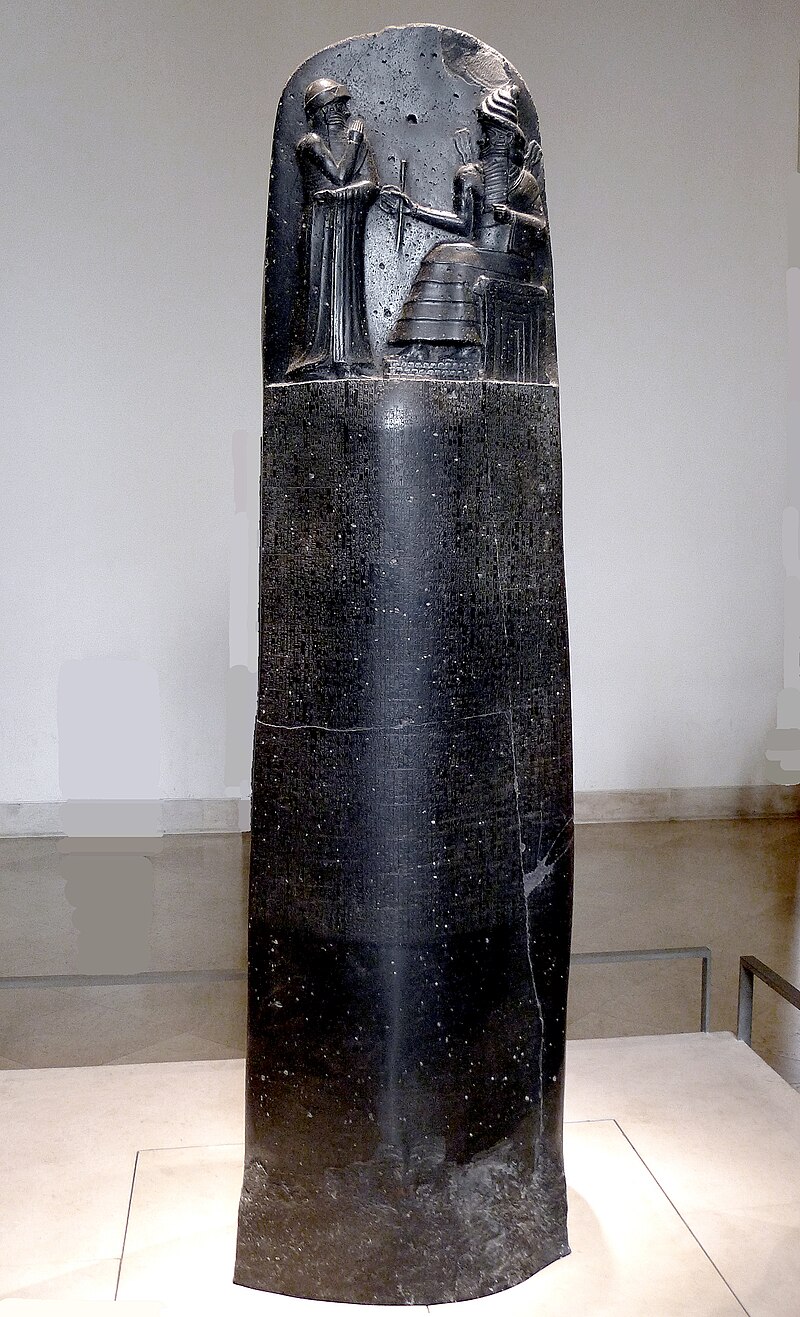
The Code of Hammurabi similarly recognizes the master’s right to discipline slaves but imposes different penalties for injuries to slaves belonging to other persons (Laws 199, 213–214, 217). In Hammurabi’s system, injuring another person’s slave creates an obligation to compensate the owner — the protected interest is the owner’s property, not the slave’s bodily integrity.5, 6
Women and slavery
The Pentateuchal laws contain several provisions specifically governing the enslavement and sexual availability of women. Exodus 21 addresses the sale of daughters:
Exodus 21:7–11, ESV“When a man sells his daughter as a slave, she shall not go out as the male slaves do. If she does not please her master, who has designated her for himself, then he shall let her be redeemed. He shall have no right to sell her to a foreign people, since he has broken faith with her. If he designates her for his son, he shall deal with her as with a daughter. If he takes another wife to himself, he shall not diminish her food, her clothing, or her marital rights. And if he does not do these three things for her, she shall go out for nothing, without payment of money.”
The passage permits fathers to sell their daughters as slaves. The female slave does not receive the automatic six-year release granted to male Hebrew servants. Instead, she may be “designated” by the master for himself or for his son — a euphemism for sexual partnership. The law provides certain protections (food, clothing, marital rights) but operates within a framework in which a father’s sale of his daughter into sexual servitude is a legally sanctioned transaction.2, 10
Deuteronomy 21 addresses the treatment of women captured in war:
Deuteronomy 21:10–14, ESV“When you go out to war against your enemies, and the LORD your God gives them into your hand and you take them captive, and you see among the captives a beautiful woman, and you desire to take her to be your wife, and you bring her home to your house, she shall shave her head and pare her nails. And she shall take off the clothes in which she was captured and shall remain in your house and lament her father and her mother a full month. After that you may go in to her and be her husband, and she shall be your wife. But if you no longer delight in her, you shall let her go where she wants. But you shall not sell her for money, nor shall you treat her as a slave, since you have humiliated her.”
The law imposes a one-month mourning period before the captor may “go in to her” — a provision that moderates the practice compared to cultures where captive women were taken immediately.10 The final clause acknowledges that the process constitutes humiliation. However, the law does not require the woman’s consent at any point. The captive woman’s agency is limited to being released if the captor no longer wants her; the initial taking is authorized by divine sanction (“the LORD your God gives them into your hand”).7, 10
War captives as plunder
Several Pentateuchal texts describe the enslavement of conquered peoples as a commanded outcome of military campaigns. Deuteronomy 20 establishes a two-tier protocol for besieged cities:
Deuteronomy 20:10–14, ESV“When you draw near to a city to fight against it, offer terms of peace to it. And if it responds to you peaceably and it opens to you, then all the people who are found in it shall do forced labor for you and shall serve you. But if it makes no peace with you, but makes war against you, then you shall besiege it; and when the LORD your God gives it into your hand, you shall put all its males to the sword, but the women and the little ones, the livestock, and everything else in the city, all its spoil, you shall take as plunder for yourselves.”
Cities that surrender are subjected to forced labor. Cities that resist are conquered, the men killed, and the women and children taken as plunder alongside livestock and other property. The text frames these outcomes as divine commands, not merely permitted practices.7
Numbers 31 provides a detailed account7 of the distribution of human captives after a military campaign against the Midianites. Moses instructs the Israelites to kill all male captives and all women “who have known man by lying with him,” but to keep the virgin girls alive “for yourselves” (Numbers 31:17–18, ESV). The text then describes the systematic division of the remaining captives:
Numbers 31:25–27, ESV“And the LORD said to Moses, ‘Take the count of the plunder that was taken, both of man and of beast, you and Eleazar the priest and the heads of the fathers’ houses of the congregation, and divide the plunder into two parts between the warriors who went out to battle and all the congregation.’”
The text records that 32,000 virgin girls were taken, with 32 given to the Levites as “the LORD’s tribute” (Numbers 31:35, 40–41, ESV). Human captives are counted alongside animals and other goods, divided between warriors and the congregation, with a portion allocated as tribute to Yahweh and given to the priestly class.7, 11
Slavery in the New Testament
The New Testament texts were composed within the Roman Empire, where slavery was a pervasive institution. An estimated one-fifth to one-third of the population of the Italian peninsula during the first century CE consisted of enslaved persons.8 The New Testament addresses slavery in several contexts but does not call for its abolition.
The “household codes” (Haustafeln) in the Pauline and deutero-Pauline letters contain direct instructions to enslaved persons:
Ephesians 6:5–8, ESV“Bondservants, obey your earthly masters with fear and trembling, with a sincere heart, as you would Christ, not by the way of eye-service, as people-pleasers, but as bondservants of Christ, doing the will of God from the heart, rendering service with a good will as to the Lord and not to man, knowing that whatever good anyone does, this he will receive back from the Lord, whether he is a bondservant or free.”
Colossians 3:22, ESV“Bondservants, obey in everything those who are your earthly masters, not by way of eye-service, as people-pleasers, but with sincerity of heart, fearing the Lord.”
The letter of 1 Peter extends the instruction further, directing slaves to submit even to harsh masters:
1 Peter 2:18–19, ESV“Servants, be subject to your masters with all respect, not only to the good and gentle but also to the unjust. For this is a gracious thing, when, mindful of God, one endures sorrows while suffering unjustly.”
These passages instruct enslaved Christians to perform obedient service as a spiritual discipline, reframing their subjugation as service to Christ. The texts do not question the legitimacy of the institution itself.8, 12
The letter to Philemon, attributed to Paul, concerns an enslaved man named Onesimus. Paul sends Onesimus back to his master Philemon, asking Philemon to receive him “no longer as a bondservant but more than a bondservant, as a beloved brother” (Philemon 1:16, ESV). Paul does not instruct Philemon to free Onesimus. He appeals to Philemon’s goodwill and offers to repay any debt Onesimus owes (Philemon 1:18–19). The letter returns a fugitive slave to his owner while requesting kind treatment — a request, not a command, and one that leaves the institution of slavery intact.9, 13
The one passage sometimes cited as anti-slavery — “There is neither Jew nor Greek, there is neither slave nor free, there is no male and female, for you are all one in Christ Jesus” (Galatians 3:28, ESV) — addresses spiritual equality in baptismal identity, not social or legal equality. Paul’s other letters make clear that he expects existing social hierarchies, including slavery, to continue in practice.8, 9
Ancient Near Eastern parallels
The biblical slave laws exist within a broader ancient Near Eastern legal tradition. Slavery was a universal institution in the societies of Mesopotamia, Egypt, Anatolia, and the Levant from the third millennium BCE onward. Comparing the biblical provisions with other law codes provides context for what the Torah’s regulations share with their cultural environment and where they diverge.1, 5
The Code of Hammurabi (c. 1750 BCE) contains extensive provisions governing slavery, including Laws 15–20 (penalties for harboring fugitive slaves), Laws 175–176 (slaves who marry free women), Laws 199 and 213–214 (injuries to slaves), and Laws 278–282 (warranty periods for slave purchases and slave denial of ownership).5, 14 Like the Torah, Hammurabi’s code treats slaves as property while imposing certain limits on violence. The penalty for killing another person’s slave is financial compensation to the owner (Law 252), not punishment for harm to the slave as a person.5
The Laws of Eshnunna (c. 1930 BCE) establish prices for the hire and purchase of slaves and impose penalties for harboring fugitives. The Middle Assyrian Laws (c. 12th–11th century BCE) contain provisions on the veiling of female slaves (Tablet A, Law 40) and the punishment of slaves who fail to show proper deference.5, 14
Comparison of slave laws across ancient Near Eastern codes1, 4, 5
| Provision | Code of Hammurabi | Torah (Pentateuch) |
|---|---|---|
| Term of debt servitude | Three years (Law 117) | Six years (Exodus 21:2) or until Jubilee (Leviticus 25:40) |
| Provisions upon release | Not specified | Master must provide liberally (Deuteronomy 15:13–14) |
| Fugitive slaves | Death penalty for harboring (Laws 15–16) | Fugitives shall not be returned to their masters (Deuteronomy 23:15–16) |
| Injury to slave | Financial compensation to owner (Laws 199, 213–214) | Slave released if eye or tooth destroyed (Exodus 21:26–27) |
| Master kills slave | Financial compensation (Law 252) | “He shall be avenged” if slave dies immediately (Exodus 21:20) |
| Permanent enslavement | Foreign slaves and prisoners of war | Foreign slaves (Leviticus 25:44–46); Israelites by consent (Exodus 21:5–6) |
The Torah’s fugitive-slave law in Deuteronomy 23:15–16 is distinctive in the ancient Near Eastern context. Where the Code of Hammurabi imposes the death penalty for harboring a runaway slave, Deuteronomy prohibits returning a fugitive to a master: “You shall not give up to his master a slave who has escaped from his master to you. He shall dwell with you, in your midst, in the place that he shall choose” (Deuteronomy 23:15–16, ESV). The scope of this law is debated — some readings restrict it to slaves fleeing from foreign masters into Israelite territory.2, 15 Regardless of its scope, the law does not abolish slavery; it addresses one circumstance of flight while leaving the institution and all other slave legislation in force.
The literary dependence of the Covenant Code on the Laws of Hammurabi has been argued at length. David Wright’s analysis concludes that the Covenant Code’s slave laws were composed during the Neo-Assyrian period (c. 740–640 BCE) as a deliberate revision of Hammurabi’s provisions, adapting Mesopotamian legal forms to Israelite theological and social concerns.4 This literary relationship indicates that the biblical slave laws are not unique revelations but products of a shared legal culture that regulated slavery throughout the ancient Near East.1, 4
No condemnation of the institution
Across the full corpus of biblical literature — Torah, prophets, writings, Gospels, and epistles — no text condemns slavery as an institution. The prophets denounce specific injustices: Amos condemns the selling of the poor for a pair of sandals (Amos 2:6), Jeremiah denounces the re-enslavement of freed Israelites during the Babylonian siege (Jeremiah 34:8–22), and Isaiah envisions a future restoration in which Israel’s captivity ends (Isaiah 61:1). These texts address violations of existing slave law or the collective captivity of Israel as a nation; none questions the legitimacy of owning another human being.7
The Decalogue itself incorporates slavery into its moral framework. The tenth commandment lists slaves among the property that one must not covet: “You shall not covet your neighbor’s house; you shall not covet your neighbor’s wife, or his male servant, or his female servant, or his ox, or his donkey, or anything that is your neighbor’s” (Exodus 20:17, ESV). The fourth commandment extends Sabbath rest to slaves (“your male servant” and “your female servant,” Exodus 20:10, ESV) — a humanitarian provision, but one that presupposes the existence of the institution and regulates it rather than prohibiting it.1, 7
The absence of any abolitionist statement in either testament is significant when placed against the scope of moral legislation in the Bible. The same legal codes that regulate slavery also prohibit murder, theft, adultery, false testimony, and the oppression of widows and orphans. The biblical authors identified numerous practices as morally impermissible. The ownership of human beings was not among them.7, 8
The biblical text in historical context
The biblical slave laws are products of societies in which slavery was a universal economic institution. Isaac Mendelsohn’s comparative study identifies the same basic sources of enslavement across Babylonia, Assyria, Syria, and Palestine: capture in war, debt default, sale of children by parents, self-sale, birth to enslaved parents, and judicial punishment.1 The Torah’s laws address all of these categories. The institution was woven into the economic fabric of the ancient world, and the biblical laws reflect that reality.6
Certain provisions in the Torah moderate the harshest aspects of slavery as practiced in surrounding cultures: the six-year term for Israelite servants, the prohibition on returning fugitive slaves, the release upon physical injury, and the requirement to provide for servants upon release. These provisions represent humanitarian modifications within a system that the texts accept as legitimate.2, 15
However, these moderating provisions apply primarily or exclusively to Israelite servants. The foreign slave — purchased from surrounding nations, taken in war, or born to enslaved parents — remains property that may be owned, inherited, beaten (within limits), and held permanently. The two-tier structure is explicit in the text and acknowledged in the comparative scholarship.1, 2, 3
The textual evidence across both testaments presents a consistent picture. The Old Testament legislates the acquisition, discipline, and inheritance of enslaved persons as part of a divinely authorized legal code. The New Testament instructs enslaved persons to obey their masters as a form of spiritual service. Neither testament identifies the ownership of human beings as morally impermissible. The texts regulate slavery. They do not abolish it.7, 8, 12
References
Slavery in the Ancient Near East: A Comparative Study of Slavery in Babylonia, Assyria, Syria, and Palestine from the Middle of the Third Millennium to the End of the First Millennium
The Manumission of Hermeneutics: The Slave Laws of the Pentateuch as a Challenge to Contemporary Pentateuchal Theory
Inventing God’s Law: How the Covenant Code of the Bible Used and Revised the Laws of Hammurabi