Overview
- The earliest known metalworking — cold-hammering of native copper — began in southeastern Anatolia by the 9th millennium BCE, thousands of years before humans learned to smelt ore, making copper one of the first materials to bridge the Neolithic and the age of metals.
- The invention of smelting, alloying (first arsenical bronze, then tin bronze), and eventually iron production transformed human societies by enabling new weapons, tools, and trade networks while simultaneously driving craft specialization, social stratification, and long-distance exchange systems spanning thousands of kilometers.
- Metallurgical traditions arose independently in at least three regions — western Asia, China, and the Andes — each following distinct technological trajectories, demonstrating that the mastery of metals was not a single diffused invention but a recurring response to diverse social and environmental pressures.
The mastery of metals is one of the defining technological achievements in human history, transforming economies, warfare, social hierarchies, and long-distance exchange networks across every inhabited continent. Beginning with the cold-hammering of native copper in southeastern Anatolia during the 9th millennium BCE and culminating in the mass production of cast iron in ancient China, the development of metallurgy unfolded over more than eight thousand years through a series of independent innovations in western Asia, the Balkans, East Asia, and the Andes.1, 4 Each advance — smelting, alloying, lost-wax casting, the blast furnace — opened new material possibilities and reshaped the societies that adopted them, making metallurgy not merely a technical story but a social and economic one of the first order.11

Native copper and the earliest metalworking
The human relationship with metals began not with smelting but with the simple recognition that certain stones could be hammered into shape. Native copper — metallic copper occurring naturally in its elemental form — was collected and cold-worked by communities in southeastern Anatolia as early as the 9th millennium BCE, with artifacts recovered from sites such as Cayonu Tepesi and Asikli Hoyuk demonstrating that Neolithic peoples treated copper as a malleable stone long before they understood its thermal properties.1 These earliest copper objects were small — beads, pins, and awls — produced by hammering and annealing, a process in which the metal is periodically heated to restore its malleability after work-hardening. Similar cold-worked native copper artifacts appear in the archaeological record across a broad swath of western Asia and southeastern Europe during the 8th and 7th millennia BCE, suggesting that the recognition of copper’s unusual properties spread gradually through networks of exchange and observation.1, 4
The transition from working native copper to intentionally smelting copper from ore represents one of the most consequential technological leaps in human history. The earliest convincing evidence for copper smelting comes from the Balkans, where slag deposits and copper prills at the site of Belovode in modern Serbia date to approximately 5000 BCE, pushing the origins of extractive metallurgy back several centuries earlier than previously thought.2, 3 At Belovode, copper was smelted from malachite and azurite ores in simple crucibles or pit furnaces, producing small quantities of relatively pure copper. This Balkan tradition appears to have developed independently of Near Eastern metallurgy, challenging older diffusionist models that traced all metallurgical innovation to a single source in Anatolia or the Levant.9
Varna and the social meaning of metals
The Varna Necropolis in modern Bulgaria, dating to approximately 4600–4200 BCE, provides some of the earliest and most dramatic evidence for the social significance of metals. The cemetery yielded over three thousand gold artifacts weighing more than six kilograms in total — the oldest substantial collection of gold objects yet discovered anywhere in the world.8 The distribution of gold across the cemetery was profoundly unequal: a small number of graves, particularly Grave 43, contained spectacular concentrations of gold ornaments, copper tools, and other prestige goods, while the majority of burials had few or no metal objects. Colin Renfrew interpreted this patterning as evidence for emergent social hierarchy in Eneolithic southeastern Europe, arguing that control over metallurgical production and the symbolic power of metals were central to the construction of elite identity well before the rise of urban civilizations.8 The Varna evidence demonstrates that the social impact of metallurgy was felt millennia before bronze or iron transformed economies and warfare.4, 8
Arsenical bronze and early alloying
Pure copper, though superior to stone for some purposes, is relatively soft. The discovery that copper alloyed with other elements produces a harder, more durable material was therefore transformative. The earliest intentional alloy was arsenical bronze — copper combined with arsenic — which appeared across western Asia and southeastern Europe during the 4th millennium BCE.1, 4 Arsenical bronze could be produced by smelting copper ores that naturally contained arsenic (such as tennantite or enargite), or by deliberately adding arsenic-bearing minerals to the smelt. The resulting alloy was harder than pure copper, had a lower melting point that made casting easier, and produced a distinctive silvery sheen when arsenic concentrations were high — an aesthetic quality that may itself have been valued.4
Despite its advantages, arsenical bronze carried significant costs. Arsenic fumes released during smelting are highly toxic, and scholars have speculated that chronic arsenic poisoning among metalworkers may lie behind myths of lame smiths in various traditions, such as the Greek god Hephaestus.4 The health hazards of arsenic, combined with the superior mechanical properties of tin bronze, ultimately drove the transition to a new alloying tradition during the 3rd millennium BCE.1, 4
Tin bronze and long-distance trade
Tin bronze — an alloy of copper and tin, typically containing 8–12 percent tin — became the defining material of the Bronze Age across Eurasia. Tin bronze is harder and more workable than arsenical bronze, casts with greater precision, and can be recycled by remelting without losing its essential properties.5 However, tin is a geologically rare element, and its sources were often located hundreds or thousands of kilometers from the population centers that consumed bronze in quantity. This geographic mismatch between copper sources, tin sources, and centers of demand created some of the ancient world’s most extensive trade networks.6, 7
The precise sources of tin used in Bronze Age ancient Mesopotamia and the eastern Mediterranean remain a subject of active debate. Tin deposits in Afghanistan, the Taurus Mountains, Cornwall, and the Erzgebirge region of central Europe have all been proposed as suppliers, and lead-isotope and tin-isotope analyses increasingly suggest that multiple sources were exploited at different periods.7 The so-called tin trade became a strategic concern for states and palace economies; texts from Mari and Ugarit record anxious correspondence about tin shipments, and the disruption of tin supply lines is considered one contributing factor in the Bronze Age collapse around 1200 BCE.6, 5 Ernst Pernicka’s extensive provenance studies using trace-element and isotope analysis have demonstrated that Bronze Age communities routinely mixed metals from different sources, making simple provenance assignments difficult but revealing the complexity of ancient exchange systems.7
The Iron Age transition
Iron is far more abundant in the Earth’s crust than copper or tin, yet it was the last of the major utilitarian metals to be widely adopted. The reason lies in its metallurgical demands: iron ore requires temperatures above 1200 degrees Celsius to reduce, and the resulting product — a spongy, slag-filled mass called a bloom — must be extensively hammered and reheated to consolidate into usable metal.10 Sporadic iron objects appear in the archaeological record from the 3rd millennium BCE onward, often made from meteoric iron identifiable by its high nickel content, but systematic smelting of terrestrial iron ore did not become widespread until the early 1st millennium BCE.4, 10
The Hittite Empire in Anatolia has long been credited with pioneering iron production, and Hittite texts do reference iron as a prestigious material.4 However, recent scholarship has challenged the notion that the Hittites monopolized iron technology or that the collapse of their empire triggered its diffusion. Archaeological evidence from the Levant, particularly the site of Tell Hammeh in Jordan, suggests that iron smelting was practiced in multiple regions by the late 2nd millennium BCE, and the transition to iron was driven as much by the disruption of bronze supply networks during the Bronze Age collapse as by any single innovation.10 The development of carburization — the intentional introduction of carbon into iron to produce steel — was a further critical advance, as unhardened wrought iron is actually softer than good bronze. Only steel, with its combination of hardness and resilience, offered a clear functional advantage over bronze for weapons and cutting tools.4
The bloomery and the blast furnace
For most of antiquity, iron was produced in bloomery furnaces — small, low-shaft furnaces charged with iron ore and charcoal, in which bellows forced air through the charge to achieve the temperatures necessary for reduction. The bloomery process never fully melts the iron; instead, it produces a bloom that must be laboriously forged to expel slag and create a workable billet.4 Bloomery technology was remarkably widespread, appearing independently in sub-Saharan Africa (where iron smelting at sites in modern Nigeria and the Great Lakes region dates to the 1st millennium BCE), as well as across Europe and Asia.4
The blast furnace, capable of producing liquid cast iron at temperatures exceeding 1500 degrees Celsius, was developed in ancient China by at least the 5th century BCE — more than a millennium before comparable technology appeared in Europe.13 Chinese blast furnaces used powerful bellows systems and tall shaft designs to achieve the necessary temperatures, and their output of cast iron enabled mass production of agricultural tools, weapons, and structural components on a scale unmatched elsewhere in the ancient world. The European blast furnace did not emerge until the medieval period, appearing in the Rhineland and Low Countries around the 13th–14th centuries CE, after which it gradually displaced the bloomery across the continent.4
Independent traditions: China and the Andes
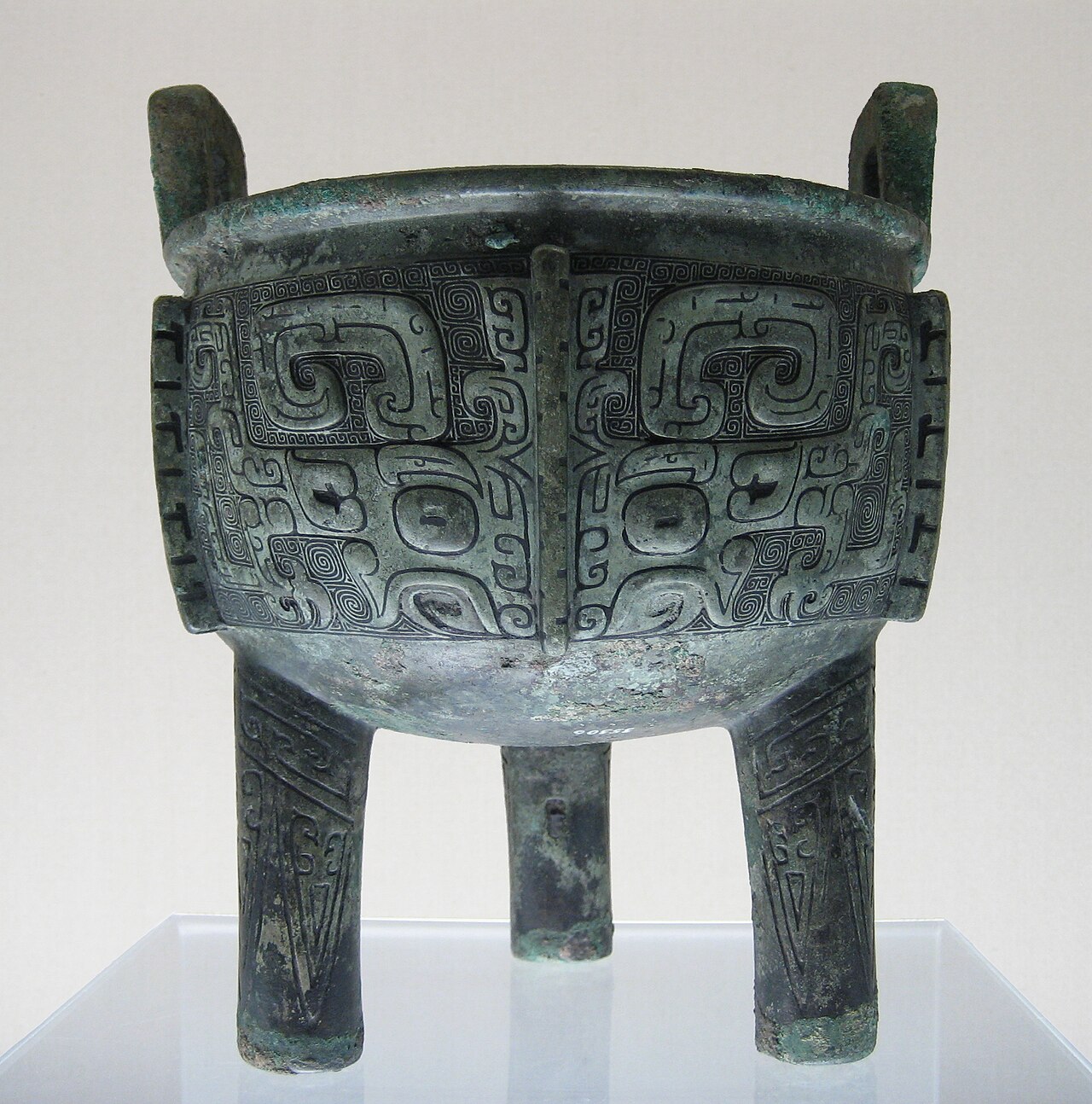
The development of metallurgy was not a single event that diffused from one origin point but rather a phenomenon that arose independently in multiple regions. In China, the earliest copper and bronze objects date to the late 3rd millennium BCE in the northwest, and by the Shang dynasty (c. 1600–1046 BCE), Chinese metalworkers had developed a sophisticated bronze-casting tradition based on piece-mold technology rather than the lost-wax method prevalent in western Asia.13 Shang ritual bronzes — monumental vessels used in ancestor veneration — represent some of the most technically accomplished castings of the ancient world, produced through a labor-intensive process of creating ceramic molds from clay models and assembling them for a single pour.13 The Chinese tradition also moved to iron earlier and more decisively than its western counterparts, with cast-iron technology becoming widespread during the Warring States period (475–221 BCE).13
In the Andes, an independent metallurgical tradition emerged by at least the 2nd millennium BCE, initially centered on gold and copper working in modern Peru and later expanding to include silver, arsenical bronze, and tin bronze.12 Dorothy Hosler’s research has demonstrated that Andean metallurgists placed particular emphasis on the sensory properties of metals — their color, sound, and luster — rather than purely utilitarian considerations, producing objects such as copper bells, gold ornaments, and gilded copper sheets that were valued for their visual and acoustic qualities as much as their functional uses.12 The Andean tradition developed entirely without contact with Old World metallurgy, confirming that the impulse to extract, alloy, and shape metals is a recurrent feature of complex societies rather than a singular historical accident.4, 12
Lost-wax casting
Among the most technically demanding achievements of ancient metallurgy was the lost-wax (cire perdue) casting process, which enabled the production of complex, hollow metal objects that could not be made by simple open-mold casting. In this technique, a wax model is encased in a clay or plaster mold; when heated, the wax melts and drains away, leaving a cavity into which molten metal is poured.14 The earliest known lost-wax castings come from the Chalcolithic Levant, dating to the late 5th or early 4th millennium BCE, and the technique was subsequently employed across Mesopotamia, Egypt, the Aegean, South Asia, and West Africa.14 The Benin Bronzes of West Africa, produced from the 13th century CE onward, represent a particularly celebrated application of lost-wax casting, demonstrating that African metalworkers achieved a level of technical mastery fully comparable to any tradition in Eurasia.4, 14 Lost-wax casting allowed artists and artisans to produce objects of extraordinary intricacy — from Sumerian figurines to Greek monumental statues — and remains in use in jewelry and precision engineering to this day.14
Social impacts of metallurgy
The consequences of metallurgy extended far beyond the material properties of the metals themselves. The production of metal tools, weapons, and ornaments required specialized knowledge, access to ore sources, fuel for smelting, and labor for mining and processing — a chain of dependencies that drove craft specialization and, in many societies, the emergence of distinct artisan classes.11 Timothy Earle has argued that elite control over metallurgical production and distribution was a key mechanism in the development of political economies during the Bronze Age, as leaders who could monopolize access to prestige metals and bronze weapons gained decisive advantages over rivals.11
The relationship between metallurgy and warfare was mutually reinforcing. Bronze weapons — swords, spearheads, and armor — gave military advantages to societies that could produce them in quantity, and the demand for metals in turn fueled conquest and the expansion of trade networks.5, 11 The introduction of iron weapons further intensified this dynamic, because iron ore was far more widely available than copper and tin, potentially democratizing access to effective weaponry and disrupting existing power structures built on control of bronze production.4 Metallurgy also deepened social inequality: the accumulation of metal wealth, as visible at Varna and in Bronze Age elite burials from ancient Greece to ancient China, created durable, inheritable forms of wealth that reinforced status distinctions across generations.8, 11
Slag analysis and archaeometallurgy
Modern understanding of ancient metallurgy depends heavily on the scientific analysis of production debris, particularly slag — the glassy waste material produced during smelting. Slag preserves chemical signatures of the ore, the flux, and the furnace conditions, allowing archaeometallurgists to reconstruct smelting technologies, identify ore sources, and trace exchange networks.15 Techniques including scanning electron microscopy (SEM), X-ray fluorescence (XRF), and lead-isotope analysis have transformed the field, enabling researchers to move beyond typological classification of finished objects to direct investigation of production processes.7, 15
Charlton and colleagues have demonstrated that slag inclusions trapped within finished iron objects can serve as fingerprints linking artifacts to specific production sites, a method with important implications for understanding ancient trade and the movement of metal goods across regions.15 Similarly, Radivojevic’s work on Balkan copper smelting slags has revealed that early metallurgists experimented with different ores, flux materials, and furnace designs, producing a diversity of slag compositions that reflect a period of active technological experimentation rather than the simple diffusion of a fixed recipe.2, 3 These analytical approaches have made archaeometallurgy one of the most productive intersections of natural science and archaeology, yielding insights into ancient technology, economy, and social organization that would be invisible from the study of finished artifacts alone.4