Overview
- Around 1200–1150 BCE, a network of interconnected Bronze Age civilizations spanning the eastern Mediterranean and Near East — including the Hittite Empire, Mycenaean Greece, New Kingdom Egypt, Kassite Babylonia, and the trading city of Ugarit — collapsed within a few decades in one of history's most dramatic civilizational failures.
- No single cause explains the collapse; current scholarship favors a systems-collapse model in which drought, earthquakes, disruptions to international trade, internal rebellions, and attacks by the so-called Sea Peoples interacted as mutually reinforcing stressors that overwhelmed societies too interdependent to absorb simultaneous shocks.
- The collapse ushered in a centuries-long period of reduced population, diminished literacy, and political fragmentation sometimes called the Dark Age, but it also cleared the way for the rise of Iron Age societies including the Phoenicians, Neo-Assyrian Empire, and the Greek city-states.
The Bronze Age collapse refers to the rapid, cascading disintegration of the interconnected civilizations of the eastern Mediterranean and Near East during the transition from the thirteenth to the twelfth century BCE. Within a span of roughly fifty years, between approximately 1200 and 1150 BCE, the Hittite Empire was destroyed, Mycenaean palatial civilization disintegrated, the trading city of Ugarit was burned and never reoccupied, Kassite Babylonia was overrun, and New Kingdom Egypt entered a terminal decline from which it would never fully recover.1, 13 The collapse was not merely a political reshuffling but a civilizational catastrophe: literacy was lost in the Aegean for centuries, long-distance trade networks that had linked the Aegean to Mesopotamia ceased to function, and populations across the region declined sharply.1, 19
What makes the Bronze Age collapse so striking to modern scholars is the scope and near-simultaneity of the destruction. These were not isolated failures but the coordinated unravelling of a tightly networked international system sometimes called the first globalized economy.9 Understanding how and why it happened remains one of the most debated questions in ancient history and archaeology, with implications for how modern societies think about systemic risk and civilizational fragility.
The Late Bronze Age international system
The Late Bronze Age, spanning roughly 1600 to 1200 BCE, witnessed the emergence of an unprecedented international order in the eastern Mediterranean and Near East. A handful of great kingdoms — New Kingdom Egypt, the Hittite Empire centered at Hattusa in Anatolia, Kassite Babylonia, Assyria, and the Mitanni kingdom — dominated the political landscape and maintained a sophisticated diplomatic system in which rulers addressed one another as "brother" and exchanged gifts, princesses, and treaties.8 The Amarna Letters, a cache of over 350 cuneiform tablets discovered at the Egyptian capital of Akhetaten (modern el-Amarna), provide an extraordinary window into this diplomatic world, documenting negotiations over trade goods, marriages, military alliances, and complaints about insufficient gifts between the great powers of the fourteenth century BCE.8

Beneath this canopy of great-power diplomacy lay a dense web of commercial exchange that linked societies from Afghanistan to the Aegean. Tin, essential for alloying with copper to produce bronze, was imported from sources in Central Asia and distributed through trading networks that passed through Mesopotamia, Syria, and Anatolia. Copper flowed from the mines of Cyprus (ancient Alashiya), which occupied a pivotal position in the Bronze Age economy. The Mycenaean kingdoms of Greece exported fine pottery, olive oil, and textiles, while the Levantine ports of Ugarit, Byblos, and Sidon served as entrepôts where goods from Egypt, Mesopotamia, the Aegean, and Anatolia converged.9, 1 The Uluburun shipwreck, discovered off the southern coast of Turkey and dated to approximately 1300 BCE, carried cargo from at least seven different cultures, including copper ingots from Cyprus, tin from Central Asia, ebony from Egypt, Mycenaean pottery, and Canaanite jars of resin — a physical snapshot of the era's astonishing commercial interconnectedness.1
This interconnectedness, however, also created vulnerability. The palatial economies of the Late Bronze Age were centrally administered systems in which kings controlled the production, storage, and redistribution of key commodities. International trade was not a supplement to these economies but a lifeline: without imported tin, bronze production would halt; without imported grain, populations in marginal agricultural zones could not be sustained.9, 17 The very feature that made the Late Bronze Age world wealthy and sophisticated — its tight integration — also meant that a disruption in one part of the system could cascade through the entire network.
The collapse: chronology and destruction
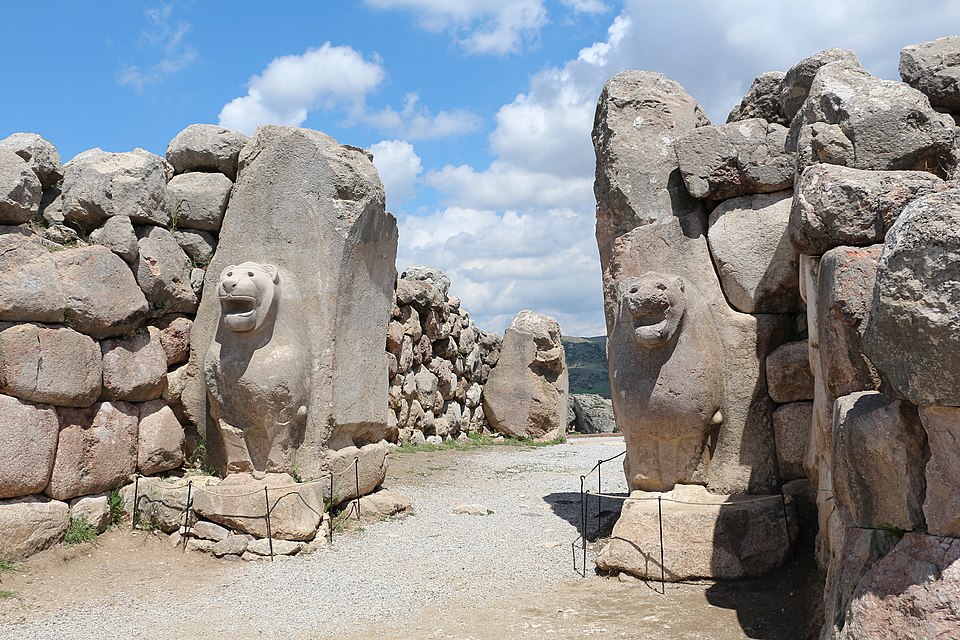
The destruction unfolded over roughly two generations, beginning around 1200 BCE and largely complete by 1150 BCE, though the precise dating of individual events remains debated.1, 13 The Hittite capital of Hattusa was destroyed by fire around 1180 BCE. Archaeological evidence indicates that the city was already partially abandoned before the final conflagration, with temples stripped of their valuables and administrative archives left behind, suggesting a gradual disintegration of royal authority rather than a single sudden assault.14, 1 With the fall of Hattusa, the Hittite Empire — which had for centuries controlled Anatolia and contested Syria with Egypt — vanished from history, leaving only small Neo-Hittite successor states in southeastern Anatolia and northern Syria.

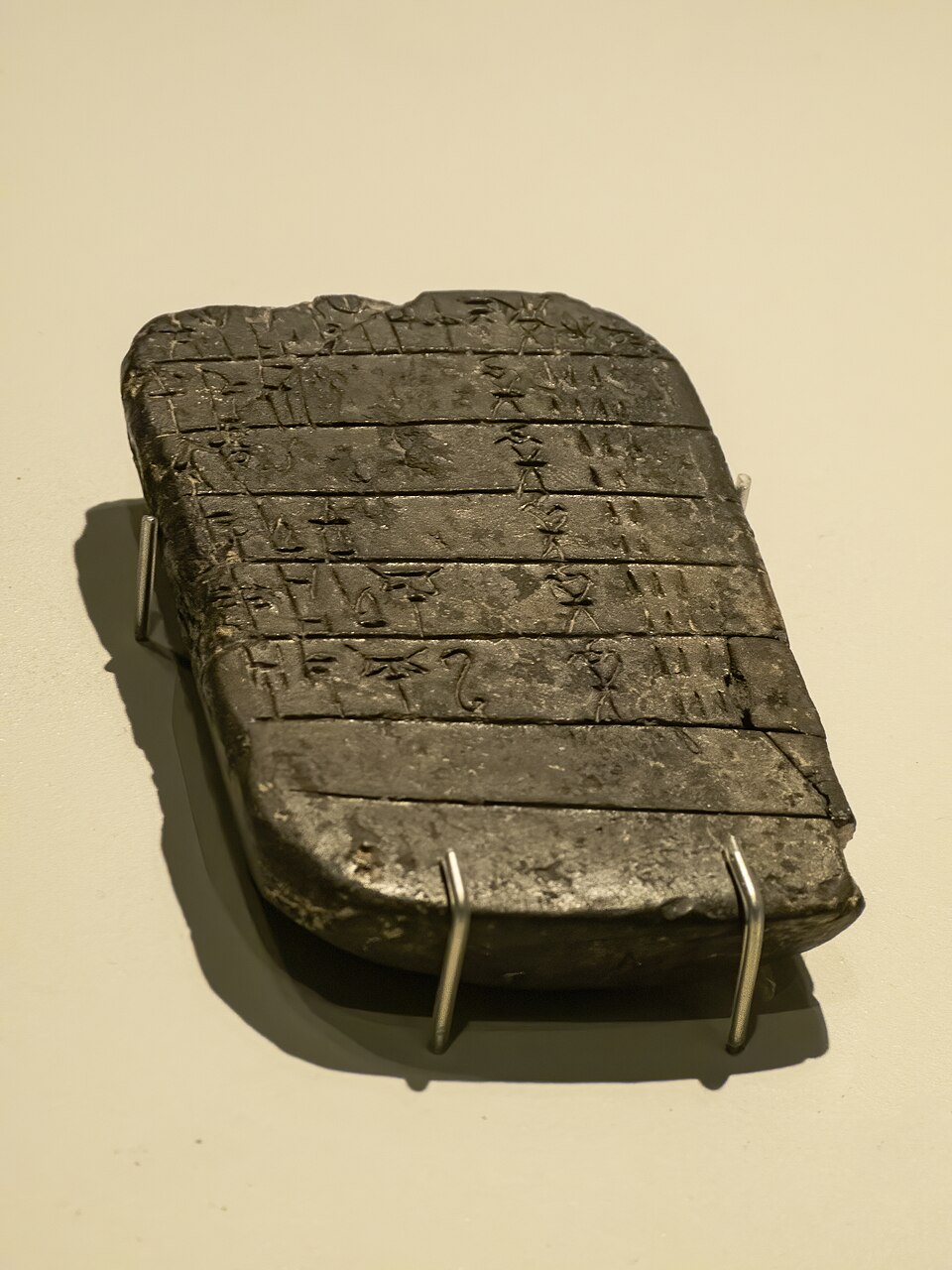
In the Aegean, the fortified citadels of Mycenaean Greece were destroyed or abandoned between roughly 1200 and 1130 BCE. Mycenae itself, Tiryns, Pylos, and Thebes all show destruction layers dating to this period. The Palace of Nestor at Pylos was burned violently around 1180 BCE, its archives of Linear B tablets baked and preserved by the conflagration, providing detailed records of a palatial administration in its final days — including evidence of unusual military mobilization and coastal watch stations that suggest the rulers knew an attack was coming.10, 1 After the destructions, the palatial system was not rebuilt; the subsequent period in Greece saw drastically reduced population, the loss of writing, and a sharp decline in material culture.
The city of Ugarit, on the Syrian coast, offers perhaps the most vivid archaeological testimony to the collapse. Excavations have revealed a thriving cosmopolitan port city that was destroyed by fire around 1185 BCE and never reoccupied.20 Among the last tablets found in the ruins are desperate letters from the city's final king, Ammurapi, including one to the king of Alashiya (Cyprus) reporting that enemy ships had been sighted off the coast: "the enemy ships are already here, they have set fire to my towns and have done very great damage in the country."1, 20 Another letter, apparently never sent, begged the viceroy of Carchemish for military assistance, pleading that the city's own forces and chariotry had already been deployed to Hittite territory at the Hittite king's command.20
Egypt, uniquely among the great powers, survived the crisis but was permanently diminished by it. The pharaoh Ramesses III recorded in the inscriptions at his mortuary temple at Medinet Habu that in his eighth regnal year (approximately 1177 BCE), a coalition of foreign peoples attacked Egypt by both land and sea.18, 9 According to the inscriptions, "no land could resist their arms," and the invaders had already destroyed the Hittites, Arzawa, Alashiya, and other states before turning on Egypt. Ramesses claimed victory in battles at Djahy (in the Levantine coastal region) and in the Nile Delta, but Egypt thereafter retreated from its Asiatic empire and entered a long period of political fragmentation and decline.18, 9
The Sea Peoples
The most enigmatic actors in the Bronze Age collapse are the groups collectively known as the Sea Peoples, a modern scholarly term for the coalition of maritime raiders and migrants described in Egyptian texts from the late thirteenth and early twelfth centuries BCE.21, 9 Egyptian sources, particularly the Medinet Habu inscriptions of Ramesses III, name several groups among them, including the Peleset (widely identified with the biblical Philistines), the Tjeker, the Shekelesh, the Denyen, and the Weshesh.18 Earlier Egyptian texts from the reigns of Merneptah and Ramesses II also mention encounters with some of these peoples, indicating that the phenomenon predated the final collapse by at least a generation.
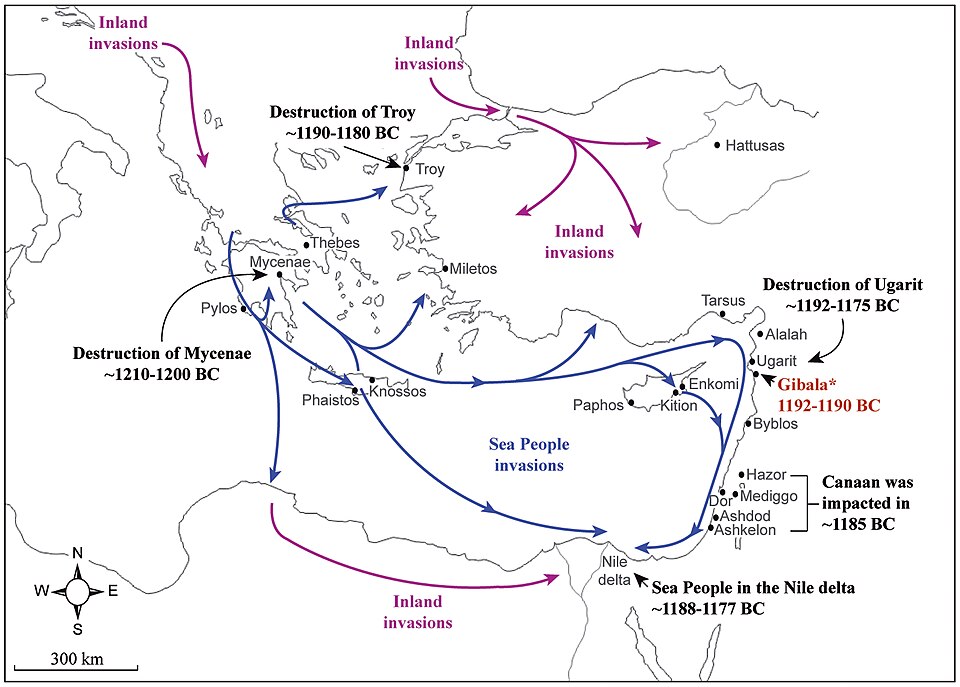

The origins of the Sea Peoples remain fiercely debated. Various scholars have proposed origins in the Aegean, western Anatolia, Cyprus, Sicily, Sardinia, and the Levant itself.21, 15 Archaeological evidence from Philistine settlements in the southern Levant, including the sites of Ashkelon and Ekron, shows strong Aegean cultural affinities in pottery, architecture, and dietary practices during the early Iron Age, supporting the identification of at least some Sea Peoples groups with Aegean migrants.15 The Medinet Habu reliefs depict the Sea Peoples travelling with ox-carts carrying women and children, suggesting that at least the overland component represented a mass migration of families rather than purely military raiding parties.18, 1
Early scholarship treated the Sea Peoples as the primary cause of the Bronze Age collapse — marauding invaders who swept through the eastern Mediterranean destroying everything in their path. More recent interpretations tend to view them as both agents and symptoms of the collapse: people who were themselves displaced by the economic, environmental, and political disruptions already underway, and whose movements then accelerated the disintegration of the remaining Bronze Age states.1, 21 As Eric Cline has argued, the Sea Peoples may have delivered the final blow to an already weakened system, but they did not create the conditions of vulnerability that made that blow fatal.1
Proposed causes
Scholars have proposed numerous explanations for the Bronze Age collapse, and the history of the debate is itself instructive about how complex civilizational failures resist monocausal explanation.1, 12
Climate change and drought. Paleoclimate evidence has increasingly placed environmental stress at the center of the collapse narrative. Pollen cores from Cyprus, analyzed by David Kaniewski and colleagues, reveal a sharp decline in Mediterranean forest vegetation and a shift toward drought-tolerant species beginning around 1200 BCE, indicating a significant and sustained reduction in rainfall.3 Sea-surface temperature proxies from the Mediterranean show a cooling episode that would have reduced evaporation and precipitation over the surrounding landmasses.6, 11 A comprehensive review of the paleoclimate data identifies a roughly 300-year drought episode spanning the Late Bronze Age to Early Iron Age transition, from approximately 1250 to 950 BCE, that would have severely impacted agricultural yields across the region.16, 4 Tree-ring data from Anatolia published in 2023 confirmed that a severe multi-year drought struck the Hittite heartland in the years immediately preceding the empire's collapse, with three consecutive years of failed rainfall around 1198–1196 BCE.14
Earthquakes. Amos Nur and Eric Cline proposed that an "earthquake storm" — a sequence of major seismic events propagating along the tectonically active plate boundary that runs through the eastern Mediterranean — struck the region between approximately 1225 and 1175 BCE. Analysis of destruction layers at multiple sites, including Mycenae, Tiryns, Midea, Thebes, Ugarit, and Hattusa, reveals patterns of structural collapse consistent with seismic damage rather than military assault.5 Modern seismological data demonstrate that earthquake storms, in which a major rupture on one fault segment increases stress on adjacent segments and triggers a cascade of earthquakes over decades, are a real phenomenon; the twentieth-century North Anatolian Fault sequence is a well-documented example. Nur and Cline argued that while earthquakes alone did not destroy the Bronze Age world, they damaged infrastructure, disrupted trade, and weakened defenses at a critical moment.5
Military and technological change. Robert Drews offered a radically different explanation, arguing that the Bronze Age kingdoms were destroyed primarily by a revolution in military tactics. The great powers of the Late Bronze Age depended on chariot-based armies in which small elite corps of charioteers dominated the battlefield. Drews proposed that toward the end of the thirteenth century, infantry forces equipped with javelins, long swords, and cut-and-thrust weapons discovered that massed foot soldiers could overwhelm chariot armies, rendering the military basis of palatial power obsolete.2 While Drews's thesis has been criticized for underestimating non-military factors and for an overly schematic reading of the archaeological evidence, it highlighted the importance of the military dimension and influenced subsequent discussions of how the collapse played out on the ground.2, 1
Internal rebellion and social breakdown. Several scholars have noted evidence suggestive of internal revolt in the collapsing kingdoms. The Linear B tablets from Pylos record anxious administrative activity in the palace's final months, and some destruction patterns at Mycenaean sites are more consistent with internal upheaval than external attack.1, 13 In the Hittite Empire, vassal revolts and succession crises had been weakening central authority for decades before the final collapse. The palatial economies of the Late Bronze Age concentrated wealth in the hands of a small ruling class, and it is plausible that the stresses of drought, disrupted trade, and military threats exacerbated existing social tensions to the point of insurrection.17
Systems collapse. The most widely accepted modern framework is the systems-collapse model, first articulated for the Bronze Age context by Colin Renfrew in 1979 and elaborated by Eric Cline and others. This model holds that no single factor was sufficient to destroy the Bronze Age world, but that the simultaneous occurrence of multiple stressors — drought, earthquakes, trade disruption, migration, military pressure, and internal instability — in a tightly interconnected system produced cascading failures that no individual polity could absorb.19, 1 The interdependence that had made the Late Bronze Age prosperous became the mechanism of its destruction: when one node in the network failed, it destabilized its trading partners, which in turn destabilized theirs, in a domino effect that brought down the entire system within decades.1, 9
Archaeological evidence of destruction
The material evidence for the Bronze Age collapse comes from destruction layers — archaeological strata containing burned debris, collapsed walls, smashed pottery, and abandoned artifacts — found at dozens of sites across the eastern Mediterranean.1, 13 The character and timing of these destruction layers vary, which itself argues against any single cause.
At Ugarit, the final destruction layer contains evidence of intense conflagration, with mud-brick walls vitrified by extreme heat. Arrowheads found embedded in walls indicate military assault. The city's harbor quarter and residential areas were burned, and the administrative archives — including the desperate letters of King Ammurapi — were preserved by the fire. Crucially, the site was never rebuilt or reoccupied, indicating that the destruction was not a temporary setback but a permanent end to the city's existence.20, 1
At Hattusa, the evidence is more complex. Certain monumental structures, particularly the Great Temple (Temple I) and sections of the royal citadel at Buyukkale, show signs of deliberate burning. However, other areas appear to have been systematically stripped of valuables and abandoned in an orderly fashion before any destruction occurred, suggesting that the Hittite court evacuated the capital before it was sacked — possibly by the Kaskian peoples who had long threatened the empire's northern frontier.14, 1
The Mycenaean citadels present their own pattern. At Pylos, the destruction was sudden and violent: the palace burned in a single catastrophic event that preserved its administrative tablets. At Mycenae and Tiryns, there is evidence of multiple phases of destruction and partial reconstruction before final abandonment, suggesting a drawn-out decline rather than a single catastrophic event.10, 1 Some sites in the Argolid show evidence of post-destruction squatter occupation, with crude structures built among the ruins of palatial buildings, indicating that small populations persisted even after the collapse of centralized authority.
Major sites destroyed or abandoned during the Bronze Age collapse1, 13
| Site | Region | Approximate date | Evidence |
|---|---|---|---|
| Ugarit (Ras Shamra) | Syria | ~1185 BCE | Burned; never reoccupied |
| Hattusa (Bogazkoy) | Anatolia | ~1180 BCE | Partially stripped, then burned |
| Pylos (Palace of Nestor) | Greece | ~1180 BCE | Sudden fire; Linear B tablets preserved |
| Mycenae | Greece | ~1190–1130 BCE | Multiple destruction phases |
| Tiryns | Greece | ~1200–1150 BCE | Destruction and partial rebuilding |
| Enkomi | Cyprus | ~1175 BCE | Destroyed; rebuilt briefly, then abandoned |
| Megiddo | Levant | ~1150 BCE | Stratum VIIA destruction layer |
| Hazor | Levant | ~1230 BCE | Burned; Canaanite city destroyed |
The aftermath and the Dark Age
The centuries following the collapse, roughly 1150 to 900 BCE, are often called the Dark Age, though this term is increasingly questioned by scholars who note that the period was neither uniformly dark nor entirely devoid of cultural achievement.12 In the Aegean, the most dramatic consequences were felt: the Mycenaean palatial system was gone, writing in Linear B ceased entirely, monumental architecture disappeared, and population estimates based on settlement surveys suggest declines of 75 percent or more in some regions.19, 1 Long-distance trade, while not completely eliminated, was drastically reduced, and communities that had been integrated into a pan-Mediterranean economy reverted to local subsistence.
In the Levant, the collapse created a political vacuum that enabled the emergence of new peoples and polities. The Philistines, probably descended from Sea Peoples settlers of Aegean origin, established a pentapolis of five cities — Gaza, Ashkelon, Ashdod, Ekron, and Gath — along the southern coastal plain.15 Phoenician city-states, including Tyre, Sidon, and Byblos, survived the collapse in reduced form and eventually became the dominant maritime traders of the early first millennium BCE, carrying the alphabet — itself a Levantine Bronze Age invention — across the Mediterranean.17 In the highlands of the Levant, new Iron Age polities emerged, including the kingdoms of Israel and Judah.
In Mesopotamia, the collapse was less total but still consequential. The Kassite dynasty in Babylonia was overthrown by the Elamites around 1155 BCE, and Assyria, though it survived the crisis, entered a period of contraction before its dramatic resurgence in the Neo-Assyrian period after 900 BCE.17 Egypt, having repelled the Sea Peoples, nonetheless lost its Levantine empire and descended into political fragmentation during the Third Intermediate Period.
The transition to the Iron Age
The Bronze Age collapse is inseparable from the transition to the Iron Age, though the relationship between the two is more complex than a simple narrative of bronze giving way to iron. Ironworking technology was known in the Late Bronze Age — the Hittites, in particular, possessed advanced metallurgical knowledge — but iron was relatively rare and used mainly for prestige objects rather than tools or weapons.2, 17 The collapse of the tin trade networks that supplied the bronze-making industry may have accelerated the adoption of iron as a practical alternative: without tin imports, communities could no longer produce bronze at scale, and locally available iron ores became the default material for tools and weapons.1, 2
The early Iron Age also saw significant social and political changes. The highly centralized, palace-dominated economies of the Bronze Age gave way to more decentralized political forms. In Greece, the eventual recovery from the Dark Age produced the polis — the independent city-state — a fundamentally different political model from the Mycenaean palace kingdoms.19 The alphabetic writing system, which had been developing in the Levant during the Late Bronze Age, spread widely during the early Iron Age, eventually displacing the complex cuneiform and hieroglyphic scripts that had required years of specialized training, and thereby democratizing literacy to an extent unimaginable in the Bronze Age world.17
Modern scholarly debates
The study of the Bronze Age collapse has undergone significant historiographical shifts. For much of the twentieth century, the dominant explanation centered on the Sea Peoples as foreign invaders who simply overwhelmed the Bronze Age states. This invasion hypothesis was challenged in the 1970s and 1980s by scholars including Colin Renfrew, who introduced the systems-collapse framework from complexity theory, arguing that interconnected systems can fail catastrophically without any external shock if internal stresses exceed the system's capacity to absorb them.19
Robert Drews's 1993 monograph recentered the debate on military factors, proposing that the shift from chariot to infantry warfare was the decisive change. While few scholars accepted Drews's monocausal argument, the book forced a serious engagement with the military dimensions of the collapse and demonstrated the inadequacy of earlier invasion narratives that had treated the Sea Peoples as an unstoppable tide of barbarian destruction.2
Eric Cline's 1177 B.C.: The Year Civilization Collapsed, first published in 2014 and updated in 2021, synthesized decades of archaeological, textual, and scientific evidence into the most comprehensive account of the collapse available to a general readership. Cline argued for a "perfect storm" of interacting calamities and emphasized that the very interconnectedness of the Late Bronze Age world — the feature that had made it wealthy — was what made it fragile.1 His framing resonated powerfully with a modern audience familiar with concepts like systemic risk and too-big-to-fail networks, and the book brought the Bronze Age collapse into mainstream historical consciousness.
More recent work has increasingly foregrounded climate data. The 2023 study by Sturt Manning and colleagues, which used high-resolution tree-ring isotope analysis to document severe drought in the Hittite heartland immediately before the empire's collapse, provided some of the most precise chronological evidence yet linking environmental stress to political dissolution.14 At the same time, scholars such as Guy Middleton have urged caution against overly deterministic environmental narratives, arguing that not all societies in the affected region collapsed — Egypt survived, Assyria survived, some Cypriot cities were rebuilt — and that the concept of "collapse" itself may obscure the complexity of what was, in many cases, a process of transformation rather than simple destruction.12
The Bronze Age collapse remains an active and evolving field of research. New excavations, improved radiocarbon dating, ancient DNA analysis, and ever more refined paleoclimate proxies continue to sharpen the picture. What seems increasingly clear is that no single factor can explain the collapse, that the interaction between human and environmental systems was central to the process, and that the Late Bronze Age world's greatest strength — its complex web of interdependencies — was also its fatal vulnerability.1, 4, 12
References
Poseidon's horses: plate tectonics and earthquake storms in the Late Bronze Age Aegean and Eastern Mediterranean
The influence of climatic change on the Late Bronze Age Collapse and the Greek Dark Ages
Late Bronze Age climate change and the destruction of the Mycenaean Palace of Nestor at Pylos
The collapse of the eastern Mediterranean: climate change and the decline of the east, 1200–150 BC
300-year drought frames Late Bronze Age to Early Iron Age transition in the eastern Mediterranean