Overview
- Evolvability is the capacity of a biological system to generate heritable, selectable phenotypic variation, and it depends on properties of genetic architecture including modularity, robustness, and the structure of the genotype-phenotype map.
- Modular organisation of developmental and genetic networks allows individual traits to evolve semi-independently without disrupting the entire organism, a property that dramatically increases the range of phenotypic variation accessible to natural selection.
- Robustness and evolvability, rather than being opposites, are positively correlated: robust genetic architectures accumulate cryptic genetic variation that can be released under stress, providing a reservoir of phenotypic diversity for rapid adaptation.
Definition and scope
Evolvability is the capacity of a biological system to generate heritable phenotypic variation that is accessible to natural selection. While all populations with genetic variation can evolve in the trivial sense that allele frequencies can change over generations, evolvability refers to something more specific: the ability of a population to produce the kinds of phenotypic variants that can be selected for, increasing the likelihood and speed of adaptive evolution.1 The concept is closely related to, but distinct from, the mere existence of genetic variation. A population may harbour abundant genetic diversity yet possess low evolvability if its developmental architecture channels that variation into non-functional or selectively invisible phenotypic outcomes. Conversely, an organism with less genetic variation but a highly modular, flexible developmental system may display greater evolvability because the variants it does produce are more likely to be functionally coherent and therefore accessible to selection.4, 12
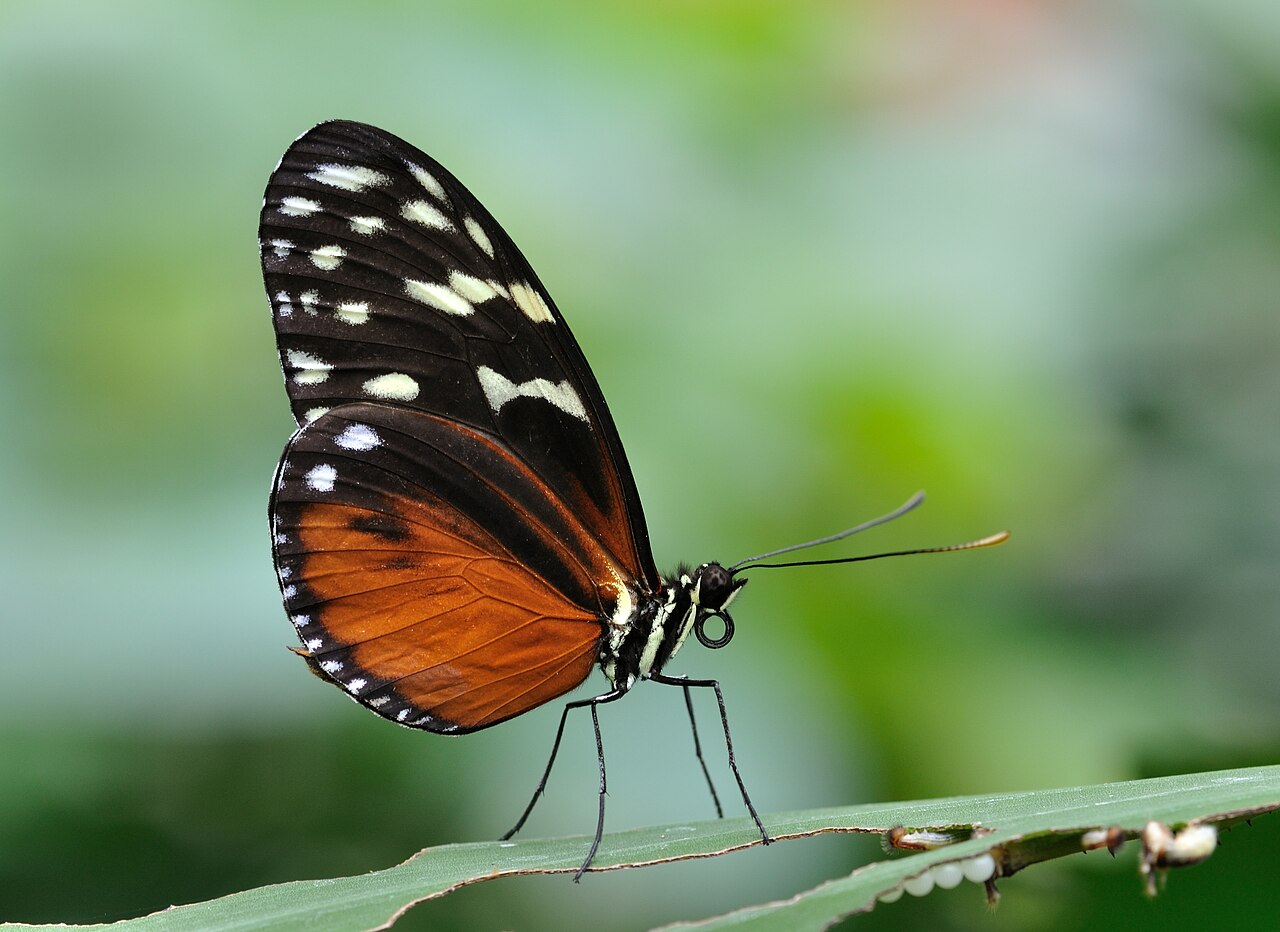

The concept of evolvability was introduced to evolutionary biology in its modern form by Richard Dawkins in 1989, who proposed that lineages might differ in their capacity to evolve and that this capacity might itself be subject to selection.15 Kirschner and Gerhart subsequently developed the idea into a detailed biological framework, arguing that specific properties of cellular and developmental organisation — including modularity, compartmentalisation, and what they called "exploratory systems" — make organisms evolvable by ensuring that genetic variation tends to produce functional phenotypic change rather than developmental chaos.12 Evolvability thus sits at the intersection of developmental biology, genetics, and evolutionary theory, asking not merely whether organisms evolve, but how the organisation of biological systems shapes their capacity to do so.
The genotype-phenotype map
At the heart of evolvability lies the genotype-phenotype map — the complex set of developmental, cellular, and molecular processes that translate genetic information into organismal form and function. The structure of this map determines which phenotypic variants are accessible from a given genotype through mutation and recombination, and which are not.14 If every mutation produced a random, uncorrelated change in phenotype, most mutations would be catastrophically deleterious, and adaptive evolution would be vanishingly slow. In reality, the genotype-phenotype map is highly structured: some phenotypic dimensions are readily accessible to genetic variation while others are strongly buffered, and mutations tend to produce changes that are biased toward certain phenotypic directions rather than distributed uniformly across all possible forms.1, 14
This structure has profound consequences for evolution. Schluter demonstrated that adaptive radiation in threespine stickleback fish proceeded along "genetic lines of least resistance" — the phenotypic directions in which genetic variation was most abundant, as measured by the leading eigenvector of the genetic variance-covariance matrix (the G-matrix).16 The implication is that the direction of evolutionary change is not determined solely by the direction of natural selection, but is also shaped by the architecture of genetic variation. Evolvability, in this sense, is not merely the amount of variation available but its orientation in phenotypic space relative to the direction of selection.
Pigliucci reviewed the theoretical and empirical challenges of characterising the genotype-phenotype map and argued that its complexity — involving epistasis, pleiotropy, gene-environment interactions, and epigenetic regulation — means that simple models of additive genetic effects are insufficient to understand evolvability.14 The genotype-phenotype map is not a fixed property of a species but can itself evolve, as changes in gene regulatory architecture, the degree of pleiotropy, and the pattern of epistatic interactions alter which phenotypic variants are accessible to selection.1, 6
Modularity
Modularity — the organisation of biological systems into semi-autonomous units that can vary independently — is widely regarded as one of the most important determinants of evolvability. A modular organism is one in which changes to one part of the body, one developmental pathway, or one gene regulatory network can occur without necessarily disrupting other parts. This independence allows individual traits to respond to selection without producing correlated, potentially deleterious changes elsewhere in the organism.5, 6
Wagner, Pavlicev, and Cheverud traced the concept of modularity through its intellectual history and distinguished between several levels at which modularity operates. At the genetic level, modularity corresponds to the clustering of genes into co-regulated units and the relative independence of different gene regulatory networks. At the developmental level, it corresponds to the compartmentalisation of embryonic fields and the semi-independence of developmental modules such as limbs, segments, and organ primordia. At the phenotypic level, it is measured as the pattern of correlations among traits: traits within a module are tightly correlated, while traits in different modules vary more independently.6
The Hox genes provide a particularly clear example of how modularity facilitates evolvability. Hox genes specify the identity of body regions along the anterior-posterior axis, and because each Hox gene regulates a semi-independent set of downstream targets, mutations in individual Hox genes or their regulatory elements can alter the morphology of one body region without affecting others.17 The remarkable diversity of arthropod body plans — from the uniform segments of centipedes to the highly differentiated tagmata of insects — has been shaped in large part by changes in Hox gene expression patterns, demonstrating how modular genetic architecture enables evolutionary diversification.4
Wagner and colleagues further argued that modularity is not a static property of organisms but can itself evolve. Populations exposed to selection that favours the independent variation of two traits will, over time, evolve reduced genetic correlations between those traits — that is, they become more modular with respect to those trait dimensions. Conversely, selection for coordinated changes in multiple traits can increase integration and reduce modularity.6 The evolution of modularity has implications for macroevolutionary patterns: lineages with greater modularity may be predisposed to higher rates of morphological diversification because a larger fraction of their genetic variation produces phenotypic changes that are functionally coherent and selectable.
Robustness and its relationship to evolvability
Robustness, or canalization, is the ability of a developmental system to produce a consistent phenotype despite genetic mutations or environmental perturbations. At first glance, robustness and evolvability appear to be opposing properties: a system that is resistant to perturbation seems, by definition, resistant to evolutionary change. However, theoretical and empirical work has demonstrated that this intuition is incorrect. Robustness and evolvability are positively correlated, and robust systems can be more evolvable, not less.2, 3, 8
The resolution of this apparent paradox lies in the concept of neutral networks. Andreas Wagner's theoretical work on RNA secondary structures and metabolic networks showed that many different genotypes can produce the same phenotype — a property known as genetic redundancy or neutrality. A population evolving on a neutral network can explore a vast region of genotype space through neutral drift without any change in phenotype. But because different positions on the neutral network have different neighbouring genotypes, the set of phenotypic innovations accessible from different positions on the network also differs.3, 9 Robustness, by buffering the phenotypic effects of mutations, allows populations to spread across neutral networks and accumulate cryptic genetic variation. When conditions change and the buffering is disrupted, this variation is released as a burst of phenotypic diversity, providing raw material for rapid adaptation.8, 10
Draghi and colleagues formalised this relationship through computational simulations and showed that populations evolving on robust genetic architectures accumulated more cryptic variation and, as a consequence, could adapt to novel selective pressures faster than populations evolving on fragile architectures where every mutation produced an immediate phenotypic effect.8 This result has significant implications for understanding the tempo of evolution: the apparent stability of a lineage during periods of environmental stasis does not mean that the lineage has ceased to evolve at the genetic level, but rather that it has been accumulating a reservoir of hidden variation that can fuel rapid phenotypic change when the environment shifts.
Facilitated variation
Kirschner and Gerhart's theory of facilitated variation provides a comprehensive account of how the organisation of cells and developing organisms enhances evolvability. They identified several properties of biological systems that make phenotypic variation more likely to be functional when it arises, rather than random and destructive.4, 12
The first is the conservation of core processes. Eukaryotic cells share a deeply conserved set of molecular and developmental mechanisms — signal transduction pathways, transcriptional regulation, cytoskeletal dynamics, cell adhesion, and apoptosis — that have been maintained across hundreds of millions of years of evolution. These conserved core processes act as a reliable platform upon which evolutionary novelty can be built. A mutation that alters the deployment of a conserved signalling pathway in a new tissue or at a new developmental stage can produce a coordinated phenotypic change because the pathway already specifies a functional cellular behaviour.4, 12 Franois Jacob's insight that evolution works as a "tinkerer" rather than an engineer — repurposing existing components rather than designing from scratch — anticipates this idea.11
The second property is exploratory behaviour. Many biological systems, including the cytoskeleton, the vascular system, the immune system, and the developing nervous system, generate variation through stochastic processes and then stabilise functional outcomes through selection-like mechanisms. The axons of developing neurons, for instance, extend in many directions and are pruned to retain only those that make functional connections. This means that a genetic change that alters the target tissue can produce a functional neural circuit without requiring simultaneous changes in the wiring of every individual axon.4 Exploratory systems thus allow organisms to accommodate genetic perturbations by adjusting their phenotype to maintain function, a property that greatly increases the fraction of mutations that are viable and therefore available to selection.
The third property is weak regulatory linkage. In many gene regulatory systems, the connections between signalling molecules and their targets are mediated by simple, versatile interactions rather than rigid, lock-and-key mechanisms. This means that regulatory relationships can be easily rewired by small genetic changes, allowing the same set of core developmental processes to be deployed in new combinations and new contexts. The result is that a small number of genetic changes can produce large, coordinated phenotypic effects — not because single genes control complex traits, but because the modular, weakly linked architecture of development amplifies the phenotypic consequences of regulatory mutations.4, 12
Developmental bias and the direction of evolution
The concept of evolvability is closely related to the concept of developmental bias — the tendency of developmental systems to produce certain phenotypic variants more readily than others, thereby influencing the direction of evolutionary change independently of the direction of natural selection. Developmental bias does not prevent adaptation, but it can affect which adaptive solutions are discovered first and how quickly populations can evolve in response to new selective pressures.13
Uller and colleagues developed a gene regulatory network perspective on developmental bias, showing through computational models that the structure of regulatory networks determines which phenotypic variants are most accessible to mutation and therefore most likely to contribute to evolutionary change. When the direction of developmental bias aligns with the direction of selection, evolution proceeds rapidly. When bias and selection are orthogonal, evolution slows. And when they oppose each other, evolution may be effectively constrained despite the presence of genetic variation, because the variants that the developmental system readily produces are not the variants that selection favours.13
The relationship between developmental bias and evolvability has implications for understanding macroevolutionary patterns. Richardson and Chipman noted that the vertebrate body plan is characterised by strong developmental constraints — the basic architecture of vertebrae, limbs, and organ systems is highly conserved across hundreds of millions of years of evolution — yet within those constraints, vertebrates have diversified into an extraordinary range of ecological forms.7 The conserved body plan is not a limitation on evolvability but a platform for it: by constraining variation to certain dimensions while permitting free variation along others, the modular developmental architecture of vertebrates channels evolution toward functional outcomes and away from developmental incoherence.
The evolution of evolvability
Whether evolvability can itself be shaped by natural selection is one of the most debated questions in evolutionary biology. The difficulty is that evolvability is a property that confers advantages over evolutionary timescales — lineages that are more evolvable adapt faster and are less likely to go extinct — but natural selection acts on individuals within populations over ecological timescales. This mismatch in timescales means that direct selection for evolvability is difficult to sustain, because the benefits of evolvability are diffuse and long-term, while the costs (such as the production of deleterious variants) are immediate.1, 15
Several mechanisms have been proposed to resolve this difficulty. First, modularity and robustness, which are key components of evolvability, can be favoured by ordinary natural selection for their immediate benefits. Modularity reduces the pleiotropic side effects of mutations, which is advantageous because most mutations are deleterious. Robustness maintains a consistent, functional phenotype in the face of environmental and genetic perturbation. The enhanced evolvability that these properties confer may thus be a byproduct of selection for their immediate functional advantages rather than a directly selected trait.2, 6
Second, lineage selection — a form of selection at the clade level — can favour evolvable lineages over geological time. Lineages that are more evolvable will tend to diversify more rapidly and persist longer in the face of environmental change, while lineages that are less evolvable are more likely to go extinct. Over millions of years, this differential survival and diversification will enrich the biota with lineages that happen to be more evolvable, even if evolvability was not directly selected within any single population.1
Pigliucci argued that the question "is evolvability evolvable?" does not have a single answer but depends on the specific components of evolvability under discussion. Properties like mutation rate, recombination rate, and the modularity of gene regulatory networks are themselves genetically variable and can respond to selection. The evolution of sex, for instance, can be interpreted as an adaptation that enhances evolvability by increasing the combinatorial diversity of offspring genotypes, although alternative explanations based on parasite resistance and DNA repair also exist.1 The consensus that has emerged is that while evolvability per se is unlikely to be the direct target of natural selection in most cases, the components of evolvability are ordinary biological traits that can evolve through standard population-genetic mechanisms, and the cumulative effect of their evolution is to shape the capacity of lineages to adapt to future challenges.1, 3