Overview
- Natural selection has been directly observed operating in wild and laboratory populations across dozens of independent study systems, with multigenerational datasets documenting measurable allele frequency changes, phenotypic shifts, and morphological evolution driven by identifiable selective agents.
- Landmark studies include the Grants’ four-decade record of beak evolution in Galápagos finches, Michael Majerus’s definitive 2012 replication of industrial melanism in peppered moths, parallel armor-plate loss in stickleback fish driven by a single gene, and the evolution of cecal valves in Italian wall lizards within thirty generations.
- The convergent evidence from organisms as different as bacteria, plants, fish, lizards, birds, and moths constitutes a direct empirical refutation of the claim that natural selection is unobserved—the question is not whether selection operates in real time but how rapidly, through what genetic mechanisms, and under what ecological conditions.
Natural selection is not merely a theoretical inference drawn from fossils or comparative anatomy. It has been watched, measured, and replicated in living populations, across dozens of independent study systems, over timescales ranging from a single season to four decades of continuous field observation. The question scientists ask is no longer whether selection operates in real time — that question was settled in the twentieth century — but rather through what genetic mechanisms it acts, how rapidly it produces measurable change, and how its effects compound across generations into the larger patterns visible in the fossil record. The case studies assembled here represent the strongest empirical evidence for evolution by natural selection: experiments and long-term field studies in which the selective agent, the heritable trait under selection, and the resulting change in population composition have all been identified with precision.1, 22
_female.jpg)
The Grants’ finch research on Daphne Major
The most sustained direct observation of natural selection in any wild vertebrate population is the forty-year study of Geospiza finches on Daphne Major, a small volcanic island in the Galápagos Archipelago, conducted by Peter and Rosemary Grant and their collaborators beginning in 1973. The Grants banded, measured, and tracked the fates of nearly every individual of three resident finch species across successive generations, assembling a dataset that permits statistical identification of selection episodes with unusual rigour.1, 22
The critical natural experiment arrived in 1977, when Daphne Major experienced a severe drought. Seed production collapsed, and the small, soft seeds preferred by the medium ground finch Geospiza fortis were rapidly depleted. What remained were large, hard seeds that required substantial crushing force to open. The population of G. fortis crashed from approximately 1,200 individuals to fewer than 180. The survivors were not a random sample of the population: birds with deeper, wider beaks were disproportionately likely to survive, because beak depth is tightly correlated with the bite force required to crack hard seeds. When Peter Boag and Peter Grant measured the beak dimensions of survivors against those of birds that died, they found that average beak depth had increased by 0.5 millimetres — roughly half a standard deviation — in a single generation, a shift of the magnitude Darwin had supposed would require geological time.4 Because beak morphology in Darwin’s finches is highly heritable (heritability estimates of 0.65 to 0.80), this phenotypic shift was transmitted to offspring, constituting genuine evolutionary change.6
The Daphne Major record also documents the reversal of selection following a return to wet conditions in 1983, and it captures a second, independent natural selection event arising from interspecific competition. When the large ground finch Geospiza magnirostris colonised Daphne Major in the early 1980s, its superior ability to process the largest seeds intensified competition with large-beaked G. fortis individuals. A subsequent drought in 2003–2004 favoured smaller-beaked G. fortis — the opposite of the 1977 selection event — because G. magnirostris had monopolised the large-seed niche. Average beak depth in G. fortis decreased measurably, a process the Grants identified as character displacement driven by competitive exclusion.2, 3 The Daphne Major dataset thus demonstrates not only that selection operates, but that its direction and magnitude respond predictably to identifiable ecological variables.
Peppered moth industrial melanism
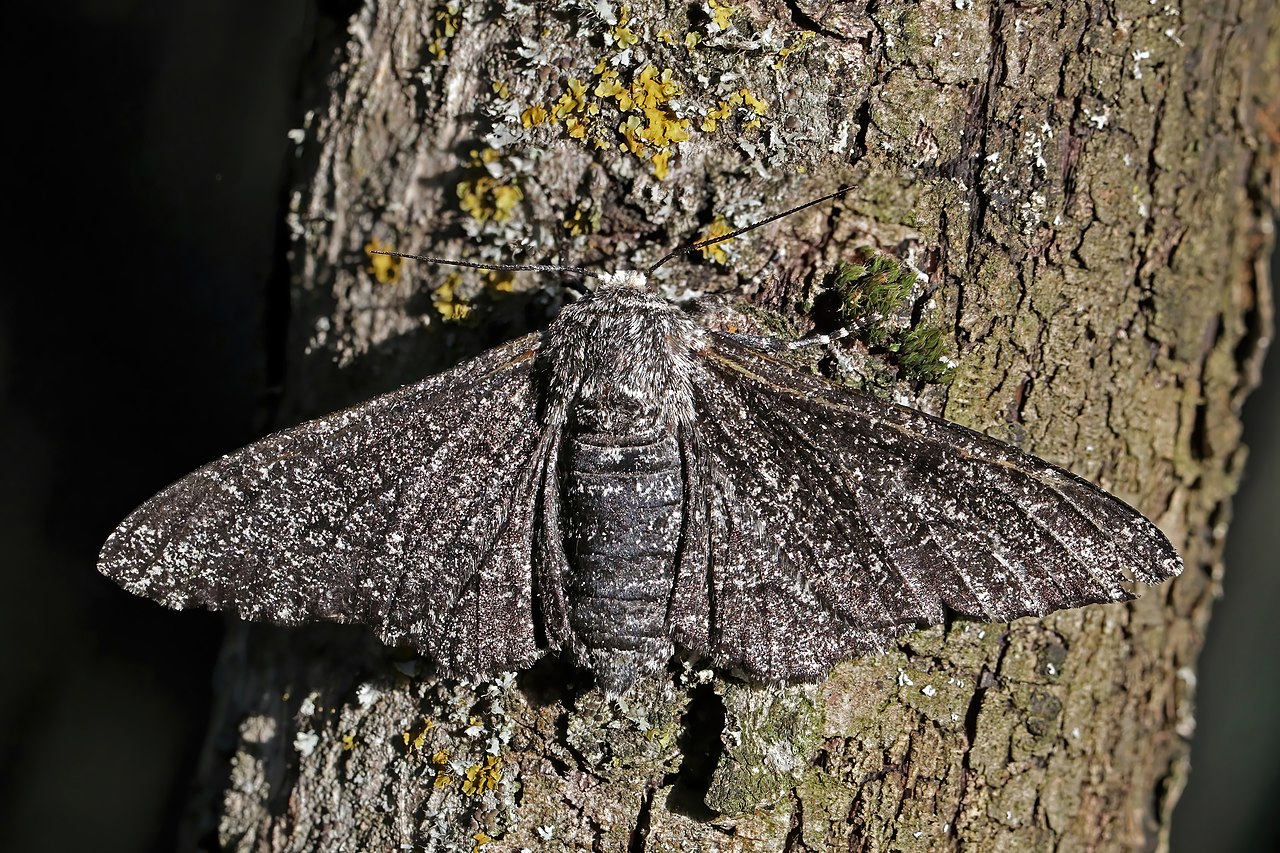
The change in frequency of the dark (melanic) form of the peppered moth Biston betularia in industrialised Britain is among the most thoroughly studied cases of natural selection in any organism. The carbonaria allele, which produces a nearly black wing coloration, was first recorded in the Manchester area in 1848 and rose to frequencies exceeding 90 percent in heavily polluted regions by the early twentieth century, while remaining rare in rural areas where lichen-covered tree bark provided camouflage for the pale typica form.9 The standard explanation, first proposed by H. B. D. Kettlewell in the 1950s, attributed the frequency change to differential predation by birds: in soot-blackened industrial landscapes, pale moths were more visible against dark bark and were preferentially taken by predators, while melanic moths survived at higher rates and their offspring inherited the carbonaria allele.
Kettlewell’s original mark-release-recapture experiments provided initial support for the predation hypothesis, but his methodology was later criticised on several grounds, including possible staging of some photographs used in popular accounts. The controversy required resolution by independent replication, which Michael Majerus of Cambridge University undertook in a rigorous six-year experiment conducted from 2001 to 2007 and published posthumously in 2012. Majerus released 4,864 moths of known genotype across his garden in Cambridgeshire under naturalistic conditions, recorded predation events by wild birds, and tracked the survival of pale and melanic individuals through multiple seasons. His results were unambiguous: bird predation was the dominant selective agent, melanic moths suffered significantly higher predation in the relatively unpolluted rural setting, and observed survival differentials were consistent with the documented post-Clean Air Act decline in carbonaria frequency across Britain.8 The molecular basis of the carbonaria mutation was subsequently identified as a single transposable element insertion in the cortex gene, confirming that the melanic phenotype represents a discrete heritable change subject to natural selection.9
Frequency changes in carbonaria track industrial pollution levels with remarkable fidelity: as clean air legislation from the 1950s onward reduced soot deposition, pale tree bark became increasingly common, bird predation on melanic moths increased, and the carbonaria allele declined. This correlation between an identified selective agent, a known allele, and a measurable population-level response makes peppered moth melanism a textbook example not because it is simple, but because all components of the Darwinian mechanism have been quantified independently and shown to fit.7, 9
Stickleback armor plate loss in freshwater
Threespine sticklebacks (Gasterosteus aculeatus) provide one of the most compelling cases of parallel evolution driven by natural selection, with the added advantage that the underlying genetic mechanism has been identified at single-gene resolution. Marine sticklebacks carry a full complement of bony lateral plates running the length of their bodies, a defensive adaptation against saltwater predators. When marine populations colonise freshwater lakes and streams — a transition that has occurred independently hundreds of times since the last glaciation — they repeatedly evolve a low-plated phenotype, retaining only a few anterior plates, within a few thousand generations.10, 11
The genetic basis of this transition was traced to variation in the Eda (Ectodysplasin) gene. Marine populations are nearly fixed for a high-plated allele; freshwater populations carry a low-plated allele at high frequency. The low-plated allele was not absent from marine populations — it persisted there at very low frequency as standing genetic variation. When sticklebacks colonise freshwater, selection rapidly increases the frequency of the low-plated allele, apparently because full plate coverage is costly in the reduced-predation, lower-calcium freshwater environment where the plates provide fewer benefits and interfere with body growth or swimming efficiency.10 Because the same allele is recruited repeatedly across independent freshwater colonisation events, the pattern constitutes genuine parallel evolution: the same genetic variant, under the same selective pressure, producing the same phenotypic outcome in populations that have had no recent contact with one another. Genomic surveys of dozens of freshwater and marine stickleback populations across the Northern Hemisphere confirmed that this parallelism extends across the entire genome, with many loci showing repeated allele frequency shifts in the same direction in independent freshwater populations.11
Italian wall lizards on Pod Mrçaru
One of the most striking documented cases of rapid phenotypic evolution in a vertebrate involves Italian wall lizards (Podarcis sicula) introduced to the Croatian island of Pod Mrçaru from the nearby island of Pod Kopište in 1971. Five adult pairs were transplanted, and the island was subsequently left unmonitored for over three decades. When Herrel and colleagues returned in 2004, they found a well-established population of hundreds of lizards whose morphology and digestive physiology differed substantially from both their ancestors and the source population in ways consistent with adaptation to the plant-rich food environment of Pod Mrçaru.12
The source population on Pod Kopište inhabits an environment dominated by animal prey, with insects constituting the bulk of the diet. Pod Mrçaru, by contrast, supports abundant plant matter but fewer insects. Within approximately 36 years — roughly 30 generations given the lizard’s generation time — the introduced population had evolved significantly larger heads with different shape parameters, increasing bite force and expanding the range of plant material that individuals could process. More strikingly, the Pod Mrçaru lizards had evolved cecal valves: previously absent structures at the junction of the small and large intestine that slow the passage of food, increase fermentation time, and improve the extraction of nutrients from plant cell walls. Cecal valves are present in mammals and some other herbivorous reptiles but are not found in typical populations of P. sicula. Their evolution in fewer than 40 years constitutes a morphological novelty arising under natural selection — a structural innovation that increased digestive efficiency in the novel dietary environment.12
Cliff swallows and Trinidadian guppies
Not all observed selection events require decades of careful field study. Charles and Mary Brown’s long-term monitoring of a cliff swallow (Petrochelidon pyrrhonota) colony in southwestern Nebraska, begun in 1982, incidentally documented the action of vehicle-strike mortality as a novel selective agent. Cliff swallows frequently forage along road margins and are killed by vehicles at measurable rates. The Browns noted that the mean wing length of birds killed on roads declined significantly between 1982 and 2012, while the mean wing length of the living population increased over the same period. Shorter wings reduce manoeuvrability, making birds less able to evade approaching vehicles; longer, more pointed wings — the aerodynamic profile characteristic of fast, agile fliers — are favoured by the novel selective pressure introduced by roads. Road-killed birds also showed shorter wings than the general population in every year sampled, confirming that the differential mortality was consistent and directional rather than random.13
In Trinidad, David Reznick and John Endler’s research on guppies (Poecilia reticulata) demonstrated that life history evolution — changes in age at first reproduction, brood size, and offspring size — can occur over timescales of decades in response to predation pressure. Guppies in high-predation environments, where large cichlid fish prey on adults, mature earlier, produce more offspring per brood, and allocate more energy to reproduction at each reproductive event than guppies in low-predation headwater streams where predators are absent or limited to a smaller killifish species. Reznick and colleagues transplanted guppies from high-predation to low-predation sites and measured life history parameters in subsequent generations. Within eleven to eighteen years — roughly thirty to sixty guppy generations — the transplanted populations had evolved life history traits characteristic of low-predation environments: delayed maturation, reduced brood frequency, and larger individual offspring.15 The reciprocal experiment, introducing guppies to previously guppy-free high-predation streams, produced the expected shift in the opposite direction. The consistency of the response across replicated transplant experiments and the alignment of the evolved differences with those observed in natural high- and low-predation populations provide strong evidence that differential predation is the selective agent responsible for the life history divergence.14, 16
Resistance evolution: antibiotics, pesticides, and heavy metals
The most economically consequential demonstrations of natural selection in real time occur in the evolution of resistance: to antibiotics in bacteria, to pesticides in insects, and to heavy metal toxicity in plants. Each system exhibits the same fundamental dynamic — a novel, intense selective pressure applied to a large population generates rapid increases in the frequency of pre-existing or newly arising heritable variants that confer a survival advantage — and each has been studied in sufficient mechanistic detail to trace the evolutionary response from phenotype to genotype.
Antibiotic resistance offers the clearest illustration of how selection operates when generation times are short and population sizes are enormous. When penicillin was introduced to clinical medicine in the 1940s, strains of Staphylococcus aureus carrying beta-lactamase genes — enzymes capable of degrading the penicillin molecule — were initially rare. Under the intense selective pressure imposed by widespread clinical use, resistant strains rapidly increased in frequency; by 1950, penicillin-resistant S. aureus was common in hospitals. Methicillin, introduced in 1959 to treat penicillin-resistant strains, encountered resistance within two years, producing MRSA. Each new antibiotic has been followed by the evolution of resistance, generally within years of introduction, via mutations in target genes, acquisition of resistance plasmids through horizontal gene transfer, or upregulation of efflux pump systems. The evolutionary dynamics are directly observable: clinicians and microbiologists can watch resistance emerge in real time within individual patients undergoing antibiotic treatment, and genomic surveillance programs track the spread of resistance alleles through hospital populations and across continents.17
Pesticide resistance in insects follows the same pattern at a slightly slower tempo. DDT resistance in mosquitoes and houseflies evolved within a decade of the compound’s introduction in the 1940s and has been traced to specific amino acid substitutions in voltage-gated sodium channels (the kdr mutations) as well as to upregulation of detoxifying cytochrome P450 enzymes.19, 20 Heavy metal tolerance in plants provides a comparable example in a non-microbial system. Populations of bent grass (Agrostis tenuis) and other species growing on the spoil heaps of metal mines in Britain evolved tolerance to copper, lead, and zinc within decades of the mines’ opening, while plants from adjacent uncontaminated grasslands remained sensitive to metal concentrations that were lethal to them. The tolerance trait is heritable, its genetic basis has been partially characterised, and the sharp boundary between tolerant mine populations and sensitive meadow populations — sometimes separated by only a few metres — demonstrates that selection is powerful enough to maintain a steep phenotypic cline even against the homogenising effects of gene flow from surrounding populations.18, 21
The weight of evidence
The cases described here are not anomalies or cherry-picked outliers. They represent a sample drawn from a large and growing literature of documented selection events. A meta-analysis by Kingsolver and colleagues compiled selection coefficients from hundreds of field studies and found that directional natural selection is detectable and statistically significant in the majority of wild populations examined, with median selection coefficients substantially larger than population geneticists had previously assumed on theoretical grounds.23 The claim that natural selection has never been observed in nature is not a scientific hypothesis awaiting evaluation; it is a factually incorrect statement contradicted by decades of experimental and observational data.
Several features of the documented cases are worth emphasising collectively. First, the selective agents are diverse: drought, competition, predation, industrial pollution, agricultural chemicals, and novel environments all produce measurable selection, confirming that selection is a general consequence of differential survival and reproduction rather than a special condition requiring unusual circumstances. Second, the organisms are diverse: bacteria, plants, insects, fish, lizards, and birds have all been shown to evolve under selection within human-observable timescales, demonstrating that the mechanism is not taxon-specific. Third, the genetic basis has been identified in several cases at single-gene or even single-nucleotide resolution — the Eda gene in sticklebacks, the cortex transposable element in peppered moths, kdr mutations in insecticide-resistant mosquitoes — connecting the population-level evolutionary response to the molecular mechanisms of heredity and mutation.9, 10, 20
Fourth, and perhaps most significant for the question of evolutionary mechanism, the documented selection events are not merely stabilising — they do not simply eliminate aberrant individuals to maintain a static phenotype. They are directional, shifting population means toward new values in response to changed environments, and in several cases (the Galápagos finches, the stickleback, the Italian wall lizard) they have produced morphological novelties or previously absent structures within observable time. The transition from observed selection to the macroevolutionary patterns documented in the fossil record requires no special additional mechanism; it requires only that the same process continue across the geological time available to it. The fossil record and molecular phylogenetics provide independent evidence that it has.1, 22
References
Industrial melanism in the peppered moth, Biston betularia: an excellent teaching example of Darwinian evolution in action
The evolution of melanism in the peppered moth tracked via a single transposable element
Repeated morphological evolution through cis-regulatory changes in a pleiotropic gene
Life history evolution in guppies (Poecilia reticulata) 2. Repeatability of field observations and the effects of season on life histories