Overview
- Clair Patterson's 1956 lead-lead isochron from the Canyon Diablo meteorite and four other meteorites established the age of the Earth at 4.55 billion years, a value that has withstood seven decades of refinement and remains the foundation of modern planetary chronology.
- Calcium-aluminum-rich inclusions (CAIs) in primitive chondrites yield Pb-Pb ages of 4,567.30 plus or minus 0.16 million years, representing the oldest dated solids in the Solar System and defining the zero point from which all subsequent planetary formation is measured.
- Meteorites serve as time capsules from the earliest epoch of the Solar System because their parent bodies were too small to sustain geological activity, preserving primordial isotopic signatures that have been erased from the Earth by billions of years of plate tectonics, volcanism, and crustal recycling.
Meteorites are the oldest materials accessible to direct laboratory analysis, and their radiometric dating has provided the definitive determination of the age of the Earth and the Solar System. Because the Earth's original surface has been destroyed by billions of years of plate tectonics, volcanism, and erosion, no terrestrial rocks survive from the planet's formation. Meteorites, by contrast, are fragments of asteroids and other small bodies whose parent objects were too small to sustain geological activity, preserving isotopic signatures from the very beginning of the Solar System essentially unchanged.2, 14 The systematic dating of meteorites — beginning with Clair Patterson's landmark 1956 determination and continuing through precision analyses of chondrules and refractory inclusions — has established that the Solar System formed 4,567 million years ago and that the Earth accreted and differentiated within the first few tens of millions of years thereafter.1, 3
Why meteorites preserve the age of the Solar System
The Earth is a geologically active planet. Plate tectonics, mantle convection, volcanism, metamorphism, and surface weathering continuously destroy and recycle crustal material, so the oldest known terrestrial rocks — the Acasta Gneisses of northern Canada, dated at approximately 4.03 billion years — formed several hundred million years after the planet itself.2 The isotopic record of Earth's formation has been overwritten. Meteorites do not share this limitation. Most meteorites derive from asteroids in the main belt between Mars and Jupiter, bodies that range from a few metres to several hundred kilometres in diameter. These parent bodies accreted from the same cloud of gas and dust — the solar nebula — that gave rise to the Earth and other planets, and they incorporated the same mix of elements and isotopes.14, 21 Crucially, most asteroidal parent bodies were too small to retain sufficient internal heat to drive ongoing geological processes. After an initial period of heating (driven largely by the decay of short-lived radioactive isotopes such as aluminium-26), they cooled to inert objects within the first few hundred million years of Solar System history.15, 22 Their constituent minerals have remained closed systems ever since, faithfully recording the isotopic ratios established at the time of their formation.
This preservation makes meteorites uniquely valuable as time capsules. When a geochronologist measures the uranium-lead or lead-lead isotopic ratios in a meteorite sample, the resulting age reflects the time at which that material last equilibrated isotopically — which, for the most primitive meteorites, was the very beginning of the Solar System.2, 22
Patterson's 1956 determination
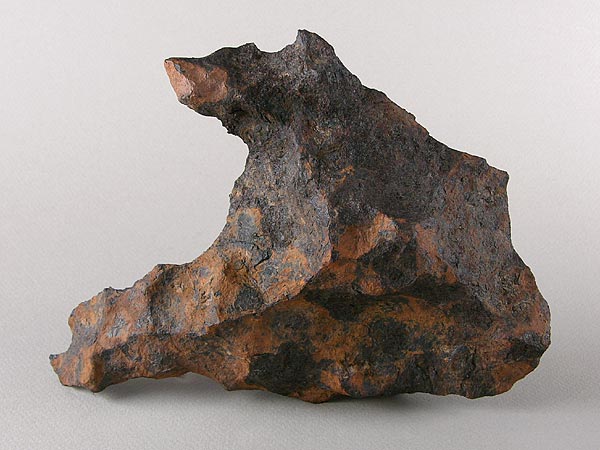
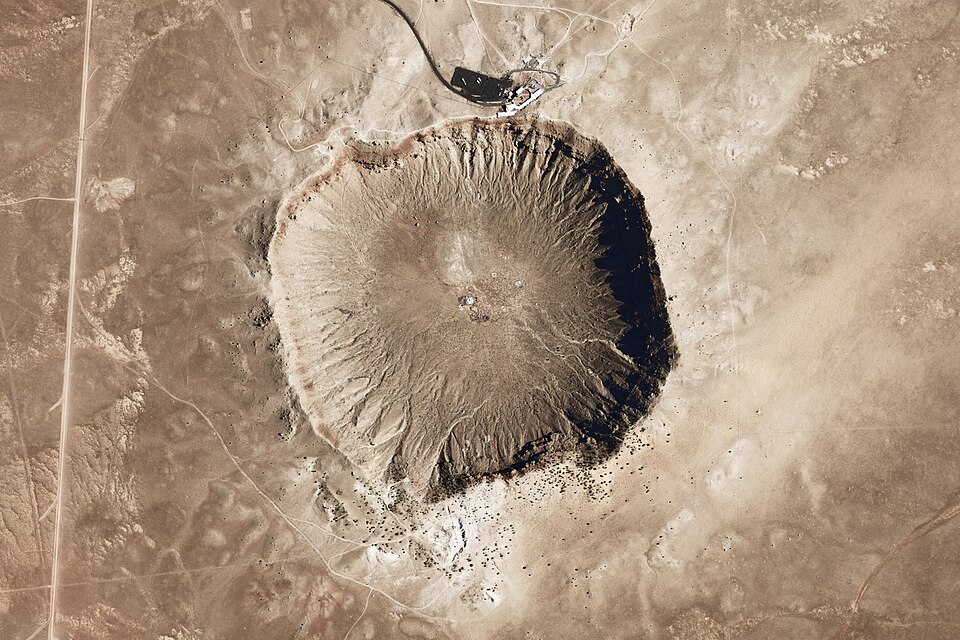
The first rigorous determination of the age of the Earth from meteorites was achieved by Clair Cameron Patterson in 1956. Working at the California Institute of Technology, Patterson measured the lead isotopic compositions of five meteorite samples: three stone meteorites (the Forest City H5 chondrite, the Modoc L6 chondrite, and the Nuevo Laredo eucrite) and the troilite (iron sulfide) phase of two iron meteorites, including the Canyon Diablo meteorite recovered from Meteor Crater in Arizona.1 The fundamental insight behind Patterson's approach was that all Solar System materials began with the same initial lead isotopic composition and have since evolved along divergent paths depending on their uranium-to-lead ratios. The troilite phase of the Canyon Diablo meteorite was critical because troilite contains virtually no uranium, meaning its lead isotopic composition has not changed since the meteorite formed — it preserves the primordial lead of the Solar System.1, 2

By plotting the 207Pb/204Pb ratios against the 206Pb/204Pb ratios for his five meteorite samples plus a sample of modern ocean sediment (representing the average present-day terrestrial lead composition), Patterson demonstrated that all six points fell on a single straight line — a lead-lead isochron. The slope of this isochron corresponds to an age of 4.55 ± 0.07 billion years.1 Because the meteorites and the Earth sample all lay on the same isochron, Patterson concluded that the Earth and the meteorite parent bodies formed at the same time from a common reservoir of material with a uniform initial lead composition.1, 2
Patterson's result built on earlier theoretical work by Arthur Holmes, who in 1946 had outlined the principles of using lead isotopes to determine the age of the Earth but lacked the analytical precision to produce a definitive measurement.8 The Stacey-Kramers two-stage lead evolution model, published in 1975, later formalised the framework for interpreting terrestrial lead isotope data by modelling the Earth as a reservoir in which lead isotopic composition has evolved through time as a function of the uranium-to-lead ratio.7 Patterson's 1956 age of 4.55 billion years has been confirmed and refined by every subsequent study; the modern best estimate, derived from the most precise meteorite analyses, is 4,567.30 ± 0.16 million years for the formation of the first solids in the Solar System.3
Calcium-aluminum-rich inclusions and the age of the Solar System
The oldest objects ever dated in the Solar System are calcium-aluminum-rich inclusions (CAIs), irregularly shaped, millimetre- to centimetre-scale objects embedded in primitive chondritic meteorites. CAIs are composed of refractory minerals — those with very high condensation temperatures, such as corundum, hibonite, melilite, spinel, and perovskite — that are predicted by thermodynamic models to be the first solid phases to condense from a cooling gas of solar composition.5, 15 Their mineralogy and isotopic composition strongly suggest that they formed at or very near the beginning of the solar nebula's evolution, before the accretion of the planets.

_(4.560-4.568_Ga)_9.jpg)
The lead-lead dating of CAIs has progressively tightened the age of the Solar System. Amelin and colleagues (2002) reported Pb-Pb ages approaching 4,566 million years for CAIs from the Efremovka CV3 chondrite, establishing them as the oldest known Solar System solids with high-precision absolute chronometry.5 Earlier U-Pb work by Chen and Wasserburg (1981) on the Allende CV3 chondrite had also identified CAIs as extremely ancient objects, though with lower analytical precision.13 Bouvier and Wadhwa (2010) refined the age further, reporting a 207Pb-206Pb age of 4,568.2 ± 0.4 million years for a CAI from the Northwest Africa 2364 meteorite.4
The current best estimate for the age of the Solar System comes from Connelly and colleagues (2012), who applied improved corrections for the variable 238U/235U ratio in meteoritic materials — a systematic effect identified by Hiess and colleagues that had introduced a small but significant bias into earlier determinations.3, 12 Using directly measured uranium isotope ratios for each sample, Connelly's team determined a CAI formation age of 4,567.30 ± 0.16 million years, with an unprecedented precision of approximately 0.003 percent.3 This age defines the zero point of Solar System chronology: all subsequent events — chondrule formation, planetesimal accretion, planetary differentiation, and the formation of the Moon — are measured relative to this anchor.
Chondrite isochrons and the accretion timeline
Chondrites are the most primitive class of meteorite, composed of an aggregate of chondrules (small, once-molten silicate spherules), CAIs, metal grains, and fine-grained matrix. Because chondrites have never been melted or differentiated as a whole body, they preserve the chemical and isotopic heterogeneity of the early solar nebula and are the primary source of information about the timing and processes of planetesimal formation.14, 22
Lead-lead isochrons constructed from bulk chondrite samples and their separated mineral fractions consistently yield ages within a few million years of the CAI age. Göpel, Manhès, and Allègre (1994) performed high-precision U-Pb dating of phosphate minerals separated from equilibrated L-group ordinary chondrites, obtaining Pb-Pb ages of 4,563 ± 1 million years — approximately 4 million years younger than the oldest CAIs.6 This small but resolvable age difference is interpreted as the time elapsed between the condensation of the first solids and the thermal metamorphism of the chondrite parent body, which reset the phosphate U-Pb system.6, 22
Connelly and colleagues (2012) also dated individual chondrules from the same meteorites in which they dated CAIs, finding that chondrule formation spanned a period of approximately 3 million years after CAI formation, from about 4,567 to 4,564 million years ago.3 This result has important implications for models of planet formation: it indicates that the solar nebula remained an active environment with ongoing melting events for several million years, and that the raw materials of the terrestrial planets were processed over a protracted interval rather than in a single brief episode.3, 15
The lead isotopic composition of the bulk Earth, when plotted alongside meteorite data on a lead-lead isochron diagram, falls on the same isochron defined by chondrites. This co-linearity is the strongest evidence that the Earth formed from the same reservoir of material as the meteorites, at approximately the same time, and that the Pb-Pb age of meteorites is directly applicable to the Earth.1, 16
Key meteorite ages from Pb-Pb geochronology1, 3, 4, 6, 9
| Material | Meteorite / sample | Age (Ma) | Method |
|---|---|---|---|
| CAIs | Various CV3 chondrites | 4,567.30 ± 0.16 | Pb-Pb (U-corrected) |
| Chondrules | Various chondrites | 4,564–4,567 | Pb-Pb |
| L chondrite phosphates | Equilibrated L chondrites | 4,563 ± 1 | U-Pb (phosphates) |
| Canyon Diablo troilite | Canyon Diablo iron | 4,550 ± 70 | Pb-Pb isochron |
| Iron meteorites | Various IIIAB, IVA groups | 4,557 ± 12 | Re-Os isochron |
Iron meteorites and core formation
Iron meteorites are metallic fragments of the cores of differentiated asteroids — small bodies that melted early in Solar System history, allowing dense iron-nickel metal to sink to the centre and silicate material to rise to the surface, in a process directly analogous to the formation of Earth's own core.9, 14 Dating iron meteorites therefore constrains not only the age of the Solar System but also the timescale of planetary differentiation — how quickly small bodies segregated into metallic cores and silicate mantles.
The rhenium-osmium (Re-Os) isotopic system is particularly well suited to dating iron meteorites because both rhenium and osmium are highly siderophile (iron-loving) elements that concentrate strongly in metallic phases. Smoliar, Walker, and Morgan (1996) constructed a Re-Os isochron for a suite of IIIAB iron meteorites, obtaining an age of 4,558 ± 12 million years.17 Horan, Smoliar, and Walker (1998) extended this work to additional iron meteorite groups and confirmed that core formation on multiple asteroid parent bodies occurred within the first 10 to 15 million years of Solar System history.9
The hafnium-tungsten (Hf-W) isotopic system provides complementary constraints on the timing of metal-silicate differentiation. Hafnium-182 decays to tungsten-182 with a half-life of approximately 8.9 million years, and because hafnium is lithophile (preferring silicate phases) while tungsten is moderately siderophile (preferring metal), the Hf-W system is a sensitive chronometer for core formation events that occurred while 182Hf was still extant — that is, within the first approximately 60 million years of Solar System history.11 Kleine and colleagues (2002) demonstrated that iron meteorites have tungsten isotopic compositions indicating that their parent bodies differentiated within 1 to 3 million years of CAI formation, making asteroidal core formation one of the earliest geological processes in the Solar System.11 Subsequent Hf-W analyses have constrained the formation of Earth's core to approximately 30 to 60 million years after CAI formation and the formation of the Moon to approximately 60 to 100 million years after Solar System formation.10, 11
The lead-lead isochron method
The lead-lead (Pb-Pb) dating method, which underpins most meteorite age determinations, is a derivative of the uranium-lead dating system that eliminates the need to measure uranium concentrations directly. The method exploits the fact that 238U decays to 206Pb and 235U decays to 207Pb at different rates, with well-determined half-lives of 4.468 billion years and 703.8 million years, respectively.19, 18 Because the present-day ratio of 238U to 235U is known (approximately 137.8 in most natural materials, though recently shown to vary slightly), the age of a sample can be calculated from the 207Pb/206Pb ratio alone, without needing to know the absolute abundances of uranium or lead.12, 20
In an isochron approach, multiple samples or mineral phases that formed at the same time from a common reservoir but with different uranium-to-lead ratios are analysed for their lead isotopic compositions. When 207Pb/204Pb is plotted against 206Pb/204Pb (where 204Pb is the non-radiogenic reference isotope), co-genetic samples define a straight line whose slope is a function of the age of the system.14, 20 The y-intercept gives the initial 207Pb/204Pb ratio at the time of formation. Patterson's 1956 meteorite isochron is the archetype of this approach: by combining samples with very different uranium-to-lead ratios — from uranium-free troilite to uranium-bearing chondrites and achondrites — he obtained a well-defined isochron whose slope yielded the age of the Solar System.1
A critical refinement to the Pb-Pb method has been the recognition that the 238U/235U ratio is not perfectly constant across all Solar System materials. Hiess and colleagues (2012) demonstrated that this ratio varies by more than 5 per mil among natural uranium-bearing minerals, with meteoritic CAIs showing particularly significant variation.12 Connelly and colleagues (2012) addressed this by measuring the uranium isotope ratio directly for each analysed sample, eliminating a systematic uncertainty that had affected all earlier Pb-Pb ages by up to 1 million years.3 This correction shifted the accepted Solar System age upward by approximately 1 million years relative to pre-2010 estimates and dramatically improved the precision of the absolute chronology.3, 12
Convergence of multiple dating systems
One of the strongest arguments for the reliability of meteorite-derived ages is the remarkable convergence of results from independent isotopic systems.

The Pb-Pb age of 4,567 million years for CAIs is supported by ages from the Re-Os system in iron meteorites (4,558 ± 12 Ma), the Hf-W system constraining core formation to within the first few million years of Solar System history, and the Mn-Cr, Al-Mg, and I-Xe short-lived radionuclide systems that provide relative chronologies anchored to the Pb-Pb absolute timescale.3, 9, 11, 15
Short-lived radionuclides — radioactive isotopes with half-lives of a few hundred thousand to a few million years, such as 26Al (half-life 717,000 years) and 53Mn (half-life 3.7 million years) — were present in the early Solar System but have long since decayed to undetectable levels. Their former presence is recorded as excesses of their daughter isotopes in early-formed minerals. The 26Al-26Mg system, for example, has been used to demonstrate that CAIs formed before chondrules and that different CAIs formed within a span of less than 200,000 years, a precision unattainable with long-lived chronometers alone.15, 22 When these relative ages are calibrated against the absolute Pb-Pb timescale, the result is a self-consistent chronology of the first 10 million years of Solar System history that has been confirmed by multiple independent laboratories using different techniques.3, 15
The alignment of meteorite data with terrestrial and lunar samples further reinforces the coherence of the chronological framework. Allègre, Manhès, and Göpel (1995) demonstrated that the lead isotopic composition of the bulk silicate Earth, when projected back to its primordial value, is consistent with derivation from the same initial lead composition as the meteorites, confirming that the Earth formed from the same pool of material at the same time.16 The Hf-W age of the Moon (approximately 60 to 100 million years after CAI formation) is consistent with the giant impact hypothesis and with the requirement that the Earth's core formed before the Moon-forming event.10 Together, these interlocking constraints from multiple isotopic systems, multiple meteorite classes, and multiple planetary bodies compose an internally consistent chronology whose central conclusion — that the Solar System is 4.567 billion years old and the Earth formed shortly thereafter — rests on an exceptionally broad evidentiary foundation.2, 3
Timeline of Solar System formation events (millions of years after CAIs)3, 10, 11
References
The absolute chronology and thermal processing of solids in the solar protoplanetary disk
The age of the Solar System redefined by the oldest Pb–Pb age of a meteoritic inclusion
Rapid accretion and early core formation on asteroids and the terrestrial planets from Hf–W chronometry
Re–Os isotope systematics in chondrites: I. Re–Os and Re–Os–Pt systems of iron and stony-iron meteorites
Subcommission on geochronology: convention on the use of decay constants in geo- and cosmochronology