Overview
- At least twice during the Cryogenian period (approximately 717–635 million years ago), Earth's surface froze over almost entirely, with ice sheets extending from the poles to the tropics — a state known as Snowball Earth.
- The runaway ice-albedo feedback drove glaciation to completion, but volcanic CO2 continued accumulating beneath the frozen surface until greenhouse forcing became strong enough to trigger catastrophic deglaciation, recorded by thick cap carbonate deposits atop glacial diamictites worldwide.
- The biological aftermath of Snowball Earth may have been pivotal for the evolution of complex life: the genetic bottleneck and subsequent environmental upheaval preceded the Ediacaran radiation, the first appearance of large, multicellular organisms in the fossil record.
The Snowball Earth hypothesis proposes that on at least two occasions during the Neoproterozoic era, Earth's surface became almost entirely encased in ice, with glaciers extending from the poles to the equator and sea ice potentially kilometres thick covering the oceans. These were the most extreme glaciations in the planet's four-and-a-half-billion-year history, lasting tens of millions of years and driving the climate system into a state without any modern analog. The idea emerged from a geological paradox — the discovery of glacial deposits at tropical paleolatitudes — and has since become one of the most productive hypotheses in the earth sciences, connecting tectonics, atmospheric chemistry, ocean geochemistry, and the evolution of complex life into a single narrative.2, 3
Historical development of the hypothesis
The intellectual roots of the Snowball Earth hypothesis extend back to the mid-twentieth century. In 1964 the British geologist W. Brian Harland noted that Neoproterozoic glacial deposits occurred on every continent and, more provocatively, that paleomagnetic data placed some of these deposits at low latitudes at the time of their formation. He argued that these observations were best explained by a glaciation of global extent, a proposal that was largely ignored because no mechanism was known that could drive Earth into such an extreme state or, once frozen, allow it to escape.1
The hypothesis was revived and given its name by the American geobiologist Joseph Kirschvink in a brief but influential 1992 chapter. Kirschvink identified the ice-albedo feedback as the mechanism capable of driving glaciation to completion once ice reached a critical latitude (roughly 30° from the equator): at that point, the planet's reflectivity would increase so rapidly that the remaining open ocean could not absorb enough solar energy to halt the advance. He also proposed the escape mechanism — volcanic CO2 accumulating in the atmosphere over millions of years in the absence of silicate weathering (which requires liquid water and exposed rock) until the greenhouse effect became strong enough to initiate melting.2
The hypothesis achieved wide prominence following the 1998 landmark paper by Paul Hoffman, Alan Kaufman, Galen Halverson, and Daniel Schrag. Working on Neoproterozoic successions in Namibia, they documented the intimate stratigraphic association of glacial diamictites with overlying cap carbonates — distinctive limestone and dolostone layers deposited immediately after deglaciation — and sharp negative excursions in carbon isotope ratios. Hoffman and colleagues integrated these observations with Kirschvink's framework into a comprehensive geochemical model for Snowball Earth, proposing that extreme CO2 buildup (perhaps 350 times pre-industrial levels) during the frozen interval explained both the rapid deglaciation and the globally synchronous precipitation of cap carbonates from a super-saturated, alkaline ocean.3, 4
The Cryogenian glaciations
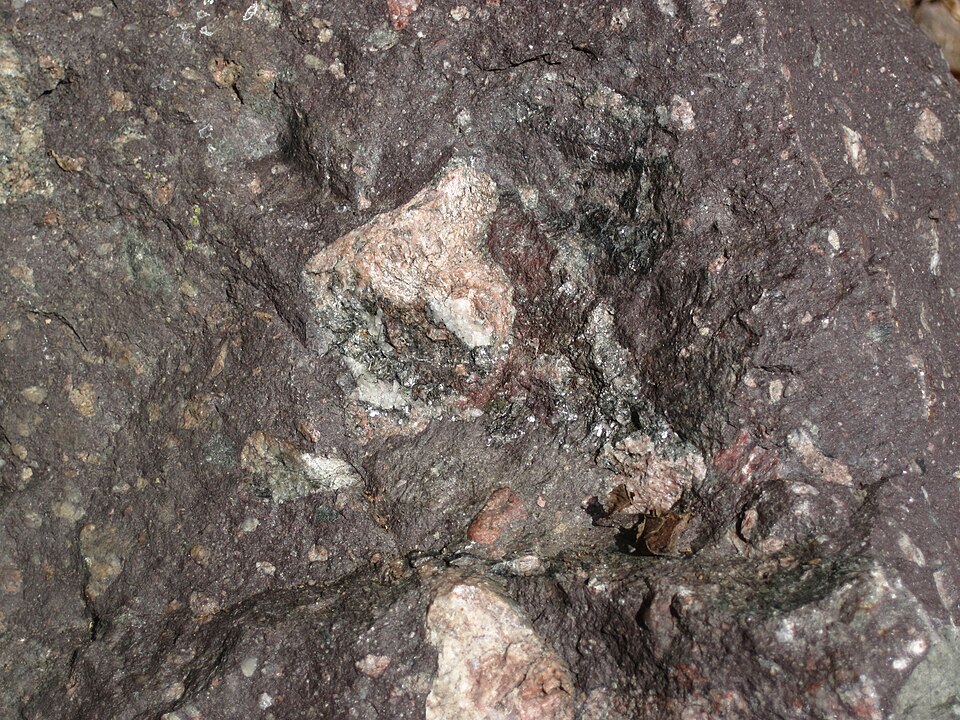
The two best-documented Snowball Earth events occurred during the Cryogenian period, which is formally defined by its glacial record. The older and longer event is the Sturtian glaciation, which began approximately 717 million years ago and persisted until roughly 660 Ma — a duration of some 57 million years that makes it by far the longest known glaciation in Earth history.7, 8 Sturtian glacial deposits have been identified on every major craton, including sequences in Australia (the Sturt Tillite, from which the name derives), Namibia, North America, China, India, and Scandinavia. The extraordinary duration of the Sturtian event may reflect anomalously low rates of volcanic CO2 outgassing related to diminished mid-ocean ridge activity during the breakup of the supercontinent Rodinia, though the initiation of the glaciation itself has been linked to enhanced weathering of continental flood basalts.9
_(Konnarock_Formation,_Neoproterozoic,_~750_Ma;_Rt._603_roadcut_near_Konnarock,_Virginia,_USA)_49_(25337206839).jpg)
The younger Cryogenian event is the Marinoan glaciation, which began around 650 Ma and ended at approximately 635 Ma, lasting an estimated 4 to 16 million years.7, 10 The Marinoan is the event most commonly associated with the Snowball Earth concept because its sedimentary record is exceptionally well preserved and its cap carbonate sequence is among the most distinctive stratigraphic markers in the geological column. In Namibia, the Marinoan glacial diamictites of the Ghaub Formation pass upward, across a knife-sharp contact, into the Keilberg cap dolostone — a metres-thick unit of finely laminated dolomite that can be traced across the entire Otavi platform. This abrupt transition from glacial to carbonate sedimentation, repeated on every continent, is the single most compelling piece of evidence for a catastrophic, greenhouse-driven deglaciation.3, 19
Neoproterozoic glacial episodes6, 7, 20
| Glaciation | Age (Ma) | Duration (Myr) | Lowest paleolatitude | Key deposits |
|---|---|---|---|---|
| Kaigas | ~757–741 | ~16 | Uncertain | Kaigas Fm., Namibia |
| Sturtian | ~717–660 | ~57 | <10° | Sturt Tillite, Australia; Rapitan Group, Canada; Chuos Fm., Namibia |
| Marinoan | ~650–635 | ~15 | <10° | Elatina Fm., Australia; Ghaub Fm., Namibia; Nantuo Fm., China |
| Gaskiers | ~580–579 | ~1–2 | ~30–40° | Gaskiers Fm., Newfoundland |
A third, much shorter glacial episode — the Gaskiers glaciation at approximately 580 Ma — is recorded in the Avalon Peninsula of Newfoundland and a few other localities. Lasting only one to two million years and apparently restricted to higher latitudes, the Gaskiers event is generally not considered a full Snowball Earth event, though it demonstrates that glacial conditions persisted intermittently into the Ediacaran period.20 An even older candidate, the Kaigas glaciation (~757–741 Ma), is documented primarily from Namibia, but its extent and severity remain poorly constrained and it is not universally accepted as a distinct global event.6
The Huronian glaciation and the Great Oxidation Event
The Cryogenian events were not the first Snowball-scale glaciations in Earth history. The Huronian glaciation, dated to approximately 2.4–2.1 billion years ago (Paleoproterozoic era), left three distinct tillite horizons in the Huronian Supergroup of Ontario, Canada, the lowermost and uppermost of which — the Ramsay Lake and Gowganda formations, respectively — are particularly thick and widespread. Correlative glacial deposits of similar age occur in South Africa, Western Australia, and Fennoscandia, suggesting a glaciation of at least hemispheric and possibly global scale.11
The Huronian glaciation is widely interpreted as a consequence of the Great Oxidation Event (GOE), the transition from an essentially oxygen-free atmosphere to one containing at least a few percent of modern oxygen levels. Before the GOE, methane produced by methanogenic archaea was a major greenhouse gas; when cyanobacterial photosynthesis raised atmospheric oxygen above a threshold, the methane was oxidised to CO2, which is a far less potent greenhouse gas molecule for molecule. The resulting collapse in greenhouse forcing may have been sufficient to tip the planet into a snowball state.11, 12, 13 Paleomagnetic measurements on Huronian-age glacial rocks from South Africa by Evans, Beukes, and Kirschvink yielded paleolatitudes as low as approximately 11°, strongly supporting a global-scale glaciation analogous to the later Cryogenian events.23
Evidence for tropical glaciation
The single most important line of evidence for the Snowball Earth hypothesis is the paleomagnetic demonstration that glacial deposits formed at tropical latitudes. Paleomagnetism exploits the fact that certain iron-bearing minerals in sedimentary and volcanic rocks record the direction and inclination of Earth's magnetic field at the time of their formation. Because magnetic field inclination varies systematically with latitude — vertical at the poles, horizontal at the equator — the inclination preserved in a rock can be used to reconstruct the paleolatitude at which it was deposited. Multiple independent paleomagnetic studies of Neoproterozoic glacial formations have consistently yielded low-latitude results. The Elatina Formation of South Australia, a Marinoan-age glacial unit, has been the most intensively studied and yields a paleolatitude of approximately 5–10° from the equator, with high confidence that the magnetisation is primary (acquired at the time of deposition) rather than a later overprint.2, 22
Alternative explanations for low-latitude glacial deposits have been proposed but are generally considered inadequate. The hypothesis that Earth's magnetic dipole was tilted at a high angle to the rotation axis (so that low paleomagnetic inclinations would not correspond to low geographic latitudes) conflicts with the theoretical and observational basis of the geocentric axial dipole model, which holds well for geological timescales. The suggestion that the glacial deposits formed at high latitudes and were subsequently moved to low latitudes by rapid plate tectonics requires implausibly fast continental drift. The paleomagnetic evidence, now replicated across multiple continents and with multiple independent dating constraints, is considered robust.4, 22
The carbon cycle mechanism
The Snowball Earth hypothesis rests on a positive feedback loop in the carbon cycle and the surface energy balance. Under normal conditions, atmospheric CO2 is consumed by the chemical weathering of silicate rocks — a process in which carbonic acid (formed when CO2 dissolves in rainwater) reacts with silicate minerals to produce bicarbonate ions, which are carried by rivers to the ocean and ultimately precipitated as carbonate sediments. This silicate weathering thermostat acts as a long-term climate regulator: when temperatures rise, weathering rates increase, drawing down CO2 and cooling the planet; when temperatures fall, weathering slows, CO2 accumulates from volcanic outgassing, and the greenhouse effect warms the planet back up. Under most circumstances this negative feedback prevents runaway glaciation.3, 4
The Snowball Earth mechanism requires that the silicate weathering thermostat be overwhelmed. This could occur if, through a combination of tectonic configuration (most continental area clustered near the equator, where weathering is most efficient), low volcanic outgassing, and perhaps biological amplification of weathering, CO2 was drawn down far enough for ice to advance into the subtropics. Once ice reached a critical latitude of approximately 30°, the ice-albedo feedback would become self-sustaining: the high reflectivity of ice and snow would prevent enough solar radiation from being absorbed to halt the advance, and the remaining open ocean would freeze within centuries to millennia. At this point the silicate weathering thermostat would effectively shut off, because the chemical weathering of silicate rocks requires liquid water and exposed rock surfaces, both of which are eliminated under a global ice cover.2, 3
Escape from the Snowball state is achieved through the steady accumulation of volcanic CO2. Earth's interior heat drives volcanic outgassing regardless of surface conditions, and with silicate weathering suppressed, CO2 would accumulate in the atmosphere unopposed. Over timescales of millions to tens of millions of years, atmospheric CO2 could reach concentrations of 0.1 bar or more (roughly 350 times the pre-industrial level of 280 ppm). At such concentrations, the greenhouse effect would become strong enough to initiate melting even on a highly reflective ice surface. Once melting began, the ice-albedo feedback would operate in reverse — exposed dark ocean would absorb more radiation, accelerating warming — and deglaciation would proceed catastrophically, perhaps in as little as a few thousand years.3, 4, 22
Cap carbonates
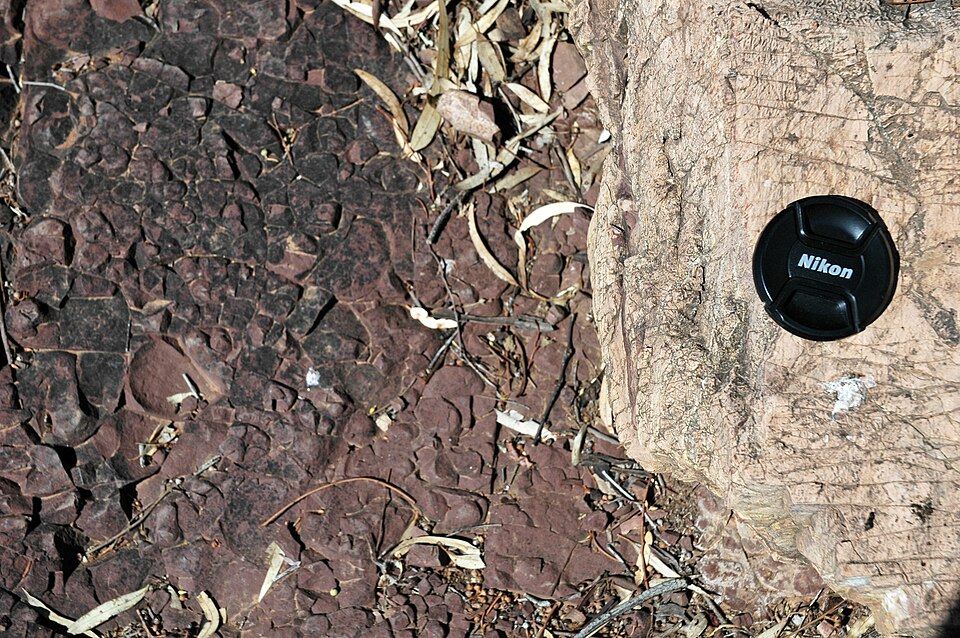
Among the most distinctive features of the Neoproterozoic glacial record are the cap carbonates — laterally continuous layers of limestone or dolostone that sit directly on top of glacial diamictites across every continent. The contact between glacial sediment and carbonate is characteristically abrupt, with no intervening soil horizon or erosion surface, implying rapid environmental change. Cap carbonates following the Marinoan glaciation are particularly thick (typically 3–30 metres) and carry a suite of unusual sedimentary features, including giant wave ripples, tepee-like structures, tube-forming structures interpreted as fluid escape features, and extremely negative carbon isotope values (as low as −5 per mil δ13C).3, 18, 19
_10.jpg)
In the Snowball Earth framework, cap carbonates are the predicted consequence of extreme CO2 buildup during the frozen interval. As the ice melted, the intense greenhouse conditions would have driven rapid warming and an extraordinarily vigorous hydrological cycle. Chemical weathering of freshly exposed silicate rocks would have proceeded at extreme rates under the hot, CO2-rich atmosphere, flooding the ocean with calcium and bicarbonate. The ocean itself, which had been acidified during the glaciation by equilibration with the high-CO2 atmosphere, would have become strongly supersaturated with respect to calcium carbonate once mixing with the weathering products began, resulting in the massive, geologically instantaneous precipitation of carbonate over the entire continental shelf area. The negative carbon isotope excursion is interpreted as reflecting the dominance of mantle-derived (isotopically light) carbon in the ocean during the glacial interval, before biological productivity could re-establish the normal fractionation pattern.3, 15, 18
Banded iron formations and ocean chemistry
One of the more striking pieces of supporting evidence for the Snowball Earth hypothesis is the reappearance of banded iron formations (BIFs) during the Cryogenian, after an absence of more than a billion years from the geological record.

_3.jpg)
The return of BIFs during the Sturtian glaciation — exemplified by the Rapitan iron formation in the Mackenzie Mountains of northwestern Canada and equivalent deposits in Namibia and Brazil — implies that the oceans became anoxic and iron-rich once again. Under a Snowball Earth scenario, the global ice cover would have cut off the ocean from atmospheric oxygen, while continued hydrothermal input from mid-ocean ridges would have steadily added dissolved iron to the deep ocean. Over tens of millions of years, iron concentrations could have built up to levels not seen since the Archean. When the ice finally melted and the ocean was re-oxygenated, the dissolved iron would have precipitated as iron oxides, producing the observed BIFs. This sequence is internally consistent with the Snowball model and difficult to explain under any hypothesis that allows significant open water.17, 22
The Slushball Earth alternative
Not all researchers accept that the oceans froze over completely. In 2000, Hyde and colleagues published coupled climate–ice-sheet model simulations suggesting that even under the most extreme forcing, a narrow belt of open water might have persisted in the tropical oceans — a state they termed Slushball Earth (also called "Jormungand" or "waterbelt" states in later modelling work). In their simulations, sea-ice dynamics and ocean heat transport prevented the complete closure of tropical open water, maintaining a refugium that, while narrow, would have been sufficient to sustain photosynthetic organisms and avoid the extreme biological crisis implied by a hard snowball.14
The debate between hard Snowball and Slushball interpretations remains active and has stimulated increasingly sophisticated climate modelling efforts. Hoffman and colleagues argued in a comprehensive 2017 review that the geological evidence — particularly the Cryogenian BIFs, the severity and global synchroneity of the carbon isotope excursions, and the thickness and ubiquity of cap carbonates — is more consistent with a hard snowball than with a state preserving significant open water. They noted that models producing a stable Slushball state tend to require specific and fine-tuned assumptions about sea-ice rheology and ocean heat transport that are not independently constrained.22 Conversely, proponents of the Slushball interpret the same geological observations as compatible with a near-frozen ocean with limited tropical gaps, and they argue that the survival of eukaryotic life through the Cryogenian is more readily explained if some marine habitat persisted throughout.14
Biological implications
The biological consequences of Snowball Earth are among the most debated aspects of the hypothesis. If the oceans truly froze over, photosynthetic organisms would have been restricted to rare patches of thin ice, meltwater ponds on the ice surface, or geothermally heated refugia such as volcanic hotsprings and hydrothermal vents. Molecular clock analyses suggest that most major eukaryotic lineages, including algae, fungi, and animal ancestors, diverged before or during the Cryogenian, implying that these organisms survived the Snowball events, albeit perhaps through severe population bottlenecks.16
The aftermath of the Marinoan glaciation is temporally associated with one of the most consequential transitions in the history of life: the appearance of the Ediacaran biota, the first large, complex, multicellular organisms preserved in the fossil record. The oldest known Ediacaran fossils, from the Avalon assemblage of Newfoundland, appear shortly after 580 Ma, within a few tens of millions of years of the Marinoan deglaciation.25 Several hypotheses connect the Snowball events to this biological revolution. The extreme glaciations may have driven genetic bottlenecks that, upon relaxation, allowed rapid evolutionary diversification. The post-glacial ocean may have been enriched in nutrients released by intense weathering, fuelling an explosion of primary productivity. The oxygenation of the deep ocean following Snowball events, recorded by changes in redox-sensitive trace metals, may have removed a longstanding barrier to the evolution of large, metabolically active, oxygen-dependent organisms.16, 22
The causal links between Snowball Earth and the Ediacaran radiation remain speculative, and the precise mechanisms by which extreme glaciation might have promoted biological complexity are not yet established. Nonetheless, the temporal coincidence is striking: the two most severe glaciations in Earth history were followed, within a geologically short interval, by the first appearance of the animal body plans that would come to dominate the Phanerozoic biosphere.16, 25
Modern evidence and ongoing debates
Research on Snowball Earth has accelerated since the early 2000s, drawing on advances in geochronology, geochemistry, paleomagnetism, and numerical climate modelling. High-precision U-Pb zircon dating has refined the timing and duration of both Cryogenian glaciations, confirming that the Sturtian and Marinoan events were discrete, globally synchronous episodes rather than diachronous regional glaciations.7, 8 Detrital zircon provenance studies have been used to trace the source regions of glacial sediments, providing independent constraints on ice-flow directions and the extent of ice cover over continental interiors.24
Geochemical investigations have added further layers of evidence. Bodiselitsch and colleagues reported an iridium anomaly in the Marinoan cap carbonate from Namibia, which they interpreted as the result of a prolonged accumulation of cosmic dust on the ice surface, concentrated into a thin layer during deglaciation. While not universally accepted, the iridium enrichment provides a potential test of glaciation duration that is independent of radiometric dating.21 Carbon and sulfur isotope records through the Neoproterozoic have been compiled in increasing detail, revealing the extreme perturbations to ocean chemistry associated with each glacial event and supporting the hypothesis of prolonged ocean anoxia beneath the ice.15, 22
Numerical climate models have become central to the debate, and the field has progressed from simple energy balance models to fully coupled atmosphere-ocean-ice general circulation models. These models have confirmed that the ice-albedo feedback can drive Earth into a globally glaciated state given sufficient CO2 drawdown, and that volcanic CO2 accumulation can plausibly trigger escape from the frozen state. However, models disagree on whether a true hard snowball or a slushball state is the more likely outcome, and on the details of deglaciation dynamics, including the role of dust on the ice surface in lowering albedo and initiating melting.14, 22
The Snowball Earth hypothesis has proven remarkably productive as a framework for understanding Neoproterozoic Earth history. Even where specific details remain contested — the completeness of ice cover, the precise CO2 levels during glaciation, the mechanisms of biological survival — the hypothesis has unified observations from sedimentology, geochemistry, paleomagnetism, and evolutionary biology into a coherent account of one of the most dramatic episodes in planetary history. The conversation between geological observation and climate modelling continues, and the Snowball Earth remains among the most active and consequential research topics in the geosciences.4, 5, 22
References
Late Precambrian glaciation and its relationship to the evolution of the Proterozoic ice ages
Snowball Earth: The Story of the Great Global Catastrophe That Spawned Life as We Know It
The Ediacaran emergence of bilaterians: congruence between the genetic and the geological fossil records
Iridium anomaly in a Neoproterozoic cap carbonate from Namibia: testing the snowball Earth hypothesis
Detrital zircon provenance of Neoproterozoic glacial diamictites and the constraints on the ice extent