Overview
- Ancient DNA research, pioneered by Svante Pääbo and recognized with the 2022 Nobel Prize in Physiology or Medicine, has transformed human evolutionary studies by enabling direct genome sequencing of archaic populations that left no living descendants.
- The 2010 Neanderthal draft genome revealed that all non-African people alive today carry approximately 1–4% Neanderthal DNA, while Melanesian and Aboriginal Australian populations carry an additional 4–6% Denisovan ancestry, the result of interbreeding events tens of thousands of years ago.
- Adaptive introgression — the retention of archaic alleles under positive selection — has had measurable consequences for modern human biology, including the Denisovan-derived EPAS1 variant that allows Tibetans to survive at extreme altitude.
Ancient DNA (aDNA) research is one of the most transformative developments in the history of science. In less than four decades, the ability to extract and sequence genetic material from archaeological remains has converted dry bones and museum specimens into direct molecular records of populations that have been extinct for tens of thousands, or even hundreds of thousands, of years. Where the fossil record yields anatomy, ancient DNA yields genealogy: who interbred with whom, which populations replaced or absorbed others, and which genes from archaic relatives persist in the bodies of living people today. The field's impact on human evolutionary biology has been so profound that the Swedish Royal Academy awarded its 2022 Nobel Prize in Physiology or Medicine exclusively to Svante Pääbo, the evolutionary geneticist whose laboratory at the Max Planck Institute for Evolutionary Anthropology in Leipzig pioneered nearly every major technical advance and landmark discovery in the discipline.1
The story of ancient DNA is inseparable from the story of its obstacles. DNA is not a stable molecule. The moment an organism dies, cellular enzymes begin hydrolyzing the double helix, and microbial colonization accelerates the destruction. What survives in old bones is highly fragmented, chemically modified, and massively outnumbered by environmental and microbial contaminant DNA. For most of human evolutionary history, the relevant specimens come from tropical and subtropical environments where heat and humidity degrade nucleic acids within decades. Yet a combination of extraordinary patience, increasingly powerful sequencing technology, rigorous contamination controls, and the exploitation of optimal preservation environments — particularly permafrost and dense cortical bone — has enabled researchers to read the genomes of individuals who died before the last glacial maximum, reconfiguring our understanding of human origins in the process.
Technical foundations
The first ancient DNA sequences were published in 1984 and 1985 by Russell Higuchi and colleagues, who extracted a 229-base-pair fragment of mitochondrial DNA from the dried muscle of a quagga, an extinct subspecies of zebra held in a museum collection.18 The field received a revolutionary boost in the late 1980s from the polymerase chain reaction (PCR), developed by Kary Mullis, which could amplify vanishingly small quantities of surviving DNA into quantities large enough to sequence. PCR transformed ancient DNA from a curiosity into a discipline. By the early 1990s, laboratories worldwide were reporting sequences from Egyptian mummies, Pleistocene megafauna, insects preserved in amber, and even dinosaur bones — most of which were subsequently shown to be laboratory or specimen contamination rather than genuine ancient sequences. The false positives of this era established a hard lesson that has defined the field ever since: extraordinary claims require extraordinarily rigorous contamination controls.
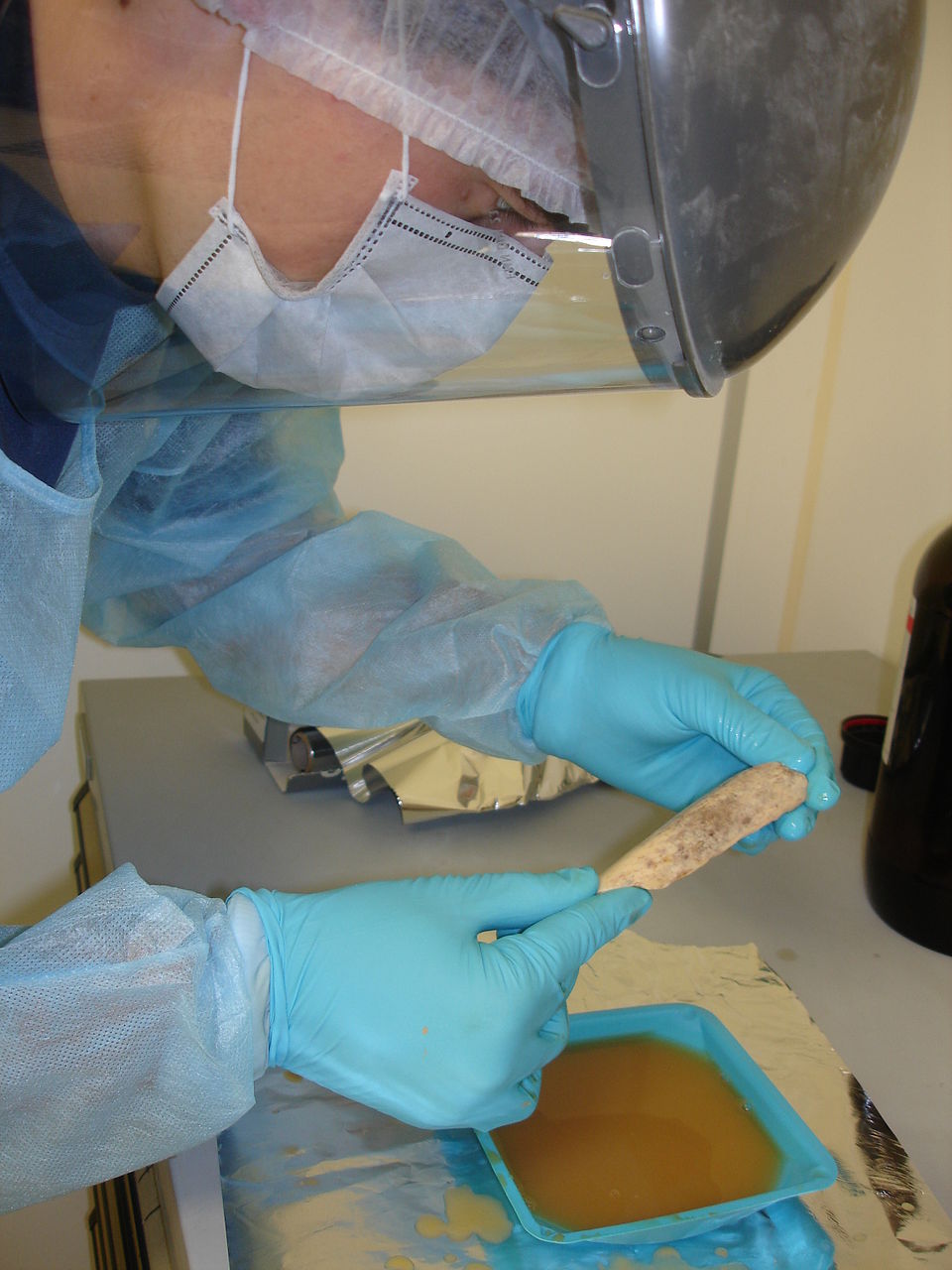

Modern ancient DNA methodology is built around several interlocking principles. First, authenticated ancient DNA has a characteristic damage signature: cytosine residues at the ends of fragments are chemically deaminated to uracil at a predictable rate that increases with specimen age, producing a distinctive pattern of C-to-T substitutions that is absent from modern contaminants.18 Software packages such as mapDamage quantify this damage to authenticate sequences, reject modern contaminants, and in some cases use the damage gradient to estimate the relative age of different fragments.18 Second, next-generation sequencing (NGS) — which generates millions of short reads simultaneously — proved ideally suited to ancient DNA because the endogenous fragments are themselves short, typically 35–100 base pairs, a length that PCR-based methods had previously treated as noise. By 2010, NGS had replaced PCR amplification as the standard platform for ancient genomics, enabling the first whole-genome sequences of extinct hominins.2
The choice of skeletal element profoundly affects DNA yield. For decades, researchers relied on teeth and the dense cortical regions of long bones, but a landmark 2015 study by Ron Pinhasi and colleagues demonstrated that the petrosal portion of the temporal bone — the extremely dense bone encasing the inner ear — consistently outperforms all other skeletal elements by an order of magnitude or more, sometimes preserving endogenous DNA proportions above 50% even in warm-climate specimens that yield almost nothing from other bones.21 The petrous bone has since become the standard sampling site for ancient human genomics. The physical reason is the extreme density of the petrosal cortex, which slows microbial infiltration, and the high mineral content, which may stabilize DNA by ionic binding. A complementary 2013 advance by Jesse Dabney and colleagues showed that a silica-based extraction protocol optimized for ultrashort DNA fragments could recover genetic material from specimens, including a 300,000-year-old cave bear, where conventional methods had failed entirely.19
The first Neanderthal sequences
The first ancient DNA from a hominin was published in 1997 by Matthias Krings and colleagues in Pääbo's laboratory. Working from a 40-gram sample of the humerus of the Feldhofer 1 Neanderthal — the holotype specimen discovered in the Neander Valley in 1856 — they extracted and amplified a 379-base-pair hypervariable segment of mitochondrial DNA.3 The sequence differed from modern human mtDNA at an average of 27 positions, nearly triple the average difference between any two living humans, and fell entirely outside the range of modern human variation. Statistical tests confirmed it was not a modern contaminant. This single sequence, from a single individual, immediately illuminated a fundamental question that had consumed paleoanthropology for a century and a half: it demonstrated that the Neanderthal mitochondrial lineage was distinct from that of all modern humans, consistent with a replacement model in which Homo sapiens expanded out of Africa without substantial mitochondrial gene flow from Neanderthals.3
The mitochondrial evidence was, however, inherently limited. The mitochondrial genome represents less than 0.001% of the human genome, is inherited only through the maternal line, and a single sequence from a single individual provides no information about nuclear admixture, population structure, or the fate of Neanderthal nuclear DNA in modern humans. The community recognized that answering the most important questions would require nuclear genomic data — data that seemed impossibly ambitious given the degraded state of ancient specimens. The path from one 379-base-pair mtDNA fragment in 1997 to the first draft Neanderthal nuclear genome in 2010 required the development of entirely new laboratory protocols, library preparation methods, and computational pipelines over more than a decade of incremental technical advances by Pääbo's group and their collaborators.
The Neanderthal genome and the discovery of admixture
In 2010, Richard Green, Johannes Krause, Svante Pääbo, and more than 50 co-authors published a draft Neanderthal genome in Science, assembled from approximately 4 billion base pairs of DNA extracted from three female Neanderthal specimens from Vindija Cave in Croatia, dated to approximately 38,000–44,000 years ago.2 The genome covered roughly 60% of the Neanderthal genome at low depth (about 1.3-fold mean coverage), sufficient for population-genetic analyses but too sparse for high-confidence calling of individual variants. In 2017, Prüfer and colleagues produced a high-coverage genome (approximately 30-fold) from a single Vindija Cave Neanderthal, enabling far more precise estimation of admixture proportions and identification of regions under selection.9
The central finding of the 2010 paper was not anatomical or behavioral but genealogical: when the Neanderthal genome was compared to five contemporary human genomes representing sub-Saharan Africa, western Europe, East Asia, Papua New Guinea, and southern Africa, the Neanderthal sequence was consistently more similar to the four non-African genomes than to the two African ones.2 This pattern held across multiple independent statistical tests and could not be explained by incomplete lineage sorting alone. The most parsimonious interpretation was gene flow from Neanderthals into the common ancestors of all non-African modern humans, most plausibly in the Near East approximately 50,000–60,000 years ago as expanding Homo sapiens populations first encountered resident Neanderthals after leaving Africa.2 The initial estimate placed Neanderthal ancestry in non-Africans at 1–4%, a range subsequently refined to approximately 1.5–2.1% using the higher-coverage 2017 genome and larger reference panels of modern human genomes.9, 27
The discovery overturned the dominant model of modern human origins — the so-called Out of Africa replacement model, also known as the Recent African Origin model — which had held that Homo sapiens expanded out of Africa and replaced all archaic human populations without significant interbreeding. In place of clean replacement, the genomic data revealed a more complex history of partial admixture, in which modern humans absorbed genetic material from multiple archaic populations as they expanded across the globe.2, 27 Subsequent analyses confirmed that the Neanderthal DNA in modern non-Africans is not randomly distributed across the genome: it is significantly depleted near genes, particularly genes expressed in the testes and brain, suggesting that many Neanderthal alleles were mildly deleterious when placed in the Homo sapiens genomic background and were gradually purged by natural selection over tens of thousands of generations.9, 27
Estimated Neanderthal DNA in modern human populations2, 9, 27
The Denisovans: a species discovered by DNA alone
The year 2010 produced not one but two genomic revolutions in human evolutionary biology. The same laboratory that sequenced the Neanderthal genome also reported, in the journal Nature, the mitochondrial DNA of an entirely unknown archaic human population — a population that had never been assigned a species name, never described morphologically, and never even suspected to exist — from a tiny fragment of a child's finger bone recovered from Denisova Cave in the Altai Mountains of Siberia.4 The mtDNA of this specimen, designated Denisova 3, diverged from both modern humans and Neanderthals by roughly twice the amount separating those two groups from each other, indicating that the individual belonged to a deeply distinct lineage. Later that year, David Reich and colleagues published a nuclear genome from the same specimen, confirming that the Denisovans were a sister group to Neanderthals that had diverged from the Neanderthal lineage approximately 390,000 years ago.5
In 2012, Matthias Meyer and colleagues produced a high-coverage genome (approximately 30-fold) from the Denisova 3 finger bone, achieving a sequence quality comparable to contemporary whole-genome sequencing of living individuals.8 The high-coverage genome enabled the first detailed population-genetic analysis of Denisovan relationships, revealing that Melanesian and Australian Aboriginal populations carry approximately 4–6% Denisovan ancestry — a separate admixture event from the Neanderthal gene flow that contributed DNA to all non-Africans.5, 8 This result established the Denisovans as a distinct source of archaic ancestry in modern humans, one geographically concentrated in Oceania and Island Southeast Asia despite the fact that the only physical Denisovan remains came from a cave in Siberia thousands of kilometers away.
The African genome is not an untouched baseline, either. A 2020 study by Arjun Durvasula and Sriram Sankararaman identified statistical signatures consistent with gene flow from a deeply diverged, unknown archaic population — one that separated from the modern human lineage before the Neanderthal-Denisovan split — into the ancestors of some sub-Saharan African populations. This "ghost lineage" has not been identified in any physical specimen.16 The convergent discovery of multiple archaic contributions to modern human genomes underscores that the evolutionary history of Homo sapiens is not a simple phylogeny but a reticulate network in which gene flow connected multiple lineages across vast geographic distances.
Denny, Sima de los Huesos, and deep-time genomics
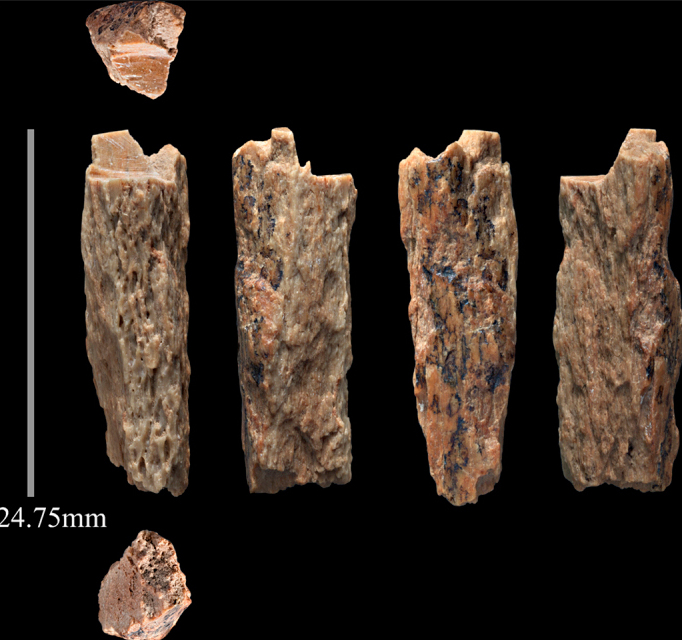
The Denisova Cave specimens have yielded not only population-level insights but one of the most extraordinary individual genetic profiles in the history of human biology. In 2018, Viviane Slon and colleagues published the genome of Denisova 11, a long-bone fragment approximately two centimeters in length recovered from the cave's Main Gallery and dated to approximately 90,000 years ago. Zooarchaeology by mass spectrometry (ZooMS) — a technique that identifies species from collagen peptide mass spectra — identified the fragment as hominin, triggering genetic analysis.6 The genome revealed that the individual, nicknamed Denny, was a first-generation hybrid: her mother was a Neanderthal whose genome closely resembled the western European Vindija Cave Neanderthals, and her father was a Denisovan who himself carried traces of earlier Neanderthal ancestry in his genome.6 Among the few dozen archaic hominin individuals whose genomes have been sequenced, the probability of recovering a first-generation hybrid by chance is vanishingly small, implying that interbreeding between the two populations was not rare when they encountered each other.

Reaching further back in time, Meyer and colleagues reported in 2014 a mitochondrial genome from a hominin at Sima de los Huesos (“Pit of Bones”), a site in the Atapuerca cave system of northern Spain that has yielded more than 6,500 fossils representing at least 28 individuals, dated to approximately 430,000 years ago — making them among the oldest hominins ever to yield genetic data.20 The morphology of the Sima de los Huesos hominins resembles early Neanderthals, but their mtDNA was unexpectedly most similar to that of Denisovans, not Neanderthals. A 2016 follow-up by the same team produced partial nuclear genome data from two Sima individuals, which placed them firmly as early Neanderthals, consistent with their anatomy.7 The discordance between mitochondrial and nuclear phylogenies is explained by a replacement of the early Neanderthal mtDNA clade by a lineage introgressed from an African population sometime after 430,000 years ago — a ghost introgression event evidenced only by its molecular traces.7 The Sima de los Huesos nuclear genome currently represents the oldest nuclear DNA recovered from any hominin.
The preservation of 430,000-year-old nuclear DNA in Spain, a temperate but not permafrost environment, was made possible by the exceptional conditions inside the Sima chamber and by the silica-based extraction protocol developed by Dabney and colleagues, which captures DNA fragments as short as 35 base pairs.19 Understanding which environments preserve DNA and which do not is a central challenge for ancient genomics. Permafrost and cold caves provide the most reliable conditions; DNA degrades approximately twice as fast for every 10°C increase in mean annual temperature. This creates a severe sampling bias: the ancient DNA record is dominated by specimens from northern Eurasia, because tropical Africa — the continent most important for human origins — offers almost no conditions conducive to long-term DNA preservation.
Sediment eDNA
A significant advance in circumventing the preservation problem came with the development of sediment environmental DNA (eDNA) analysis. When organisms shed cells, excrete waste, or decompose, they deposit DNA into the surrounding sediment, where it can bind to mineral particles and persist long after bone and tissue have vanished. Benjamin Vernot and colleagues demonstrated in a landmark 2021 study in Science that DNA extracted from cave sediments could identify hominin occupants, including both Neanderthals and Denisovans, from seven caves across Europe and Asia, in some cases from layers where no physical hominin remains had been recovered.17 The study achieved spatial resolution sufficient to track changes in hominin occupation through stratigraphic layers within individual sites, revealing, for example, that Denisovans occupied Baishiya Karst Cave on the Tibetan Plateau during multiple distinct time periods spanning more than 100,000 years.
Sediment eDNA offers a path to genomic data from sites and periods that are otherwise invisible to the ancient DNA record — particularly sites in tropical Africa, where bone DNA is rarely preserved but sediment may protect fragmented DNA for far longer. The technique does carry significant interpretive challenges: because sediment DNA derives from multiple sources and can be physically transported by water or bioturbation, distinguishing contemporaneous deposition from contamination requires careful stratigraphic control and statistical filtering. Nevertheless, the ability to detect the genomic signatures of populations that left no bones at a given site represents a qualitative expansion of the ancient DNA toolkit, opening parts of the human evolutionary record that had been effectively inaccessible.
Adaptive introgression
Not all archaic DNA that entered the Homo sapiens genome was neutral or deleterious. A subset of introgressed alleles was positively selected because it encoded adaptive phenotypes that modern humans had not independently evolved, particularly phenotypes useful in environments that Homo sapiens encountered for the first time during their out-of-Africa expansion but where archaic populations had lived and adapted for hundreds of thousands of years. This process, known as adaptive introgression, is one of the most important mechanisms revealed by ancient genomics.12
The most thoroughly documented case involves the EPAS1 gene, which encodes a transcription factor that regulates the cellular response to low oxygen. Tibetans living above 4,000 meters carry a distinctive EPAS1 haplotype that suppresses the overproduction of red blood cells at altitude — a response that in other high-altitude groups leads to chronic mountain sickness. In 2014, Emilia Huerta-Sánchez and colleagues demonstrated that this haplotype matches the Denisovan reference genome almost perfectly, is present in Tibetans at approximately 78% frequency, is essentially absent from all other modern human populations except Han Chinese (where it occurs at less than 1%), and can only be parsimoniously explained by introgression from a Denisovan or closely related population.10 The EPAS1 case is the clearest known instance of a gene that Homo sapiens acquired from an archaic relative and then rapidly spread to near-fixation under positive selection in a specific ecological context.
Immune system genes offer a different category of adaptive introgression. The human leukocyte antigen (HLA) system, encoded by the most polymorphic gene cluster in the human genome, plays a fundamental role in presenting antigens to the adaptive immune system. A 2011 study by Laurent Abi-Rached and colleagues found that several HLA haplotypes of apparent Neanderthal or Denisovan origin are present at high frequencies in modern human populations outside Africa, particularly in populations of western Eurasia and Oceania.11 The inference is that as modern humans expanded into Eurasia and encountered novel pathogens to which archaic populations had adapted over hundreds of millennia, introgressed HLA variants conferred resistance and were rapidly selected to high frequency. Fernando Racimo and colleagues, reviewing the evidence for adaptive introgression more broadly in 2015, identified multiple genomic regions showing signals consistent with positive selection on archaic alleles, including loci involved in skin biology, immunity, and metabolism.12
The ancient DNA revolution in European prehistory
Beyond the archaic genomics of Neanderthals and Denisovans, the ancient DNA revolution has transformed the archaeology of the Holocene, particularly the population history of Europe over the past 10,000 years. Before ancient genomics, European prehistory was reconstructed almost entirely from material culture — pottery styles, burial practices, tool technologies — and the question of whether cultural change reflected the movement of peoples or merely the transmission of ideas among stable populations could not be resolved. Ancient DNA answered this question definitively in favor of repeated, large-scale migrations that replaced or substantially displaced earlier inhabitants.
A 2013 study by Wolfgang Haak and colleagues, analyzing genomes from early Neolithic individuals from sites in Germany and Sweden, established that the first farmers of central Europe were genetically distinct from the indigenous Mesolithic hunter-gatherers of the region, carrying instead affinities to populations from the Aegean and Anatolia.23 This genomic signature confirmed that farming spread to Europe primarily through the migration of agricultural peoples from the Near East, not through the cultural transmission of farming techniques to existing hunter-gatherer populations. A 2015 companion study by the same group showed that Mesolithic hunter-gatherers and early Neolithic farmers coexisted for centuries in some regions with little admixture before the farmers ultimately became demographically dominant.14
A second major migration, the Yamnaya expansion, proved even more dramatic. Haak and colleagues' landmark 2015 study in Nature sequenced 69 ancient European genomes spanning 8,000 years and found a massive genomic shift in Bronze Age central Europe beginning approximately 4,500 years ago, coinciding with the appearance of Corded Ware culture: populations across much of Europe came to carry 50–75% of their ancestry from steppe pastoralists related to the Yamnaya culture of the Pontic-Caspian steppe.13 This migration — which the ancient DNA could demonstrate was a real movement of people rather than a diffusion of ideas — is the primary candidate for the dispersal of Indo-European languages into Europe. A 2018 analysis of the Bell Beaker phenomenon, a cultural complex that spread across western Europe around 2750–2500 BCE, found that it was associated with near-total population replacement in Britain: within a few centuries of the Beaker culture's arrival, up to 90% of the ancestry of the British population had been replaced by Beaker-associated migrants from mainland Europe with high steppe ancestry.22
These results illustrate the power of ancient DNA to answer questions that archaeology alone cannot: not just whether cultures moved, but whether people moved. The genome sequences of ancient individuals constitute a direct, biological record of ancestry, admixture, and migration that neither artifact typology nor stable isotopes can fully replicate. As the geographic and temporal coverage of ancient genomic datasets expands — a 2015 study by Mathieson and colleagues synthesized 230 ancient Eurasian genomes to track the spread of phenotypic variants such as lactase persistence, lighter skin pigmentation, and blue eye color through time — the outlines of population history across Eurasia are emerging in unprecedented detail.14
Ethical dimensions
The ancient DNA revolution has generated not only new scientific knowledge but renewed ethical scrutiny of how human remains are treated, who controls access to the genetic information they contain, and what obligations researchers have to descendant communities. These concerns are particularly acute in the Americas, Australia, and the Pacific, where Indigenous communities maintain cultural and spiritual relationships to ancestral remains that are often housed in distant institutions, and where the history of collection is entangled with colonialism, grave robbing, and scientific exploitation.
In the United States, the Native American Graves Protection and Repatriation Act (NAGPRA) of 1990 established legal obligations for federally funded institutions to consult with and, under specified conditions, repatriate human remains and associated objects to lineal descendants and culturally affiliated tribes. A 2019 review by Chip Colwell found that NAGPRA had by that point facilitated the repatriation of more than 67,000 sets of Native American remains, though significant backlogs remain and disputes about cultural affiliation continue to generate litigation and controversy.25 Ancient DNA science has complicated repatriation in both directions: genomic data can sometimes establish or refute claimed affiliations between modern communities and ancient remains, but the extraction of DNA requires physical sampling that destroys a portion of the specimen, raising additional concerns about irreversible alteration of objects held in trust.
A 2021 commentary in Nature by Sonja Alpaslan-Roodenberg and more than 30 co-authors, including some of the most prominent ancient DNA researchers in the world, argued that the ethical framework for ancient DNA research must be substantially improved.24 The authors identified a pattern in which researchers obtain ancient human remains — particularly from regions outside western Europe — without adequate consultation with descendant communities, publish findings without giving those communities meaningful input, and fail to share data or findings in forms accessible to non-specialist stakeholders. They called for community co-governance of research projects, benefit-sharing agreements, free and prior informed consent from relevant communities, and a global framework that goes beyond existing national regulations. The commentary reflected a broader shift in the field toward recognizing that ancient DNA research on human populations is not merely a technical enterprise but a social and political one, with real consequences for how communities understand their own histories and the legal and cultural claims that flow from ancestry.
Significance and future directions
Svante Pääbo's Nobel Prize in 2022 recognized a body of work that spanned four decades, encompassed the development of entirely new analytical methods, and produced a series of findings that individually would have qualified as landmark contributions.1 The first Neanderthal mtDNA sequence in 1997, the draft Neanderthal nuclear genome in 2010, the identification of the Denisovans in 2010, and the discovery of first-generation Neanderthal-Denisovan hybrids in 2018 each reshaped the conceptual framework of paleoanthropology. Together, they established that the late Pleistocene was populated by a web of interbreeding archaic and modern human lineages — not a ladder of replacement, but a braided stream of populations exchanging genes across continents and millennia.

.jpg)
The genomic record is not static. The sequencing of a 45,000-year-old Homo sapiens from Ust'-Ishim, Siberia, by Fu and colleagues in 2014 provided a temporal benchmark for the Neanderthal admixture signal, confirming that the introgressed Neanderthal segments in that individual were already being eroded by recombination and selection, implying admixture had occurred only a few thousand years before his death.28 Ancient genomics has also shed light on the deep ancestry of populations in the Caucasus, Southeast Asia, the Americas, and sub-Saharan Africa, in each case revealing migration histories of a complexity that prior models had not anticipated.15, 26
Key frontiers remain. DNA preservation in tropical Africa — the continent that produced modern humanity and where the most important questions about Homo sapiens origins remain unanswered — is the central technical challenge of the coming decade. Sediment eDNA from African caves, improved low-input library preparation protocols, and targeted capture of ancient DNA from calcified dental pulp and vitrified dental enamel proteins are all active research directions aimed at extending the genomic record into the African Pleistocene. Meanwhile, the development of ancient metagenomics — simultaneous sequencing of all DNA in an ancient specimen, including pathogens and microbiota — is enabling the study of ancient infectious diseases, revealing, for example, the early spread of plague across Eurasia in the third millennium BCE and the genomic origins of tuberculosis in the Americas. The integration of ancient DNA with isotopic analysis, zooarchaeology, and paleoecology promises a holistic reconstruction of past human lives that no single discipline could achieve alone. What began with a 379-base-pair fragment from a nineteenth-century museum specimen has grown into a discipline that reads the genomes of the dead as fluently as those of the living, and in doing so has fundamentally altered what it means to know our own species.
References
The shaping of modern human immune systems by multiregional admixture with archaic humans
Ancient human genome-wide data from a 3000-year interval in the Caucasus corresponds with eco-geographic regions
Complete mitochondrial genome sequence of a Middle Pleistocene cave bear reconstructed from ultrashort DNA fragments