Overview
- Birds survived the end-Cretaceous extinction because ground-dwelling, seed- and insect-eating lineages weathered the post-impact collapse of forest canopies, and within 10–15 million years the surviving Neoaves lineage had diversified into virtually every terrestrial and aquatic ecological niche on Earth.
- The Paleogene produced some of the largest birds in vertebrate history: terror birds up to 3 metres tall dominated South American ecosystems for roughly 60 million years, giant flightless ratites occupied island continents, and early penguins reached the stature of a modern human.
- A wave of human-driven extinctions during the Pleistocene and Holocene erased the largest island birds — elephant birds, moas, and Haast’s eagle — destroying ecosystems that had persisted unchanged for tens of millions of years.
The end-Cretaceous mass extinction 66 million years ago annihilated the non-avian dinosaurs and roughly three-quarters of all species on Earth, yet one lineage of small-bodied theropods survived: the birds. What followed was one of the most spectacular radiations in vertebrate history. Within 15 million years, the ancestors of every modern bird order had appeared, and within 60 million years, birds had evolved forms ranging from flightless giants weighing half a tonne to aerobatic insect-catchers weighing less than three grams. The Cenozoic — the era spanning the extinction to the present — is as much an age of birds as it is an age of mammals.18

Understanding Cenozoic bird evolution requires integrating evidence from an increasingly rich fossil record with molecular phylogenetic analyses that have revolutionised understanding of avian relationships since the early 2000s. Large-scale genomic studies have largely resolved the deep branching pattern of the avian tree, even as they have revealed that some of the most familiar bird groups — songbirds, parrots, raptors — diversified remarkably recently.3, 4 The result is a picture of birds as a group perpetually reinventing itself: surviving catastrophe, radiating explosively, producing ecological giants, and then, in a pattern that haunts the Pleistocene and Holocene, losing its largest members to the newest large-bodied animal on the landscape.
Surviving the K-Pg boundary
The mechanism by which birds survived the Chicxulub impact and its aftermath has become one of the most actively investigated questions in avian paleontology. A critical clue lies in the ecology of the survivors. Analysis of the bird fauna immediately above and below the K-Pg boundary demonstrates that arboreal, forest-canopy-dependent lineages — the enantiornithines, which had dominated Cretaceous bird diversity — disappeared entirely at the boundary, along with the tree-perching ancestors of many modern groups.2 The impact caused a global collapse of forest ecosystems through wildfire, darkness, and the destruction of primary productivity; environments that depended on intact canopies became uninhabitable for months to years.
What survived were ground-dwelling lineages adapted to open or disturbed habitats, and in particular lineages capable of exploiting seeds and invertebrates. Seeds are calorie-dense, resistant to decay, and persist in soils long after the plants that produced them have died. The ancestor of all living birds — the last common ancestor of Neornithes — was almost certainly a ground-nesting, seed- and insect-eating bird of modest size, capable of surviving the years of reduced productivity that followed the impact.2, 18 Molecular clock analyses calibrated against the fossil record place this ancestor in the latest Cretaceous, consistent with a scenario in which a small number of neornithine lineages passed through the extinction bottleneck and seeded all subsequent diversity.
The two basal neornithine lineages — Palaeognathae (ratites and tinamous) and Neognathae (all other birds) — had already diverged before the extinction.3 Within Neognathae, the waterfowl-like Anseriformes and the chicken-like Galliformes form a clade called Galloanserae that also diverged early. All remaining bird diversity belongs to Neoaves, a grouping that encompasses roughly 95 percent of living species and whose explosive early-Cenozoic diversification constitutes one of the most remarkable evolutionary events in the history of life.
The Neoaves radiation
The Neoaves radiation is extraordinary not merely for its breadth but for its speed. Molecular estimates consistently place the origin of most major Neoaves orders within a window of roughly 10–15 million years immediately following the K-Pg boundary, roughly 66–50 Ma.4, 17 This compressed timeframe, during which the ancestors of songbirds, parrots, raptors, owls, shorebirds, herons, swifts, and dozens of other lineages all diverged from one another, represents one of the fastest diversifications among vertebrates. For comparison, the entire mammalian order-level radiation, often cited as exceptionally rapid, unfolded over a similar or slightly longer interval.
Reconstructing the branching order of this radiation proved exceptionally difficult precisely because it was so fast: rapid divergence leaves short branches in the molecular tree and limited time for unique mutations to accumulate, creating a pattern called an “anomaly zone” in which different genomic regions favour conflicting topologies. The landmark Avian Phylogenomics Consortium study of 2014, which sequenced the full genomes of 48 bird species, and the independent analysis by Prum and colleagues using 259 ultraconserved elements, achieved broad consensus on the major lineages while revealing that some traditional groupings — raptors in particular — are not monophyletic.4, 3
Ecologically, the Neoaves radiation can be understood as an avian parallel to the mammalian adaptive radiation occurring simultaneously. As mammals invaded the large-body terrestrial herbivore and predator niches, birds radiated into aerial insectivory, aquatic foraging, raptor niches, and the open-habitat seed-eating roles that had been vacated by ornithischian dinosaurs. The two radiations unfolded in parallel on the same post-extinction landscape, with birds dominating the aerial and many aquatic niches while mammals occupied the terrestrial large-body niches — though, as the story of terror birds demonstrates, this division was never absolute.19
Terror birds: the Phorusrhacidae
Among the most striking products of the Cenozoic bird radiation were the Phorusrhacidae, known colloquially as terror birds — a family of large, flightless, carnivorous birds that dominated terrestrial apex predator niches in South America from the Paleocene through to the Pleistocene, a reign of approximately 60 million years.6 Terror birds were members of Cariamiformes, an order related to the seriemas of modern South America. They ranged from roughly 1 to 3 metres in height, with the largest species, Kelenken guillermoi from the Miocene of Patagonia, possessing a skull nearly 72 centimetres long — among the largest bird skulls known.7
Their ecology as apex predators is well supported by morphological analysis. The beak of large phorusrhacids was deep, laterally compressed, and strongly hooked, resembling an enormous raptor’s bill capable of delivering powerful downward strikes to immobilise prey. Biomechanical analyses of the skull suggest that terror birds did not use their beaks to grab and shake prey in the manner of modern raptors but instead delivered repeated rapid axial blows — a hatchet-like strike pattern that would have been lethal against animals up to the size of a small deer.6 The legs were long and powerful, built for pursuit predation across the open Patagonian grasslands that characterised much of Cenozoic South America.
South America’s isolation as an island continent throughout most of the Cenozoic, analogous to Australia’s isolation, created a faunal laboratory in which birds and large native ungulates evolved without competition from the placental carnivore guilds that dominated other continents. Terror birds thrived in this context, filling the large predator niche that elsewhere was occupied by hyenas, cats, and bear-dogs. When the Isthmus of Panama closed approximately 3 million years ago during the Great American Interchange, some terror bird lineages moved north into North America.8 The best-documented North American phorusrhacid, Titanis walleri, is known from Pliocene and possibly early Pleistocene deposits in Florida and Texas, making it one of the last surviving terror birds, and the only phorusrhacid known to have successfully colonised North America.8 The family went extinct during the Pleistocene, likely as a combination of competition from incoming placental carnivores and the broader changes to South American ecosystems that accompanied the Great American Interchange.
Giant flightless birds of the Paleogene
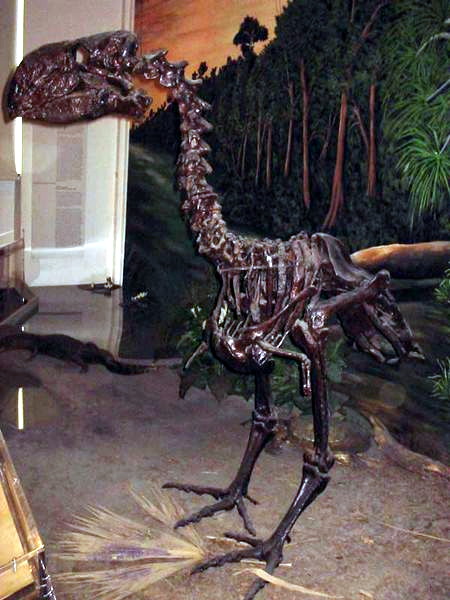
Terror birds were not the only large flightless birds to emerge in the post-extinction world. In Europe and North America during the Eocene, an entirely separate lineage of giant flightless birds achieved comparable or greater body masses. Gastornis (sometimes referred to under the North American synonym Diatryma) was a bird of imposing proportions — standing approximately 1.75 metres tall, with a massive, deep skull and an extraordinarily robust beak.9 Its remains are known from the Paleocene and Eocene of Europe, North America, and possibly East Asia, suggesting a cosmopolitan distribution across the Laurasian landmasses during the warm Paleogene greenhouse.24
The ecological role of Gastornis was long debated. Its massive beak superficially resembled that of a predator, and for decades it was reconstructed as an apex carnivore competing with early large mammals. However, stable isotope analysis of Gastornis bones from multiple European localities published in 2014 revealed a carbon and nitrogen isotope signature inconsistent with carnivory and instead consistent with a diet of tough plant material — seeds, nuts, and possibly tubers.9 This finding repositions Gastornis as a large-bodied herbivore or omnivore during the early Eocene, a role paralleling that of some giant extinct mammals rather than that of the contemporaneous predatory mammals. It went extinct by the middle Eocene, roughly coincident with the establishment of more diverse mammalian herbivore guilds.
A far more familiar group of giant flightless birds — the ratites — achieved their greatest sizes on the island continents and island systems of the Southern Hemisphere. The elephant birds of Madagascar (family Aepyornithidae) were the heaviest birds in the history of life. Vorombe titan, described in 2018 and previously assigned to other genera, reached an estimated mass of approximately 650 kilograms, dwarfing even large ratites.10 The elephant birds were herbivores that occupied Madagascar’s open grasslands and forest margins, and their eggs — with a volume of up to 160 times that of a chicken egg — are among the most impressive reproductive structures produced by any vertebrate. Their extinction occurred primarily between 1,000 and 1,500 years ago, following initial human colonization of Madagascar, and represents a clear case of anthropogenic extinction through hunting and habitat modification.10
New Zealand’s moas (order Dinornithiformes) comprised nine species ranging from turkey-sized to the enormous Dinornis robustus, which stood up to 3.6 metres tall and weighed approximately 250 kilograms, making it the tallest bird known.12 Unlike elephant birds, moas were entirely wingless — not merely flightless but lacking wings and the associated pectoral girdle entirely, a condition unique among birds. Molecular analysis of museum specimens and subfossil bones has demonstrated that moa populations were demographically healthy immediately prior to the arrival of Polynesian settlers around 1280–1300 CE, directly contradicting earlier suggestions of a pre-human decline.11 All nine species were extinct within approximately 100 years of first human contact, one of the most rapid and well-documented megafaunal extinctions on record.11, 13
The evolution of penguins
Penguins present one of the most compelling case studies in avian evolutionary transformation. The living penguins — the most aquatically adapted of all birds, incapable of flight and with wings fully modified into flippers — share ancestry with the Procellariiformes, the order that includes albatrosses and petrels. Molecular clock analyses calibrated against the oldest definitive penguin fossils place the penguin divergence from flying relatives at approximately 62–65 Ma, in the immediate aftermath of the K-Pg extinction.14 The oldest known penguin fossils, from the Paleocene of New Zealand and Antarctica, already show substantial modification of the forelimb toward flipper function, indicating that the transition from flight to wing-propelled diving was accomplished relatively early in penguin history.
What is most striking about the early history of penguins is that many stem-group taxa were dramatically larger than any living species. Kumimanu biceae, described in 2017 from late Paleocene deposits of New Zealand dated to approximately 55–60 Ma, is estimated to have stood around 1.77 metres tall and weighed approximately 101 kilograms — approaching the height of a tall human and more than double the mass of the largest living penguin, the emperor.15 Other giant Paleogene penguins, including Kairuku grebneffi from the Oligocene of New Zealand, reached comparable or slightly lesser dimensions.16 Large body size in penguins is thought to confer thermoregulatory advantages in cold water and extended dive capacity through increased oxygen storage.
The eventual reduction in maximum penguin body size during the Miocene and Pliocene coincides broadly with the radiation of pinnipeds — seals and sea lions — into the Southern Ocean. Competition or predation pressure from these highly efficient aquatic predators may have imposed new selective pressures on penguin body size and ecology, though the causal relationship remains incompletely understood.16 Modern penguins achieve their greatest diversity in and around Antarctica and the sub-Antarctic islands, with the 18 living species representing the remnants of a lineage that was once far more diverse in both species number and body size.
The diversification of modern bird orders
The largest order of birds by species count is Passeriformes — the perching birds or songbirds — which encompasses more than 6,000 of the approximately 10,000 living bird species, over 60 percent of avian diversity.20 Passerines are defined by a specialised foot anatomy with a strongly grasping hallux that locks around perches, and by a complex vocal apparatus, the syrinx, capable of producing the elaborate learned songs that define the group. Despite their enormous present-day diversity, passerines appear to have radiated primarily during the Oligocene and Miocene, roughly 30–10 Ma, long after most other bird orders had diversified.20 The passerine radiation appears to have originated in Gondwana — probably Australia or the broader Australasian region — with the major suborders (Acanthisitti of New Zealand, Tyranni of the Americas, and Passeri of the remaining diversity) representing successive dispersal events into other continents.4
Waterfowl (Anseriformes) and shorebirds and waders (Charadriiformes) represent two of the most ecologically diverse groups among non-passerines. Anseriformes, which includes ducks, geese, and swans, are among the oldest-diverging neognath lineages and have a continuous fossil record extending back to the Paleocene. Charadriiformes — a group of roughly 380 species including plovers, sandpipers, gulls, auks, and terns — show a remarkable ecological range, from the deep-diving alcids of the Northern Hemisphere to the long-distance migratory shorebirds that traverse entire hemispheres twice annually. Both orders diversified throughout the Paleogene and Neogene, with major expansions linked to the development of coastal and wetland habitats as continental positions shifted.
The raptors deserve particular attention as a case study in convergent evolution. Large genomic analyses have overturned the classical view of raptors as a unified order, revealing instead that the two major groups of diurnal raptors — the Accipitridae (hawks, eagles, and old-world vultures) and the Falconidae (falcons) — are not each other’s closest relatives.4 Falcons are more closely related to parrots and passerines than to hawks, and the falcon body plan and hunting ecology evolved independently from the accipitrid plan. Owls (order Strigiformes) likewise represent an independent evolution of nocturnal raptor ecology, with the earliest owl fossils known from the Paleocene of North America.23 This pattern of convergent evolution across distantly related bird lineages reflects the stable ecological value of the aerial predator niche throughout the Cenozoic.
Pleistocene and Holocene avian extinctions
The late Pleistocene and Holocene megafaunal extinction that eliminated the majority of large mammals worldwide also claimed many of the world’s largest and most ecologically distinctive birds. The pattern is consistent across every island system and continent reached by modern humans: within centuries of human arrival, the largest birds disappear. The timing and geographic pattern of these extinctions, always tracking human colonization rather than climate shifts, makes the anthropogenic cause unambiguous for island systems and strongly supported for continental losses.10, 11
The extinction of the New Zealand moas provides the best-documented case. Population genetic analysis of Dinornis and other moa genera using ancient DNA from subfossil bones demonstrates that moa populations maintained high genetic diversity and showed no signs of demographic decline in the centuries before human arrival, directly refuting the hypothesis that climate change or pre-human factors had already pushed them toward extinction.11 Archaeological sites document intensive moa hunting by early Polynesian settlers, including mass-kill sites containing thousands of individuals. The rapidity of extinction — nine species gone within a century — reflects both the high vulnerability of large, slow-reproducing birds to hunting pressure and the absence of any prior evolutionary experience with human hunters.
The extinction of the moas triggered a secondary cascade that eliminated New Zealand’s apex avian predator, Haast’s eagle (Harpagornis moorei), the largest eagle known, with females reaching a body mass of 10–15 kilograms and a wingspan of up to 3 metres.21 Haast’s eagle was adapted specifically for hunting large moas, with relatively short broad wings suited to flying through forest and powerful talons capable of gripping and killing prey many times its own mass. Ancient DNA analysis revealed the surprising result that Haast’s eagle’s closest living relative is the little eagle of Australia, implying a dramatic and rapid increase in body size following the colonisation of New Zealand by a small ancestral raptor — an island gigantism event of extraordinary magnitude.22 With the moas gone, Haast’s eagle lost its prey base and followed within decades.
The elephant birds of Madagascar met a comparable fate, albeit on a longer timescale reflecting Madagascar’s more complex and extended history of human settlement. Evidence for human presence on Madagascar extends to at least 2,000 years ago, with initial low-intensity hunting followed by more intensive exploitation and habitat clearance as populations grew. Genetic analysis of elephant bird subfossils suggests that the largest species, Vorombe titan, survived until approximately 1,000 years ago, with final extinction linked to intensifying agricultural transformation of Madagascar’s central plateau.10 The loss of these birds — which were the dominant large herbivores and seed dispersers in Malagasy ecosystems — left ecological legacies that continue to shape Madagascar’s forests today: many endemic Malagasy plants produce fruits far larger than any surviving animal can disperse, ghostly adaptations to giant herbivores that no longer exist.
A deep pattern
The Cenozoic history of birds reveals a group of organisms of exceptional ecological versatility, capable of repeatedly producing radically different body plans and life histories from a common template. The same basic avian blueprint — a lightweight, feathered, biped with a toothed beak replaced by a keratinous bill — was reworked into a 650-kilogram flightless herbivore, a 100-kilogram pursuit-swimming penguin, a 3-metre terror-bird predator, and a 3-gram hummingbird hovering at a flower. This morphological plasticity, achieved through developmental modularity that allows the avian body plan to be reshaped in almost any direction, underlies both the remarkable diversity of living birds and the repeated convergences that characterise the fossil record.18
The survivorship of birds through the K-Pg extinction, while the rest of the dinosaurian radiation was extinguished, reflects not any pre-adaptation for the Cenozoic world but the contingent advantages of small body size, dietary generalism, and ground-nesting behaviour at a particular catastrophic moment. That contingency produced a world in which birds account for roughly 10,000 species today — more than mammals, reptiles, or amphibians — and occupy every terrestrial and marine environment on Earth. The transition from feathered theropod to modern bird was the pivotal event, but the Cenozoic diversification was its full flowering, and its largest products were erased only by the emergence of a novel ecological force that even terror birds and giant eagles had no evolutionary experience of encountering.
References
A comprehensive phylogeny of birds (Aves) using targeted next-generation DNA sequencing
Titanis walleri (Aves: Phorusrhacidae) from the Pliocene of Florida and its implications for the Great American Interchange
The giant bird Gastornis (Aves, Gastornithiformes) from the Early Eocene of the Monte Bolca Konservat-Lagerstätte
Stable isotopes challenge the herbivorous habits of Gastornis, the giant bird from the Eocene of Europe and North America
Resolving the phylogenetic position of the extinct giant moa (Dinornis) among ratites using ancient DNA
A giant Paleocene penguin (Kumimanu biceae, n. gen. n. sp.) indicates non-linear size evolution in the penguin stem lineage
New Zealand’s giant penguins: the Oligocene Kairuku and a review of penguin body size evolution
Time trees of flowering plants, insects, and birds reveal simultaneous radiations in the Cretaceous and Paleogene
Passerine diversification: ecological opportunity and the tempo of morphological evolution
Ancient DNA evidence reveals that the giant eagle Harpagornis moorei is a critically endangered living eagle
A new early Paleocene bird from North America supporting a post-Cretaceous origin of owls
The first Gondwanan records of Gastornis suggest the bird was cosmopolitan during the Paleocene