Overview
- Religious pluralism is the philosophical and theological position that multiple religious traditions constitute equally valid responses to ultimate transcendent reality, most influentially formulated by John Hick, who drew on Kant’s noumenal–phenomenal distinction to argue that the Real an sich lies beyond all human categories while the world’s religions represent culturally conditioned phenomenal manifestations of it — ‘personae’ such as Yahweh or Vishnu and ‘impersonae’ such as Brahman or Sunyata
- Pluralism stands in contrast to exclusivism (one tradition possesses the truth and others are mistaken, defended by Karl Barth and Alvin Plantinga) and inclusivism (one tradition is most fully correct but others participate partially in its truth, as in Karl Rahner’s ‘anonymous Christians’ and Vatican II), and faces the challenge that it functions not as a neutral meta-theory but as a competing first-order theology that reinterprets every tradition’s self-understanding
- Critics charge that Hick’s unknowable Real is either vacuous or self-refuting, that his soteriological criterion smuggles in culturally particular values, and that S. Mark Heim’s alternative — multiple genuinely different religious ends — better respects the irreducible diversity of traditions without collapsing them into a single framework
Religious pluralism, in the philosophy of religion, is the position that the world’s major religious traditions are independently valid paths to the divine, to salvation, or to ultimate reality. Rather than treating the diversity of religions as a problem to be explained away, pluralism takes it as a starting datum and asks whether a coherent theology can accommodate the claim that Christianity, Islam, Hinduism, Buddhism, and other traditions are each, in their own way, genuine responses to a transcendent reality that exceeds the grasp of any single tradition.1, 10
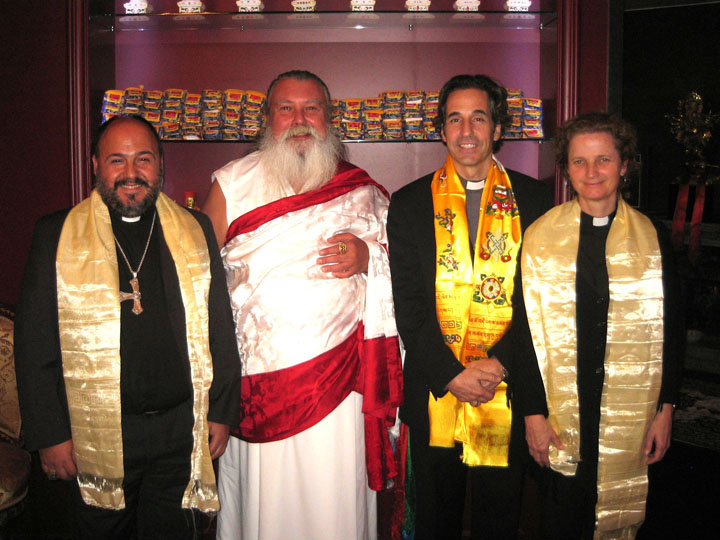

The position is most closely associated with John Hick (1922–2012), whose An Interpretation of Religion (1989) remains the most systematic philosophical defence of religious pluralism. Hick’s pluralistic hypothesis draws on Immanuel Kant’s distinction between the noumenal and the phenomenal to argue that the ultimate reality — “the Real” — is experienced differently across cultures, generating the diverse theistic and non-theistic traditions without any one of them capturing the Real as it is in itself.1 Pluralism stands in deliberate contrast to two other responses to religious diversity: exclusivism, which holds that one tradition alone possesses the truth, and inclusivism, which holds that one tradition is most fully correct while allowing partial truth in others.10, 11
The philosophical debate over pluralism engages some of the deepest questions in religious epistemology: whether religious experience is culturally constructed or cognitively universal, whether conflicting truth claims can be rationally adjudicated, and whether the geographic and cultural correlation of religious belief undermines the epistemic warrant of any particular faith commitment.12, 19
The three positions
Philosophical discussions of religious diversity typically identify three broad responses — exclusivism, inclusivism, and pluralism — though each admits of considerable internal variation. The taxonomy was popularised by Alan Race in Christians and Religious Pluralism (1983) and has since become the standard framework in the field, despite periodic objections that it oversimplifies the landscape.10, 16
Exclusivism holds that one particular religious tradition possesses the truth about ultimate reality and the correct path to salvation. Other traditions, insofar as their distinctive doctrines contradict the true tradition, are mistaken. This is the default stance of traditional Christian orthodoxy, classical Islam, and Orthodox Judaism, each of which claims a unique and privileged revelation. Karl Barth articulated perhaps the most uncompromising modern version: non-Christian religions are expressions of human sinfulness, not genuine encounters with God, because only in Christ has God truly revealed himself.4 Alvin Plantinga has offered a more epistemologically nuanced defence, arguing that the Christian believer may possess warrant for her beliefs — through the internal testimony of the Holy Spirit or the sensus divinitatis — that adherents of other traditions lack, and that the mere existence of disagreement does not constitute a defeater for properly basic belief.3
Inclusivism occupies a middle position. It affirms the unique truth of one tradition while allowing that adherents of other traditions may participate in or benefit from that truth without explicit awareness. The most influential inclusivist proposal is Karl Rahner’s concept of the “anonymous Christian”: a person who has never heard the gospel may nonetheless respond to God’s grace through the moral and spiritual resources of their own tradition, achieving salvation through Christ without knowing Christ by name.5 The Second Vatican Council’s declaration Nostra Aetate (1965) moved the Roman Catholic Church toward an inclusivist position, affirming that non-Christian religions “often reflect a ray of that Truth which enlightens all men” while maintaining that the fullness of truth subsists in the Church.14
Pluralism goes further than inclusivism by denying that any single tradition occupies a privileged position. On the pluralist view, the major world religions are independently valid responses to the same transcendent reality, and none has a greater claim to truth or salvific efficacy than any other. The philosophical challenge for pluralism is to explain how traditions with mutually contradictory doctrines — a personal God versus an impersonal absolute, salvation by grace versus liberation through enlightenment, the finality of death versus cyclical rebirth — can all be “valid” without emptying the concept of validity of its content.1, 12
Hick’s pluralistic hypothesis
John Hick’s journey from evangelical exclusivism to full pluralism began in the 1960s when, as a philosopher at the University of Birmingham, he found himself living and working among devout Muslims, Sikhs, and Hindus whose moral and spiritual lives were as impressive as those of his Christian neighbours. This experience led him to question whether it was plausible that these individuals were simply wrong about the nature of ultimate reality while Christians alone had got it right.2, 15
In God and the Universe of Faiths (1973), Hick proposed a “Copernican revolution” in theology: just as Copernicus shifted the centre of the solar system from the Earth to the Sun, so theology should shift from a Christ-centred or church-centred model to a God-centred (and eventually Reality-centred) model in which all traditions orbit the same transcendent centre.2 This initial theocentric pluralism gave way, by the time of An Interpretation of Religion, to a broader framework that could accommodate non-theistic traditions as well.
The mature pluralistic hypothesis rests on a Kantian epistemological framework. Kant distinguished between the Ding an sich (the thing in itself) and the phenomenon (the thing as it appears to a perceiving subject, structured by the categories of human understanding).20 Hick applies this distinction to religious experience: the Real an sich — ultimate transcendent reality — is beyond all human conceptualisation, including the categories of personal and impersonal, one and many, good and evil, and even existence and non-existence. What the world’s religions encounter and worship are phenomenal manifestations of the Real, filtered through the culturally specific conceptual lenses of each tradition.1
Hick distinguishes two types of phenomenal manifestation. Personae are the personal deities of theistic traditions: Yahweh, the Holy Trinity, Allah, Vishnu, Shiva. Impersonae are the impersonal absolutes of non-theistic traditions: Brahman (in Advaita Vedanta), Sunyata (in Mahayana Buddhism), the Tao, the Dharmakaya. Each persona and impersona is a real encounter with the Real, but none is the Real as it is in itself. The differences between them are not errors or distortions; they are the inevitable result of the Real being experienced through different cultural, linguistic, and conceptual frameworks.1, 11
On this view, the Muslim who encounters Allah and the Hindu who encounters Brahman are both genuinely in contact with ultimate reality, but their experiences are shaped by the conceptual resources of their respective traditions in the same way that all human experience is shaped by the structures of the perceiving mind. The doctrinal contradictions between traditions are contradictions at the phenomenal level, not at the noumenal level. There is no contradiction in saying that the Real is experienced as personal by Christians and as impersonal by Advaitins, any more than there is a contradiction in saying that the same physical object appears red under one lighting condition and blue under another.1
The soteriological criterion
If doctrinal truth claims cannot adjudicate between traditions — because all traditions are equally limited phenomenal responses to the noumenal Real — then some other criterion is needed to assess them. Hick proposes a soteriological criterion: traditions should be evaluated by their capacity to promote the transformation from self-centredness to Reality-centredness. A tradition is “valid” insofar as it produces genuine moral and spiritual transformation in its adherents — insofar as it leads people from egoism toward compassion, justice, and openness to the transcendent.1, 15
Hick argues that, by this criterion, the major world religions are roughly comparable. Each has produced saints and moral exemplars; each has inspired extraordinary acts of compassion and self-sacrifice; each has also been associated with violence, oppression, and moral failure. No tradition has a demonstrable monopoly on the production of transformed lives, and no tradition is uniquely guilty of moral atrocity. This rough parity, Hick contends, is exactly what the pluralistic hypothesis would predict and what exclusivism struggles to explain.1, 11
The soteriological criterion allows Hick to make normative judgements without abandoning pluralism. A religion that produced only suffering, exploitation, or moral degradation would fail the criterion and could be judged inferior. Traditions can also be assessed internally — medieval Christianity’s persecution of heretics, for instance, represents a failure by Christianity’s own standards. But the criterion does not permit ranking the major traditions against one another, because each produces a characteristic form of transformation that is genuinely salvific in its own terms.1
The elephant and the blind men
The parable of the elephant and the blind men, found in both Buddhist (Udana 6.4) and Jain traditions, is frequently invoked as an analogy for religious pluralism. In the story, several blind men each touch a different part of an elephant — the trunk, the leg, the ear, the tail — and each concludes that the elephant is like a snake, a pillar, a fan, or a rope. Each is partly right and partly wrong, because each has access to only a portion of the total reality.15
The analogy is intuitively appealing as a model for pluralism: the world’s religions, like the blind men, are each grasping a genuine aspect of ultimate reality but none has the complete picture. However, the analogy has a well-known limitation that critics of pluralism have been quick to exploit. The storyteller — the one who knows that the object is an elephant and that the blind men are each grasping only a part — occupies a privileged epistemic position that transcends the limitations of all the participants. If we are all blind men, who occupies the storyteller’s position? The pluralist, by claiming to know that all traditions are partial apprehensions of the same Real, appears to claim precisely the kind of transcendent knowledge that the parable says no one possesses.3, 9
Hick was aware of this objection and insisted that his hypothesis was not a claim to have seen the elephant but a second-order explanatory hypothesis — a philosophical interpretation of the data of religious diversity that he argued was more plausible than exclusivist or inclusivist alternatives. He acknowledged that the hypothesis could not be verified from within any tradition and that it remained a fallible intellectual construction, not a privileged revelation.1, 15
The problem of conflicting truth claims
Perhaps the most persistent objection to religious pluralism concerns the irreducibly contradictory truth claims made by different traditions. Christianity asserts that God is a personal being who became incarnate in Jesus of Nazareth. Advaita Vedanta asserts that ultimate reality (Brahman) is impersonal, beyond all qualities (nirguna), and that the appearance of personality is a lower-level illusion (maya). Theravada Buddhism denies the existence of any permanent self or divine being and locates liberation in the extinction of craving. Islam affirms strict monotheism and denies the divinity of any human being, directly contradicting the Nicene Creed. These are not minor differences of emphasis; they are logically incompatible propositions about the fundamental nature of reality.1, 12
Hick’s response is to relocate these contradictions to the phenomenal level. The propositions “God is personal” and “ultimate reality is impersonal” do indeed contradict each other if taken as descriptions of the Real an sich. But on Hick’s view, they are not descriptions of the Real an sich; they are descriptions of different phenomenal manifestations of the Real, each generated by the interaction between the transcendent Real and particular human conceptual schemes. Just as Newtonian mechanics and quantum mechanics offer incompatible descriptions of the same physical world at different scales, theistic and non-theistic traditions offer incompatible descriptions of the same transcendent reality at different cultural scales.1
Critics have argued that this move comes at too high a price. If the Real is beyond all human categories, then the proposition “the Real exists” is itself a human category applied to the Real. Hick cannot consistently maintain that the Real is utterly beyond conceptualisation while also maintaining that it is a single reality rather than many, that it is the cause of religious experience rather than its product, and that it is the appropriate object of worship rather than indifference. Peter van Inwagen has pressed this point forcefully, arguing that Hick’s Real is a philosophical posit with no content — that saying “the Real is beyond all categories” is equivalent to saying nothing at all about it, and that a reality about which nothing can be said is indistinguishable from no reality.3, 18
Exclusivist responses
Exclusivism has been defended with considerable philosophical sophistication, particularly in the Reformed epistemological tradition associated with Plantinga. Plantinga’s central argument against pluralism is that it is self-undermining. Hick claims that no tradition captures the Real as it is in itself, but this claim is itself a substantive metaphysical assertion — one that contradicts the self-understanding of every tradition it purports to respect. The devout Muslim who recites the shahada, the Christian who confesses the Nicene Creed, and the Advaitin who affirms “tat tvam asi” all understand themselves to be making claims about ultimate reality as it actually is, not about culturally conditioned phenomenal appearances. Pluralism, by reinterpreting all of these claims as symbolic rather than literal, is not a neutral meta-theory standing above the traditions but a competing first-order theology that disagrees with all of them.3
Plantinga further argues that the pluralist’s position is no less “exclusivist” than the Christian’s. The Christian holds that Islam is mistaken about the divinity of Christ; the pluralist holds that both Christianity and Islam are mistaken about the nature of their core truth claims. The pluralist excludes every tradition’s self-understanding in favour of a revisionist interpretation. If exclusivism is objectionable because it claims that other traditions are wrong, pluralism is equally objectionable by its own standard, since it claims that every tradition’s understanding of its own beliefs is wrong.3, 11
Karl Barth’s earlier and more radically exclusivist position rested on christological rather than epistemological grounds. For Barth, the question was not whether adherents of other traditions have adequate evidence for their beliefs but whether God has genuinely revealed himself outside of Christ. Barth’s answer was a categorical no: religion as a human phenomenon — including Christianity as a sociological institution — is a manifestation of human sinfulness, and only the Word of God in Jesus Christ breaks through the human condition to establish genuine contact between God and humanity.4
Inclusivism and Rahner’s anonymous Christians
Karl Rahner’s theology of religions represents the most philosophically developed inclusivist position. Rahner argued that God’s saving grace is universally operative — it is at work in every human being, not only in those who have heard the Christian message. A person who responds to this grace with authentic self-transcendence, moral seriousness, and openness to the mystery of existence is, in Rahner’s terminology, an “anonymous Christian” — someone who has accepted God’s grace without recognising its Christian origin. The non-Christian religions, insofar as they mediate this grace to their adherents, are “lawful religions” that possess a genuine, if incomplete, saving function.5
Nostra Aetate, promulgated by the Second Vatican Council in 1965, gave institutional expression to an inclusivist sensibility. The declaration acknowledged that Hinduism and Buddhism address the “unsolved riddles of the human condition,” that Islam worships the one God and honours Abraham, and that Judaism retains a special and irrevocable covenant with God. While the declaration stopped short of affirming the salvific efficacy of non-Christian religions, it marked a dramatic shift from the preconciliar position of extra ecclesiam nulla salus (“outside the Church there is no salvation”).14
Critics from both ends of the spectrum have found inclusivism unstable. Pluralists like Hick object that Rahner’s framework is patronising: it claims to honour other traditions while insisting that their adherents are really Christians who do not know it. The devout Buddhist who has spent decades in meditation practice and who explicitly rejects the concept of a creator God would presumably object to being classified as an “anonymous Christian.” The Hindu philosopher Raimon Panikkar turned the tables by asking whether Rahner himself might be an “anonymous Hindu” — highlighting the arbitrariness of the inclusivist’s assumption that Christianity is the norm against which other traditions are to be measured.10, 16 Exclusivists, meanwhile, argue that inclusivism dilutes the distinctiveness of the Christian gospel by suggesting that explicit faith in Christ is not necessary for salvation.4
Heim’s multiple religious ends
S. Mark Heim has proposed an alternative to both Hick’s pluralism and traditional exclusivism that he calls a theology of “multiple religious ends.” In Salvations (1995) and The Depth of the Riches (2001), Heim argues that the world’s religions are not all aiming at the same goal under different descriptions — which is Hick’s assumption — but are genuinely seeking and achieving different ultimate states.6, 7
On Heim’s view, the Buddhist who attains nirvana and the Christian who enters into communion with the triune God have not reached the same destination by different routes; they have reached genuinely different destinations. The Advaitin who realises identity with Brahman has achieved something real but categorically distinct from the Sufi’s fana (annihilation of the self in God) or the Jewish covenantal relationship with Yahweh. These are not phenomenal appearances of a single noumenal reality but genuinely different dimensions or aspects of a complex transcendent reality.6
Heim’s proposal has the advantage of taking each tradition’s self-understanding seriously rather than reinterpreting it through a pluralist lens. The Buddhist can be pursuing nirvana as the Buddhist understands it, not as a symbolic expression of “Reality-centredness.” However, Heim remains a Christian inclusivist: he argues that the Christian Trinitarian understanding of God encompasses the richest and most complete vision of ultimate reality, within which the genuine but partial truths of other traditions find their place. Other religious ends are real but are located within the broader landscape mapped by Trinitarian theology. Critics have noted that this position, while more respectful of diversity than Hick’s, still privileges one tradition’s metaphysical framework over all others.7, 10
Criticisms of Hick
Gavin D’Costa has developed what is perhaps the most sustained critique of Hick’s pluralism. In John Hick’s Theology of Religions (1987) and The Meeting of Religions and the Trinity (2000), D’Costa argues that pluralism collapses into a form of exclusivism. Hick’s position excludes every tradition’s literal self-understanding; it excludes the possibility that any tradition has genuine knowledge of the Real as it is in itself; and it privileges a particular Western philosophical framework (Kantian epistemology) as the uniquely correct meta-theory of religion. D’Costa concludes that the threefold taxonomy of exclusivism, inclusivism, and pluralism is unstable, because pluralism, properly analysed, turns out to be a form of exclusivism masquerading as tolerance.8, 9
Plantinga raises the objection that Hick’s Kantian framework is philosophically suspect even on its own terms. Kant’s noumenal–phenomenal distinction was developed to address problems in the epistemology of sense perception, not in the epistemology of religious experience. The application to religion requires that religious experience be structurally analogous to sense perception — that it involve a genuinely existing external object (the Real) that is processed through culturally specific cognitive categories — and this analogy is far from obvious. If religious experience is not perceptual in the relevant sense, the Kantian framework does not apply, and the pluralistic hypothesis loses its philosophical foundation.3
A further criticism targets the notion that the Real an sich can have no properties ascribed to it. If the Real is truly beyond all categories, then it cannot be said to be one rather than many, to be the cause of religious experience, to be worthy of worship, or even to exist. Yet Hick needs the Real to be at least one thing (not many), to be genuinely transcendent (not a human projection), and to be the common object of all traditions’ devotion. These are substantive predications that violate the very principle that the Real is beyond predication. The philosopher William Rowe pressed this objection, arguing that Hick faces a dilemma: either the Real has some properties (in which case it is not beyond all categories) or it has none (in which case it is nothing, and pluralism collapses).10, 16
Peter Byrne has offered a partial defence of Hick against this line of criticism, arguing that formal or purely negative properties can be ascribed to the Real without violating the ban on substantive predication. Saying that the Real is “that which is the ground of all religious experience” is a relational property, not a categorical one, and does not commit the pluralist to knowing what the Real is like in itself. Whether this defence succeeds remains a matter of ongoing debate.16
The demographic challenge
One of the strongest motivations for pluralism — and one of the strongest challenges to exclusivism — is the demographic correlation between geography and religious belief. A person born in Saudi Arabia is overwhelmingly likely to be Muslim; a person born in rural Thailand is overwhelmingly likely to be a Theravada Buddhist; a person born in the American Bible Belt is overwhelmingly likely to be an evangelical Protestant. The single strongest predictor of a person’s religious beliefs is not the evidence they have considered, the arguments they have evaluated, or the spiritual experiences they have undergone, but the time and place of their birth.12, 17, 19
This demographic argument poses a challenge to any tradition that claims exclusive possession of salvific truth. If a person’s eternal fate depends on holding the correct religious beliefs, and if those beliefs are largely determined by the accident of birth, then the system appears unjust: billions of people are, through no fault of their own, overwhelmingly likely to form the “wrong” beliefs and face the corresponding soteriological consequences. Linda Zagzebski has formalised this as “the problem of religious luck” — the worry that a factor beyond one’s rational control (geographic and cultural context) largely determines one’s epistemic access to religious truth.19
John Loftus has developed this line of reasoning into the outsider test for faith, which asks believers to evaluate their own religion with the same scepticism they apply to every other religion. If a Christian would dismiss the testimony of a devout Hindu as unreliable evidence for Hinduism, intellectual consistency requires applying the same standard to one’s own Christian testimony.17 The pluralist can accommodate the demographic data naturally: if all major traditions are valid responses to the Real, then being born into any tradition provides genuine, if culturally particular, access to transcendent reality. The exclusivist must explain why a just God would arrange the world so that the vast majority of humans, through no fault of their own, are born into traditions that lead them away from truth.12, 22
Exclusivists have offered several responses. Plantinga argues that the causal origin of a belief is irrelevant to its epistemic status — a version of the genetic fallacy objection. A person born into a community of mathematicians is more likely to hold true mathematical beliefs, but this does not undermine those beliefs’ warrant.3 William Lane Craig has argued that God, in his providence, has arranged the world so that those who would freely respond to the gospel are born in circumstances where they will hear it — a response that relies on the controversial doctrine of middle knowledge.18
Connection to the argument from inconsistent revelations
Religious pluralism is closely related to the argument from inconsistent revelations, which observes that the world’s religions appeal to incompatible revealed texts and prophetic claims. The Bible, the Quran, the Vedas, the Pali Canon, and the Book of Mormon each claim divine authority, yet their content is mutually contradictory on fundamental matters: the nature of God, the fate of the soul, the means of salvation, and the structure of the cosmos. Since these revelations invoke the same types of evidence (divine inspiration, prophetic testimony, miraculous confirmation, personal spiritual experience), and since this evidence produces contradictory conclusions across traditions, the reliability of revelation as an epistemic source is called into question.18, 21
The pluralist and the sceptic draw different conclusions from this observation. The sceptic argues that inconsistent revelations constitute evidence against the reliability of revelation altogether — and, by extension, against the existence of a revealing God. The pluralist argues instead that the inconsistencies arise at the phenomenal level: each tradition’s revelation is a genuine but culturally conditioned communication from the Real, and the contradictions reflect the limitations of human conceptual frameworks rather than the absence of a transcendent source.1
This distinction matters for the broader debate about the argument from religious diversity. If the pluralist is right, then religious diversity is not evidence against theism (or against the existence of transcendent reality) but evidence about the nature of human cognition and the inevitable pluriformity of responses to the transcendent. The cognitive science of religion is relevant here: if the human mind has a natural tendency to conceptualise ultimate reality in culturally familiar terms — through anthropomorphism, agent detection, and narrative framing — then the diversity of religions may be predictable on both naturalist and pluralist assumptions, though for very different reasons.13, 22
The problem of the Real
The central philosophical difficulty for Hick’s pluralism is the status of the Real an sich. Hick insists that the Real is beyond all human categories, that it cannot be described in positive terms, and that all religious language about it is mythological rather than literal.1 Yet the pluralistic hypothesis requires certain things to be true of the Real: it must exist, it must be one (or at least unified enough to be the single source of all religious experience), it must be genuinely transcendent (not reducible to a natural phenomenon), and it must be the sort of thing that appropriately elicits worship, devotion, and moral transformation.10
Hick attempted to navigate this difficulty by distinguishing between substantial (or first-order) properties and formal (or second-order) properties. The Real has no substantial properties — it is not personal, not impersonal, not good, not evil, not conscious, not unconscious. But it can be ascribed formal or relational properties: it is “that which is responded to” in religious experience, “that which grounds” the possibility of salvation and liberation. These formal properties, Hick argued, do not tell us what the Real is like in itself but only how it stands in relation to human experience.1, 15
Whether this distinction can bear the weight Hick places on it is doubtful. If the Real is genuinely beyond all substantial predication, then it seems that even the claim “the Real is that which is responded to in religious experience” is a substantial claim about the Real’s causal powers and its relationship to human consciousness. Moreover, the claim that the Real is the ground of moral transformation from self-centredness to Reality-centredness presupposes that the Real is the sort of thing toward which one can be oriented — which is itself a substantive predication. As D’Costa has argued, Hick’s position oscillates between a genuinely agnostic stance (in which nothing can be said about the Real, including that it exists or grounds religious experience) and a covertly positive theology (in which the Real is characterised as the transcendent source of all genuine religion).8, 9
Pluralism and religious experience
The argument from religious experience has a complex relationship with pluralism. On the one hand, the diversity of religious experience — Christian mystics who report union with a personal God, Buddhist meditators who report the dissolution of self, Hindu sages who report identity with Brahman — seems to support the pluralist thesis that the same transcendent reality is experienced differently in different traditions. On the other hand, if these experiences genuinely reveal the nature of their object, then they cannot all be right: reality cannot be both personal and impersonal, both a self and the absence of self.1, 13
Hick argues that religious experience is constructive rather than simply receptive: the mystic does not passively receive data from the Real but actively constructs the experience using the conceptual resources of their tradition. A Christian mystic who has spent years meditating on the Gospels will naturally experience the transcendent in personal, Christological terms; a Buddhist monk who has spent years practising vipassana will naturally experience it in terms of impermanence and non-self. The structure of the experience is determined by the practitioner’s cultural and conceptual formation, not solely by the nature of the object experienced.1, 15
This constructivist account of religious experience is supported by some findings in the cognitive science of religion, which has documented the ways in which cultural expectations shape the content of spiritual and mystical experiences. However, it also raises a difficulty for the pluralist: if the content of religious experience is largely determined by cultural formation, what reason is there to posit a transcendent Real as its cause at all? A naturalistic explanation — that religious experience is entirely the product of neurological and cultural processes, with no transcendent object — seems equally compatible with the constructivist data. The pluralist must explain why a constructivist epistemology of religious experience supports pluralism rather than atheism.13, 18
Formal structure of the pluralistic hypothesis
The core argument for religious pluralism can be stated formally:1, 10
P1. The world’s major religious traditions produce genuine moral and spiritual transformation in their adherents (the soteriological premise).
P2. Genuine moral and spiritual transformation requires contact with a transcendent reality (the transcendence premise).
P3. If multiple traditions produce genuine transformation through contact with transcendent reality, then multiple traditions are in authentic contact with that reality.
P4. The doctrinal contradictions between traditions show that none has captured the transcendent reality as it is in itself.
C. Therefore, the transcendent reality (the Real) exceeds the conceptual resources of any single tradition, and all major traditions are independently valid, though culturally limited, responses to it.
Each premise is contestable. Exclusivists deny P1 for traditions other than their own, or deny P2 by arguing that transformation can occur through common grace without authentic contact with ultimate reality. Naturalists deny P2 entirely, arguing that moral transformation requires no transcendent cause. Heim denies P3’s implicit assumption that there is a single transcendent reality rather than multiple religious ends. And critics like D’Costa and Plantinga argue that P4 does not follow from doctrinal disagreement — that one tradition may have captured the Real accurately while others are genuinely mistaken.3, 6, 8
Contemporary assessment
Religious pluralism remains one of the most debated positions in the philosophy of religion, and the terms of the debate have shifted since Hick’s initial formulation. Several developments are worth noting.
First, the threefold taxonomy of exclusivism, inclusivism, and pluralism has come under increasing pressure. D’Costa has argued that the categories are unstable: pluralism collapses into exclusivism, and inclusivism is merely a diplomatic form of exclusivism. Some philosophers have proposed alternative frameworks, including Mark Heim’s “orientational pluralism” (which preserves diversity without collapsing it into unity) and Robert McKim’s “religious ambiguity” thesis (which argues that the evidence is genuinely ambiguous between multiple religious and non-religious interpretations, warranting epistemic humility rather than any confident position).8, 13
Second, the demographic challenge to exclusivism has, if anything, grown stronger as data on the geographic distribution of religious belief has become more precise. The argument from locality — that religious belief correlates more strongly with geography than with any truth-tracking process — remains a powerful motivation for pluralist or sceptical positions and continues to generate responses in the religious epistemology literature.17, 19, 22
Third, the rise of the cognitive science of religion has provided new resources for understanding why religious diversity exists but has not clearly resolved the philosophical debate. If the human mind is naturally disposed to form religious beliefs through domain-specific cognitive mechanisms (agent detection, teleological reasoning, minimally counterintuitive concepts), then religious diversity is predictable on both naturalist and theist assumptions. The cognitive science explains the mechanism of religious belief formation but cannot, by itself, determine whether the beliefs so formed track an objective transcendent reality.13
The philosophical legacy of Hick’s pluralism is thus a complex one. Few philosophers today accept the pluralistic hypothesis in its original form: the problems with the concept of the Real an sich, the self-undermining character of a “neutral” meta-theology that contradicts every tradition it claims to honour, and the difficulty of maintaining that all traditions are “equally valid” without specifying what validity means in this context have proved formidable. But Hick’s work permanently changed the terms of the debate by insisting that any adequate philosophy of religion must take the full range of the world’s religious traditions seriously, and that the fact of religious diversity is not a peripheral sociological observation but a central philosophical datum that demands explanation.1, 10, 16