Overview
- Antony Flew's 'presumption of atheism' argument holds that the default rational position in debates about God's existence should be non-belief (atheism in the negative sense), just as the default position in a courtroom is innocence until guilt is proven — placing the entire burden of proof on the theist.
- Flew distinguished between positive atheism (the belief that God does not exist) and negative atheism (the mere absence of belief in God), arguing that the latter is the epistemically appropriate starting point because extraordinary existence claims require positive evidence rather than refutation.
- Alvin Plantinga's reformed epistemology and Richard Swinburne's cumulative-case natural theology represent the two principal responses: Plantinga argued that belief in God can be properly basic and needs no evidential justification, while Swinburne accepted the burden and argued it can be met through the cumulative probability of theistic evidence.
In a 1972 essay that became one of the most influential contributions to twentieth-century philosophy of religion, Antony Flew argued that the debate about God's existence should begin with a presumption of atheism — not in the sense that atheism is obviously correct, but in the sense that the absence of belief in God is the appropriate default position from which inquiry must start. Just as a defendant in a court of law is presumed innocent until proven guilty, Flew contended, the proposition "God exists" must be presumed unwarranted until the theist provides sufficient evidence or argument to establish it.1, 3 The presumption of atheism is thus primarily a thesis about the burden of proof: it assigns the entire burden to the theist and holds that the rational default, in the absence of evidence, is non-belief.3
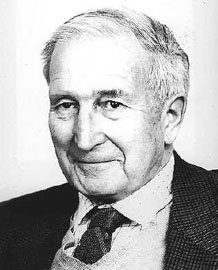

Flew's argument
Flew's essay, first published in the Canadian Journal of Philosophy and later expanded in his 1976 collection The Presumption of Atheism and Other Philosophical Essays, began by clarifying what he meant by "atheism." He explicitly distinguished between positive atheism, which asserts that God does not exist (a substantive metaphysical claim requiring its own justification), and negative atheism, which is simply the absence of belief in God — the state of not yet having been persuaded that God exists.1, 3 It was this negative atheism that Flew proposed as the starting point. The presumption of atheism is not itself an argument against God's existence; it is a procedural principle about where the dialectical burden lies.3
Flew grounded this procedural principle in a broader epistemological tradition stretching back to John Locke and David Hume. Locke had argued that one ought to proportion one's belief to the evidence and withhold assent from propositions for which sufficient evidence is lacking.10 Hume had contended that extraordinary claims require proportionally strong evidence and that the default position toward any undemonstrated existence claim is doubt.11 Flew applied these principles to theism: since the claim that an omnipotent, omniscient, perfectly good being exists is among the most extraordinary claims possible, the burden of proof falls squarely on the person making that claim, and the absence of evidence is itself a reason to withhold belief.1, 3
The legal analogy was central to Flew's argument. In Anglo-American law, the presumption of innocence does not mean that the defendant is in fact innocent; it means that guilt must be demonstrated by the prosecution and that the absence of proof counts in the defendant's favour. Similarly, the presumption of atheism does not mean that God does not exist; it means that the theist bears the onus of providing reasons for belief, and that absent such reasons, the rational inquirer should remain a non-believer. Flew argued that this is not a biased or unfair starting point but a necessary one: some initial position must be adopted before evidence is weighed, and the non-committal position of negative atheism is the most epistemically neutral starting point available.3, 17
Connection to the falsification challenge
The presumption of atheism was a natural extension of Flew's earlier work on the falsification of theological claims. In his 1950 essay "Theology and Falsification," Flew had argued that religious statements are rendered vacuous when believers systematically qualify them to evade counter-evidence, making it impossible to specify what would count against the claim that God exists or that God is good.9 The presumption of atheism generalized this concern: if the theist cannot specify what evidence would count against theistic claims, then those claims lack the kind of empirical content that would justify departing from the default position of non-belief. In Flew's God and Philosophy (1966), he extended this reasoning into a systematic examination of the traditional arguments for God's existence, concluding that none succeeds in meeting the burden he had assigned.2
Flew's argument also drew a connection between the burden of proof and the concept of ontological commitment. Following a broadly Quinean approach, Flew held that one should not multiply entities beyond what the evidence requires and that existence claims carry a special justificatory burden: the person who asserts that something exists must provide reasons for that assertion, while the person who refrains from the assertion need not provide reasons for their abstention.12 This asymmetry — that "X exists" demands justification while "I see no reason to believe X exists" does not — is the core of the presumption of atheism, and Flew argued it applies to God no less than to any other proposed entity.1, 3
Plantinga's response: reformed epistemology
The most influential philosophical response to Flew's presumption came from Alvin Plantinga, whose reformed epistemology challenged the underlying evidentialism that Flew presupposed. Plantinga argued that Flew's presumption rests on an implicit commitment to "classical foundationalism" — the view that a belief is rationally justified only if it is either self-evident, evident to the senses, or supported by evidence from beliefs that are themselves self-evident or evident to the senses. But classical foundationalism, Plantinga argued, is self-defeating: the foundationalist criterion itself is neither self-evident nor evident to the senses, and so by its own standard it is unjustified.6, 14
In place of classical foundationalism, Plantinga proposed that belief in God can be properly basic — that is, rationally held without being based on evidence or argument from other beliefs, just as belief in the reality of the external world, belief in other minds, or memory beliefs are properly basic. On this view, a person who experiences what they take to be the presence of God, or who has a deep sense of being created and sustained by a divine being, may be entirely rational in holding that belief without having first examined the cosmological or teleological arguments. If belief in God can be properly basic, then the presumption of atheism is misplaced: there is no antecedent obligation on the theist to provide evidence, because not all rational beliefs require evidential support.4, 5, 6, 13
In Warranted Christian Belief (2000), Plantinga developed this position further, arguing that if God exists, it is probable that God would have designed human beings with a cognitive faculty (which he calls the sensus divinitatis) that produces belief in God under appropriate circumstances, just as perception produces belief in physical objects. If this model is correct, then belief in God has "warrant" — it is produced by cognitive faculties functioning properly in an appropriate environment according to a design plan aimed at truth — and the presumption of atheism is undermined not by evidence for God but by an alternative account of rational belief formation.5
Swinburne's response: accepting the burden
Richard Swinburne took a fundamentally different approach from Plantinga. Rather than challenging the evidentialism presupposed by Flew's argument, Swinburne largely accepted the burden of proof and set out to meet it. In a series of works beginning with The Coherence of Theism (1977), The Existence of God (1979; revised 2004), and Faith and Reason (1981), Swinburne constructed a cumulative case for the existence of God using the framework of Bayesian probability.7, 8, 9
Swinburne agreed with Flew that theism is a hypothesis that must be assessed against the evidence, but he argued that the relevant evidence is vast and varied — including the existence of the universe, its law-governed order, the fine-tuning of physical constants, the existence of conscious beings, the phenomena of moral experience, the occurrence of religious experience, and the historical evidence for specific revelatory events. No single piece of evidence is decisive, but Swinburne argued that each raises the probability of theism relative to its rivals, and that the cumulative weight of all the evidence makes the existence of God more probable than not.7 This approach accepts Flew's procedural framework while contending that the theist can in fact discharge the burden, making the presumption of atheism a useful starting point that is nonetheless overcome by the available evidence.7, 8
Criticisms and continuing debate
J. L. Mackie, himself a prominent atheist, offered a nuanced assessment of Flew's presumption. In The Miracle of Theism (1982), Mackie agreed that the burden of proof rests on the theist but cautioned that the presumption of atheism should not be treated as a trump card that excuses the atheist from engaging seriously with theistic arguments. The question of God's existence is substantive, Mackie argued, and must be decided by examining the arguments on both sides rather than by procedural default.15
Other critics have questioned whether the legal analogy is apt. In a courtroom, the presumption of innocence reflects a moral judgement that it is worse to convict an innocent person than to acquit a guilty one; no comparable asymmetry obviously applies to belief about God's existence. If the costs of false belief and false disbelief are symmetric — or if, as in Pascal's wager, false disbelief is worse than false belief — then the legal analogy may not support the conclusion Flew draws.16, 17
The presumption of atheism has also been challenged by those who argue that agnosticism, rather than negative atheism, is the genuinely neutral starting position. On this view, the appropriate default is not the absence of belief in God but the suspension of judgement about whether God exists, pending examination of the evidence. If this is correct, then Flew's presumption already tilts the playing field toward a particular conclusion rather than occupying a truly neutral ground.16, 17
Despite these criticisms, the presumption of atheism has had a lasting influence on the structure of philosophical debates about God's existence. It established the now-widespread assumption in analytic philosophy of religion that theism requires positive justification and that the theist cannot simply rely on the difficulty of disproving God's existence. Whether one accepts Plantinga's claim that belief in God is properly basic, Swinburne's claim that the evidential burden can be met, or Flew's original claim that the burden has not been met, the debate itself presupposes the framework that Flew's essay helped to establish: the question of who must justify what, and where rational inquiry about God should begin.1, 3, 17
References
The Presumption of Atheism and Other Philosophical Essays on God, Freedom, and Immortality