Overview
- Anthropology is organized into four subfields—cultural, biological, linguistic, and archaeological—each with distinctive methods, but all committed to the holistic study of humanity across time and space.
- Archaeological methods, from stratigraphic excavation to radiometric dating and ancient DNA analysis, provide the chronological and material evidence through which the deep human past is reconstructed.
- Theoretical frameworks in anthropology have evolved from nineteenth-century unilinear evolutionism through cultural relativism to contemporary approaches including dual-inheritance theory, which models culture as a second system of inheritance operating alongside genetic transmission.
Anthropology studies the human species through a distinctive combination of methods and theoretical perspectives that together span the full range of human biological, cultural, and historical variation. What sets anthropology apart from other social and natural sciences is not any single technique but a commitment to holism: the principle that human behavior, whether observed in a contemporary urban neighborhood or inferred from a two-million-year-old stone tool scatter, can be understood only within its broader cultural, ecological, and evolutionary context.1 This commitment has generated a discipline organized around four major subfields, each with its own methods and traditions but all contributing to a shared intellectual project.
The four-field approach
The organizational structure of anthropology as practiced in North America is conventionally described as four-field, a framework that dates to the discipline's formalization in the late nineteenth and early twentieth centuries.1 Cultural anthropology (known as social anthropology in the British tradition) investigates the beliefs, institutions, economic practices, kinship systems, and symbolic life of human societies through long-term ethnographic fieldwork. The hallmark method of cultural anthropology is participant observation: the researcher lives within a community for an extended period, participating in daily activities while systematically documenting social practices, oral traditions, and patterns of interaction.1, 6 The ethnographic record produced by more than a century of such fieldwork constitutes the most comprehensive comparative database of human cultural variation available to any discipline.
Biological anthropology (also called physical anthropology) studies the human species as a biological organism. Its subdisciplines include primatology, which investigates the behavior and ecology of non-human primates to illuminate the evolutionary context of human traits; paleoanthropology, which reconstructs human evolution from fossil and archaeological evidence; human genetics and genomics, which trace population history and adaptation through DNA; and forensic anthropology, which applies skeletal analysis to legal and humanitarian contexts.1 Linguistic anthropology examines language not merely as a communication system but as a cultural practice that shapes perception, encodes social identity, and structures power relations within communities.1 Archaeology reconstructs past human behavior through the recovery and analysis of material remains—artifacts, architecture, ecofacts, and the spatial relationships among them—providing the only means of access to the more than 99% of human history that predates written records.2


The four-field structure has been the subject of recurring debate within the discipline. Critics argue that the subfields have diverged to the point where they share little common method or theory; defenders maintain that the strength of anthropology lies precisely in its ability to bring multiple perspectives to bear on questions that no single approach can answer.1 In practice, the most productive anthropological research frequently bridges subfield boundaries: the study of the Neolithic transition, for instance, requires archaeological evidence for domestication, biological data on skeletal health and dietary change, linguistic evidence for the spread of farming populations, and ethnographic analogy with contemporary subsistence societies.
Archaeological methods


Archaeology depends on a chain of methods that begins with site discovery and extends through excavation, recording, dating, and interpretation. Systematic survey—the methodical walking of a landscape to identify surface artifacts, architectural remains, and soil anomalies—locates potential sites for investigation. Excavation proceeds by removing soil in controlled units, recording the precise three-dimensional position of every artifact and feature, and documenting the stratigraphic sequence of deposits.2 Stratigraphy, the principle that older deposits lie beneath younger ones in undisturbed sequences, provides the fundamental framework for establishing relative chronology at any archaeological site.
Absolute dating methods assign calendar-year ages to archaeological materials. Radiocarbon dating, developed by Willard Libby in 1949, measures the decay of carbon-14 in organic materials and is effective for samples up to approximately 50,000 years old.5 For older deposits, potassium-argon dating measures the decay of potassium-40 in volcanic minerals and has been essential for dating early hominin sites in East Africa. Uranium-series dating, luminescence dating, and cosmogenic nuclide dating extend the chronological toolkit to cover different materials and time ranges. Together, these techniques allow archaeologists to construct chronological frameworks spanning from the earliest hominin tool use to the historical period.2
Beyond dating, archaeological analysis includes the study of artifact typology and technology (lithic analysis, ceramic analysis), faunal remains (zooarchaeology), plant remains (paleoethnobotany), isotopic analysis of human skeletal remains for diet and mobility, and ancient DNA extraction for population history.2 Remote sensing technologies—aerial photography, satellite imagery, ground-penetrating radar, and LiDAR—have transformed site discovery and landscape-scale analysis, revealing settlement patterns and buried features invisible at ground level. The integration of these diverse analytical methods makes modern archaeology a highly interdisciplinary enterprise, drawing on chemistry, physics, genetics, and computer science alongside traditional humanistic interpretation.
Theoretical frameworks
The theoretical history of anthropology reflects a series of shifts in how scholars have conceptualized human cultural diversity and change.
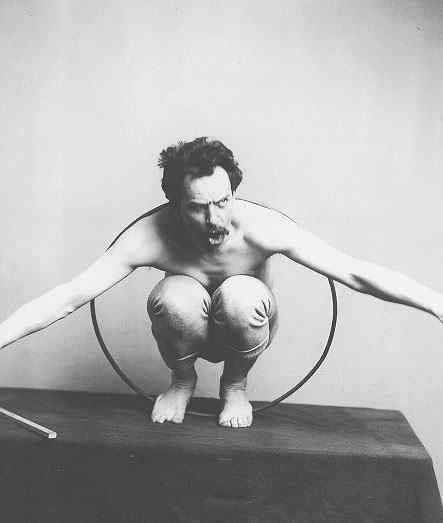

Nineteenth-century unilinear evolutionism, associated with figures such as Lewis Henry Morgan and Edward Burnett Tylor, proposed that all societies progressed through the same sequence of developmental stages—savagery, barbarism, and civilization—differing only in the rate of their advancement.1 Nineteenth-century unilinear evolutionism, associated with figures such as Lewis Henry Morgan and Edward Burnett Tylor, proposed that all societies progressed through the same sequence of developmental stages—savagery, barbarism, and civilization—differing only in the rate of their advancement.1 Franz Boas and his students dismantled this framework in the early twentieth century, demonstrating through detailed ethnographic and historical research that cultural traits diffuse across societies in complex patterns that cannot be reduced to a single evolutionary trajectory.4 Boas's insistence on cultural relativism—the principle that each culture must be understood in its own terms—became foundational to the discipline.
The mid-twentieth century saw the rise of structural-functionalism in British social anthropology, which analyzed cultural practices as components of integrated social systems, and of structuralism in France, where Claude Lévi-Strauss applied linguistic models to the analysis of myth, kinship, and classification.1 Interpretive anthropology, exemplified by Clifford Geertz's 1973 essay collection The Interpretation of Cultures, reframed the anthropological enterprise as the interpretation of public symbols and the "thick description" of meaningful social action, moving the discipline away from law-like generalizations toward hermeneutic analysis of particular cultural worlds.6 Pierre Bourdieu's practice theory introduced the concept of habitus—the set of durable dispositions through which individuals internalize and reproduce social structures—bridging the gap between structural analysis and individual agency.8
In recent decades, dual-inheritance theory (also called gene-culture coevolution) has provided a formal framework for understanding how cultural transmission operates as a second system of inheritance alongside genetic inheritance. Developed by Robert Boyd and Peter Richerson, this approach models culture as information acquired through social learning that accumulates, varies, and is subject to selection-like processes analogous to but distinct from biological evolution.3, 7 Dual-inheritance theory has been particularly productive in explaining the evolution of large-scale human cooperation, the spread of subsistence technologies, and the demographic transitions associated with agriculture and urbanism—phenomena that purely genetic models cannot adequately explain.7
Ethics and reflexivity
Contemporary anthropology is also characterized by sustained attention to the ethical dimensions of research involving human subjects and cultural heritage. The discipline's historical entanglement with colonialism — early anthropologists often studied colonized peoples under conditions of profound power asymmetry — has generated ongoing critical reflection on the politics of representation, the ownership of cultural knowledge, and the obligations of researchers to the communities they study.1 The development of institutional review processes, community-based participatory research models, and protocols for the repatriation of human remains and sacred objects reflects the discipline's effort to address these legacies. In biological anthropology and archaeology, the Native American Graves Protection and Repatriation Act (NAGPRA) of 1990 and analogous legislation in other countries have fundamentally reshaped the relationship between researchers and descendant communities, establishing legal frameworks for the return of ancestral remains and cultural artifacts.1, 2
Reflexivity — the practice of critically examining the researcher's own positionality, assumptions, and influence on the research process — has become a methodological norm across the discipline. Ethnographers now routinely discuss how their gender, ethnicity, nationality, and institutional affiliation shape their access to information and their interpretation of cultural practices, and archaeological interpretation increasingly acknowledges the interpretive frameworks through which material evidence is filtered.6, 8 This reflexive turn has not abandoned the goal of systematic, evidence-based knowledge but has enriched it by making the conditions of knowledge production themselves an object of analysis.