Overview
- For much of the 20th century, estimates of the age of the universe derived from the Hubble constant were embarrassingly shorter than the independently determined ages of the oldest stars and globular clusters, creating a fundamental contradiction known as the cosmic age problem.
- The crisis peaked in the early 1990s when a Hubble constant of ~80 km/s/Mpc implied a matter-dominated universe only 8–10 Gyr old, while globular cluster dating consistently indicated stellar ages of 14–17 Gyr — stars apparently older than the universe that contained them.
- The problem was resolved by two developments in the late 1990s: improved distance calibrations from Hipparcos reduced globular cluster ages to 11–13 Gyr, and the discovery of accelerating expansion from Type Ia supernovae increased the cosmological age to 13.8 Gyr, bringing stellar and expansion ages into concordance.
The paradox of old stars in a young universe
The cosmic age problem was one of the most persistent tensions in 20th-century cosmology: independent methods for estimating the age of the universe yielded contradictory results, with the ages of the oldest stars consistently exceeding the age implied by the rate of cosmic expansion. In its starkest form, the problem reduced to an apparent impossibility — stars that were older than the universe they inhabited.1, 2
The expansion age
In a matter-dominated Friedmann universe (no cosmological constant), the age of the universe is related to the Hubble constant by t0 = 2/(3H0). For a Hubble constant of 72 km/s/Mpc — close to the value established by the HST Key Project in 2001 — this gives an age of only about 9.1 Gyr.5 Even allowing for the full range of H0 values debated in the 1990s (50–80 km/s/Mpc), the matter-dominated age ranged from roughly 8 to 13 Gyr, with most estimates clustering around 9–11 Gyr.7, 11
The situation was complicated by the “Hubble wars” of the 1980s and 1990s, in which two camps of astronomers obtained persistently different values: Allan Sandage and collaborators favored a low value near 55 km/s/Mpc (implying an older universe of approximately 12 Gyr even without a cosmological constant), while Gerard de Vaucouleurs and others, followed by the HST Key Project team, obtained higher values near 70–80 km/s/Mpc (implying a younger universe).5, 6, 7 The higher values exacerbated the age problem to crisis levels.
Stellar ages
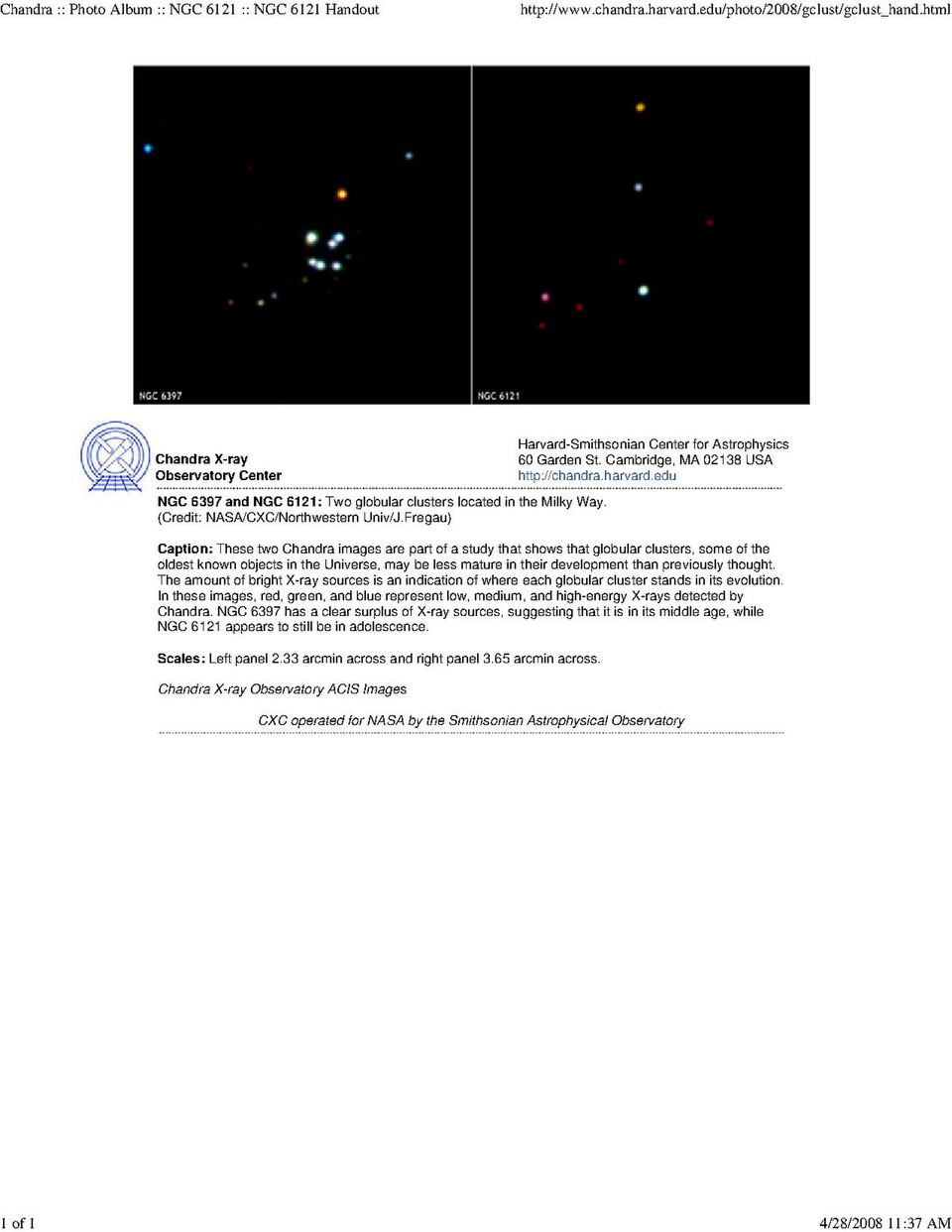
Meanwhile, the ages of the oldest known globular clusters were being determined from their main-sequence turnoff luminosities. Through the 1980s and early 1990s, the best estimates for the most metal-poor globular clusters consistently yielded ages of 14–17 Gyr, with some analyses pushing as high as 18 Gyr.1 These ages depended on the assumed distances to the clusters: longer distances implied brighter turnoff luminosities, which corresponded to more massive (and therefore shorter-lived) stars at the turnoff, yielding younger ages. Shorter distances had the opposite effect.1, 8
The tension was acute. If H0 was truly near 70–80 km/s/Mpc and the universe was matter-dominated (as most cosmologists assumed before 1998), the universe was only 8–10 Gyr old. But the oldest globular clusters appeared to be 14–17 Gyr old. No physical cosmology could accommodate stars older than the universe — the discrepancy pointed to a fundamental error in at least one (and possibly both) sets of measurements, or to a missing ingredient in the cosmological model.1, 2, 9
Proposed resolutions before 1998
Before the discovery of accelerating expansion, several resolutions to the age problem were proposed. The most conservative was to invoke a low Hubble constant: if H0 was near 50 km/s/Mpc, as Sandage advocated, the matter-dominated age increased to approximately 13 Gyr, which could marginally accommodate globular cluster ages of 13–14 Gyr within the uncertainties.6
A more radical proposal was to reintroduce Einstein’s cosmological constant, Λ. Einstein had originally introduced Λ in 1917 to allow a static universe but abandoned it after Hubble’s discovery of expansion, reportedly calling it his “biggest blunder.”12 In a universe with a positive cosmological constant, the expansion history differs from the matter-dominated case: the expansion rate decelerates initially (when matter dominates) but later accelerates (when Λ dominates). This has the effect of making the universe older for a given H0, because the expansion was slower in the past than a matter-dominated extrapolation would predict.9, 13 A flat universe with Ωm = 0.3 and ΩΛ = 0.7 gives an age of approximately 13.5 Gyr for H0 = 70 km/s/Mpc — comfortably older than globular cluster ages.9
Resolution: two simultaneous corrections
The age problem was resolved in the late 1990s by developments on both sides of the equation.
On the stellar side, the Hipparcos satellite (launched 1989, catalog published 1997) provided precise trigonometric parallaxes for nearby subdwarf stars, which serve as distance anchors for globular clusters via main-sequence fitting. The Hipparcos distances to subdwarfs were systematically longer than previously assumed, implying that globular clusters were farther away and therefore that their turnoff stars were more luminous (more massive, shorter-lived) than previously thought. This revised globular cluster ages downward by 2–3 Gyr, from 14–17 Gyr to approximately 11–13 Gyr.1, 8, 14
On the cosmological side, in 1998 two independent supernova survey teams — the Supernova Cosmology Project and the High-z Supernova Search Team — announced the discovery that the expansion of the universe is accelerating, driven by a component consistent with a cosmological constant or dark energy.3, 4 In the Lambda-CDM model implied by the supernova data, with Ωm ≈ 0.3, ΩΛ ≈ 0.7, and H0 ≈ 70 km/s/Mpc, the age of the universe is approximately 13.7–13.8 Gyr — comfortably older than the revised globular cluster ages of 11–13 Gyr.3, 4, 5
The 2011 Nobel Prize in Physics was awarded to Saul Perlmutter, Brian Schmidt, and Adam Riess for the discovery of accelerating expansion, which not only resolved the age problem but opened an entirely new chapter in cosmology.15
Current status
The Planck satellite’s precise determination of cosmological parameters yields a universe age of 13.80 ± 0.02 Gyr.10 Modern globular cluster ages, incorporating Gaia parallax-based distance calibrations and improved stellar models, cluster around 11.5–13 Gyr for the oldest systems, leaving a gap of approximately 0.5–2 Gyr between the formation of the universe and the formation of the first globular clusters — a timeline consistent with hierarchical structure formation models.2, 14
The cosmic age problem is now considered resolved, and the concordance between stellar ages, white dwarf cooling ages, nucleocosmochronological ages, and the CMB-derived expansion age is one of the most powerful arguments for the standard Lambda-CDM cosmological model. The historical tension, however, played a vital role in the development of modern cosmology: it was one of the theoretical motivations that kept the cosmological constant under active consideration throughout the 1990s, priming the community to accept the supernova evidence for accelerating expansion when it arrived.9, 13
Independent confirmations of the concordant age
The resolution of the cosmic age problem was not a simple two-way reconciliation between globular cluster ages and the expansion age; it was reinforced by several independent age determinations that converged on the same timescale. White dwarf cooling ages for the Milky Way disk, based on the faint-end cutoff of the white dwarf luminosity function, yielded ages of approximately 8–10 Gyr for the thin disk, consistent with the expectation that the disk formed a few billion years after the halo globular clusters.17 Nucleocosmochronological ages, derived from thorium and uranium abundance ratios in ultra-metal-poor halo stars, independently placed the age of the oldest stellar populations at approximately 12–15 Gyr, broadly consistent with the revised globular cluster ages.16
The WMAP satellite, which preceded Planck, provided the first high-precision CMB-derived age of 13.77 ± 0.06 Gyr in its nine-year data release, already in excellent agreement with the Planck value and with the stellar age constraints.18 The convergence of expansion-based ages, stellar evolution ages, white dwarf cooling ages, and radioactive dating of old stars — each relying on different physics and different observational techniques — constitutes one of the most impressive consistency checks in modern science and provides the foundation for the current cosmic concordance model.2, 10
Residual tensions
While the age problem in its classical form is resolved, a related tension persists in the form of the Hubble tension — the approximately 4–5σ discrepancy between the value of H0 measured locally from the cosmic distance ladder (~73 km/s/Mpc) and the value inferred from the CMB under Lambda-CDM (~67.4 km/s/Mpc).10 If the higher local value is correct, the expansion-derived age of the universe would be slightly younger (approximately 12.9 Gyr in a matter-only model, though the effect is mitigated by dark energy), and the margin between the cosmological age and the oldest stellar ages would narrow. Whether this represents a new form of the age problem or is attributable to systematic errors in one or both measurements remains an active area of investigation.7
Lessons for scientific methodology
The cosmic age problem and its resolution illustrate several important features of how science progresses through apparent contradictions. For decades, the discrepancy between stellar ages and the expansion age was not hidden or minimized but was openly discussed as one of the most serious problems in cosmology. The tension motivated intensive work on both fronts — refining distance measurements to globular clusters and improving determinations of the Hubble constant — and ultimately pointed toward a missing component in the cosmological model (dark energy) that had not been anticipated from either side of the problem alone.9, 13 The resolution required simultaneous corrections to both the stellar ages and the cosmological model, demonstrating that scientific progress often comes not from vindicating one side of a debate but from recognizing that both sides contained partially correct information that needed to be reconciled within a more complete framework.2, 15
References
Observational evidence from supernovae for an accelerating universe and a cosmological constant
Final results from the Hubble Space Telescope key project to measure the Hubble constant
Nine-year Wilkinson Microwave Anisotropy Probe (WMAP) observations: cosmological parameter results