Overview
- Cosmic concordance refers to the remarkable agreement among more than a dozen entirely independent observational methods — using different physics, different instruments, and different astrophysical objects — on the same values for the age, geometry, and matter-energy composition of the universe.
- The age of the universe converges on 13.8 billion years from at least five independent lines of evidence: the cosmic microwave background, stellar ages in globular clusters, white dwarf cooling sequences, nucleocosmochronology, and the expansion rate; no combination of systematic errors could reconcile all five if the true age were significantly different.
- The same model — a flat universe composed of approximately 5% ordinary matter, 27% dark matter, and 68% dark energy — emerges independently from CMB acoustic peak ratios, baryon acoustic oscillations, galaxy cluster counts, weak gravitational lensing, and Type Ia supernovae, establishing the Lambda-CDM framework as one of the most cross-validated scientific models in history.
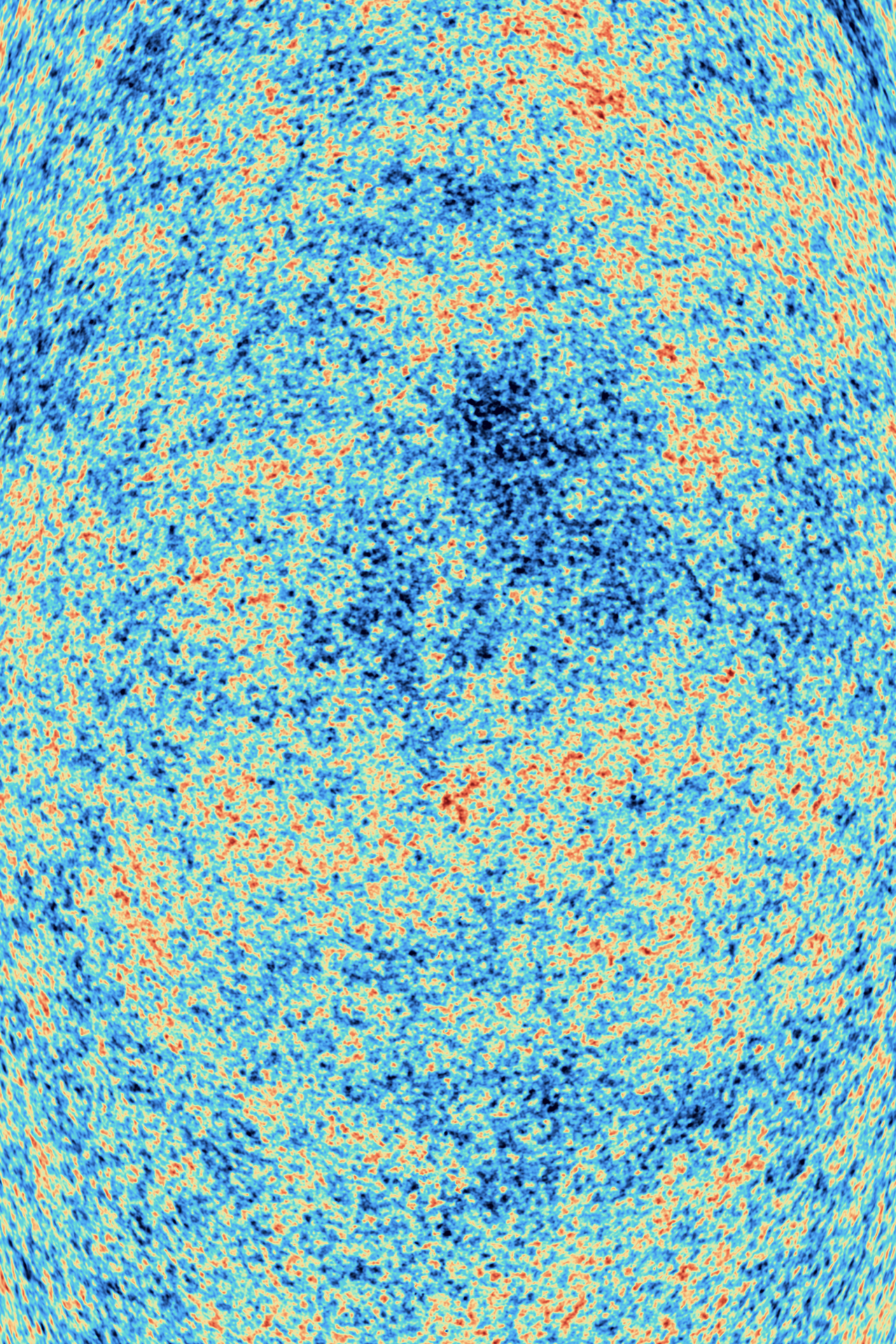
Science rarely delivers certainty through a single measurement. Instruments malfunction, assumptions go unexamined, and systematic errors can masquerade as signals for years before they are identified. What science can deliver, given sufficient effort, is convergence: the point at which many independent methods — using different physics, different instruments, different objects in different parts of the sky — all arrive at the same answer. When that convergence spans more than a dozen techniques drawing on nuclear physics, general relativity, stellar astrophysics, and observational cosmology simultaneously, the probability that all of them share the same undetected flaw collapses toward zero. This situation, in which independent observational programs agree on a single coherent picture of the universe, is called cosmic concordance.
.png)
The concordant model that has emerged — the Lambda-CDM framework, named for the cosmological constant Λ and cold dark matter CDM — describes a universe approximately 13.8 billion years old, geometrically flat, and composed of roughly 5 percent ordinary baryonic matter, 27 percent dark matter, and 68 percent dark energy.1 None of these quantities were chosen to fit each other; each was measured independently, by different research communities, using data collected over decades. That they fit together into a single self-consistent model is not a coincidence of bookkeeping. It is the most powerful form of scientific confirmation available: a cross-validation so redundant that dismantling it would require replacing not one theory but a dozen.
What concordance means as evidence
In any scientific investigation, a single measurement is vulnerable. The instrument may be miscalibrated, the sample may be unrepresentative, the analysis pipeline may carry an unrecognized bias. These possibilities are not rhetorical concessions but genuine concerns that practicing scientists take seriously. The response to that vulnerability is not to abandon measurement but to multiply it — to find every independent path to the same quantity and check whether they agree. When they do not agree, something is wrong with at least one of them. When they do agree, the probability that every independent path shares the same undetected error decreases multiplicatively with each additional method that confirms the result.1
Cosmic concordance represents the application of this logic on a grand scale. The age of the universe has been estimated from the thermal pattern of the cosmic microwave background, from the luminosities of the oldest stars in globular clusters, from the cooling rates of white dwarf stars, from the radioactive decay of heavy elements forged in ancient stellar explosions, and from independent measurements of the cosmic expansion rate. The geometry of space has been measured from the angular scale of CMB acoustic peaks and from the clustering statistics of hundreds of thousands of galaxies. The composition of the universe has been inferred from CMB peak ratios, from the motions of galaxies within clusters, from the bending of background light by invisible matter, and from the three-dimensional distribution of galaxies on scales of hundreds of millions of light-years. Every one of these programs could in principle have returned a different answer. None did. The fact that they agree is not a property of our measurement tools — it is a property of the universe.1, 7, 10, 11
The age of the universe: five independent clocks
The most direct measurement of the universe's age comes from the cosmic microwave background. The CMB is the thermal afterglow of the epoch when the universe first became transparent to light, roughly 380,000 years after the Big Bang. Its temperature fluctuations encode a precise snapshot of the density variations that were present at that moment, and fitting the observed angular power spectrum to the predictions of the Lambda-CDM model yields a universe age of 13.787 ± 0.020 billion years from the 2018 Planck satellite analysis — a precision better than 0.2 percent.1 The same analysis also delivers the Hubble constant, the matter density, the curvature, and the dark energy density simultaneously, all from a single coherent fit to the same data set.
Completely independent confirmation comes from the oldest stars in the Milky Way. Globular clusters are dense spherical collections of hundreds of thousands of stars that formed early in the history of the Galaxy. Because all the stars in a globular cluster formed from the same gas cloud at nearly the same time, they provide a direct laboratory for stellar evolution theory: the color-magnitude diagram of the cluster reveals its age through the position of the main-sequence turnoff, the point at which the most massive remaining stars are exhausting their hydrogen fuel. Ages derived from globular cluster turnoffs converge on values of 11 to 13 billion years, which are consistent with and slightly younger than the CMB-derived age of the universe, as they must be if the stars formed some time after the Big Bang.7, 8 The agreement sets a hard lower bound: a universe younger than about 11 billion years is excluded because the oldest stars would be older than the cosmos that produced them.
A third independent clock comes from white dwarf stars. When low- and intermediate-mass stars exhaust their nuclear fuel, they shed their outer layers and leave behind a dense stellar cinder — a white dwarf — that cools at a calculable rate determined by its mass and composition. The coolest, faintest white dwarfs in a stellar population are therefore the oldest ones, and the sharp faint end of the white dwarf luminosity function marks the age at which the population stopped being born. White dwarf cooling ages in the solar neighborhood are consistent with a Galactic disk age of roughly 8 to 10 billion years, and age measurements of white dwarfs in old globular clusters using this method with the Hubble Space Telescope yield ages of approximately 12 billion years — fully consistent with the CMB and globular cluster results.10, 18
A fourth clock is nucleocosmochronology: the radioactive dating of the oldest stars using long-lived isotopes of thorium and uranium.9 These isotopes are produced in the rapid neutron-capture process during neutron star mergers and core-collapse supernovae, and their initial production ratios are calculable from nucleosynthesis theory. When astronomers measure the current ratio of thorium-232 to uranium-238, or compare them against stable r-process elements like europium, the elapsed time since the elements were forged can be read off like a radioactive clock. Ages derived from metal-poor halo stars using this method typically fall between 12 and 15 billion years, with uncertainties reflecting both observational precision and the theoretical production ratios — again consistent with a universe age near 13.8 billion years.9
The fifth clock runs backward from the present expansion rate. The Hubble constant H0 measures how fast the universe is currently expanding; combined with the matter and energy densities that determine how the expansion rate has changed over time, it yields a lookback time to the Big Bang. CMB-calibrated measurements give H0 ≈ 67–68 km/s/Mpc, implying an age of approximately 13.8 billion years.1, 16 Earlier Hubble Space Telescope measurements of Cepheid variable stars in nearby galaxies gave a higher value near 72 km/s/Mpc, which would imply a somewhat younger age — this discrepancy, known as the Hubble tension, is actively debated, but even the higher value gives an age well above 12 billion years and is thus fully concordant with stellar ages.17 Five independent physical clocks, rooted in plasma physics, stellar astrophysics, nuclear physics, white dwarf cooling theory, and general relativity, all point to an age between roughly 12 and 14 billion years. The probability of this agreement arising from coincidental systematic error in all five is negligible.
The expansion history: supernovae, BAO, and the CMB
The evidence that the universe's expansion is accelerating rests most directly on Type Ia supernovae used as standardizable candles. Because the peak luminosity of a Type Ia supernova can be calibrated from its light-curve decline rate, the apparent brightness of distant supernovae encodes their true distance, and comparing this with their redshift maps out the expansion history. Two independent survey teams — the High-z Supernova Search Team and the Supernova Cosmology Project — announced in 1998 and 1999 that distant supernovae were fainter than expected in a decelerating universe, requiring an accelerating expansion driven by a dark energy component.2, 3 The Pantheon+ sample of over 1,500 supernovae spanning redshifts from 0.001 to 2.26 confirms these constraints with high statistical power, yielding a matter density Ωm ≈ 0.334 and a dark energy equation-of-state parameter consistent with a cosmological constant.13
An entirely independent measurement of the expansion history comes from baryon acoustic oscillations (BAO). In the early universe, the coupled baryon-photon fluid supported acoustic waves that propagated outward from density perturbations until recombination froze them in place. This left a characteristic overdensity of galaxies at a comoving separation of approximately 150 megaparsecs — a standard ruler imprinted in the three-dimensional distribution of galaxies. By measuring how this preferred scale appears at different redshifts in spectroscopic galaxy surveys, cosmologists can trace the expansion history in a way that is entirely independent of supernova calibrations. The first clear detection of the BAO peak came from the Sloan Digital Sky Survey in 2005.4 Subsequent surveys including the Baryon Oscillation Spectroscopic Survey and, most recently, the Dark Energy Spectroscopic Instrument (DESI) confirm the same cosmological parameters to high precision.15 The 2024 DESI results, based on galaxy clustering across a comoving volume of tens of cubic gigaparsecs, are consistent with the Planck CMB results and the supernova data, with hints of mild tension that may indicate evolving dark energy — an active area of research.15
The CMB itself also encodes the expansion history through the angular diameter distance to the last-scattering surface and through the late-time integrated Sachs-Wolfe effect, in which CMB photons gain or lose energy as they traverse evolving gravitational potential wells shaped by dark energy. These constraints, derived purely from photons emitted 380,000 years after the Big Bang, agree with the supernova and BAO results derived from objects at redshifts between 0 and 2. Three methods measuring the expansion across different cosmic epochs, using radiation, exploding stars, and the galaxy distribution as their respective tools, converge on the same expansion history.1, 13, 15
The matter-energy budget: four independent inventories
The composition of the universe — the relative proportions of ordinary matter, dark matter, and dark energy — has been measured by four independent methods that use fundamentally different physics.1
The first and most precise measurement comes from the acoustic peaks of the CMB power spectrum. The heights and positions of the acoustic peaks are sensitive to the baryon density, the total matter density, the curvature, and the dark energy density in distinct ways. The ratio of the first to second peak is particularly sensitive to the baryon fraction, while the third peak constrains the total matter density. Fitting the full power spectrum from the Planck satellite yields Ωbh2 = 0.02237 ± 0.00015 for baryons, Ωch2 = 0.1200 ± 0.0012 for cold dark matter, and ΩΛ = 0.6847 ± 0.0073 for dark energy — the 5-27-68 split quoted at the beginning of this article.1
The second measurement comes from galaxy clusters, the largest gravitationally bound structures in the universe. Because clusters are formed from regions of space large enough to be representative samples of the universe's matter content, the ratio of hot intracluster gas (a tracer of baryonic matter) to total cluster mass (measured from X-ray temperatures or gravitational lensing) directly reflects the cosmic baryon fraction. Galaxy cluster surveys also constrain the total matter density through the abundance of clusters as a function of mass and redshift, since the rate at which massive structures grow depends sensitively on Ωm. These analyses consistently recover matter fractions near 30 percent of the critical density, consistent with the CMB result.11
The third method is weak gravitational lensing. As light from distant galaxies travels toward the observer, the intervening mass distribution deflects the photon paths, producing subtle but coherent distortions in galaxy shapes across the sky. Statistical analysis of these distortions — called cosmic shear — maps the total projected mass distribution along the line of sight, regardless of whether that mass is luminous or dark. Cosmic shear surveys constrain the combination S8 = σ8(Ωm/0.3)0.5, where σ8 is the amplitude of matter density fluctuations on scales of 8 Mpc/h. Results from the Kilo-Degree Survey, the Dark Energy Survey, and the Hyper Suprime-Cam survey are broadly consistent with Planck CMB predictions, independently confirming both the matter density and the amplitude of fluctuations.12
The fourth measurement comes from the BAO scale itself, which is sensitive to the matter-radiation equality epoch and therefore to the matter density. The position of the BAO peak in the galaxy power spectrum depends on the sound horizon at recombination, which is set by the baryon-to-photon ratio. Fitting the BAO peak across multiple redshift bins recovers the same baryon and matter densities as the CMB, providing a consistency check that spans redshifts from 0.1 to 3.5.4, 15 Four methods that use plasma oscillations in the early universe, the gravitational growth of galaxy clusters, the deflection of light by invisible matter, and acoustic imprints in the galaxy distribution all agree that ordinary matter constitutes about 5 percent of the cosmic energy budget, dark matter about 27 percent, and dark energy about 68 percent.
Big Bang nucleosynthesis and the element abundances
One of the most striking concordance tests involves nuclear physics that is entirely decoupled from the astronomical measurements described above. Big Bang nucleosynthesis (BBN) describes the production of light elements — hydrogen, deuterium, helium-3, helium-4, and lithium-7 — during the first three minutes of the universe's history, when temperatures were high enough for nuclear fusion to proceed.5 The predicted abundances depend almost entirely on a single parameter: the baryon-to-photon ratio η, or equivalently the physical baryon density Ωbh2.
The helium-4 mass fraction predicted by BBN for the baryon density inferred from the CMB is approximately 24 to 25 percent. Observational measurements of the primordial helium abundance — derived from emission line ratios in the most metal-poor extragalactic H II regions, which have processed the fewest heavy elements from subsequent stellar nucleosynthesis — give Yp = 0.2449 ± 0.0040.6 The agreement is precise to within a few tenths of a percent. Primordial deuterium is even more sensitive to the baryon density, because it is rapidly destroyed in stellar interiors and its present abundance in nearly pristine intergalactic gas clouds at high redshift reflects its primordial value. Measurements of deuterium-to-hydrogen ratios in quasar absorption systems yield a baryon density that agrees with the Planck CMB baryon density to within 1 percent.5
This concordance is remarkable because BBN and CMB measurements are based on completely different physics occurring at completely different epochs. BBN takes place during the first three minutes, when the universe has a temperature of billions of degrees and the relevant physics is nuclear reactions between free protons and neutrons. The CMB is set at 380,000 years, when the relevant physics is the recombination of hydrogen and the subsequent free-streaming of photons. That both methods recover the same baryon density means the standard model of particle physics, general relativity, and the Lambda-CDM cosmological model are all internally consistent across twelve orders of magnitude in cosmic time.1, 5
The geometry of space
One of the most counterintuitive results of modern cosmology is that space, on the largest observable scales, is geometrically flat to extraordinary precision. Flat space means that the angles of a triangle sum to exactly 180 degrees, that parallel lines neither converge nor diverge, and that the total energy density of the universe equals the critical density Ωtot = 1. The evidence for this flatness comes from two independent sources.1, 14
The primary evidence is the angular scale of the first acoustic peak in the CMB power spectrum. In a flat universe, the sound horizon at recombination subtends a specific angle on the sky — approximately one degree, corresponding to a multipole moment ℓ ≈ 220 in the harmonic decomposition of temperature fluctuations. In a positively curved universe, the same physical scale would appear larger; in a negatively curved universe, it would appear smaller. The Planck satellite measures the first peak position to be fully consistent with flat geometry, with a total energy density Ωtot = 1.0007 ± 0.0019, consistent with flatness at the sub-percent level.1
Independent confirmation comes from combining CMB data with BAO measurements. The CMB alone has a mild degeneracy between the geometry and the Hubble constant, but adding the BAO scale as a standard ruler breaks this degeneracy cleanly. The joint CMB and BAO analysis of the Planck and DESI data sets constrains the curvature density Ωk to be consistent with zero with high precision, independently confirming the flat geometry inferred from the CMB peak positions alone.14, 15 Flatness was also predicted by the theory of cosmic inflation, which posits a period of exponential expansion in the first fraction of a second after the Big Bang that would have stretched any initial curvature to unmeasurable smallness. The observational confirmation of flatness thus connects to the theoretical framework of inflation as well.
The evidential significance of concordance
The power of cosmic concordance as a form of scientific evidence rests on a simple probabilistic argument. Any single measurement is vulnerable to systematic error. Two independent measurements that agree could share a correlated systematic error if they use related techniques or rely on the same underlying assumptions. But when methods are genuinely independent — using different physical phenomena, different instruments, different analytical pipelines, and different research teams working on different data sets — the probability that all of them share the same undetected error decreases rapidly with the number of methods that agree. More than a dozen independent probes now constrain the major parameters of the Lambda-CDM model, all yielding consistent results.1, 11, 12, 13, 15
This network of cross-validations is what distinguishes established cosmology from speculation. The age of the universe is not inferred from one technique that might be wrong; it is over-determined by at least five techniques using nuclear physics, stellar evolution theory, white dwarf cooling, radioactive decay, and the geometry of space-time. The matter-energy budget is not inferred from the CMB alone; it is confirmed by cluster physics, gravitational lensing, and galaxy clustering. The expansion history is not inferred from supernovae alone; it is confirmed by BAO and the CMB. Each confirmation adds redundancy; the ensemble as a whole is robust against the failure of any individual component in a way that no single measurement can be.1, 2, 4, 7
It is worth being explicit about what concordance does not mean. It does not mean that the Lambda-CDM model is complete or final. The physical nature of dark matter remains unknown, despite strong gravitational evidence for its existence from galaxy rotation curves, cluster dynamics, gravitational lensing, and the CMB. The physical nature of dark energy remains equally mysterious. The Hubble tension — the mild disagreement between CMB-inferred and direct measurements of H0 — may indicate new physics or unresolved systematic errors.17 Cosmology is an active science, and these open questions are genuine. But the concordance of the major cosmological parameters is not among the open questions. The age, geometry, and gross composition of the universe are among the most precisely and multiply verified quantities in all of science.
Proposed alternatives to the standard cosmology — and most especially young-earth creationist models that place the age of the universe at a few thousand years — face not one anomaly but the entire structure of concordance. A universe created six thousand years ago would be inconsistent with white dwarf cooling sequences, globular cluster ages, nucleocosmochronology, the CMB power spectrum, the BBN predictions for helium and deuterium, the baryon acoustic oscillation scale imprinted in the galaxy distribution, the distance-redshift relation of Type Ia supernovae, and the gravitational lensing maps of dark matter simultaneously. Proposing that each of these methods is independently flawed in just the right way to falsely suggest an old universe requires a conspiratorial coincidence involving every major branch of contemporary physics and astronomy. Cosmic concordance makes that kind of systematic dismissal logically incoherent, not merely unlikely. The methods are too numerous, too independent, and too deeply rooted in different areas of physical law for all of them to be simultaneously and coherently wrong.
References
- Planck Collaboration. “Planck 2018 results. VI. Cosmological parameters.” Astronomy & Astrophysics 641: A6, 2020.
- Riess, A. G. et al. “Observational evidence from supernovae for an accelerating universe and a cosmological constant.” The Astronomical Journal 116: 1009–1038, 1998.
- Perlmutter, S. et al. “Measurements of Ω and Λ from 42 high-redshift supernovae.” The Astrophysical Journal 517: 565–586, 1999.
- Eisenstein, D. J. et al. “Detection of the baryon acoustic peak in the large-scale correlation function of SDSS luminous red galaxies.” The Astrophysical Journal 633: 560–574, 2005.
- Iocco, F. et al. “Big Bang nucleosynthesis: present status.” Physics Reports 472: 1–76, 2009.
- Aver, E., Olive, K. A. & Skillman, E. D. “The primordial helium abundance from updated emissivities.” Journal of Cosmology and Astroparticle Physics 2015(07): 011, 2015.
- Chaboyer, B. et al. “An absolute age for the Milky Way globular cluster system.” The Astrophysical Journal 494: 96–110, 1998.
- VandenBerg, D. A., Bolte, M. & Stetson, P. B. “Ages of globular clusters and the age of the universe.” Annual Review of Astronomy and Astrophysics 34: 461–510, 1996.
- Cowan, J. J., Sneden, C. & Beers, T. C. “Cosmochronology and nucleosynthesis.” Annual Review of Astronomy and Astrophysics 49: 279–331, 2011.
- Winget, D. E. et al. “White dwarfs and the field age of the Galactic disk.” The Astrophysical Journal Letters 315: L77–L81, 1987.
- Allen, S. W., Evrard, A. E. & Mantz, A. B. “Cosmological parameters from observations of galaxy clusters.” Annual Review of Astronomy and Astrophysics 49: 409–470, 2011.
- Kilbinger, M. “Cosmology with cosmic shear observations: a review.” Reports on Progress in Physics 78: 086901, 2015.
- Brout, D. et al. “The Pantheon+ analysis: cosmological constraints.” The Astrophysical Journal 938: 110, 2022.
- Park, C.-G. & Ratra, B. “Spatial flatness of the universe from the cosmic microwave background and baryon acoustic oscillations.” The Astrophysical Journal 882: 158, 2019.
- DESI Collaboration. “DESI 2024 VI: cosmological constraints from the measurements of baryon acoustic oscillations.” Journal of Cosmology and Astroparticle Physics 2025(02): 021, 2025.
- Hinshaw, G. et al. “Nine-year Wilkinson Microwave Anisotropy Probe (WMAP) observations: cosmological parameter results.” The Astrophysical Journal Supplement Series 208: 19, 2013.
- Freedman, W. L. et al. “An independent determination of the cosmic distance scale and the age of the universe.” The Astrophysical Journal 553: 47–72, 2001.
- Hansen, B. M. S. et al. “An absolute age for 47 Tucanae from Hubble Space Telescope white dwarf cooling sequences.” The Astrophysical Journal Supplement Series 155: 551–576, 2004.
References
Observational evidence from supernovae for an accelerating universe and a cosmological constant
Detection of the baryon acoustic peak in the large-scale correlation function of SDSS luminous red galaxies
Spatial flatness of the universe from the cosmic microwave background and baryon acoustic oscillations
DESI 2024 VI: cosmological constraints from the measurements of baryon acoustic oscillations
Nine-year Wilkinson Microwave Anisotropy Probe (WMAP) observations: cosmological parameter results
An independent determination of the cosmic distance scale and the age of the universe
An absolute age for 47 Tucanae from Hubble Space Telescope white dwarf cooling sequences