Overview
- Variable stars are stars whose brightness changes over time, either because of physical processes within the star itself (intrinsic variables such as Cepheids, RR Lyrae, Mira variables, and Delta Scuti stars) or because of external geometric effects (extrinsic variables such as eclipsing binaries and rotating variables).
- The period-luminosity relation discovered by Henrietta Swan Leavitt in 1912 for Cepheid variables transformed variable stars into precision distance indicators, establishing the first reliable extragalactic distances and enabling Edwin Hubble to prove that spiral nebulae were independent galaxies far beyond the Milky Way.
- Modern surveys including OGLE and the Kepler space telescope have catalogued hundreds of thousands of new variable stars and launched the field of asteroseismology, which uses stellar oscillation frequencies to probe the internal structure, mass, radius, and age of stars with unprecedented precision.
A variable star is any star whose apparent brightness, as observed from Earth, changes measurably over time. The phenomenon encompasses an enormous range of physical mechanisms, timescales, and amplitudes, from the slow, centuries-spanning dimming of a dying red giant to the rapid, millisecond flickering of a compact stellar remnant, and from the subtle thousandths-of-a-magnitude oscillations detectable only by space-based photometry to the dramatic several-magnitude swings visible to the unaided eye. The study of variable stars has been central to astrophysics since the early twentieth century, when the discovery that certain pulsating variables obey a strict relationship between their pulsation period and their intrinsic luminosity transformed them into cosmic yardsticks capable of measuring distances far beyond the reach of geometric parallax.2, 9
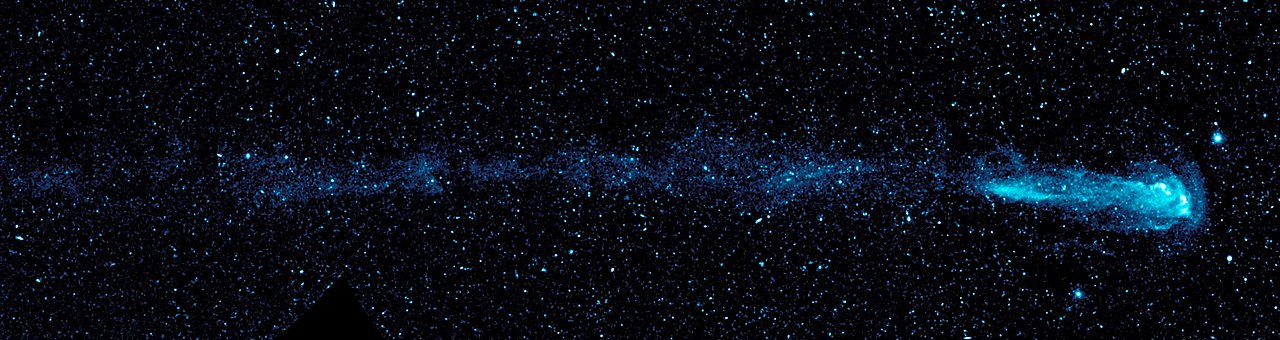

Variable stars are conventionally divided into two broad categories. Intrinsic variables change brightness because of physical processes occurring within or on the surface of the star itself, including radial and nonradial pulsations, eruptions, and rotational modulation of surface features. Extrinsic variables appear to change brightness because of geometric effects external to the star, most commonly the mutual eclipsing of stars in a binary system. The General Catalogue of Variable Stars (GCVS), the standard reference compiled at the Sternberg Astronomical Institute in Moscow, catalogues more than 58,000 confirmed variable stars in its 5.1 release, classified into dozens of distinct types, while modern photometric surveys have identified hundreds of thousands more in the Milky Way and its satellite galaxies.13
Historical development
The systematic study of variable stars began in the late eighteenth century. In 1783, the English amateur astronomer John Goodricke presented his observations of Algol (Beta Persei) to the Royal Society of London, demonstrating that the star's brightness declined at regular intervals of approximately 2.87 days and proposing that the variability was caused by a large, dark body periodically passing in front of the star. Goodricke's hypothesis, for which he received the Copley Medal, anticipated the modern understanding of eclipsing binaries by more than a century.9 In the same decade, Goodricke also discovered the variability of Delta Cephei, whose light curve would eventually define an entire class of pulsating stars and whose descendants would become the most important distance indicators in observational cosmology.
By the late nineteenth century, the advent of photographic astronomy at institutions such as the Harvard College Observatory enabled systematic surveys of stellar brightness. It was at Harvard that Henrietta Swan Leavitt, working as one of the "Harvard Computers," made the discovery that would elevate variable-star research from a niche observational pursuit to a pillar of modern cosmology. Examining photographic plates of the Small Magellanic Cloud between 1904 and 1908, Leavitt identified 1,777 variable stars and noticed that the brighter variables tended to have longer periods of variation.1 In 1912, she published a definitive analysis of 25 Cepheid variables in the Small Magellanic Cloud, establishing a clear linear relationship between the logarithm of the pulsation period and the star's apparent magnitude. Because all stars in the Small Magellanic Cloud lie at effectively the same distance from Earth, differences in apparent brightness corresponded directly to differences in intrinsic luminosity. The period-luminosity relation, now known as Leavitt's Law, meant that any Cepheid's true brightness could be deduced from its period alone.2
Cepheid variables and the period-luminosity relation
Classical Cepheids, also called Type I Cepheids or Delta Cephei variables, are luminous yellow supergiants of spectral types F through K that pulsate radially with periods ranging from approximately 1 day to over 100 days. They are young, massive stars (typically 3 to 13 solar masses) found in the disk populations of spiral galaxies, and their high intrinsic luminosities — 500 to 300,000 times that of the Sun — make them visible at great distances.9, 3 The defining characteristic of Cepheids is their strict adherence to the period-luminosity relation: a Cepheid with a pulsation period of 10 days is approximately 3,000 times more luminous than the Sun, while one with a period of 50 days exceeds 30,000 solar luminosities. The scatter around this relation is remarkably small, especially in the infrared, where the effects of interstellar dust extinction and the temperature sensitivity of the bolometric correction are minimized.
The cosmological importance of Leavitt's discovery was realized almost immediately. In the 1920s, Edwin Hubble identified Cepheid variables in what was then known as the Andromeda Nebula and used the period-luminosity relation to calculate its distance, demonstrating that it lay far beyond the boundaries of the Milky Way and was an independent galaxy in its own right. This result resolved the "Great Debate" over the scale of the universe and established Cepheids as the first rung of the extragalactic distance ladder.6 In 2001, the Hubble Space Telescope Key Project, led by Wendy Freedman, used Cepheid distances to 31 galaxies to calibrate secondary distance indicators and derived a Hubble constant of 72 ± 8 km/s/Mpc, establishing the modern scale of the expanding universe with a precision of roughly 10 percent.7 The subsequent SH0ES programme, led by Adam Riess, has refined this approach using improved Cepheid photometry calibrated against Gaia parallaxes, reporting H0 = 73.04 ± 1.04 km/s/Mpc — a value now in well-publicized tension with the lower estimate from cosmic microwave background observations.8
Type II Cepheids, also called population II Cepheids, are an older, lower-mass class of pulsating variables found in globular clusters and the galactic halo. They follow a period-luminosity relation that is systematically fainter than that of classical Cepheids at the same period. The historical failure to distinguish the two classes led Hubble and his contemporaries to underestimate extragalactic distances by roughly a factor of two, an error corrected by Walter Baade in the 1950s when he recognized two distinct stellar populations with different period-luminosity calibrations.9
RR Lyrae stars
RR Lyrae variables are old, low-mass (approximately 0.5 to 0.8 solar masses), horizontal-branch stars that pulsate with periods between roughly 0.2 and 1.0 days and visual amplitudes of 0.2 to 2.0 magnitudes. They are Population II objects, found abundantly in globular clusters, the galactic bulge, and the stellar halo of the Milky Way, and they are named after the prototype star RR Lyrae in the constellation Lyra.9 Like Cepheids, RR Lyrae stars occupy the classical instability strip on the Hertzsprung-Russell diagram, where they pulsate through the same kappa-mechanism driving process (discussed below), but they are substantially less luminous than Cepheids, with absolute visual magnitudes near +0.6.
At visual wavelengths, the intrinsic luminosity of RR Lyrae stars depends primarily on their metallicity — the abundance of elements heavier than helium — rather than on their pulsation period, which limits their utility as straightforward distance indicators in the optical. However, in the near-infrared K band, RR Lyrae stars do follow a well-defined period-luminosity relation with relatively little metallicity sensitivity, making them effective distance indicators for old stellar populations where young, luminous Cepheids are absent.9 RR Lyrae distances to globular clusters were among the earliest measurements that revealed the enormous scale of the Milky Way, and they remain the primary distance indicators for the oldest stellar systems in the Local Group. The tip of the red giant branch method and RR Lyrae distances provide crucial independent cross-checks on the Cepheid-based distance ladder.8
Mira variables and Delta Scuti stars
Mira variables are large-amplitude, long-period pulsating stars on the asymptotic giant branch (AGB) of stellar evolution. Named after Mira (Omicron Ceti), the first recognized periodic variable star, these cool red giants pulsate with periods ranging from approximately 100 to 1,000 days and visual amplitudes that can exceed 8 magnitudes — meaning they brighten and fade by factors of more than 1,500 in visible light over a single cycle. Their enormous radii (several hundred solar radii), low surface temperatures (below 3,500 kelvins), and prodigious mass-loss rates through stellar winds make them among the most evolved stars visible in any galaxy.10
Despite their large amplitudes in the optical, Mira variables follow a well-defined period-luminosity relation in the infrared K band, where their pulsation amplitudes are much smaller (typically less than one magnitude) and the effects of circumstellar dust extinction are reduced. Whitelock, Feast, and Van Leeuwen (2008) established a K-band period-luminosity relation for oxygen-rich Miras in the Large Magellanic Cloud with a slope of −3.51 ± 0.20 and calibrated its zero point using revised Hipparcos parallaxes and very-long-baseline interferometry (VLBI) parallaxes of OH maser sources in the Milky Way.10 Because Miras are intrinsically luminous and present in old and intermediate-age stellar populations, they serve as distance indicators complementary to Cepheids, particularly in elliptical galaxies and galaxy bulges where young Cepheids are absent.
At the opposite end of the pulsation-period spectrum lie the Delta Scuti stars, short-period pulsating variables of spectral types A and early F located at the intersection of the main sequence and the classical instability strip on the HR diagram. They pulsate with periods between approximately 0.02 and 0.25 days (roughly 30 minutes to 6 hours) and amplitudes that range from a few thousandths of a magnitude for the lowest-amplitude members to several tenths of a magnitude for the high-amplitude Delta Scuti (HADS) subclass.9 Delta Scuti stars are of particular interest because many of them exhibit simultaneous oscillation in multiple radial and nonradial pulsation modes, producing complex light curves that encode detailed information about their internal structure. This richness of oscillation modes has made Delta Scuti stars important targets for asteroseismology, the technique of probing stellar interiors through the analysis of their natural oscillation frequencies.15
Pulsation mechanisms
The question of why certain stars pulsate while their neighbours on the HR diagram do not was one of the central problems of twentieth-century astrophysics. The answer lies in the interaction between stellar opacity and the ionization of abundant elements in the outer envelope. Arthur Stanley Eddington laid the theoretical groundwork for stellar pulsation theory in 1918, proposing that a star could act as a thermodynamic heat engine: if the opacity of a layer increased during compression, the layer would trap radiation, build up pressure, and be driven outward past its equilibrium position, after which the opacity would decrease, radiation would escape, and the layer would fall back inward, repeating the cycle.5 Eddington recognized that this "valve mechanism" could sustain self-excited oscillations, but he was unable to identify which physical process in stellar interiors provided the necessary opacity increase upon compression.
The solution came in the early 1950s and was formalized by Sergei Zhevakin in 1963. Zhevakin demonstrated that the critical opacity changes occur in the partial ionization zones of hydrogen and helium in the stellar envelope.4 In these regions, the gas is in a state of partial ionization: some atoms are neutral and some are ionized. When the layer is compressed, instead of the gas simply heating up (which would increase pressure and resist further compression, as in a fully ionized or fully neutral gas), the compression energy goes into ionizing more atoms. This ionization absorbs energy that would otherwise be radiated away, effectively increasing the opacity of the layer. The trapped energy then drives the layer outward; as the layer expands and cools, the ions recombine, the opacity drops, energy is released, and the cycle repeats.
This driving mechanism is called the kappa mechanism (from the Greek letter κ, the standard symbol for opacity in astrophysics), also known as the Eddington valve.3, 4 The kappa mechanism operates most effectively in two specific ionization zones within the stellar envelope. The first is the hydrogen ionization zone, located at temperatures of roughly 10,000 to 15,000 kelvins, where neutral hydrogen is ionized to H+. The second, and more important for driving pulsation in Cepheids and RR Lyrae stars, is the second helium ionization zone, located deeper in the envelope at temperatures of approximately 40,000 to 50,000 kelvins, where singly ionized helium (He+) is further ionized to doubly ionized helium (He2+). Zhevakin showed that the interaction of pulsation with this second helium ionization zone provides a sufficiently strong destabilizing force to overcome the damping effects present in the rest of the star and sustain oscillations indefinitely.4
The kappa mechanism explains the existence of the instability strip, a nearly vertical band on the HR diagram within which pulsating stars of the Cepheid, RR Lyrae, and Delta Scuti types are found. Stars hotter than the blue (left) edge of the instability strip have their ionization zones too close to the surface, where the overlying mass is too small to drive effective pulsation. Stars cooler than the red (right) edge develop deep convective envelopes that transport energy so efficiently that the pulsation driving is quenched. Only within the instability strip are the ionization zones located at the correct depth to trap and release radiation in phase with the compression cycle.3, 9
Representative types of pulsating variable stars and their properties3, 9
| Variable type | Spectral type | Period range | Amplitude (V) | Driving mechanism |
|---|---|---|---|---|
| Classical Cepheid | F–K supergiant | 1–100 days | 0.3–2.0 mag | κ mechanism (He II zone) |
| Type II Cepheid | F–G giant | 1–50 days | 0.3–1.5 mag | κ mechanism (He II zone) |
| RR Lyrae | A–F horizontal branch | 0.2–1.0 days | 0.2–2.0 mag | κ mechanism (He II zone) |
| Delta Scuti | A–F main sequence / subgiant | 0.02–0.25 days | 0.003–0.9 mag | κ mechanism (He II zone) |
| Mira | M giant (AGB) | 100–1,000 days | 2.5–11 mag | κ mechanism (H zone) + dynamics |
Extrinsic variables: eclipsing binaries and rotating stars
Not all stellar variability arises from processes internal to the star. Eclipsing binaries are star systems in which two stars orbit a common centre of mass in an orbital plane aligned closely enough with the observer's line of sight that one star periodically passes in front of the other, blocking a fraction of the system's total light and producing a characteristic dip in the observed brightness. The prototype Algol (Beta Persei), identified by Goodricke in 1783, is the best-known example. Eclipsing binaries are classified by the shape of their light curves into three principal categories: Algol-type (EA) systems, which show well-separated eclipses with relatively constant brightness between them; Beta Lyrae (EB) systems, which display continuously varying brightness due to tidally distorted, nearly contact components; and W Ursae Majoris (EW) systems, in which both stars fill their Roche lobes and share a common envelope, producing broad, sinusoidal light curves.11
Eclipsing binaries hold a special status in astrophysics because they are the primary empirical source of accurate stellar masses and radii. When the orbital period is measured from the light curve and the radial velocities of both components are obtained spectroscopically, Kepler's third law yields the masses of the two stars directly, with no dependence on theoretical models. The depth and duration of the eclipses, analysed through light-curve modelling, provide the radii of both stars as fractions of the orbital separation. Torres, Andersen, and Giménez (2010) compiled a critical catalogue of 95 detached eclipsing binary systems (190 individual stars) for which masses and radii were known to accuracies of 3 percent or better, providing the fundamental empirical calibration of the mass-luminosity and mass-radius relations used throughout stellar astrophysics.11 These measurements serve as the primary benchmarks against which stellar evolution models are tested.
Rotating variables constitute another class of extrinsic variables. Stars with inhomogeneous surface features — such as dark starspots (analogous to sunspots but often vastly larger), bright facular regions, or chemical abundance patches — produce periodic brightness variations as the star rotates and different hemispheres face the observer. The amplitude of the rotational modulation is typically small, often a few hundredths of a magnitude or less, but the regularity of the period provides a direct measurement of the stellar rotation rate. The Kepler space telescope detected rotational modulation in tens of thousands of solar-type and cooler stars, providing rotation periods that constrain theories of stellar angular momentum evolution and magnetic activity cycles.16
Variable stars as standard candles
The most profound contribution of variable stars to astrophysics has been their role as standard candles — objects whose intrinsic luminosity can be determined independently of their distance, so that comparing their known true brightness with their observed apparent brightness yields a direct distance measurement. The period-luminosity relation of classical Cepheids remains the single most important standard candle in the cosmic distance ladder, underpinning essentially all extragalactic distance measurements up to approximately 40 megaparsecs, where Cepheids become too faint for even the Hubble Space Telescope to resolve.7, 8
The chain of calibration that makes Cepheids effective distance indicators proceeds in well-defined steps. First, the period-luminosity relation must be anchored to an absolute luminosity scale. Historically, this was done by measuring the distances to a small number of Milky Way Cepheids using statistical parallax or main-sequence fitting of their parent star clusters. The European Space Agency's Hipparcos and Gaia missions revolutionized this calibration by providing direct trigonometric parallaxes for dozens of galactic Cepheids with unprecedented precision, removing much of the systematic uncertainty that had plagued earlier work.8 Once anchored, Cepheid distances are measured in galaxies that have also hosted Type Ia supernovae, calibrating the peak luminosity of those explosions. Type Ia supernovae, being far more luminous than any individual star, can then be observed at cosmological distances exceeding a billion light-years, extending the reach of the distance ladder into the regime where the expansion history of the universe can be measured.
Reach of variable-star distance indicators compared7, 8, 10
Each type of variable star occupies a different niche on the distance ladder. Classical Cepheids, being the most luminous pulsating variables, reach the farthest. RR Lyrae stars, though intrinsically fainter, are indispensable for measuring distances within the Milky Way and to the nearest galaxies, particularly in old stellar populations where Cepheids are absent. Mira variables bridge the gap between these extremes, offering a distance indicator applicable to intermediate-age and old populations at moderate extragalactic distances. The complementary nature of these indicators means that the distance ladder is not a single chain but a web of overlapping, cross-calibrating methods, each strengthening the reliability of the others.7, 9, 10
Asteroseismology
The study of stellar oscillations has matured in the twenty-first century into the discipline of asteroseismology — the probing of stellar interiors through the analysis of their natural resonant frequencies, in direct analogy with the way seismologists use earthquake waves to map the internal structure of the Earth. Just as the frequencies, amplitudes, and mode patterns of terrestrial seismic waves reveal the depth and composition of geological layers, the oscillation frequencies of a star encode information about its density profile, sound-speed stratification, rotation rate, core composition, and evolutionary state.15, 14
Stellar oscillations come in two principal families. Pressure modes (p-modes) are acoustic waves for which the restoring force is the pressure gradient in the stellar interior. They are most sensitive to conditions in the outer layers of the star and tend to have relatively high frequencies (periods of minutes to hours in solar-type stars). Gravity modes (g-modes) are oscillations for which the restoring force is buoyancy in stably stratified regions, and they probe the deep interior, particularly the region near the stellar core. In evolved red giant stars, p-modes in the outer envelope can couple with g-modes trapped in the radiative core, producing mixed modes whose frequencies carry information about both the envelope and the core simultaneously.14
The detection of solar-like oscillations — oscillations driven by the turbulent convection in a star's outer envelope, analogous to those observed in the Sun — requires photometric precision of parts per million sustained over weeks to months. This capability became available with the launch of dedicated space photometry missions. The French-led CoRoT satellite (2006–2013) provided the first detections of solar-like oscillations in red giant stars, revealing that these stars oscillate in thousands of detectable modes and establishing asteroseismology as a viable tool for studying evolved stellar populations. The NASA Kepler mission (2009–2018) then revolutionized the field by monitoring approximately 150,000 stars with nearly continuous, micromagnitude-precision photometry for up to four years.16
Kepler detected solar-like oscillations in more than 500 solar-type main-sequence and subgiant stars and in roughly 20,000 red giants, delivering an ensemble large enough for statistical studies of stellar populations for the first time. The global oscillation parameters — the frequency of maximum oscillation power (νmax) and the large frequency separation (Δν) between consecutive overtone modes — scale in well-understood ways with stellar mass, radius, and effective temperature, allowing these fundamental properties to be estimated from the oscillation spectrum alone with typical precisions of 2 to 5 percent in radius and 5 to 10 percent in mass.14, 16 For individual stars with high signal-to-noise oscillation spectra, detailed frequency modelling can determine ages to precisions of 10 to 25 percent — far more precise than any other age-dating technique available for isolated field stars. This capability has transformed the study of galactic archaeology, enabling the reconstruction of the Milky Way's formation history by dating large samples of red giant stars distributed across the galactic disk and halo.
One of the most striking results from Kepler asteroseismology was the discovery that the oscillation spectra of red giant stars contain a clear observational signature that distinguishes stars burning hydrogen in a shell around an inert helium core (ascending the red giant branch) from those burning helium in their core (residing on the red clump or horizontal branch). These two evolutionary states are nearly indistinguishable from surface observations alone but produce different patterns of mixed-mode oscillation frequencies, allowing asteroseismology to classify the evolutionary state of tens of thousands of red giants across the Kepler field.14
Modern surveys: OGLE, Kepler, and the era of big data
The volume and precision of variable-star science have been transformed by systematic photometric surveys conducted from both ground-based observatories and space-based platforms. The Optical Gravitational Lensing Experiment (OGLE), operated by the University of Warsaw at the Las Campanas Observatory in Chile, has been the most productive ground-based variable-star survey of the past three decades. Initiated in 1992 to search for dark matter through gravitational microlensing, OGLE rapidly evolved into the world's premier variability survey of the southern sky. Its fourth phase, OGLE-IV, employs a 1.3-metre telescope with a 1.4-square-degree mosaic CCD camera to monitor roughly a billion stars in the Galactic bulge, the Galactic disk, and the Magellanic Clouds with cadences of days to weeks.12
The OGLE Collection of Variable Stars (OCVS) is the largest homogeneous catalogue of variable stars in the world, containing over one million classified variables of all types. The collection includes nearly complete censuses of classical Cepheids (9,535 in the Magellanic System alone), Type II Cepheids, RR Lyrae stars (roughly 78,000 in the Galactic bulge and Magellanic Clouds), eclipsing binaries (over 450,000), Delta Scuti stars, and long-period variables.12 The OGLE Cepheid and RR Lyrae catalogues have become standard reference datasets for calibrating period-luminosity relations and testing stellar pulsation theory. The sheer size of the OGLE sample has also enabled the discovery of rare variable-star types and the detection of subtle systematic effects in period-luminosity relations that were invisible in smaller datasets.
From space, the Kepler mission transformed variable-star science not through sky coverage — it monitored a single 115-square-degree field — but through photometric precision and temporal baseline. Kepler's nearly continuous observations at a cadence of one measurement per 30 minutes (long cadence) or one per minute (short cadence) over a four-year primary mission yielded light curves of extraordinary quality, detecting variability at amplitudes as small as a few parts per million. This precision opened the entire field of asteroseismology for solar-type and red giant stars, as described above, and also revealed rotational modulation, starspot evolution, flare activity, and tidal interactions in binary systems with detail impossible from the ground.16
The Kepler mission's successor, TESS (Transiting Exoplanet Survey Satellite), launched in 2018, surveys nearly the entire sky with somewhat lower photometric precision than Kepler but with far broader coverage. TESS has identified tens of thousands of new pulsating variables, eclipsing binaries, and other classes of variable stars, and its data have been particularly valuable for asteroseismology of bright, nearby stars that Kepler could not observe.14 Together with the all-sky astrometric and photometric survey of the ESA Gaia mission, which is detecting variability in hundreds of millions of sources from its scanning pattern, these space-based surveys have ushered in an era in which the known population of variable stars is growing by orders of magnitude and the statistical study of stellar variability has become a data-intensive computational discipline.
Ongoing significance and open questions
Despite more than a century of study, variable stars continue to pose fundamental questions and to drive some of the most consequential programmes in observational astronomy. The calibration of the Cepheid period-luminosity relation remains at the heart of the Hubble tension — the persistent disagreement between the value of the Hubble constant derived from the local distance ladder (H0 ≈ 73 km/s/Mpc) and the value inferred from early-universe observations of the cosmic microwave background (H0 ≈ 67 km/s/Mpc). Whether this tension reflects undetected systematic errors in the Cepheid distance scale, in the CMB analysis, or genuine new physics beyond the standard cosmological model is one of the defining open problems in twenty-first-century cosmology.8
In pulsation physics, the detailed mechanisms governing mode selection — why a given star pulsates in certain modes and not others — remain incompletely understood, particularly for multi-mode pulsators such as Delta Scuti stars, which often exhibit dozens of simultaneous oscillation frequencies whose selection appears governed by complex, poorly constrained interactions between pulsation, rotation, and convection.15 The treatment of convection in pulsation models remains one of the largest theoretical uncertainties, because convective energy transport in stellar envelopes is inherently three-dimensional and turbulent, while most pulsation models are one-dimensional and employ simplified mixing-length prescriptions. The boundaries of the instability strip, the period-luminosity relation at low metallicities, and the amplitude-limiting mechanisms in all pulsating variable types all depend on the accurate modelling of convection-pulsation interaction.3, 9
Asteroseismology continues to expand in scope and ambition. The detection of individual oscillation frequencies in stars beyond the Milky Way remains a goal for future missions, and the combination of asteroseismic data with spectroscopic chemical abundances and Gaia astrometry is enabling the first detailed, age-resolved maps of the Milky Way's chemical evolution — a programme now called galactic archaeology.14 The forthcoming PLATO mission (Planetary Transits and Oscillations of Stars), planned by ESA for launch in 2026, is specifically designed to combine exoplanet detection with asteroseismology, aiming to determine the ages and radii of planet-hosting stars with sufficient precision to place exoplanetary systems in their evolutionary context. Variable stars, from the classical Cepheids that built the distance ladder to the subtle oscillators that reveal stellar interiors, remain indispensable tools in humanity's effort to understand the structure and history of the cosmos.15
References
Final results from the Hubble Space Telescope Key Project to measure the Hubble constant
A comprehensive measurement of the local value of the Hubble constant with 1 km/s/Mpc uncertainty from the Hubble Space Telescope and the SH0ES team