Overview
- Large igneous provinces (LIPs) are massive emplacements of igneous rock—exceeding 100,000 km² in area and often millions of km³ in volume—erupted in geologically brief pulses of one to five million years, primarily through flood basalt volcanism fed by deep mantle plumes.
- At least three of Earth's five major mass extinctions coincide with LIP emplacement: the Siberian Traps with the end-Permian extinction, the Central Atlantic Magmatic Province with the end-Triassic extinction, and the Deccan Traps with environmental stress at the Cretaceous–Paleogene boundary.
- LIPs drive environmental catastrophe through massive releases of CO₂ and SO₂, triggering global warming, ocean acidification, ozone depletion, and mercury enrichment in sedimentary records worldwide.
Large igneous provinces (LIPs) are among the most extreme geological phenomena in Earth's history. Defined as massive emplacements of predominantly mafic igneous rock—covering areas greater than 100,000 km² and often exceeding one million km³ in volume—LIPs form in geologically brief intervals typically spanning one to five million years.1 They include continental flood basalts, oceanic plateaus, volcanic rifted margins, and associated intrusive complexes such as giant dike swarms and sill provinces. Unlike the steady volcanism at plate boundaries, LIPs represent episodic, catastrophic pulses of magmatism that have repeatedly reshaped Earth's surface, climate, and biosphere. Their temporal correlation with mass extinctions, continental breakup events, and dramatic shifts in ocean chemistry makes them central to understanding how internal planetary processes drive environmental change at a global scale.1, 15

Definition and classification
The term "large igneous province" was formalized in the early 1990s to describe any region where anomalously large volumes of igneous rock were emplaced in a geologically short time, distinct from the more continuous magmatism at mid-ocean ridges and subduction zones. Bryan and Ernst (2008) refined the definition to require a minimum areal extent of 100,000 km², with predominantly mafic (basaltic) composition, and emplacement within a period of less than approximately 50 million years, though most major LIPs erupted in pulses far shorter than that upper limit.1
LIPs can be broadly divided into two categories based on their tectonic setting. Continental flood basalts, such as the Siberian Traps and the Deccan Traps, were erupted onto or intruded into existing continental crust. Oceanic plateaus, such as the Ontong Java Plateau in the western Pacific, formed on oceanic crust, often at great distance from any continental margin.1, 11 A third category encompasses volcanic rifted margins—thick sequences of seaward-dipping reflectors formed during continental breakup, where LIP volcanism accompanied and facilitated the separation of tectonic plates. The rifting of the North Atlantic, for instance, was accompanied by the North Atlantic Igneous Province around 55–62 million years ago.5
Formation mechanisms
The prevailing explanation for LIP formation invokes mantle plumes—thermally buoyant columns of rock rising from the deep mantle, possibly from the core-mantle boundary at a depth of approximately 2,900 km. The starting plume head model, developed by Campbell and Griffiths (1990), proposes that when a newly initiated plume head reaches the base of the lithosphere, it flattens to a disk roughly 2,000 km in diameter. Decompression melting of this enormous volume of anomalously hot mantle material produces the vast quantities of basaltic magma characteristic of LIPs.12 The model predicts that the initial plume head phase generates the most voluminous and rapid volcanism, while the narrower plume tail produces a more modest, long-lived volcanic chain—precisely the pattern observed, for example, in the relationship between the Deccan Traps and the subsequent Réunion hotspot track.12
Geochemical studies have added nuance to the plume model. Sobolev and others (2011) demonstrated that many LIP basalts bear the isotopic and trace-element signature of recycled oceanic crust (eclogite) entrained within the plume. Partial melting of this eclogite component produces more melt at lower temperatures than surrounding peridotite mantle, helping to explain the extraordinary volumes of magma generated during LIP events.2 Some researchers have proposed alternative or complementary mechanisms, including lithospheric delamination, edge-driven convection, and bolide impact—though the latter remains speculative for most LIPs. The plume model, supported by seismic imaging of deep mantle structures beneath active hotspots, remains the most widely accepted framework.1, 12
The Siberian Traps and the end-Permian extinction
The Siberian Traps, emplaced across what is now northern Siberia approximately 252 million years ago, represent one of the largest and most consequential LIPs in Earth's history. The province originally covered an area of at least 5 million km², with an estimated original volume of 3–4 million km³ of basaltic lava, tuff, and associated intrusions.4 The main phase of eruption lasted less than one million years and coincided precisely—within geochronological uncertainty—with the end-Permian mass extinction, the most severe biotic crisis in the Phanerozoic, which eliminated approximately 90% of marine species and 70% of terrestrial vertebrate species.3
High-precision U-Pb geochronology by Burgess, Bowring, and Shen (2014) demonstrated that the onset of the extinction and the main pulse of Siberian Traps volcanism were synchronous to within less than 60,000 years, strongly supporting a causal link.3 The kill mechanism was not lava itself but rather the massive release of volcanic gases. The Siberian Traps intruded through thick sequences of Paleozoic evaporites, carbonates, and organic-rich sediments in the Tunguska Basin, and the thermal metamorphism of these country rocks generated enormous volumes of CO₂, methane, and halocarbons in addition to the SO₂ released directly by the magma.4, 15 The resulting environmental cascade included rapid global warming of 6–10°C, ocean acidification, marine anoxia, and ozone depletion—a combination of stresses that overwhelmed ecosystems on land and in the sea.15
The Deccan Traps and the Cretaceous–Paleogene boundary
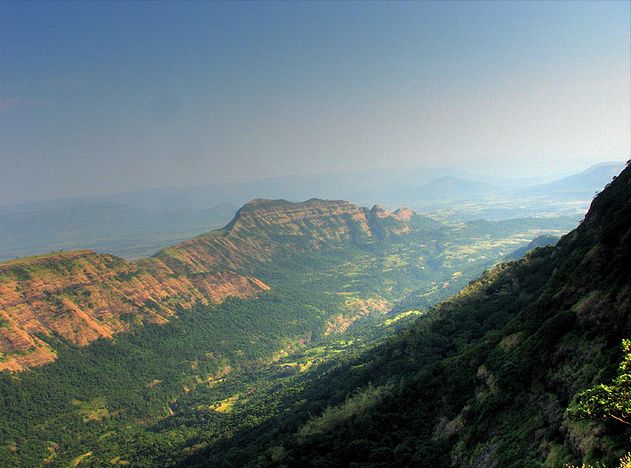
The Deccan Traps of west-central India were erupted between approximately 67 and 65 million years ago, spanning the Cretaceous–Paleogene (K-Pg) boundary and the extinction of the non-avian dinosaurs. The province preserves a stratigraphic thickness exceeding 3,500 meters of basaltic lava flows in some sections, with an original volume estimated at 1–2 million km³.7 The relationship between Deccan volcanism and the K-Pg mass extinction is more complex than the Siberian Traps case, because the K-Pg boundary also coincides with the Chicxulub asteroid impact in present-day Mexico.
U-Pb geochronology by Schoene and others (2019) revealed that Deccan volcanism occurred in four major eruptive pulses, with the most voluminous pulse beginning tens of thousands of years before the K-Pg boundary and continuing into the earliest Paleocene.7 Richards and others (2015) proposed that the Chicxulub impact may have triggered a state shift in Deccan eruption rates, intensifying the volcanism in the aftermath of the impact.6 Regardless of the precise interplay between impact and volcanism, the Deccan Traps clearly contributed to environmental stress during this interval. Pre-boundary warming of 2–3°C, shifts in marine carbonate chemistry, and mercury anomalies in sedimentary records around the world point to volcanically driven climate perturbation that preceded and likely compounded the effects of the asteroid impact.7, 13
The Central Atlantic Magmatic Province and the end-Triassic extinction
The Central Atlantic Magmatic Province (CAMP) is the most areally extensive LIP recognized in the geological record, with remnants preserved across four continents—eastern North America, northwestern Africa, southwestern Europe, and northeastern South America—that were joined as part of Pangaea at the time of eruption approximately 201 million years ago.8 CAMP volcanism accompanied the initial stages of Pangaea's breakup and the opening of the central Atlantic Ocean. Though the preserved volume is modest compared to the Siberian Traps, the original province may have covered more than 10 million km², and much of the intrusive component remains buried beneath Atlantic margin sediments.8
CAMP eruption coincided with the end-Triassic mass extinction, which eliminated roughly 80% of species and cleared ecological space for the subsequent radiation of dinosaurs during the Jurassic.9 Carbon isotope excursions in end-Triassic sedimentary sections worldwide indicate massive perturbations to the global carbon cycle, consistent with volcanogenic CO₂ release. Whiteside and others (2013) documented coincident shifts in carbon isotopes and extinction horizons in lacustrine sections from British Columbia, tightening the temporal link between CAMP volcanism and biotic collapse.9 As with the Siberian Traps, the most lethal aspect of CAMP was not the lava but the atmospheric loading of greenhouse gases and acid-rain precursors over timescales too rapid for ecosystems to adapt.15
The Columbia River Basalts
The Columbia River Basalt Group (CRBG) of the northwestern United States is the youngest and best-exposed continental flood basalt province on Earth. Erupted primarily between 16.7 and 15.9 million years ago during the Miocene, the CRBG covers approximately 210,000 km² across Washington, Oregon, and Idaho, with an estimated volume of 210,000 km³.10 Individual lava flows within the CRBG are remarkable for their scale: some single flows traveled more than 600 km from their source fissures and covered areas exceeding 40,000 km², representing eruption rates with no modern analog.10
The CRBG provides a uniquely detailed record of flood basalt emplacement because its young age and mid-latitude setting have protected it from the erosion and burial that obscure older LIPs. Studies of individual flow lobes indicate that major eruptions lasted years to decades, with lava advancing as inflated sheet flows rather than channelized rivers. Self and others (2014) estimated that individual large eruptions produced lava at rates of approximately 4,000 m³ per second—roughly ten times the output of Kīlauea at its most vigorous.10 The CRBG is commonly linked to the Yellowstone hotspot, with the initial plume head generating the flood basalts and the plume tail producing the subsequent Snake River Plain volcanic track as the North American plate migrated southwestward over the stationary plume.10
The Ontong Java Plateau
The Ontong Java Plateau (OJP) in the western Pacific Ocean is the largest single volcanic construct on Earth, covering approximately 1.86 million km²—roughly the size of Alaska—and containing an estimated 44–57 million km³ of igneous rock when associated features are included.11 The main phase of OJP construction occurred at approximately 122 million years ago during the Early Cretaceous, with a secondary pulse around 90 million years ago. Unlike continental flood basalts, the OJP was erupted entirely in an oceanic setting and now stands as a broad submarine plateau rising 2–4 km above the surrounding abyssal seafloor.11
The sheer volume of the OJP has important implications for understanding the scale of mantle plume activity. Coffin and Eldholm (1994) argued that the OJP required an exceptionally large and hot plume head, potentially originating from the core-mantle boundary. The emplacement of the OJP coincides with Oceanic Anoxic Event 1a (OAE-1a), a global episode of black shale deposition reflecting widespread ocean deoxygenation, suggesting that even submarine LIPs can drive significant environmental change through CO₂ degassing and nutrient loading of the oceans.11, 15
Environmental effects of LIP volcanism
The environmental consequences of LIP emplacement extend far beyond the local devastation of lava flows. The primary kill mechanisms are atmospheric and oceanic, driven by the release of volcanic gases on a scale without modern comparison. A single major LIP eruption phase can release thousands of gigatons of CO₂ and hundreds of gigatons of SO₂, along with significant quantities of hydrogen fluoride, hydrogen chloride, and mercury.14, 15
CO₂ emissions from LIPs drive long-term global warming over timescales of tens of thousands to hundreds of thousands of years. This warming, in turn, triggers a cascade of secondary effects: reduced ocean circulation, expansion of oxygen minimum zones, thermal stress on marine and terrestrial organisms, and accelerated weathering of continental crust. Black and others (2014) modeled the ocean chemistry response to LIP degassing and demonstrated that the rate of CO₂ input—not merely the total amount—determines whether the ocean's carbonate buffering system is overwhelmed, leading to acidification and dissolution of carbonate-shelled organisms.14
SO₂ emissions, while shorter-lived in the atmosphere, produce sulfate aerosols that cause intense but transient cooling episodes lasting years to decades per eruption pulse. The alternation between SO₂-driven cooling and CO₂-driven warming may have subjected ecosystems to repeated thermal shocks, a pattern sometimes called "volcanic winter followed by greenhouse summer."15 Additionally, halogen-bearing gases from LIP eruptions can destroy stratospheric ozone, increasing ultraviolet radiation at the surface. Mercury enrichment in sedimentary rocks at LIP-extinction boundaries—documented by Sanei and others (2012) at the Permian–Triassic boundary—provides a global geochemical fingerprint of LIP activity, because mercury is released in large quantities by volcanic degassing and the combustion of organic sediments intruded by magma.13
Geochronology and eruption rates
Establishing the precise timing of LIP emplacement is essential for testing the hypothesis that LIPs caused mass extinctions. Advances in high-precision U-Pb zircon geochronology and 40Ar/39Ar dating of basaltic minerals have transformed the field over the past two decades, reducing age uncertainties from millions of years to tens of thousands of years for key LIP-extinction pairs.3, 7
For the Siberian Traps, Burgess, Bowring, and Shen (2014) used U-Pb dating of zircons from volcanic ash beds interbedded with flood basalts and from the extinction horizon itself to demonstrate synchrony within approximately 60,000 years—far tighter than previous estimates.3 For the Deccan Traps, Schoene and others (2019) dated zircons from within the lava pile to constrain the tempo of eruption, revealing that the most voluminous phase of Deccan volcanism (the Wai Subgroup) erupted in less than one million years and began approximately 250,000 years before the K-Pg boundary.7
These geochronological advances have also revealed that LIPs do not erupt at constant rates. Instead, they typically consist of several discrete pulses of intense volcanism separated by relative quiescence. The eruptive tempo matters profoundly for environmental impact: short, intense pulses inject gases into the atmosphere faster than carbon cycle feedbacks (such as silicate weathering) can remove them, overwhelming the system's capacity to buffer change. Bond and Wignall (2014) argued that the correlation between LIPs and mass extinctions is strongest when eruption rates are highest, not merely when total volumes are largest, helping to explain why some very large LIPs (such as the Ontong Java Plateau) produced less severe biotic crises than smaller but faster-erupting provinces.15
LIPs and continental breakup
Many LIPs are spatially and temporally associated with episodes of continental rifting and breakup, a relationship that has fueled debate about whether plumes drive rifting or rifting triggers decompression melting that mimics plume volcanism. The breakup of Pangaea was accompanied by multiple LIPs: the Central Atlantic Magmatic Province coincided with the initial rifting of the central Atlantic, the Karoo-Ferrar LIP with the separation of Africa from Antarctica, and the Paraná-Etendeka with the opening of the South Atlantic.5
Storey (2000) reviewed evidence from Antarctic LIP remnants and concluded that thermal weakening of the lithosphere by plume heads is a major facilitator of continental breakup, rather than a passive consequence of rifting. The arrival of a large, hot plume head beneath a supercontinent thins and weakens the overlying plate, focusing subsequent extensional strain along zones of thermal weakness. The resulting volcanism produces the volcanic rifted margins seen in seismic profiles along many passive continental margins worldwide.5 This link between deep mantle dynamics and the fragmentation of supercontinents makes LIPs a key component of the supercontinent cycle, connecting processes at the core-mantle boundary to the configuration of continents at the surface.
Broader significance
Large igneous provinces occupy a unique position in Earth science, linking deep mantle dynamics to surface environments, climate, and the history of life. The recognition that episodic mantle plume activity can trigger mass extinctions, reshape ocean chemistry, and initiate the breakup of continents has profoundly influenced how geologists understand the long-term evolution of the planet.1, 15 LIPs are not merely geological curiosities; they are agents of planetary-scale change, and their study continues to reveal the mechanisms by which Earth's interior governs conditions at its surface. As geochronological precision improves and new geochemical proxies for volcanic degassing are developed, the connections between LIPs and the critical transitions in Earth's history will only become clearer.
References
Mantle plumes and flood basalts: enhanced melting from plume ascent and an eclogite component
Siberian Traps large igneous province: evidence for two flood basalt pulses around the Permo-Triassic boundary and in the Middle Triassic, and contemporaneous granitic magmatism
The link between large igneous provinces, continental break-up and environmental change: evidence reviewed from Antarctica
State shift in Deccan volcanism at the Cretaceous-Paleogene boundary, possibly induced by impact
U-Pb geochronology of the Deccan Traps and relation to the end-Cretaceous mass extinction
Volatile poisoning: degassing-induced ocean acidification during large igneous province volcanism