Overview
- Metamorphic rocks form when pre-existing igneous, sedimentary, or other metamorphic rocks are transformed by elevated temperature, pressure, or chemically active fluids without fully melting, producing new mineral assemblages and textures that record the conditions of their formation.
- The systematic progression of mineral assemblages with increasing temperature and pressure defines metamorphic facies and grades, from low-grade greenschist through amphibolite to high-grade granulite and eclogite, providing a mineralogical thermometer and barometer for reconstructing the pressure-temperature histories of mountain belts and subduction zones.
- Metamorphic rocks preserve critical evidence of tectonic processes including continental collision, subduction, and crustal thickening, and their pressure-temperature-time paths have been instrumental in understanding the thermal evolution of orogenic belts from the Archean to the present.
Metamorphic rocks are one of the three fundamental rock types in the rock cycle, formed when pre-existing rocks — whether igneous, sedimentary, or previously metamorphosed — are subjected to conditions of elevated temperature, pressure, or chemically active fluids sufficient to alter their mineralogy, texture, or chemical composition without completely melting them.1, 3 The term "metamorphism," derived from the Greek meta (change) and morphe (form), was introduced in the early nineteenth century to describe this solid-state transformation. Metamorphic rocks are found on every continent and constitute a substantial portion of the continental crust, particularly in the ancient cratonic shields that form the stable cores of continents and in the deeply eroded roots of mountain belts.1
The study of metamorphic rocks provides an unparalleled window into the thermal and tectonic history of the Earth's crust and upper mantle. Because different minerals are stable at different combinations of temperature and pressure, the mineral assemblages preserved in metamorphic rocks function as natural thermometers and barometers, recording the conditions under which the rocks were transformed. By deciphering these mineral records, geologists can reconstruct the pressure-temperature paths that rocks followed as they were buried, heated, deformed, and exhumed — paths that in turn reveal the geodynamic processes operating within mountain belts, subduction zones, and rift environments.2, 12
Agents of metamorphism
Three principal agents drive metamorphic transformation: heat, pressure, and chemically active fluids. Their relative contributions vary depending on the tectonic setting and the depth at which metamorphism occurs, and the distinctive mineral assemblages and textures observed in metamorphic rocks reflect the particular combination of these agents that prevailed during their formation.1, 3
Heat is the most important single agent of metamorphism. Increasing temperature accelerates the rates of chemical reactions and permits the growth of new minerals that are thermodynamically stable at higher temperatures. Heat is supplied to rocks by three principal mechanisms: conduction from the general increase of temperature with depth in the Earth (the geothermal gradient, typically 20 to 30 degrees Celsius per kilometre in stable continental crust); advection by magmatic intrusions that inject hot material directly into cooler country rock; and the release of heat from radioactive decay of uranium, thorium, and potassium within the crust itself.1, 16 At temperatures exceeding roughly 650 to 850 degrees Celsius, depending on rock composition and the presence of water, partial melting begins, and the rock transitions from a metamorphic to an igneous regime. This boundary zone, where metamorphic rocks begin to melt and coexist with silicate liquid, is known as anatexis, and the resulting hybrid rocks are called migmatites.1
Pressure operates in two distinct forms during metamorphism. Lithostatic (or confining) pressure increases uniformly with burial depth, approximately 27 megapascals per kilometre, and promotes the formation of denser minerals with more compact crystal structures. Directed pressure, or differential stress, arises from tectonic forces and is responsible for the development of the planar and linear fabrics — foliation and lineation — that characterise many metamorphic rocks. Under differential stress, platy minerals such as micas and elongate minerals such as amphiboles rotate or grow with their long axes perpendicular to the maximum compressive stress, producing the aligned mineral textures that distinguish metamorphic rocks from their unmetamorphosed equivalents.13, 14
Fluids, principally water and carbon dioxide, play a catalytic role in metamorphism by accelerating reaction kinetics, transporting dissolved chemical species, and enabling the growth of hydrous minerals such as chlorite, muscovite, and amphibole. In the absence of a fluid phase, solid-state metamorphic reactions proceed extremely slowly even at elevated temperatures. Water-rich fluids are released from hydrous minerals during prograde metamorphism (the progressive increase of temperature) and migrate upward through the crust, facilitating reactions in overlying rocks. In some settings, externally derived fluids — from magmatic intrusions, seawater circulation, or deep crustal sources — infiltrate rocks and cause chemical changes known as metasomatism, in which the bulk chemical composition of the rock is altered by the addition or removal of elements.1, 3
Types of metamorphism
Metamorphism is classified by the tectonic or geological setting in which it occurs, each type producing characteristic mineral assemblages and textures that reflect its distinctive combination of temperature, pressure, and fluid activity.1
Regional metamorphism is the most areally extensive type, affecting thousands to tens of thousands of square kilometres of crust within orogenic belts where tectonic plates converge and continental crust is thickened by collision, thrusting, and folding. The rocks are simultaneously heated by burial and deformed by tectonic stresses, producing strongly foliated metamorphic rocks such as slate, phyllite, schist, and gneiss. Regional metamorphism in collisional mountain belts such as the Himalayas and the European Alps generates the classic progression of metamorphic grade from low-temperature slates at the margins to high-temperature gneisses and migmatites in the deeply buried core.1, 21
Contact metamorphism (also called thermal metamorphism) occurs in the aureole of heat surrounding an igneous intrusion, where the country rock is baked by the thermal energy of the adjacent magma. Because the high temperatures are not accompanied by significant differential stress, contact metamorphic rocks are typically non-foliated, producing dense, fine-grained rocks called hornfels. The width of a contact aureole ranges from a few centimetres around thin dykes to several kilometres around large plutons such as batholiths, and the grade of metamorphism decreases systematically with distance from the intrusion.16
Subduction-zone metamorphism (often termed high-pressure/low-temperature metamorphism) occurs where oceanic lithosphere descends into the mantle at convergent boundaries. The subducting slab is subjected to rapidly increasing pressure as it plunges to depth, but because the cold slab descends faster than heat can be conducted into it from the surrounding mantle, temperatures remain relatively low. This produces the characteristic blueschist and eclogite facies assemblages, in which high-pressure minerals such as glaucophane, lawsonite, jadeite, and garnet form at temperatures that would normally produce only greenschist-facies minerals at equivalent depths in stable continental crust.6, 22 The Japanese petrologist Akiho Miyashiro recognised that these high-pressure metamorphic belts occur in geographic pairs with adjacent low-pressure, high-temperature belts, a pattern he termed paired metamorphic belts, and which he interpreted as a diagnostic signature of subduction-zone tectonics.17
Dynamic metamorphism occurs in narrow zones of intense deformation, particularly along fault zones, where mechanical grinding and shearing transform rocks into fine-grained, strongly foliated or pulverised products such as mylonite and cataclasite. In these settings, the dominant agent of transformation is differential stress rather than temperature, although frictional heating can contribute at high strain rates.14, 20
Metamorphic grade and facies
The concept of metamorphic grade provides a qualitative scale for describing the intensity of metamorphism a rock has experienced, ranging from low grade (relatively modest temperatures and pressures) through medium grade to high grade (extreme temperatures and pressures approaching partial melting). The Scottish geologist George Barrow, working in the southeastern Highlands of Scotland in the 1890s, established the first systematic framework for metamorphic grade by mapping the progressive appearance of new index minerals in pelitic (clay-rich) rocks with increasing distance toward the metamorphic core of the Dalradian terrane.9 Barrow identified a sequence of mineral zones — chlorite, biotite, garnet, staurolite, kyanite, and sillimanite — each defined by the first appearance of its namesake mineral. This progression, now known as the Barrovian sequence, remains the standard reference for medium-pressure regional metamorphism of pelitic rocks and demonstrates that metamorphic mineral assemblages change systematically and predictably with increasing temperature.9, 19
The Finnish petrologist Pentti Eskola formalised the relationship between mineral assemblages and metamorphic conditions through the concept of metamorphic facies, introduced in the early twentieth century.4 A metamorphic facies is defined as a set of mineral assemblages repeatedly found together in rocks of different bulk compositions that have been metamorphosed under the same range of temperature and pressure conditions. The principal metamorphic facies, in order of broadly increasing temperature and pressure, are: zeolite, prehnite-pumpellyite, greenschist, amphibolite, granulite, blueschist, and eclogite. Each facies is named for a characteristic mineral or rock type: greenschist for the green colour imparted by chlorite, actinolite, and epidote; amphibolite for the dominance of amphibole; granulite for the granular, anhydrous texture; blueschist for the blue amphibole glaucophane; and eclogite for the striking red-and-green garnet-omphacite assemblage.1, 4
Representative metamorphic facies and their pressure-temperature conditions1, 4
| Facies | Temperature (°C) | Pressure (GPa) | Typical setting | Characteristic minerals |
|---|---|---|---|---|
| Zeolite | 150–250 | 0.1–0.4 | Shallow burial | Zeolites, quartz, calcite |
| Greenschist | 300–500 | 0.3–1.0 | Regional (orogenic belts) | Chlorite, actinolite, epidote, albite |
| Amphibolite | 500–700 | 0.5–1.2 | Regional (mid-crustal) | Hornblende, plagioclase, garnet |
| Granulite | 700–900 | 0.5–1.5 | Deep crust | Pyroxene, garnet, feldspar |
| Blueschist | 200–500 | 0.6–2.5 | Subduction zones | Glaucophane, lawsonite, jadeite |
| Eclogite | 450–800 | 1.2–3.5+ | Deep subduction | Garnet, omphacite |
The facies concept is powerful because it is independent of rock type: a basalt, a shale, and a limestone metamorphosed under the same conditions will each develop a different mineral assemblage, but those assemblages will all belong to the same facies. This principle allows geologists to compare metamorphic conditions across regions, continents, and geological periods, and to map the thermal structure of ancient mountain belts and subduction zones from their preserved mineral records.4, 5
Textures and structures
Metamorphic rocks display a distinctive range of textures and structures that record both the mineral reactions and the deformation that accompanied their formation. The most diagnostic of these is foliation, the planar alignment of mineral grains that gives metamorphic rocks a layered or sheeted appearance. Foliation develops when platy minerals such as micas (muscovite and biotite) and elongate minerals such as amphiboles grow or rotate under differential stress, aligning their flat or long axes perpendicular to the direction of maximum compression.13, 14

_(49155756208).jpg)
The character of foliation changes systematically with metamorphic grade, producing a progression of rock types that is itself an indicator of metamorphic intensity. At the lowest grades of regional metamorphism, clay-rich sedimentary rocks develop slaty cleavage, the perfectly planar parting that allows slate to be split into thin, smooth sheets. This cleavage results from the parallel alignment of microscopic clay and chlorite flakes during incipient metamorphism.13 With increasing grade, the minerals grow larger and the foliation becomes visibly lustrous, producing phyllite, a rock intermediate between slate and schist with a characteristic silky sheen on its cleavage surfaces. At still higher grades, the growth of conspicuous mica, garnet, staurolite, and other minerals produces schist, a strongly foliated rock in which individual mineral grains are readily visible to the naked eye. The highest grades of regional metamorphism produce gneiss, characterised by alternating light and dark bands (compositional layering) of felsic minerals (quartz and feldspar) and mafic minerals (biotite, hornblende), a texture known as gneissic banding.1, 13
Not all metamorphic rocks are foliated. Contact metamorphic rocks, formed under conditions of high temperature but low differential stress, typically exhibit a granoblastic texture in which equidimensional grains of similar size interlock in a mosaic pattern without any preferred orientation. Hornfels, the characteristic product of contact metamorphism, and quartzite, the metamorphic equivalent of quartz sandstone, are examples of non-foliated metamorphic rocks. Marble, the metamorphic product of limestone or dolostone, may also be non-foliated when formed under conditions of predominantly thermal metamorphism, though it can develop foliation when deformed during regional metamorphism.1, 16
Large, conspicuous mineral grains that grow within a finer-grained metamorphic matrix are called porphyroblasts. Common porphyroblastic minerals include garnet, staurolite, kyanite, and andalusite, all of which can grow to several centimetres across in schists and gneisses. Porphyroblasts frequently contain inclusion trails — tiny mineral grains trapped within the growing crystal — that preserve a record of the deformation history of the rock. By comparing the geometry of inclusion trails within the porphyroblast to the external foliation of the surrounding matrix, structural geologists can determine whether the porphyroblast grew before, during, or after a particular episode of deformation.13, 14
Pressure-temperature paths and tectonic interpretation
One of the most powerful applications of metamorphic petrology is the reconstruction of pressure-temperature-time (P-T-t) paths — the trajectories that rocks follow through pressure-temperature space as they are buried, heated, and subsequently exhumed during tectonic processes. Because different minerals are stable in different regions of P-T space, the succession of mineral assemblages preserved in a single rock, including relict minerals from earlier stages that survived later recrystallisation, can be used to trace the entire metamorphic history from initial burial through peak conditions to final cooling and uplift.2, 12
The development of quantitative geothermobarometry — the use of thermodynamically calibrated mineral equilibria to calculate precise temperatures and pressures of metamorphic crystallisation — has transformed this endeavour from a qualitative exercise into a rigorous analytical discipline. Mineral thermometers exploit temperature-sensitive exchange reactions, such as the partitioning of iron and magnesium between garnet and biotite, while mineral barometers exploit pressure-sensitive net-transfer reactions, such as the breakdown of garnet, sillimanite, and quartz to form cordierite.10, 11 Modern computational approaches, particularly the THERMOCALC software package developed by Holland and Powell, use internally consistent thermodynamic datasets to calculate the stability fields of complex mineral assemblages and construct pseudosections — phase diagrams specific to the bulk composition of a particular rock — that predict which minerals should be present at any given combination of pressure and temperature.10, 11
The shape of a P-T path carries diagnostic tectonic information. Rocks from collisional orogens such as the Himalayas typically exhibit clockwise P-T paths characterised by initial burial and heating (increasing pressure and temperature), followed by near-isothermal decompression (decreasing pressure at roughly constant temperature) as the thickened crust is uplifted and eroded. This clockwise pattern reflects the thermal relaxation of overthickened crust and is the most common P-T path geometry in Phanerozoic mountain belts.2, 21 In contrast, rocks that undergo counter-clockwise P-T paths — with initial heating at relatively low pressures followed by compression — are characteristic of settings where heat is introduced before or simultaneously with burial, such as magmatic arc environments or regions of mantle upwelling beneath thinned crust.2
The chemical zoning preserved within garnet porphyroblasts has proved especially valuable for extracting continuous P-T records from single crystals. As garnet grows during prograde metamorphism, its composition changes in response to evolving pressure and temperature, and because diffusion rates in garnet are extremely slow below roughly 700 degrees Celsius, the chemical profile from core to rim preserves a frozen record of the conditions that prevailed during growth. Spear and Selverstone demonstrated in the 1980s that this zoning could be inverted to yield quantitative P-T paths, a technique that has since become standard practice in metamorphic petrology.12
Ultra-high-pressure metamorphism
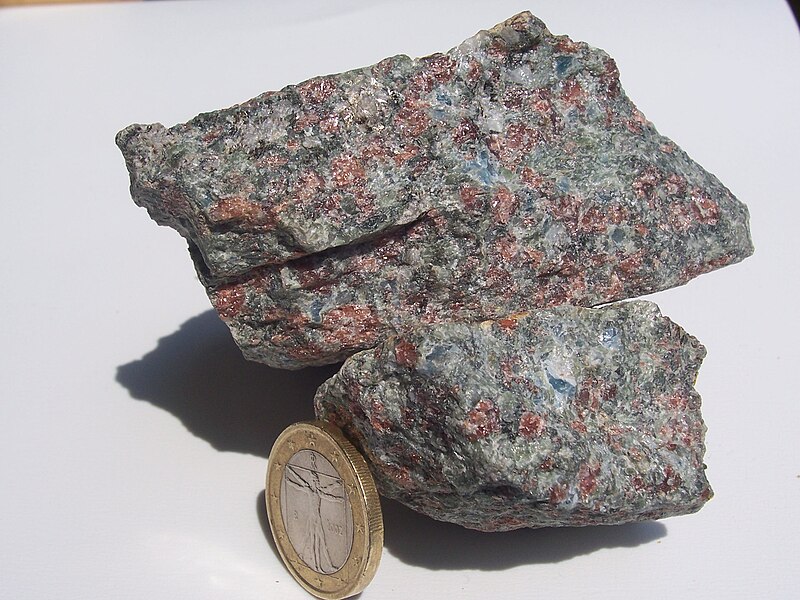

The discovery in the 1980s and 1990s of ultra-high-pressure (UHP) metamorphic rocks — rocks containing minerals that are stable only at the extreme pressures found at mantle depths — revolutionised understanding of the depth to which continental crust can be subducted and subsequently returned to the surface. The defining UHP indicator mineral is coesite, a high-pressure polymorph of silica (SiO2) that is stable only above approximately 2.5 to 3.0 gigapascals, corresponding to depths of 80 to 100 kilometres. The first unambiguous identification of coesite in a crustal metamorphic rock was made by David C. Smith in 1984 in eclogites from the Western Gneiss Region of Norway.7
Even more remarkable was the subsequent discovery of microdiamond inclusions in metamorphic rocks from the same Norwegian terrane and from the Kokchetav Massif of Kazakhstan. Because diamond is the stable form of carbon only at pressures exceeding approximately 4.0 to 4.5 gigapascals (depths greater than about 120 to 150 kilometres), these microdiamonds demonstrated that crustal rocks had been subducted to mantle depths far exceeding those previously thought recoverable and then exhumed back to the surface intact.8 The mechanism of exhumation of UHP rocks remains a subject of active research, but most models invoke buoyancy-driven return flow within subduction channels, whereby low-density continental material detaches from the descending slab and rises rapidly through the mantle wedge, sometimes at rates of centimetres per year.6
Ultra-high-pressure terranes have now been identified on every continent, from the Dabie-Sulu belt of eastern China to the Western Alps, the Caledonides of Norway, and the Bohemian Massif of central Europe. Their existence demonstrates that continental subduction to depths of 100 to 200 kilometres and subsequent exhumation is a recurring feature of plate tectonic collisions, not an anomalous rarity, and their mineral assemblages place quantitative constraints on the thermal structure and dynamics of deep subduction zones.6, 18
Metamorphism and plate tectonics
The distribution of metamorphic rocks across the Earth's surface is intimately linked to the geometry and history of plate tectonic processes. Different tectonic settings produce metamorphism at characteristically different ratios of temperature to pressure, and the metamorphic facies preserved in ancient terranes can be used to infer the tectonic environment in which they formed, even when the original plate configuration has been dismembered and dispersed by subsequent tectonic activity.17
At convergent margins, two contrasting metamorphic regimes operate simultaneously. In the subducting slab, cold oceanic crust and its veneer of sediment are carried to great depths at relatively low temperatures, producing high-pressure, low-temperature blueschist and eclogite facies assemblages. In the overriding plate, heat from the mantle wedge and from arc magmatism produces high-temperature, lower-pressure metamorphism in the greenschist through granulite facies. Miyashiro's recognition that these two contrasting metamorphic regimes occur as geographically paired belts — a high-pressure belt on the ocean side and a high-temperature belt on the continental side — provided one of the earliest independent confirmations of the plate tectonic theory from metamorphic evidence.17
At divergent margins and in extensional tectonic settings, thin crust and elevated heat flow produce high-temperature, low-pressure metamorphism. Oceanic metamorphism at mid-ocean ridges, driven by the circulation of hydrated seawater through hot basaltic crust, produces characteristic greenschist and amphibolite facies assemblages in the oceanic lithosphere. This hydrothermal metamorphism hydrates the oceanic crust, introducing the water that will later be released during subduction to trigger arc magmatism — a connection that links the metamorphic processes at spreading ridges to those at convergent margins in a global-scale volatile cycle.22
In continental collision zones, the extreme crustal thickening produced by the convergence of two continental plates buries rocks to depths of 30 to 70 kilometres, generating widespread high-grade regional metamorphism and, at the deepest levels, partial melting and migmatite formation. The Himalayan orogen, formed by the ongoing collision of the Indian and Eurasian plates, contains a spectacular record of progressive metamorphism from low-grade slates and phyllites in the Lesser Himalaya through amphibolite-facies schists and gneisses in the Greater Himalaya to granulite-facies rocks and migmatites at the deepest structural levels, all arranged in a systematic pattern that records the thermal and tectonic evolution of the collision over the past 50 million years.21
Metamorphism through deep time
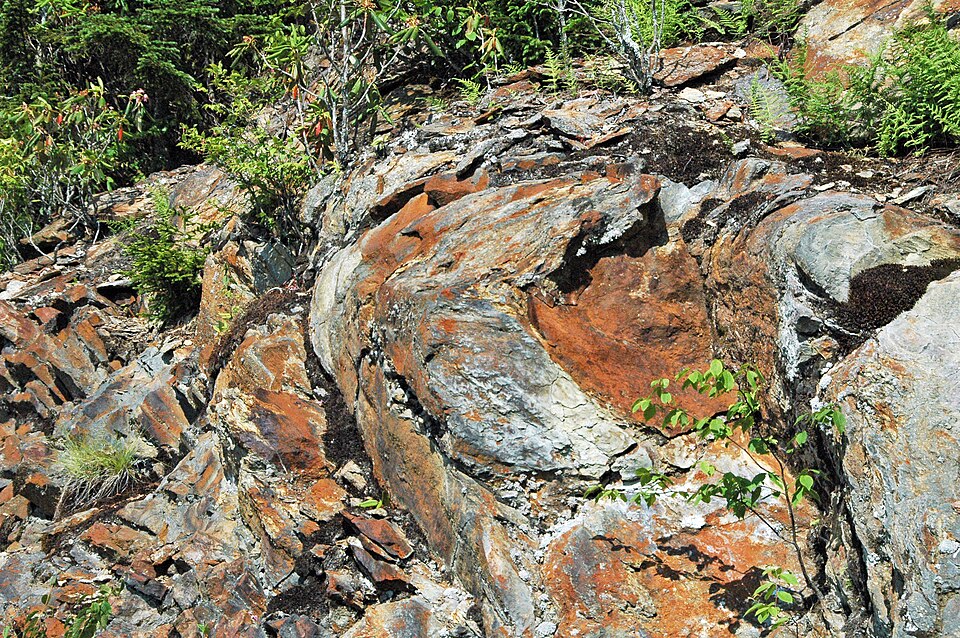
The character of metamorphism has changed over the course of Earth's 4.5-billion-year history, reflecting the secular evolution of mantle temperatures, tectonic style, and the thermal structure of the lithosphere. The oldest metamorphic rocks on Earth are found in the Archean cratons — the ancient, stable cores of the continents — where gneisses and granulites record metamorphic conditions that in many cases differ from those observed in modern orogenic belts.1, 15
_7.jpg)
Archean metamorphic terranes are dominated by high-temperature, low-to-moderate-pressure granulite facies assemblages, a pattern that has been interpreted as evidence for steeper geothermal gradients in the early Earth, when mantle heat production from the decay of radioactive elements was two to three times higher than today. The relative rarity of blueschist and eclogite facies rocks in the Archean geological record has been cited as evidence that modern-style cold subduction — in which oceanic lithosphere descends rapidly enough to maintain high-pressure, low-temperature conditions — may not have operated in the same way during the first one to two billion years of Earth history, although this interpretation remains debated.1, 6
The oldest known blueschist facies rocks date to the Neoproterozoic, approximately 700 to 800 million years ago, and eclogites with confirmed UHP indicators become more common in the Phanerozoic record. This temporal distribution has led some researchers to propose that the onset of cold, deep subduction — and by extension, the establishment of a plate tectonic regime broadly similar to that of the modern Earth — occurred during or shortly before the Neoproterozoic, perhaps in connection with the breakup of the supercontinent Rodinia. Others argue that the absence of older blueschists reflects preservation bias rather than a true absence of high-pressure metamorphism, since blueschist-facies minerals are metastable and readily overprinted during subsequent metamorphic events.6, 18
Regardless of these unresolved debates, the metamorphic rock record provides one of the most continuous and information-rich archives of Earth's thermal and tectonic evolution. From the granulite terranes of the Archean shields to the UHP eclogites exposed in the cores of young mountain belts, metamorphic rocks preserve a mineral record of the conditions that prevailed deep within the Earth at the time of their formation — conditions that are otherwise inaccessible to direct observation. Their study continues to illuminate the mechanisms by which the planet's interior and surface interact across the full span of geological time.1, 2
References
P-T-t paths from garnet zoning: a new technique for deciphering tectonic processes in crystalline terranes
The role of deformation on the formation of foliations and lineations in metamorphic rocks