Overview
- Hundreds of millions of years of animal suffering preceded the existence of human beings — predation, parasitism, disease, starvation, and death on a vast scale have been features of the biological world since the Cambrian explosion approximately 540 million years ago — and this suffering cannot be accommodated by theodicies that appeal to human free will, moral development, or punishment for sin.
- Paul Draper, Michael Murray, and others have argued that the sheer volume, duration, and apparent pointlessness of pre-human animal suffering constitutes a distinct evidential challenge to theism, because it is far more probable on the hypothesis of an indifferent universe than on the hypothesis of a benevolent creator who values the welfare of sentient creatures.
- Theistic responses include the claim that animals lack phenomenal consciousness and therefore do not truly suffer, the suggestion that animal pain may serve soul-making purposes for non-human beings, the appeal to unknown goods (skeptical theism), and the proposal that animal suffering results from the free agency of fallen angels — critics argue that each response either contradicts empirical evidence, multiplies entities beyond necessity, or concedes the force of the argument.
The problem of animal suffering is a variant of the problem of evil that focuses specifically on the pain experienced by non-human animals, particularly the vast quantities of suffering that preceded the emergence of human beings by hundreds of millions of years. Standard theodicies — the free will defense, the soul-making theodicy, and punishment-for-sin accounts — are crafted to explain human suffering and invoke distinctively human capacities: the ability to make morally significant choices, the capacity for spiritual growth, or culpability for moral transgression. Animals, at least in their vast majority, possess none of these capacities in the relevant senses, yet they suffer enormously. This creates what Michael Murray has called a “Darwinian problem of evil” — a challenge to theism that arises specifically from the biological world as described by evolutionary science.1, 5, 7
The problem is not new — Charles Darwin himself struggled with it — but it has received sustained philosophical attention only in recent decades, partly because of advances in our understanding of animal cognition and sentience, and partly because the evolutionary timeline reveals a scale of animal suffering that earlier generations could not have appreciated. The fossil record shows that predation, parasitism, disease, starvation, and mass extinction have been pervasive features of the biological world for more than 500 million years, long before any creature existed that could have sinned, exercised free will, or undergone moral development.1, 9, 14
The scope of animal suffering
The scale of animal suffering in evolutionary history is difficult to comprehend. The Cambrian explosion, approximately 540 million years ago, marks the rapid diversification of complex animal body plans, including the first appearance of sophisticated nervous systems, eyes, and predatory structures. From that point onward, the biological world has been characterized by what Darwin called the “war of nature” — a relentless process of predation, competition, parasitism, and death in which the vast majority of individual organisms that have ever lived died young, often violently or from disease and starvation, without reproducing.9, 14
The numbers involved are staggering. Biologists estimate that over 99% of all species that have ever existed are now extinct, most of them long before human beings appeared. Within any given species at any given time, the majority of individuals born die before reaching reproductive age. Among fish that practice broadcast spawning, mortality rates for eggs and larvae can exceed 99.99%. Among many insect species, only a tiny fraction of offspring survive to adulthood. The reproductive strategies of most animals produce vast surpluses of offspring precisely because the expected mortality rate is enormous — a pattern that natural selection favors but that results in an extraordinary quantity of individual suffering and death.1, 14
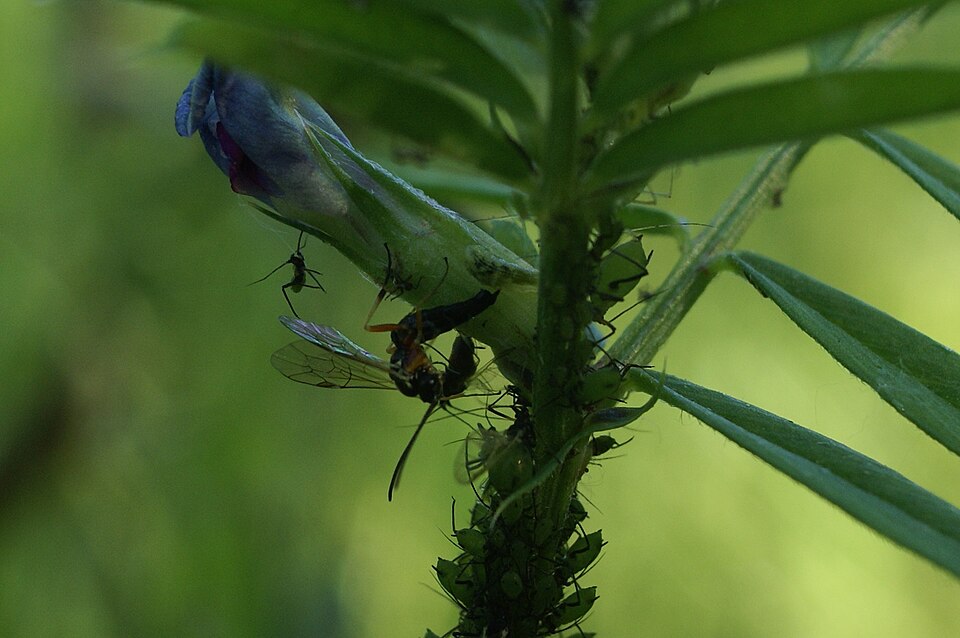

Parasitism constitutes a particularly vivid category of animal suffering. Parasitoid wasps of the family Ichneumonidae (the example Darwin himself cited in a famous letter to Asa Gray) lay their eggs inside living caterpillars; the larvae consume the host from the inside while it remains alive. The emerald cockroach wasp (Ampulex compressa) stings a cockroach in the brain, zombifying it and leading it to the wasp’s burrow, where its body serves as a living food source for the wasp’s larvae. These are not aberrant cases but representative examples of a parasitic strategy that is extraordinarily widespread: parasitism is the most common lifestyle among animal species, and parasites often inflict prolonged suffering on their hosts as a direct consequence of their life cycle.1, 9
Darwin recognized the theological implications of these observations. In an 1860 letter to Asa Gray, he wrote: “I cannot persuade myself that a beneficent and omnipotent God would have designedly created the Ichneumonidae with the express intention of their feeding within the living bodies of Caterpillars.” This is not merely an emotional reaction but the expression of a philosophical difficulty: if God designed the natural world, he designed a world in which suffering is not an incidental byproduct but a central mechanism of biological process.9, 14
Why standard theodicies fail
The free will defense, in its standard formulation, holds that God permits evil because the creation of beings with morally significant free will is a great good that requires the possibility of moral evil. Alvin Plantinga’s version of this defense has been widely regarded as successful against the logical problem of evil. However, it is difficult to extend the free will defense to animal suffering, because the animals that suffer — the Cambrian trilobites consumed by anomalocarids, the Mesozoic dinosaurs devoured by predators, the Cenozoic mammals dying of disease — are not moral agents, did not exercise free will, and are not the victims of any moral agent’s choices. Their suffering predates the existence of any creature that could plausibly be described as a free moral agent.1, 4, 5
The soul-making theodicy, associated with John Hick, holds that suffering provides the conditions for moral and spiritual growth — the development of virtues such as courage, compassion, patience, and faith. This theodicy requires that the sufferer be capable of moral and spiritual growth, a condition that most animals do not meet. A fawn dying in agony from a forest fire (William Rowe’s famous example) does not grow in courage or faith; it simply suffers and dies. The soul-making theodicy is, by design, an account of why human suffering is permitted by a good God; it has no obvious application to the suffering of beings that lack the cognitive capacities for moral development.1, 8, 12
Punishment-for-sin accounts, which trace suffering back to the fall of humanity and the resulting corruption of creation, face two difficulties. First, the vast majority of animal suffering occurred before any human being existed to sin. The Permian–Triassic extinction event, which killed approximately 90% of marine species roughly 252 million years ago, occurred more than 250 million years before the first Homo sapiens. It is difficult to see how the suffering involved in this event can be punishment for human sin. Second, the account appears to attribute the suffering of innocent creatures to the moral failures of a different species — a principle that most moral systems would regard as unjust.1, 7, 14
The evidential argument from animal suffering
Paul Draper’s comparative likelihood argument (1989), although formulated in terms of pain and pleasure generally, applies with particular force to animal suffering. Draper argued that the distribution of pain and pleasure in the biological world is much more probable on the “hypothesis of indifference” (HI) — the view that no omnipotent, omniscient being cares about the welfare of sentient creatures — than on theism. The connection between pain and biological function (pain as a fitness-enhancing signal), the existence of biologically gratuitous pain (chronic pain, pain in terminal conditions), and the vast scale of animal suffering across evolutionary history are all straightforwardly predicted by HI and poorly predicted by theism.2
Murray (2008) sharpened the specifically Darwinian version of the argument. He identified three features of evolutionary suffering that are particularly difficult for the theist to accommodate. First, the sheer duration: animal suffering has been occurring for over 500 million years, which is an extraordinarily long time for a benevolent God to permit suffering that serves no apparent purpose related to free will or moral development. Second, the intensity: many animals possess sophisticated nociceptive systems that produce genuine pain experiences, not mere reflex responses, and the suffering involved in predation, parasitism, and disease can be extreme. Third, the waste: the evolutionary process depends on the overproduction of offspring and the premature death of the vast majority, a mechanism that produces an enormous amount of suffering per unit of biological achievement.1
The argument can be stated formally:
P1. If theism is true, the probability that the natural world would contain hundreds of millions of years of intense animal suffering, serving no purpose related to free will, moral growth, or punishment, is low.
P2. If naturalism is true, the probability that the natural world would contain hundreds of millions of years of intense animal suffering is high (because natural selection operates by differential survival and reproduction, which inherently involves massive suffering and death).
P3. The natural world does contain hundreds of millions of years of intense animal suffering.
C. Therefore, the existence of extensive pre-human animal suffering constitutes significant evidence favoring naturalism over theism.
The argument is evidential, not logical: it does not claim that God and animal suffering are logically incompatible, only that the evidence of animal suffering shifts the probability balance away from theism and toward naturalism.1, 2, 11
The consciousness objection
One theistic response denies that animals suffer in the phenomenologically relevant sense. On this view, animals may have nociceptive responses (reflexive reactions to tissue damage) without possessing phenomenal consciousness — the subjective, felt quality of pain that makes suffering morally significant. If animals do not genuinely experience pain (if “there is nothing it is like” to be a wounded animal), then the problem of animal suffering dissolves: there is no suffering to explain.1, 6
Murray (2008) explored this response in detail, drawing on Peter Carruthers’s higher-order thought theory of consciousness, which holds that a mental state is conscious only if the organism is capable of forming higher-order representations of that state. On this view, organisms that lack the cognitive architecture for higher-order thought — plausibly, most non-mammalian animals — would have nociceptive responses without conscious pain experiences. Murray argued that this may substantially reduce the scope of the problem, though he acknowledged that it does not eliminate it entirely, since mammals and birds appear to possess the relevant cognitive architecture.1
However, the consciousness objection faces severe empirical challenges. The 2012 Cambridge Declaration on Consciousness, signed by a prominent group of neuroscientists, affirmed that “the weight of evidence indicates that humans are not unique in possessing the neurological substrates that generate consciousness” and that “non-human animals, including all mammals and birds, and many other creatures, including octopuses, also possess these neurological substrates.”16 Convergent evidence from neuroscience, comparative psychology, and behavioral ecology strongly supports the existence of phenomenal pain experience in a wide range of vertebrate species and at least some invertebrates. The nociceptive systems of mammals are homologous to those of humans, involving the same neurotransmitters, neural pathways, and brain regions. Animals display the same behavioral indicators of pain that humans do: vocalization, guarding of injured body parts, learned avoidance of pain-associated stimuli, self-administration of analgesics when available, and trade-offs between pain avoidance and other motivations. The denial of animal consciousness requires overriding a large body of convergent evidence and rests on a philosophical theory of consciousness (the higher-order thought theory) that is itself contested.1, 13, 16
The satanic hypothesis and other responses
Plantinga suggested, in God, Freedom, and Evil (1977) and elsewhere, that animal suffering might be the result of the free agency of non-human rational beings — fallen angels or demonic powers who have corrupted the natural world. On this hypothesis, the free will defense is extended from human moral evil to natural evil: animal suffering is not designed by God but is a consequence of the free choices of malevolent supernatural agents. This preserves the free will framework while accounting for pre-human suffering.4
The satanic hypothesis is almost universally regarded as an unsuccessful theodicy, even among theistic philosophers. It multiplies entities beyond necessity (introducing an additional class of supernatural beings to explain observations that the evidential argument handles parsimoniously), lacks independent motivation (the only reason to posit demonic corruption of the natural world is to solve the problem of animal suffering), and generates further difficulties (why would a good God permit powerful supernatural agents to inflict suffering on innocent animals for hundreds of millions of years?). Murray notes that the hypothesis may be logically possible but is not plausible enough to bear significant evidential weight.1, 10, 11
Christopher Southgate (2008) proposed a “compound evolutionary theodicy” in The Groaning of Creation. Southgate argued that an evolutionary process involving suffering and death may be the only way for God to bring about the kinds of creatures — with their particular beauties, complexities, and capacities — that actually exist. On this “only way” hypothesis, God does not gratuitously permit suffering; rather, the suffering inherent in evolution is a necessary cost of the goods that evolution produces. Southgate supplemented this with an eschatological dimension: God will ultimately redeem animal suffering by providing non-human creatures with some form of compensatory afterlife.17
Critics have questioned both elements of Southgate’s theodicy. The “only way” claim sits uneasily with divine omnipotence: if God is omnipotent, he could presumably create any species he wished by direct fiat, without requiring an evolutionary process that produces billions of years of suffering as a byproduct. The eschatological compensation claim raises its own difficulties: it is entirely speculative (no religious tradition provides detailed accounts of animal afterlives), and it is unclear how a future compensatory good can justify hundreds of millions of years of past suffering — especially for the trillions of individual animals who suffered and died without any connection to the goods that evolution eventually produced.7, 11
Skeptical theism and its costs
The default theistic response to arguments from evil — including the argument from animal suffering — is skeptical theism: the claim that human cognitive limitations prevent us from judging whether any particular instance of suffering is truly gratuitous. Applied to animal suffering, the skeptical theist holds that God may have morally sufficient reasons for permitting hundreds of millions of years of animal pain that are simply beyond human comprehension. We cannot survey the full range of possible goods that might justify such suffering, and our inability to identify such goods does not entail that they do not exist.9, 15
Skeptical theism has more difficulty with animal suffering than with human suffering, for two reasons. First, the sheer duration and scale of animal suffering intensify the challenge. It is one thing to claim that God has inscrutable reasons for permitting a specific instance of human suffering; it is another to claim that God has inscrutable reasons for permitting 500 million years of pervasive suffering across an entire biosphere, affecting trillions of individual sentient beings, none of whom possess the cognitive capacities that standard theodicies invoke. The inscrutable-goods hypothesis must account for a vastly larger body of data when extended to the evolutionary history of life on Earth.1, 7
Second, skeptical theism applied to animal suffering threatens to undermine theistic arguments from the natural world. If we cannot judge what a good God would do with respect to animal suffering, we equally cannot judge what a good God would do with respect to the order, beauty, and apparent design of nature. The fine-tuning argument and the argument from design in biology both rest on the claim that certain features of the natural world are what we would expect from a good and intelligent creator. Skeptical theism, applied consistently, undercuts the epistemic basis for these positive arguments as effectively as it undercuts the negative argument from animal suffering. The theist who invokes cognitive limitations to block the argument from animal suffering must also explain how those same cognitive limitations do not block arguments from design and fine-tuning.11, 15
The problem of animal suffering thus occupies a distinctive position in the landscape of the problem of evil. It targets the weakest point of standard theodicies (their reliance on distinctively human capacities), draws on robust empirical evidence (the evolutionary timeline, the neuroscience of animal pain), and resists the most common theistic responses (free will, soul-making, skeptical theism) more effectively than the human-centered versions of the problem. Whether it constitutes a decisive objection to theism or merely a significant evidential consideration depends on one’s assessment of the overall balance of evidence — but among philosophers who work on the problem of evil, there is broad agreement that animal suffering poses a formidable and underappreciated challenge to traditional theistic belief.1, 5, 7
References
Darwin, God and the Meaning of Life: How Evolutionary Theory Undermines Everything You Thought You Knew