Overview
- The earliest plausible evidence for life on Earth dates to approximately 3.7 billion years ago in the form of isotopically light carbon in metasedimentary rocks and possible stromatolites from the Isua greenstone belt of Greenland, with unambiguous microfossils and stromatolites well established by 3.5 to 3.4 billion years ago in Western Australia and South Africa.
- The Great Oxidation Event around 2.4 billion years ago, driven by cyanobacterial oxygenic photosynthesis, permanently transformed Earth's atmosphere and ocean chemistry, while the origin of eukaryotic cells through endosymbiosis opened the path toward complex multicellular life.
- The Ediacaran period (635 to 539 million years ago) witnessed the first large, macroscopic organisms in Earth's history, following the extreme Snowball Earth glaciations, and these soft-bodied communities set the ecological stage for the explosive diversification of animals in the Cambrian.
The Precambrian encompasses the vast majority of Earth's history, stretching from the planet's formation approximately 4.54 billion years ago to the beginning of the Cambrian period around 539 million years ago. This interval of nearly four billion years witnessed every foundational development in the history of life: the emergence of the first microorganisms, the invention of photosynthesis and the consequent transformation of the atmosphere, the origin of the eukaryotic cell through endosymbiosis, and the eventual appearance of the first large, complex multicellular organisms. Despite the immense span of Precambrian time, its fossil record is sparse and fragmentary compared with later eras, because most Precambrian organisms lacked hard shells or skeletons and the rocks that preserve them have often been deeply metamorphosed or destroyed by billions of years of tectonic recycling.17, 21
Understanding Precambrian life requires integrating multiple lines of evidence: isotopic signatures of biological carbon cycling, morphological fossils preserved in exceptional silicified or phosphatised sediments, molecular biomarkers extracted from ancient rocks, and the environmental context provided by geochemistry and sedimentology. Together, these lines of evidence reveal a world dominated by microbial life for more than three billion years before the first animals appeared in the Ediacaran period.5, 15
The earliest evidence for life
The question of when life first appeared on Earth remains one of the most actively debated topics in geobiology. The oldest putative evidence comes from the Isua greenstone belt in southwestern Greenland, where rocks dating to approximately 3.7 billion years ago contain structures interpreted as stromatolites — layered mounds built by the trapping and binding of sediment by microbial mats. These structures, reported in 2016, exhibit the conical and domical morphologies characteristic of biogenic stromatolites, although their interpretation has been contested by researchers who argue the features may be the product of non-biological processes such as hydrothermal precipitation or tectonic deformation.1
Additional claims for very early life include putative microfossils and chemical biosignatures in ferruginous sedimentary rocks from the Nuvvuagittuq belt in northern Quebec, which may be as old as 4.28 billion years. Tubular and filamentous structures composed of haematite in these rocks have been compared to the morphologies of modern iron-oxidising bacteria found at hydrothermal vents, though the antiquity and biogenicity of these structures remain subjects of vigorous debate.3
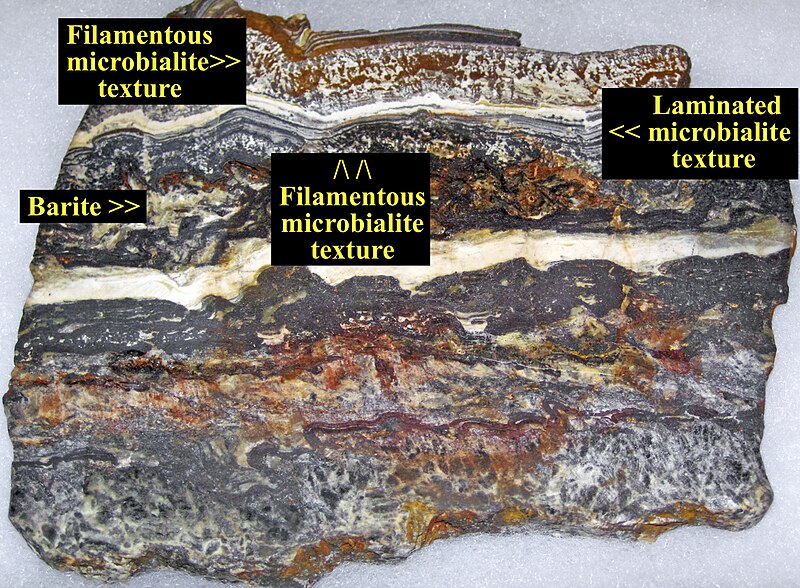
The evidence becomes substantially more robust by 3.5 to 3.4 billion years ago. The Strelley Pool Formation in the Pilbara region of Western Australia preserves laminated stromatolitic structures across a wide lateral extent, exhibiting morphological diversity and sedimentological context consistent with biological origin. These stromatolites grew in a shallow marine to intertidal setting, and their morphologies cannot be readily explained by purely abiotic processes.4 Contemporaneous rocks from the Strelley Pool and the nearby Dresser Formation also contain microfossils and sulfur isotope signatures consistent with active microbial sulfur metabolism.19 In the Barberton greenstone belt of South Africa, rocks of similar age (approximately 3.4 billion years) preserve cellular microfossils associated with pyrite, interpreted as the remains of sulfur-metabolising microorganisms.2
These earliest communities appear to have been chemotrophic — organisms that derived energy from chemical reactions rather than sunlight. Sulfur isotope analyses of Archaean sediments indicate that microbial sulfur cycling, including the disproportionation of elemental sulfur, was already operating by 3.5 billion years ago, well before the advent of oxygenic photosynthesis.19
Stromatolites and the rise of photosynthesis
Stromatolites — laminated sedimentary structures produced by the growth of microbial mats, primarily cyanobacteria — are among the most iconic fossils of the Precambrian. They become increasingly abundant and morphologically diverse in the geological record from about 3.5 billion years ago through the late Archaean and into the Proterozoic, reaching their greatest diversity and abundance between approximately 2.0 and 1.0 billion years ago before declining in the Neoproterozoic, possibly due to grazing by newly evolved eukaryotic organisms.4, 17
_3_(47011415774).jpg)
The proliferation of stromatolites is intimately linked to the evolution of photosynthesis. Anoxygenic photosynthesis, which uses reductants such as hydrogen sulfide or ferrous iron rather than water and does not produce oxygen, likely evolved first and may have been present by 3.5 billion years ago. Oxygenic photosynthesis, the water-splitting reaction performed by cyanobacteria that releases molecular oxygen as a byproduct, represents one of the most consequential metabolic innovations in the history of life. Geochemical evidence suggests that cyanobacteria capable of oxygenic photosynthesis had evolved by at least 2.7 to 2.5 billion years ago, though some researchers argue for an even earlier origin based on trace-metal enrichments and molybdenum isotope data in Mesoarchaean sediments.5, 7
For several hundred million years after the evolution of oxygenic photosynthesis, the oxygen produced was consumed by reactions with reduced substances in the ocean and atmosphere — dissolved ferrous iron, volcanic gases, and reduced minerals on the continents. Only after these oxygen sinks were substantially exhausted could free oxygen begin to accumulate in the atmosphere, setting the stage for the Great Oxidation Event.5, 6
The Great Oxidation Event
The Great Oxidation Event (GOE) refers to the first sustained rise of molecular oxygen in Earth's atmosphere, which occurred approximately 2.4 to 2.3 billion years ago during the early Paleoproterozoic. Before this transition, the atmosphere was essentially anoxic, containing less than 0.001 percent of present atmospheric oxygen levels. The most compelling evidence for the timing of the GOE comes from the record of mass-independent fractionation (MIF) of sulfur isotopes in sedimentary rocks. MIF-S signals, which are produced by photochemical reactions of sulfur-bearing gases in an oxygen-free atmosphere and preserved in sedimentary sulfides and sulfates, are ubiquitous in rocks older than about 2.4 billion years but disappear abruptly from the record after that date. This disappearance indicates that atmospheric oxygen rose to levels sufficient to generate an ozone layer, which blocked the ultraviolet radiation responsible for the photochemical MIF reactions.22, 6
The GOE had profound and far-reaching consequences for the Earth system. The oxidation of atmospheric methane, a potent greenhouse gas that had helped maintain warm surface temperatures under the faint young Sun, may have triggered the Huronian glaciation, one of the earliest and most severe ice ages in Earth's history, lasting from roughly 2.4 to 2.1 billion years ago.6 The presence of free oxygen also enabled the oxidative weathering of continental sulfide minerals, releasing sulfate into the oceans and fundamentally altering marine chemistry. New metabolic pathways dependent on molecular oxygen, including aerobic respiration, became possible, providing organisms with a far more efficient means of extracting energy from organic compounds.5
Despite the GOE, oxygen levels in the mid-Proterozoic atmosphere remained far below modern values. Geochemical proxy data suggest that atmospheric oxygen may have remained at only a few percent of present levels for more than a billion years after the GOE, a prolonged interval of relatively low but non-zero oxygenation that had significant implications for the pace of biological evolution.5, 11
The origin of eukaryotic cells
The evolution of the eukaryotic cell — characterised by a membrane-bound nucleus, an endomembrane system, a dynamic cytoskeleton, and organelles including mitochondria and (in photosynthetic lineages) chloroplasts — represents one of the most transformative transitions in the history of life. Eukaryotes differ from prokaryotes (bacteria and archaea) not merely in cellular complexity but in their capacity for large cell size, phagocytosis, sexual reproduction, and ultimately complex multicellularity.8
The endosymbiotic origin of mitochondria is now supported by overwhelming molecular, genomic, and cell-biological evidence. Mitochondria descended from an alpha-proteobacterial ancestor that was engulfed by, or entered into a symbiotic relationship with, an archaeal host cell. Over evolutionary time, the majority of the endosymbiont's genes were transferred to the host nucleus, leaving the mitochondrion with a reduced genome encoding only a small fraction of its proteins. A similar endosymbiotic event, involving the capture of a cyanobacterium, later gave rise to chloroplasts in the lineage leading to plants and algae.18
The timing of eukaryogenesis is constrained by both the fossil and molecular records. Acritarchs — organic-walled microfossils of uncertain affinity but generally accepted as eukaryotic — appear in the geological record by about 1.8 to 1.6 billion years ago. The oldest widely accepted fossil of a morphologically complex, taxonomically identifiable eukaryote is Bangiomorpha pubescens, a multicellular red alga from the Hunting Formation of Arctic Canada, dated to approximately 1.05 billion years ago (though some estimates place it closer to 1.2 billion years). Bangiomorpha is significant not only as an early eukaryote but as the oldest known sexually reproducing organism, based on the presence of distinct reproductive cell types analogous to those in modern bangiophyte red algae.9
The acquisition of mitochondria was almost certainly a prerequisite for the evolution of large, energetically demanding eukaryotic cells. Aerobic respiration in mitochondria generates far more ATP per glucose molecule than anaerobic metabolism, and this energy surplus may have been necessary to support the large genomes, complex gene regulation, and elaborate cellular architecture that distinguish eukaryotes from prokaryotes.8
The "boring billion"
The interval from approximately 1.8 to 0.8 billion years ago, spanning much of the Mesoproterozoic and early Neoproterozoic, has been informally dubbed the "boring billion" because of the apparent stability of Earth's climate, ocean chemistry, and biological evolution during this period. Compared with the dramatic changes that preceded it (the GOE, the Huronian glaciation) and followed it (Snowball Earth glaciations, the rise of animals), the boring billion appears as a long plateau of relative quiescence.10
During this interval, atmospheric oxygen levels remained low — recent chromium isotope studies suggest they may have been as low as 0.1 percent of present atmospheric levels, far lower than previously estimated. The deep oceans were likely anoxic and in many settings rich in dissolved ferrous iron (ferruginous) or hydrogen sulfide (euxinic), conditions that would have severely limited the availability of essential trace metals such as molybdenum and copper to marine organisms and constrained biological productivity.11
The causes of this prolonged environmental stasis are debated. Hypotheses include a negative feedback between low oxygen, limited phosphorus weathering, and reduced biological productivity that maintained the Earth system in a stable, low-energy state; tectonic quiescence that reduced the supply of nutrients from continental weathering; and the absence of biological innovations capable of disrupting the prevailing geochemical equilibrium.10, 11 Whatever the cause, the boring billion ended decisively in the Neoproterozoic, when a cascade of environmental and biological changes — including renewed oxygenation, extreme glaciations, and the evolution of complex multicellular life — shattered the long equilibrium.23
Estimated atmospheric oxygen levels through the Precambrian5, 11, 23
Snowball Earth glaciations
The Neoproterozoic era (1.0 to 0.539 billion years ago) was punctuated by at least two, and possibly three, episodes of extreme glaciation during which ice sheets may have extended from the poles to the equator, covering the entire planet in a condition known as Snowball Earth. The two best-documented events are the Sturtian glaciation (approximately 717 to 660 million years ago) and the Marinoan glaciation (approximately 650 to 635 million years ago). A possible third glaciation, the Gaskiers event (approximately 580 million years ago), was less severe and more geographically restricted.12, 13
The Snowball Earth hypothesis, as developed by Paul Hoffman and Daniel Schrag building on earlier work by Joseph Kirschvink, proposes that a runaway ice-albedo feedback drove global glaciation. As ice sheets advanced to low latitudes, the planet's reflectivity increased, causing further cooling and ice advance in a positive feedback loop. Evidence supporting near-total ice cover includes the presence of glacial deposits — diamictites, dropstones, striated pavements — in rocks that paleomagnetic data indicate were deposited at tropical latitudes, as well as distinctive cap carbonates: thick sequences of carbonate rock deposited directly atop glacial deposits, interpreted as the product of rapid carbonate precipitation in warm, CO2-rich surface waters following the termination of the glaciation.13
Escape from the Snowball state is thought to have occurred through the gradual accumulation of volcanic CO2 in the atmosphere over millions of years. Because silicate weathering, the primary long-term sink for atmospheric CO2, was suppressed by ice cover over the continents, volcanic outgassing led to an extreme greenhouse effect that eventually overwhelmed the ice-albedo feedback and triggered rapid deglaciation. The resulting environmental whiplash — from extreme cold to extreme warmth — would have caused intense chemical weathering of newly exposed continental rock, delivering a pulse of nutrients to the oceans.12, 13
The biological consequences of the Snowball Earth glaciations are a subject of intense research. Photosynthetic organisms must have survived the glacial episodes, probably in refugia such as ice-free volcanic hotspots, thin ice margins, or meltwater ponds on the glacial surface. The post-Snowball nutrient pulse and the associated rise in oceanic oxygen levels have been proposed as a trigger for the subsequent radiation of complex eukaryotic life, including the Ediacaran biota.12, 23
Neoproterozoic oxygenation
Following the Snowball Earth glaciations, the Neoproterozoic witnessed a second major rise in atmospheric and oceanic oxygen levels, sometimes called the Neoproterozoic Oxygenation Event (NOE). While less sharply defined than the GOE, geochemical evidence from multiple proxies — including iron speciation, trace metal abundances, sulfur isotopes, and cerium anomalies — indicates that oxygen levels in both the atmosphere and the deep ocean increased substantially between approximately 800 and 540 million years ago.23
The causes of Neoproterozoic oxygenation are debated but likely involved a combination of factors. Enhanced nutrient delivery from intensified continental weathering following the Snowball Earth events may have stimulated primary productivity and the burial of organic carbon, which removes reduced carbon from the surface environment and allows oxygen to accumulate. The evolution of larger eukaryotic algae with faster sinking rates may have increased the efficiency of organic carbon export to the deep ocean, further enhancing oxygen accumulation. The breakup of the supercontinent Rodinia, which increased the total length of continental margins and shallow marine shelf area, may also have contributed by expanding the habitats available for photosynthetic organisms.5, 23
The rise in oxygen was almost certainly a prerequisite for the evolution of large, metabolically active animals. Aerobic metabolism is required for organisms above a certain size threshold because oxygen diffusion alone cannot supply the metabolic needs of thick tissues without a circulatory system, and even organisms with circulatory systems require ambient oxygen concentrations above a minimum threshold. The temporal coincidence between Neoproterozoic oxygenation and the appearance of the first macroscopic animals in the Ediacaran strongly suggests a causal link, though the precise oxygen thresholds required for different animal body plans remain a subject of ongoing investigation.17, 23
The Ediacaran biota
The Ediacaran period (635 to 539 million years ago), the terminal period of the Proterozoic, witnessed the first appearance of large, macroscopic, morphologically complex organisms in the fossil record. The Ediacaran biota, named after the Ediacara Hills of South Australia where many of the first specimens were discovered in the 1940s and 1950s, represent a globally distributed assemblage of soft-bodied organisms preserved as impressions and casts in sandstone and siltstone. They are found on every continent except Antarctica and span a range of depositional environments from deep marine slopes to shallow coastal settings.15
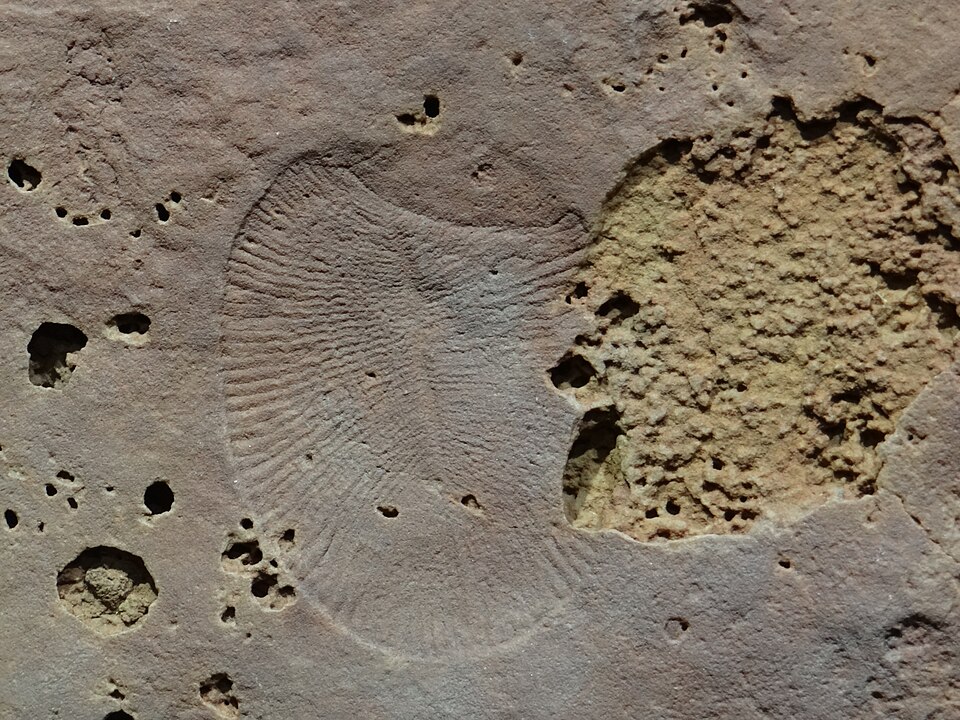

The taxonomic affinities of many Ediacaran organisms remain deeply uncertain. Some, such as the frond-like rangeomorphs (e.g., Charnia, Rangea), display a fractal branching architecture unlike any living organism and have been interpreted variously as colonial organisms, giant protists, fungi, or members of an extinct kingdom of life (the "Vendobionta" concept proposed by Adolf Seilacher). The quilted, air-mattress-like body plans of many Ediacaran organisms have no obvious counterparts in the modern biota.14, 15
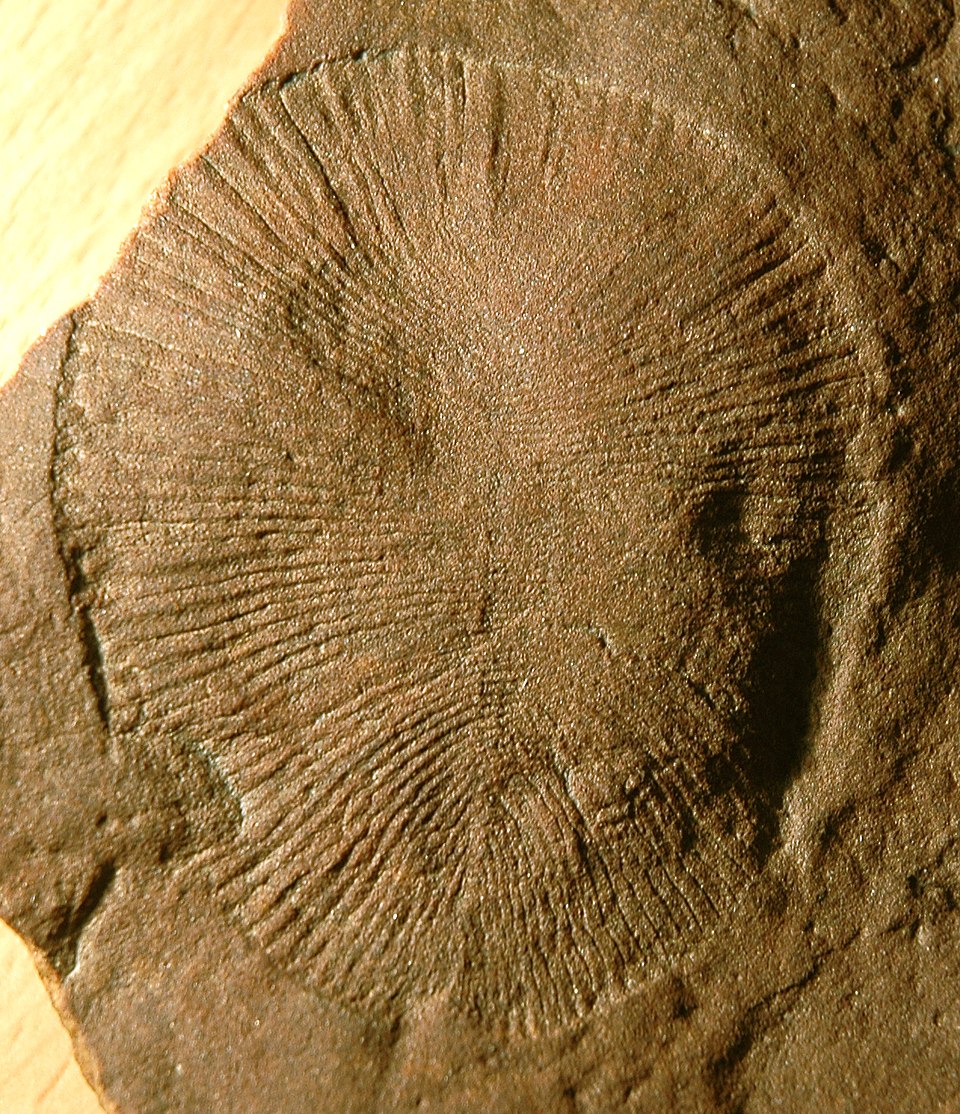
Other Ediacaran organisms have been more convincingly linked to modern animal phyla. Dickinsonia, a flat, ribbed, ovoid organism that grew up to 1.4 metres in length, was long of uncertain affinity, but the discovery of cholesterol-like steroid biomarkers (cholesteroids) in organic films associated with Dickinsonia fossils in 2018 provided strong evidence that it was an animal, as cholesteroids are produced almost exclusively by animals. This finding represents some of the oldest direct molecular evidence for animal life.20 Kimberella, a bilaterally symmetrical organism associated with scratch marks interpreted as feeding traces, has been compared to molluscs, though its exact phylogenetic position remains debated.15
The Ediacaran biota appear in the fossil record in a roughly successive pattern. The oldest assemblages, dating to approximately 575 to 560 million years ago (the Avalon assemblage), are dominated by rangeomorphs preserved on deep-water surfaces in Newfoundland and England. Younger assemblages from the White Sea region of Russia (560 to 550 million years ago) and South Australia (555 to 550 million years ago) include a wider variety of forms, including mobile bilaterians. The youngest Ediacaran assemblages, from the Nama Group of Namibia (550 to 539 million years ago), include the first skeletal organisms — small tubular fossils such as Cloudina and Namacalathus — alongside a diminished diversity of soft-bodied forms.15, 16
Prelude to the Cambrian explosion
The transition from the Ediacaran to the Cambrian represents one of the most dramatic biological turnovers in Earth's history. Most of the distinctive Ediacaran organisms disappear from the fossil record before the base of the Cambrian, in what has been described as the first mass extinction of complex life, though whether their disappearance reflects true extinction, a change in preservation conditions, or ecological displacement by newly evolving animals remains debated.16
_(Ediacara_Member,_Rawnsley_Quartzite,_near-uppermost_Neoproterozoic;_Flinders_Ranges,_South_Australia)_1_(15018192227).jpg)
Several developments in the latest Ediacaran and earliest Cambrian set the stage for the explosive diversification of animal body plans that defines the Cambrian explosion. The evolution of biomineralisation — the ability to produce hard skeletal elements from calcium carbonate, calcium phosphate, or silica — appears in the fossil record in the latest Ediacaran with organisms like Cloudina, which also shows the earliest known evidence of predatory boring. The advent of predation has been proposed as a key ecological driver of the Cambrian explosion, initiating an evolutionary arms race that favoured the development of hard shells, spines, eyes, and other defensive and sensory innovations.15, 17
The rise of burrowing organisms in the latest Ediacaran and earliest Cambrian, evidenced by increasingly complex trace fossils, fundamentally altered seafloor ecology. The Precambrian seafloor was largely covered by microbial mats (the "matground" ecosystem), and the evolution of animals capable of burrowing into the substrate disrupted this mat-dominated world, oxygenating the shallow subsurface and mixing sediment in a process termed the "agronomic revolution" or "Cambrian substrate revolution." This bioturbation destroyed the preservational conditions that had favoured the fossilisation of Ediacaran organisms as impressions on mat-stabilised surfaces, which may partly explain their disappearance from the record.17
The Precambrian thus established every prerequisite for the Cambrian radiation: an oxygenated atmosphere and ocean capable of supporting metabolically active animals, the eukaryotic cell with its capacity for complex multicellularity and developmental gene regulation, a biosphere that had been tested and reshaped by extreme environmental perturbations, and the first experiments in large body size, animal-grade organisation, and ecological interaction. The four billion years of Precambrian life were not merely a prelude but the indispensable foundation upon which all subsequent biological diversity was built.5, 17, 21
References
Rapid emergence of life shown by discovery of 3,700-million-year-old microbial structures
Microfossils of sulphur-metabolizing cells in 3.4-billion-year-old rocks of Western Australia
Bangiomorpha pubescens n. gen., n. sp.: implications for the evolution of sex, multicellularity, and the Mesoproterozoic/Neoproterozoic radiation of eukaryotes
Two-phase increase in the maximum size of life over 3.5 billion years reflects biological innovation and environmental opportunity
Mass-independent fractionation of sulfur isotopes in Archean sediments: strong evidence for an anoxic Archean atmosphere