Overview
- Multi-messenger astronomy combines four cosmic messengers—electromagnetic radiation, gravitational waves, neutrinos, and cosmic rays—to study astrophysical phenomena that no single channel can fully reveal, with its foundations laid by the detection of 24 neutrinos from supernova SN 1987A on February 23, 1987.
- The field's modern era began on August 17, 2017, when the LIGO-Virgo gravitational-wave detection of the binary neutron star merger GW170817 was followed 1.7 seconds later by a gamma-ray burst and then observed by more than 70 electromagnetic facilities, confirming neutron star mergers as sites of r-process nucleosynthesis and enabling the first standard-siren measurement of the Hubble constant at 70.0 km/s/Mpc.
- Subsequent milestones include the 2017 IceCube neutrino association with the flaring blazar TXS 0506+056, the 2022 detection of neutrino emission from the Seyfert galaxy NGC 1068 at 4.2σ significance, and the 2023 NANOGrav evidence for a nanohertz gravitational-wave background from supermassive black hole binaries, while future facilities such as LISA, the Einstein Telescope, and Cosmic Explorer promise to extend multi-messenger observations across the entire observable universe.
For most of its history, astronomy was a single-channel science: virtually everything known about the universe beyond the solar system came from collecting photons—light in all its wavelengths, from radio waves to gamma rays. Multi-messenger astronomy is the practice of observing the same astrophysical source or event through two or more fundamentally different carriers of information: electromagnetic radiation, gravitational waves, neutrinos, and cosmic rays. Each messenger probes different physical conditions and escapes from different environments, so combining them yields a picture far richer than any one channel alone can provide.14, 15
The concept emerged gradually over the twentieth century, but the field coalesced into a recognized discipline through a series of landmark observations. The detection of neutrinos from supernova SN 1987A offered the first glimpse of a cosmic event in a non-photon channel. The direct detection of gravitational waves in 2015 opened an entirely new observational window on the universe. And the joint gravitational-wave and electromagnetic observation of a binary neutron star merger in 2017, followed within months by the association of a high-energy neutrino with a flaring blazar, demonstrated the transformative power of combining messengers in practice.1, 5, 10, 16
The four messengers
The four cosmic messengers differ fundamentally in how they are generated, how they interact with matter, and what they reveal about their sources.

Electromagnetic radiation—photons spanning from radio frequencies through microwaves, infrared, visible, ultraviolet, X-rays, and gamma rays—remains the most versatile and information-rich messenger. Photons are produced by a wide variety of physical processes including thermal emission, synchrotron radiation, inverse Compton scattering, and nuclear transitions, and they can be focused, spectrally resolved, and imaged with exquisite precision. However, photons interact strongly with matter: they are absorbed by dust, scattered by plasma, and blocked entirely by opaque environments such as the cores of collapsing stars or the interiors of accretion disks.14
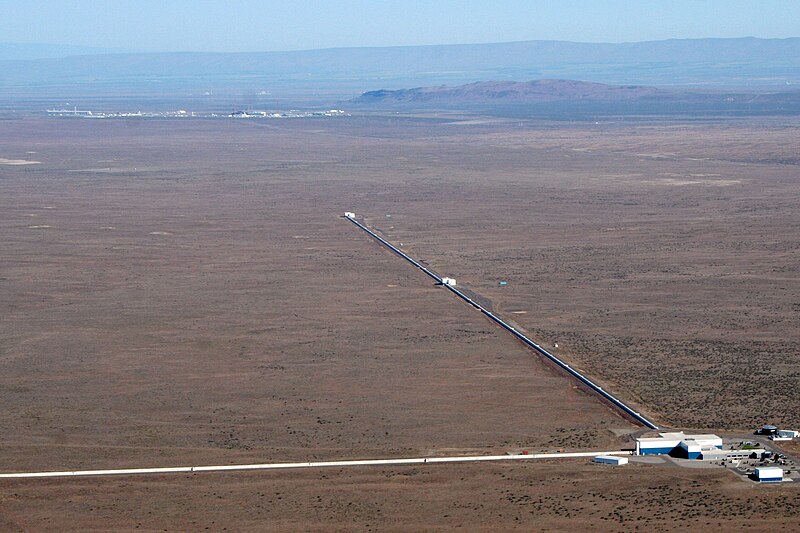
Gravitational waves are ripples in the fabric of spacetime produced by the acceleration of massive objects, predicted by Einstein's general relativity and first directly detected on September 14, 2015, by the twin LIGO interferometers observing the merger of two black holes.16 Unlike photons, gravitational waves pass through matter essentially unimpeded, carrying information about the bulk dynamics of their sources—the orbital motion, masses, spins, and orientations of merging compact objects. They are emitted most strongly by systems involving neutron stars and black holes, where the gravitational field is strongest and changes most rapidly. Their weakness of interaction, however, makes them extraordinarily difficult to detect, requiring interferometers sensitive to length changes smaller than one-thousandth the diameter of a proton.16, 19
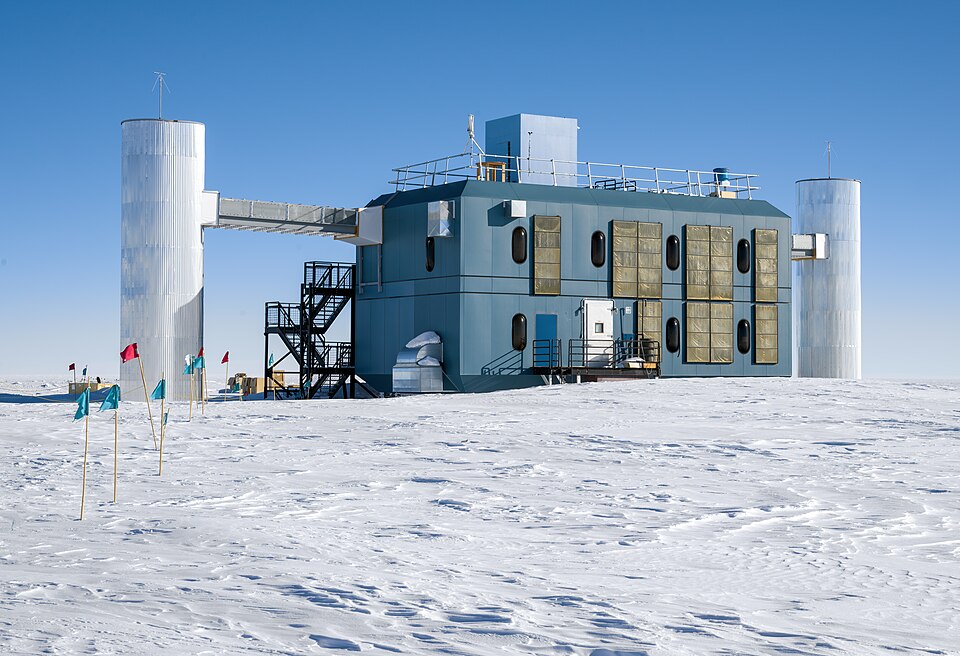
Neutrinos are nearly massless, electrically neutral particles produced in nuclear reactions inside stars, supernovae, active galactic nuclei, and other high-energy environments. Like gravitational waves, neutrinos interact only weakly with matter, allowing them to escape from the dense cores of collapsing stars where photons are trapped. Their detection, however, requires massive instrumented volumes—kilotonnes of water or ice—because only a tiny fraction of the neutrinos passing through a detector interact with its target material. The IceCube Neutrino Observatory at the South Pole, encompassing one cubic kilometer of Antarctic ice instrumented with over 5,000 optical sensors, is the world's largest neutrino telescope.10, 14
Cosmic rays are high-energy charged particles—predominantly protons and atomic nuclei—that arrive at Earth from astrophysical sources throughout the Galaxy and beyond. The highest-energy cosmic rays carry energies exceeding 1020 electronvolts, far surpassing anything achievable in terrestrial particle accelerators. Because cosmic rays are charged, their trajectories are deflected by galactic and extragalactic magnetic fields, which scrambles their arrival directions and makes it difficult to trace them back to individual sources. Nonetheless, the most energetic cosmic rays retain enough directional information to constrain the population of sources, and their composition and energy spectrum encode information about the acceleration mechanisms at work in the most extreme astrophysical environments.14, 15
SN 1987A: the birth of neutrino astronomy
The first multi-messenger astronomical observation occurred on February 23, 1987, when a burst of neutrinos from supernova SN 1987A in the Large Magellanic Cloud—a satellite galaxy of the Milky Way at a distance of approximately 51.4 kiloparsecs—was detected by three independent neutrino observatories approximately two to three hours before the supernova's visible light reached Earth.1, 2, 3
.jpg)
.jpg)
The Kamiokande-II detector in Japan, a 2,140-tonne water Cherenkov detector located 1,000 meters underground in the Kamioka zinc mine, recorded 12 electron antineutrino events in a 13-second burst beginning at 07:35:35 UTC.1 The Irvine-Michigan-Brookhaven (IMB) detector, a 6,800-tonne water Cherenkov facility in a salt mine near Cleveland, Ohio, independently detected 8 antineutrino events in approximately the same time window.2 The Baksan Neutrino Observatory in the Caucasus Mountains of the Soviet Union recorded 5 additional events.3 The combined 25 neutrinos, arriving hours before the optical brightening, confirmed a cornerstone prediction of stellar collapse theory: that roughly 99 percent of the gravitational binding energy released in a core-collapse supernova—approximately 3 × 1046 joules—is carried away by neutrinos, with only about one percent going into the kinetic energy of the explosion and an even smaller fraction into photons.1, 2
The neutrino detection from SN 1987A provided the first direct observational evidence for the physical mechanism of core-collapse supernovae and established upper limits on the electron antineutrino mass, charge, and magnetic moment. The fact that the neutrinos arrived hours before the optical signal demonstrated their ability to escape the collapsing stellar core long before photons could diffuse outward through the expanding debris, illustrating the core principle of multi-messenger astronomy: different messengers carry complementary information from physically distinct regions of the same event.1, 14
GW170817: the dawn of gravitational-wave multi-messenger astronomy
The event that transformed multi-messenger astronomy from a concept into a practiced discipline occurred on August 17, 2017. At 12:41:04 UTC, the Advanced LIGO detectors at Hanford, Washington and Livingston, Louisiana, together with the Advanced Virgo detector near Pisa, Italy, recorded a gravitational-wave signal from the inspiral and merger of two neutron stars at a luminosity distance of approximately 40 megaparsecs in the elliptical galaxy NGC 4993. Designated GW170817, the signal swept through the detectors' sensitive band for approximately 100 seconds with a combined signal-to-noise ratio of 32.4—the loudest gravitational-wave event observed to that date.4 The component masses were measured at 1.17 to 1.60 solar masses, placing both objects firmly in the neutron star range and distinguishing the event from the binary black hole mergers that had constituted all previous gravitational-wave detections.21

Just 1.74 seconds after the estimated merger time, the Fermi Gamma-ray Burst Monitor detected a short gamma-ray burst, GRB 170817A, independently confirmed by the INTEGRAL spacecraft.6 This near-simultaneous detection established that binary neutron star mergers produce short gamma-ray bursts, resolving a question that had been debated for decades. The 1.7-second delay between the gravitational-wave and gamma-ray signals constrained the difference between the speed of gravity and the speed of light to less than a few parts in 1015, providing one of the most stringent tests of general relativity ever performed.5, 6
The gravitational-wave sky localization, refined to approximately 28 square degrees by the three-detector network, triggered a worldwide electromagnetic follow-up campaign of unprecedented scale. Within 11 hours, the Swope Telescope at Las Campanas Observatory identified an optical transient, SSS17a (later AT 2017gfo), in NGC 4993.9 Over the following weeks, more than 70 observatories on all seven continents and in space observed the transient across the full electromagnetic spectrum, from radio to X-ray wavelengths, making GW170817 the most thoroughly observed astronomical transient in history.5
The optical and infrared evolution of AT 2017gfo displayed the hallmarks of a kilonova—a thermal transient powered by the radioactive decay of freshly synthesized r-process elements in the neutron-rich merger ejecta, as predicted by Metzger and collaborators in 2010.20 The early blue emission gave way within days to a red, infrared-dominated phase, consistent with models of lanthanide-rich r-process ejecta with an estimated total mass of 0.03 to 0.05 solar masses.8 These observations provided the most direct evidence that neutron star mergers are a major site of heavy element nucleosynthesis in the universe.
Multi-messenger observations of GW1708174, 5, 6, 9
| Time after merger | Messenger / band | Detector(s) | Key result |
|---|---|---|---|
| 0 s | Gravitational waves | LIGO Hanford, Livingston; Virgo | 100-second chirp, SNR 32.4, chirp mass 1.188 M⊙ |
| +1.7 s | Gamma rays | Fermi GBM, INTEGRAL SPI-ACS | Short GRB 170817A; speed of gravity = speed of light to 10−15 |
| +10.9 hr | Optical (i-band) | Swope 1-m Telescope | Discovery of SSS17a / AT 2017gfo in NGC 4993 |
| +1–4 d | Near-infrared | Gemini-South, VLT, HST | Red kilonova; lanthanide-rich ejecta (~0.04 M⊙) |
| +9 d | X-ray | Chandra | Rising off-axis jet afterglow |
| +16 d | Radio (3 GHz) | Karl G. Jansky VLA | Structured relativistic jet confirmed |
Standard sirens and the Hubble constant
One of the most consequential results of multi-messenger astronomy has been the development of standard sirens—the gravitational-wave analog of the standard candles used in electromagnetic cosmology. A compact binary merger emitting gravitational waves encodes its luminosity distance directly in the amplitude of the observed waveform, without requiring any intermediate calibration steps or distance ladder. When the host galaxy can be identified through electromagnetic follow-up, providing a redshift measurement, the combination yields an independent determination of the Hubble constant, H0, the present-day expansion rate of the universe.7
GW170817 provided the first standard-siren measurement of H0. The gravitational-wave data yielded a luminosity distance of 40+8−14 megaparsecs, and the identification of the host galaxy NGC 4993 provided a recession velocity corrected for peculiar motion. The resulting Hubble constant was 70.0+12.0−8.0 km/s/Mpc, consistent with values obtained from both the cosmic microwave background (67.4 km/s/Mpc from Planck) and the local distance ladder (73.0 km/s/Mpc from SH0ES), though with uncertainties too large to distinguish between them.7
The significance of this measurement lies not in its precision—which was limited by having only a single event—but in its complete independence from all electromagnetic distance calibrations. The standard-siren method bypasses the entire chain of distance indicators (Cepheids, Type Ia supernovae, tip of the red giant branch) that underlies electromagnetic H0 measurements, offering a clean path to resolving the Hubble tension, the persistent 4–6σ discrepancy between early-universe and late-universe determinations of the expansion rate. Projections indicate that a sample of approximately 50 binary neutron star mergers with identified host galaxies could measure H0 to 2 percent precision, and next-generation detectors could push this to sub-percent accuracy.7, 17, 22
High-energy neutrino sources
While GW170817 demonstrated the power of combining gravitational waves with electromagnetic radiation, a parallel line of multi-messenger investigation has linked high-energy neutrinos to specific astrophysical sources for the first time. On September 22, 2017—barely a month after the neutron star merger—the IceCube Neutrino Observatory at the South Pole detected a muon neutrino with an energy of approximately 290 teraelectronvolts (TeV), designated IceCube-170922A. Within one minute of the detection, IceCube issued an automated alert to observatories worldwide, and follow-up observations revealed that the neutrino's arrival direction was consistent with the position of TXS 0506+056, a known blazar—a type of active galactic nucleus whose relativistic jet is oriented toward Earth—that was simultaneously in a state of enhanced gamma-ray emission as observed by the Fermi Large Area Telescope.10
The probability of a chance coincidence between a high-energy neutrino and a flaring gamma-ray blazar at that position was estimated at approximately 3σ. Critically, a subsequent archival search of IceCube data revealed an independent excess of 13 ± 5 high-energy neutrinos from the same direction between September 2014 and March 2015, constituting 3.5σ evidence for neutrino emission from TXS 0506+056 independent of and prior to the 2017 flaring episode.11 Taken together, these results identified TXS 0506+056 as the first individual extragalactic source of high-energy astrophysical neutrinos, and by extension, as a site of hadronic particle acceleration where protons are accelerated to energies sufficient to produce neutrinos through interactions with ambient photon fields or matter.10, 11
A further milestone came in November 2022, when the IceCube Collaboration reported evidence for neutrino emission from NGC 1068 (Messier 77), a Seyfert II galaxy at a distance of approximately 14.4 megaparsecs. Analysis of IceCube data recorded between 2011 and 2020 revealed an excess of approximately 79 neutrinos from the direction of NGC 1068 at a significance of 4.2σ.12 Unlike TXS 0506+056, NGC 1068 is not a blazar; its central engine is viewed through a thick torus of gas and dust that obscures the nucleus at optical and X-ray wavelengths. The inferred neutrino flux exceeds the potential TeV gamma-ray flux by at least an order of magnitude, indicating that the gamma rays produced alongside the neutrinos are absorbed within the dense environment surrounding the supermassive black hole before they can escape.12 This result demonstrated that neutrinos can reveal the inner workings of astrophysical engines that are completely opaque to photons, underscoring the irreplaceable value of multi-messenger observations.
The gravitational-wave background
Multi-messenger astronomy has expanded beyond individual transient events to encompass persistent, diffuse signals. In June 2023, the North American Nanohertz Observatory for Gravitational Waves (NANOGrav) Collaboration, along with several international pulsar timing array collaborations, reported compelling evidence for a stochastic gravitational-wave background at nanohertz frequencies.13
Pulsar timing arrays (PTAs) exploit the extraordinary rotational stability of millisecond pulsars as a galaxy-scale gravitational-wave detector. A passing gravitational wave stretches and compresses the spacetime between Earth and a pulsar, inducing correlated variations in the pulse arrival times across an array of pulsars distributed across the sky. The NANOGrav 15-year data set, comprising precision timing observations of 67 millisecond pulsars, revealed a common-spectrum stochastic process with the characteristic Hellings-Downs angular correlation pattern—the specific quadrupolar signature predicted for a gravitational-wave background—preferred over uncorrelated models with a Bayes factor exceeding 1014 and a frequentist significance of approximately 3.5 to 4σ.13
The amplitude and spectral shape of the detected signal are consistent with astrophysical expectations for a superposition of gravitational waves emitted by a cosmological population of supermassive black hole binaries—pairs of black holes with masses of billions of solar masses that form when galaxies merge and whose black holes slowly spiral toward coalescence over millions of years.13, 22 If confirmed as the dominant source, this signal provides direct evidence that supermassive black hole mergers are common throughout the universe, with implications for galaxy evolution models and the co-evolution of galaxies and their central black holes. Alternative or contributing sources, including cosmological phase transitions in the early universe, cosmic strings, and primordial gravitational waves from inflation, remain under active investigation.13
Scientific impact across disciplines
Multi-messenger observations have produced results that reach across astrophysics, fundamental physics, nuclear physics, and cosmology. In fundamental physics, the near-simultaneous arrival of gravitational waves and gamma rays from GW170817 constrained the fractional difference between the speed of gravity and the speed of light to less than approximately 10−15, ruling out a broad class of alternative theories of gravity that predict a difference between the two speeds.5, 6 This single measurement eliminated or severely constrained numerous modified gravity models that had been proposed to explain the accelerated expansion of the universe without invoking dark energy.14
In nuclear physics, the tidal deformation of the neutron stars during the final orbits of GW170817 imprinted itself on the gravitational-wave signal, constraining the neutron star equation of state—the relationship between pressure and density at supranuclear densities that cannot be reproduced in terrestrial laboratories. The combined gravitational-wave and kilonova observations favored equations of state that predict neutron star radii of approximately 11 to 13 kilometers for a 1.4 solar mass star.21
In nucleosynthesis, the kilonova AT 2017gfo provided the most direct evidence that neutron star mergers are a major production site for the heaviest elements in the periodic table, including gold, platinum, and uranium, through the rapid neutron-capture process.8 In cosmology, the standard-siren measurement of H0 inaugurated a new, independent method for measuring the expansion rate of the universe.7 And in particle astrophysics, the identification of TXS 0506+056 and NGC 1068 as neutrino sources has begun to resolve the century-old mystery of the origin of high-energy cosmic rays, since the hadronic interactions that produce neutrinos necessarily co-produce cosmic rays.10, 12
Key milestones in multi-messenger astronomy1, 5, 10, 12, 13, 16
Future facilities and prospects
The coming decades will see a dramatic expansion of multi-messenger capabilities across all four channels. In gravitational-wave astronomy, the LIGO-Virgo-KAGRA detector network is undergoing progressive upgrades. The fifth observing run (O5), expected to begin after further detector improvements, will bring the binary neutron star detection range to 240–345 megaparsecs, roughly doubling the fourth run's reach and increasing the observable volume by a factor of approximately eight.17 Beyond the current generation, two next-generation ground-based observatories are in development. The Einstein Telescope, a proposed European underground facility with triangular 10-kilometer arms, would achieve sensitivity roughly ten times greater than current detectors at low frequencies.22 Cosmic Explorer, a proposed American observatory with 20-to-40-kilometer arms, would provide comparable sensitivity at higher frequencies.22 Together, these facilities could detect virtually every binary neutron star merger in the observable universe, yielding thousands of events per year and enabling precision multi-messenger studies on a statistical basis.17, 22
The Laser Interferometer Space Antenna (LISA), formally adopted by the European Space Agency in January 2024 for a planned launch in 2035, will open the millihertz gravitational-wave band using three spacecraft separated by 2.5 million kilometers in a heliocentric orbit.18 LISA will observe massive black hole binaries with total masses of 104 to 107 solar masses, compact binaries in the Milky Way, and extreme-mass-ratio inspirals of stellar-mass objects into supermassive black holes. For massive black hole mergers, LISA could provide days to weeks of advance warning, enabling pre-merger electromagnetic observations of the host galaxy and the accretion environment—a qualitatively new mode of multi-messenger astronomy.18, 22
In neutrino astronomy, the planned IceCube-Gen2 detector will instrument approximately 8 cubic kilometers of Antarctic ice, increasing the detection rate of high-energy astrophysical neutrinos by roughly an order of magnitude and dramatically improving angular resolution for source identification.14 The KM3NeT telescope, under construction in the Mediterranean Sea, will provide complementary sky coverage in the Northern Hemisphere. In electromagnetic astronomy, the Vera C. Rubin Observatory, with its 8.4-meter primary mirror and 3.2-gigapixel camera, will survey the entire accessible sky every few nights, providing rapid identification of optical counterparts to gravitational-wave and neutrino alerts.14 The convergence of these facilities in the late 2020s and 2030s promises to make multi-messenger observations routine rather than exceptional, transforming the field from one defined by individual landmark events into a mature, statistical science capable of probing the most extreme phenomena in the universe.14, 22
References
Observation of a neutrino burst in coincidence with supernova 1987A in the Large Magellanic Cloud
Detection of the neutrino signal from SN 1987A in the LMC using the INR Baksan underground scintillation telescope
An ordinary short gamma-ray burst with extraordinary implications: Fermi-GBM detection of GRB 170817A
Origin of the heavy elements in binary neutron-star mergers from a gravitational-wave event
Swope Supernova Survey 2017a (SSS17a), the optical counterpart to a gravitational wave source
Multimessenger observations of a flaring blazar coincident with high-energy neutrino IceCube-170922A
Neutrino emission from the direction of the blazar TXS 0506+056 prior to the IceCube-170922A alert
Colloquium: Multimessenger astronomy with gravitational waves and high-energy neutrinos
Prospects for observing and localizing gravitational-wave transients with Advanced LIGO, Advanced Virgo, and KAGRA
Gravitational radiation from post-Newtonian sources and inspiralling compact binaries
Electromagnetic counterparts of compact object mergers powered by the radioactive decay of r-process nuclei