Overview
- Evolutionary stasis — the persistence of a recognizable body plan across tens or hundreds of millions of years — is one of the most prevalent patterns in the fossil record, with quantitative analyses showing that stasis or random walks characterize approximately 95 percent of well-sampled fossil lineages.
- Organisms commonly called living fossils, including the coelacanth, horseshoe crabs, Ginkgo biloba, the nautilus, the tuatara, and the Wollemi pine, exhibit striking morphological conservatism, yet genomic evidence demonstrates that molecular evolution has continued uninterrupted in every one of these lineages.
- The mechanisms sustaining morphological stasis include stabilizing selection in stable ecological niches, developmental canalization that buffers phenotypic output against genetic variation, and constraints imposed by the deep integration of body-plan regulatory networks, while the broader scientific debate centers on whether the term living fossil remains a useful concept or misleads the public about how evolution works.
The idea that some organisms have persisted virtually unchanged for tens or hundreds of millions of years is among the most arresting observations in the history of biology. Charles Darwin introduced the phrase "living fossil" in On the Origin of Species in 1859 to describe species such as the lungfish and the platypus, organisms whose body plans appeared to have changed remarkably little even as most of their relatives diverged dramatically or went extinct.1 Since Darwin's time, the category has grown to encompass a diverse gallery of organisms — horseshoe crabs, the coelacanth, Ginkgo biloba, the nautilus, the tuatara, and the Wollemi pine among them — all of which share the striking property of morphological conservatism across geological timescales. Yet the scientific understanding of what this conservatism means, what mechanisms sustain it, and whether the term "living fossil" itself remains useful has evolved considerably, driven in particular by the revolution in comparative genomics that has demonstrated unambiguously that every so-called living fossil is genetically far removed from its ancient counterparts.5, 7, 8
This article examines the concept of evolutionary stasis in detail: its intellectual history from Darwin through the punctuated equilibrium debate to modern genomic analyses, the iconic organisms that exemplify it, the mechanisms that sustain morphological conservatism despite continuous genetic change, and the ongoing scholarly debate over whether "living fossil" is a concept worth preserving or one that does more harm than good.
Darwin and the origin of the concept
Darwin's use of the term "living fossil" appears in Chapter 4 of On the Origin of Species, where he described certain organisms that "have endured to the present day, from having inhabited a confined area, and from having thus been exposed to less severe competition."1 He did not mean that these organisms had literally ceased to evolve. Rather, Darwin recognized that species occupying stable, isolated niches had experienced fewer of the competitive pressures that drive rapid morphological change in more contested environments. He also noted that living fossils were almost invariably species-poor lineages — ancient survivors whose close relatives had largely disappeared — rather than species-rich groups undergoing active diversification.
_7.jpg)
_7.jpg)
George Gaylord Simpson formalized the study of evolutionary rates in his landmark 1944 work Tempo and Mode in Evolution, which bridged paleontology and population genetics for the first time.15 Simpson classified lineages into three rate categories: tachytelic (fast-evolving), horotelic (evolving at the standard rate), and bradytelic (slow-evolving). He placed the classic living fossils — linguloid brachiopods, horseshoe crabs, coelacanths, and opossums — squarely in the bradytelic category, lineages that appeared to reside in stable "adaptive zones" where the selective landscape had remained largely unchanged over geological time.15 Simpson's classification established that varying rates of morphological evolution were not anomalies but expected features of the evolutionary process, and it provided the vocabulary that paleontologists would use for the next half century to discuss the tempo of change in the fossil record.
Punctuated equilibrium and the centrality of stasis
The empirical significance of stasis was elevated from a taxonomic curiosity to a central theoretical problem by paleontologists Niles Eldredge and Stephen Jay Gould in their 1972 paper "Punctuated equilibria: an alternative to phyletic gradualism." Eldredge and Gould argued that the fossil record did not merely fail to preserve the gradual transitions predicted by the strictest reading of Darwinian gradualism; instead, it faithfully recorded what actually happened: species persisted for millions of years with little detectable morphological change (stasis), and new forms arose in geologically rapid bursts associated with speciation events (punctuation).2 Prior to their intervention, most paleontologists had attributed the apparent abruptness of new species' appearances to gaps in an inherently incomplete fossil record. Eldredge and Gould inverted this reasoning, arguing that stasis was the signal, not the noise.
By the time Gould and Eldredge published a retrospective review in Nature in 1993, they could point to extensive empirical corroboration across marine invertebrate sequences, Cenozoic mammal lineages, and Paleozoic graptolites, all documenting the same pattern of prolonged stasis punctuated by brief episodes of rapid change.3 The theory did not claim that microevolution — change within populations over ecological timescales — had stopped. Rather, it proposed that microevolutionary fluctuations within established species were typically non-directional and were buffered at the species level, so that the cumulative morphological change over a species' existence was far smaller than the change that occurred rapidly during branching events.
In 2007, Gene Hunt of the Smithsonian Institution published a rigorous quantitative test of these ideas by fitting three evolutionary models — directional change, random walk, and stasis — to over 250 well-sampled fossil trait sequences using maximum likelihood. Hunt found that directional evolution was the best-supported model in only about 5 percent of cases; the remaining 95 percent were divided nearly equally between random walks and stasis.16 This result provided some of the strongest quantitative evidence that morphological stasis is not a rare exception but one of the dominant modes of phenotypic evolution in the fossil record.
Iconic examples
Several organisms have come to symbolize the concept of evolutionary stasis in both scientific and popular literature. Their stories illuminate different facets of the phenomenon and reveal how discoveries in paleontology, taxonomy, and genomics have reshaped understanding of each lineage.
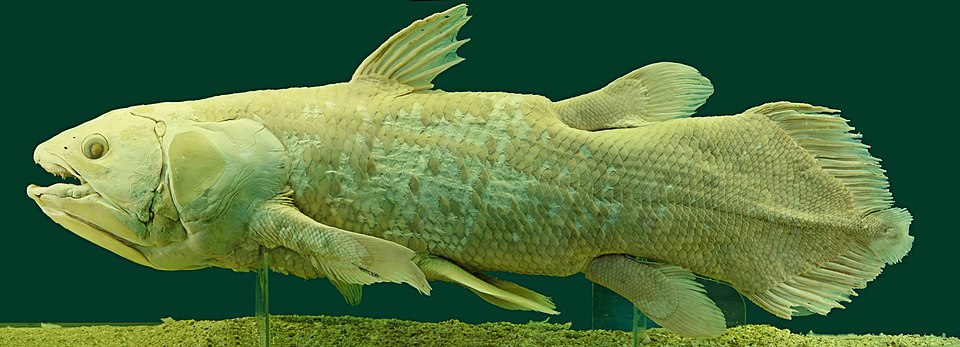

The coelacanth. The most dramatic single discovery in the history of living fossils occurred on 22 December 1938, when Marjorie Courtenay-Latimer, curator of the East London Museum in South Africa, noticed an unusual fish among the catch brought in by a local trawler operating near the mouth of the Chalumna River. She recognized its extraordinary nature and contacted ichthyologist J. L. B. Smith at Rhodes University, who confirmed in a landmark 1939 paper in Nature that the fish was a coelacanth — a lobe-finned fish belonging to the order Actinistia, thought to have gone extinct at the end-Cretaceous mass extinction approximately 66 million years ago.4 Smith named it Latimeria chalumnae in honour of Courtenay-Latimer. A second species, Latimeria menadoensis, was identified in Indonesia in 1998. The coelacanth's fleshy, lobed fins, internally supported by bones homologous to tetrapod limb elements, and its unique hinged braincase and intracranial joint all closely resemble those of Devonian-age fossil relatives dating to approximately 400 million years ago.5
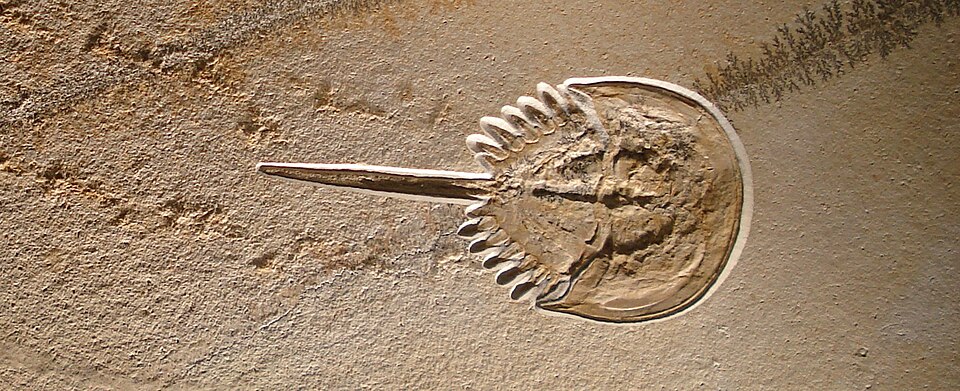
Horseshoe crabs. The four living species of horseshoe crab (order Xiphosura) — Limulus polyphemus along the Atlantic coast of North America and three Asian species of Tachypleus and Carcinoscorpius — preserve a domed carapace, compound eyes, and long telson spine recognizable in fossils stretching back to the Late Ordovician. The oldest known xiphosurid, Lunataspis aurora, was described in 2008 from approximately 445-million-year-old Konservat-Lagerstatten deposits in Manitoba, Canada, making the horseshoe crab body plan one of the most durable in the animal kingdom.6 Genomic sequencing of Tachypleus tridentatus has revealed substantial molecular divergence beneath this morphological constancy, including major expansions and reorganizations of immune-system gene families that reflect hundreds of millions of years of coevolution with pathogens.23
Ginkgo biloba. The sole surviving species of the class Ginkgopsida, Ginkgo biloba is the last representative of a plant lineage that was diverse and globally distributed during the Mesozoic Era. Fossil leaves morphologically indistinguishable from the modern tree are found in deposits spanning more than 200 million years, from the early Mesozoic onward.21 Today the species survives in a small wild population in the Tianmu Mountains of China, although it has been cultivated for centuries in East Asian temple gardens. Whole-genome sequencing revealed an enormous genome of approximately 10.6 gigabases, structured by extensive transposable element activity and gene family turnover that demonstrate continuous, active molecular evolution over the lineage's history.21
The nautilus. Nautiloids are the sole surviving externally shelled cephalopods, and their fossil record extends back to the Late Cambrian, approximately 500 million years ago. The modern genus Nautilus diverged from the coleoid cephalopods (squid, octopus, and cuttlefish) around the Silurian-Devonian boundary, roughly 423 million years ago.8 The complete genome of Nautilus pompilius, published in 2021, revealed a compact genome with slow evolutionary rates in both coding and non-coding regions compared to other cephalopods, yet also documented significant gene family contractions and expansions associated with the evolution of the nautilus's distinctive pinhole eye and shell biomineralization systems.8
The tuatara. Sphenodon punctatus of New Zealand is the only surviving member of the order Rhynchocephalia, which diverged from the lineage leading to lizards and snakes over 240 million years ago during the Triassic. The 2020 sequencing of the tuatara genome by Gemmell and colleagues revealed a genome of approximately 5 gigabases, rich in repetitive elements and with strong evidence for punctuated evolution at the molecular level — approximately 33.5 percent of deviation from the molecular clock at fourfold-degenerate sites was attributable to punctuational bursts rather than gradual accumulation.7 Rapid evolution was detected in genes related to olfaction, immunity, and temperature sensitivity, demonstrating that the tuatara's externally conservative body plan conceals substantial molecular adaptation.
The Wollemi pine. In 1994, New South Wales National Parks ranger David Noble discovered a stand of massive conifers with fern-like leaves and distinctive bumpy bark growing in a remote sandstone canyon in the Wollemi Wilderness, approximately 150 kilometres northwest of Sydney. Formal description by Jones, Hill, and Allen in 1995 established the trees as Wollemia nobilis, a new genus in the family Araucariaceae — a conifer family with deep roots in the Mesozoic.9 Pollen grains assigned to the fossil genus Dilwynites, virtually identical to Wollemi pine pollen, are common in the fossil record dating back more than 90 million years to the Cretaceous. Fewer than 60 adult trees survive in the wild, making it one of the most critically endangered plant species on Earth. Genome sequencing revealed a 12-gigabase genome with extremely low heterozygosity and an unusual abundance of DNA transposons, along with conserved ancient silencing mechanisms despite thousands of active transposable elements.10
Morphological conservatism and genomic findings across classic living fossil lineages5, 6, 7, 8, 21, 23
| Organism | Oldest similar fossil | Living species | Key genomic finding |
|---|---|---|---|
| Coelacanth (Latimeria) | ~400 Ma (Devonian) | 2 | Slow protein-coding evolution; continued transposable element activity |
| Horseshoe crab (Limulus spp.) | ~445 Ma (Ordovician) | 4 | Expanded immune gene families; whole-genome duplication events |
| Ginkgo (Ginkgo biloba) | ~200+ Ma (early Mesozoic) | 1 | 10.6 Gb genome; extensive TE expansion and gene family turnover |
| Nautilus (N. pompilius) | ~500 Ma (Cambrian, order-level) | ~6 | Compact genome; gene family changes in eye and shell biomineralization |
| Tuatara (Sphenodon) | ~240 Ma (Triassic) | 1 | 5 Gb genome; punctuated molecular evolution; rapid change in olfaction genes |
| Wollemi pine (Wollemia) | ~90 Ma (Cretaceous, pollen) | 1 | 12 Gb genome; ancient transposon activity; extremely low heterozygosity |
Morphological stasis versus genetic evolution
The single most important scientific corrective to popular misconceptions about living fossils is the demonstration that morphological conservatism does not imply molecular stasis. The neutral theory of molecular evolution, formalized by Motoo Kimura in the late 1960s and subsequently refined, established that nucleotide substitutions accumulate in genomes at rates governed largely by mutation rates and effective population sizes, and that these rates are substantially independent of the rate of morphological change in the organism.5 A lineage whose external body plan has not changed detectably in 100 million years has still accumulated vast numbers of neutral and nearly neutral substitutions, gene duplications, transposable element insertions, and regulatory changes throughout its genome.
The coelacanth genome, sequenced by Amemiya and colleagues at the Broad Institute in 2013, provided the most thorough demonstration of this principle for a vertebrate living fossil. The team found that protein-coding gene evolution in Latimeria was indeed significantly slower than in tetrapods — genes of lizards and mammals evolved at least twice as quickly — consistent with the hypothesis that strong functional constraints on core physiology had limited protein sequence divergence.5 Yet the genome also contained extensive evidence of transposable element activity, gene duplications, and structural reorganizations that had continued throughout the lineage's long history. Casane and Laurenti, in a critical 2013 review, cautioned that even the characterization of the coelacanth as molecularly slow was overstated: some studies that did not find especially slow rates in coelacanth genes had been overlooked, and the observed low intraspecific molecular diversity could reflect small population sizes rather than low mutation rates.17
The pattern of decoupled morphological and molecular rates has been documented across every living fossil lineage subjected to genomic analysis. The brachiopod Lingula anatina, whose shell morphology has been called virtually unchanged since the Cambrian, was found upon genome sequencing to harbour extensive lineage-specific gene family expansions, novel gene acquisitions via horizontal transfer from bacteria, and active adaptive evolution in immune and stress-response genes.24 The tuatara genome exhibited rapid molecular evolution in genes governing olfaction and immunity even as the body plan remained essentially static for over 200 million years.7 The nautilus genome documented gene family reorganizations associated with its pinhole eye despite the external shell retaining its ancient form.8 In every case, the genome is not frozen; it is the morphology that has been constrained.

Mechanisms of morphological stasis
If genetic evolution never ceases, what sustains morphological conservatism across geological timescales? Evolutionary biologists have identified several complementary mechanisms, no single one of which fully explains all cases of stasis but which together account for the empirical pattern.
Stabilizing selection is the most straightforward mechanism. When an organism occupies an ecological niche that has remained stable over long periods, natural selection consistently removes individuals that deviate from the phenotypic optimum in either direction. Rather than driving directional change, selection under such conditions actively maintains the existing form. Quantitative modelling by Estes and Arnold, published in The American Naturalist in 2007, demonstrated that a fitness optimum moving within fixed boundaries can explain the paradox of stasis: lineages diverge over short timescales (as observed in microevolutionary studies) but are constrained within an adaptive zone over geological time.18 However, the empirical evidence for the prevalence of stabilizing selection in the wild is complex. A large meta-analysis of phenotypic selection gradients by Kingsolver and colleagues in 2001, covering studies from 1984 to 1997, found that the absolute values of quadratic (stabilizing or disruptive) selection gradients were typically very weak, with a median of only 0.10, and that stabilizing selection was not detectably more common than disruptive selection across the surveyed populations.22 This finding suggests that while stabilizing selection may be a powerful force in specific well-adapted lineages, its overall strength in nature is often modest.
Developmental canalization provides a second category of explanation rooted in the internal architecture of development. The concept was introduced by C. H. Waddington in 1942 to describe the tendency of developmental systems to produce a consistent phenotypic outcome despite genetic or environmental variation, a property he illustrated with the metaphor of the "epigenetic landscape" in which developmental trajectories follow deeply canalized valleys. Siegal and Bergman, in a 2002 computational study published in the Proceedings of the National Academy of Sciences, demonstrated that canalization emerges as an intrinsic property of complex gene regulatory networks: the more interconnected the network, the more canalized the developmental output becomes, even in the absence of direct selection for canalization itself.14 This finding has profound implications for understanding stasis, because it suggests that highly integrated body plans — those specified by complex networks of transcription factors, signalling molecules, and morphogens — are inherently resistant to phenotypic change, not because selection prevents it but because the developmental system buffers it.
Developmental constraints represent a related but distinct mechanism. John Maynard Smith and colleagues defined developmental constraints in a 1985 synthesis as "biases on the production of variant phenotypes or limitations on phenotypic variability caused by the structure, character, composition, or dynamics of the developmental system."13 In complex metazoan body plans, the regulatory interactions among Hox genes and other developmental toolkit genes are so deeply integrated that mutations affecting them tend to be either lethal or severely deleterious. A body plan in which changing any one element demands compensatory changes in many others is thus intrinsically resistant to sustained directional change — not because there is no genetic variation available, but because the developmental system channels that variation away from major morphological reorganisation.
Ecological specialization offers a complementary environmental explanation. Living fossils are disproportionately represented among organisms occupying narrow, stable, deep-time niches: the deep-water reef habitat of the coelacanth, the intertidal sandy flats of horseshoe crabs, the gymnosperm understory niche of Ginkgo in its Mesozoic heyday. An organism that has become a specialist in a persistent environment experiences neither the repeated disruptions that generate directional selection nor the ecological expansions that favour rapid diversification.15 The ecological and developmental explanations are mutually reinforcing: a stable niche reduces external selective pressure for change, while canalized development reduces the internal supply of viable morphological variants.
Approximate fossil age of selected living fossil lineages (millions of years)5, 6, 7, 8, 21
Lazarus taxa and the incompleteness of the record
The concept of a Lazarus taxon is closely related to, but distinct from, that of a living fossil. A Lazarus taxon is a lineage that disappears from the fossil record for an extended period — appearing to have gone extinct — and then reappears, either in younger rock strata or among living organisms. The term was coined in 1983 by Karl Flessa and David Jablonski, drawing on the biblical account of Lazarus being raised from the dead.20 Jablonski applied the concept extensively in his analysis of macroevolutionary dynamics across mass extinction boundaries, documenting numerous marine invertebrate genera that vanished from the record at the end-Cretaceous extinction only to reappear millions of years later.20
The coelacanth is the most famous Lazarus taxon. After a continuous presence in the fossil record spanning roughly 340 million years, from the Devonian to the Late Cretaceous, the order Actinistia vanished entirely from the geological record at approximately 66 million years ago, coinciding with the end-Cretaceous mass extinction. Its "resurrection" in 1938 demonstrated that the 66-million-year gap reflected the organism's absence from environments conducive to fossilization, not its absence from the planet.4 The Wollemi pine similarly represents a Lazarus taxon: pollen referrable to the genus Dilwynites disappears from the Australian fossil record approximately 2 million years ago, yet the trees persisted undetected in remote sandstone canyons until their discovery in 1994.9
Wignall and Benton's 1999 analysis of Lazarus taxa across major extinction events demonstrated that the apparent disappearances of many lineages correlate with intervals of reduced fossil abundance rather than genuine extinction pulses.19 They proposed that the Lazarus effect is primarily driven by periods of low population abundance: when populations drop below a critical threshold, they become effectively invisible to the fossil record even though they persist as viable breeding populations in refugial habitats. This interpretation has important implications for how scientists read the fossil records of living fossil lineages: a gap in the record is evidence about preservation conditions and population sizes, not necessarily about the presence or absence of the organism.
The debate over whether "living fossil" is useful
Despite its long history and iconic status in both scientific and popular discourse, the concept of the living fossil has attracted sustained criticism from evolutionary biologists and philosophers of science who argue that the term misleads more than it illuminates. The core objection is that the phrase implies a cessation of evolution — that the organism is a literal relic, frozen in time — when in fact every well-studied living fossil is genetically far removed from its ancient counterparts and has been subject to continuous natural selection, drift, and mutation throughout its history.17
Casane and Laurenti, in their 2013 BioEssays review titled "Why coelacanths are not 'living fossils'", argued that the label conflates several independent properties — morphological conservatism, molecular evolutionary rate, species richness, and phylogenetic age — that can dissociate freely in any given lineage. A taxon can be morphologically conservative while being molecularly diverse, or phylogenetically ancient while having undergone numerous cryptic speciations invisible to gross anatomy.17 The authors contended that the continued use of the term in scientific discourse obscures these important distinctions and reinforces public misconceptions about evolution as a process aimed at producing change for its own sake.
Lidgard and Love, in a 2018 analysis published in BioScience, took a more nuanced position. Rather than abandoning the concept entirely, they proposed reconceptualizing its function. Instead of treating "living fossil" as a categorical label that either applies or does not, they argued that the concept is most useful as a framework for structuring research questions about the distinct phenomena that living fossil lineages present: why are some morphological traits conserved while others are not? What is the relationship between stasis at the level of individual characters and stasis at the level of whole organisms or lineages?11 Their analysis emphasised the importance of distinguishing parts from wholes — a shell may be conserved while the soft anatomy changes substantially, or an overall body plan may persist while individual genes evolve rapidly.
Derek Turner, a philosopher of science at Connecticut College, offered a direct defence of the concept in a 2019 paper in Biology & Philosophy. Turner proposed a specifically phylogenetic conception of living fossils as taxa that exhibit three properties: deep prehistoric morphological stability, low extant species richness, and high contribution to phylogenetic diversity.12 Under this definition, the concept has both theoretical value, because it picks out an important explanatory target for evolutionary theory (why do some lineages remain morphologically conservative for so long?), and practical value, because it identifies taxa that contribute disproportionately to the tree of life's total evolutionary heritage and therefore merit conservation priority. The debate remains active, with no consensus on whether the term should be retained, refined, or abandoned.
Evolutionary constraints and developmental integration
The concept of developmental constraints occupies a pivotal position in explanations of evolutionary stasis because it provides a mechanistic bridge between the genetic level (where evolution is continuous) and the phenotypic level (where stasis is observed). The key insight is that the relationship between genotype and phenotype is not one-to-one: the developmental system mediates between them, and the properties of that system — its modularity, connectivity, redundancy, and regulatory architecture — determine which genetic changes produce phenotypic effects and which are buffered away.13
Maynard Smith and colleagues' 1985 synthesis distinguished between universal constraints (such as the physical and chemical laws governing biological processes) and local constraints (those specific to particular clades or body plans).13 It is local constraints that are most relevant to understanding living fossils. The arthropod body plan, for example, is specified by a conserved set of Hox genes whose expression domains determine segment identity and appendage type. In horseshoe crabs, this regulatory architecture has maintained the fundamental arrangement of prosoma, opisthosoma, and telson for over 400 million years, even as the genome has undergone whole-genome duplications and extensive gene family reorganisation beneath this morphological constancy.23
Siegal and Bergman's computational work on gene regulatory networks demonstrated that canalization — the property that makes a developmental outcome robust to perturbation — increases with network complexity.14 This means that organisms whose body plans are specified by highly interconnected regulatory networks are, as a direct consequence of that complexity, more resistant to phenotypic change. The implication is that stasis in living fossil lineages may not require extraordinary selective pressures to maintain; instead, the developmental architecture itself generates a strong default toward phenotypic conservatism. Genetic variation continues to accumulate, but it is channelled into dimensions of the phenotype that do not disrupt the fundamental body plan — a process sometimes described as evolution "beneath the morphological radar."
Significance for understanding evolution
Living fossils and the stasis they represent are not problems for evolutionary theory but rather illuminate how evolution operates across different timescales and levels of biological organization. The recognition that stasis is a dominant pattern in the fossil record, confirmed by Hunt's 2007 quantitative analysis, has fundamentally recast macroevolution as a field concerned not only with explaining change but also with explaining the absence of change.16 Punctuated equilibrium, the theoretical framework most closely associated with stasis, emerged directly from this challenge and enriched evolutionary biology by decoupling microevolution (change within populations) from macroevolution (patterns across species over geological time).2, 3
The molecular biology of living fossil lineages has also contributed substantially to comparative genomics and the understanding of vertebrate evolution. The coelacanth genome, as the closest living relative of the tetrapod ancestor, has served as an invaluable outgroup for identifying gene regulatory elements uniquely associated with the evolution of limbs, lungs, and terrestrial physiology in the tetrapod lineage.5 The tuatara genome has shed light on the ancestral architecture of amniote gene regulation, revealing features shared with mammals but absent from other living reptiles.7 The Lingula genome has clarified the deep evolutionary history of lophophore-bearing invertebrates.24 In each case, the very antiquity of these lineages — the property that makes them fascinating as living fossils — is precisely what makes them scientifically valuable as comparative resources.
Perhaps the most instructive lesson of evolutionary stasis is that natural selection does not drive organisms toward greater complexity or novelty for its own sake. Selection optimizes fitness within a given environment. When the environment is stable and the organism is already well-adapted, selection can maintain a body plan indefinitely while the genome continues its quieter, less visible evolution beneath. Simpson captured this insight in 1944 when he placed bradytelic lineages within persistent "adaptive zones," and seven decades of subsequent research have confirmed and deepened that understanding.15 The organisms we call living fossils are not failures of evolution or relics awaiting replacement. They are among its most enduring successes, demonstrating that the measure of evolutionary fitness is not the capacity for change but the capacity for persistence.
References
The oldest horseshoe crab: a new xiphosurid from Late Ordovician Konservat-Lagerstätten deposits, Manitoba, Canada
Developmental constraints and evolution: a perspective from the Mountain Lake conference on development and evolution
The relative importance of directional change, random walks, and stasis in the evolution of fossil lineages
Why coelacanths are not 'living fossils': a review of molecular and morphological data
Resolving the paradox of stasis: models with stabilizing selection explain evolutionary divergence on all timescales
The genome of the horseshoe crab Tachypleus tridentatus provides insights into its evolution
The draft genome of the living fossil Lingula anatina and its implications for brachiopod evolution