Overview
- Lagerstätten are rare geological deposits that preserve fossils with extraordinary fidelity, including soft tissues such as muscle, gut contents, eyes, feathers, and neural structures that are almost never fossilized under normal conditions, providing irreplaceable windows into the true diversity of ancient life.
- Conservation Lagerstätten arise from specific taphonomic conditions — rapid burial, anoxic bottom waters, early diagenetic mineralization, bacterial sealing, or entombment in amber or asphalt — that inhibit microbial decay and replicate delicate tissues before they decompose.
- Major Lagerstätten spanning from the Cambrian Burgess Shale and Chengjiang biota to the Cretaceous Jehol deposits and Pleistocene La Brea Tar Pits have fundamentally reshaped understanding of evolutionary history, revealing feathered dinosaurs, the earliest land ecosystems, and the full scope of the Cambrian explosion.
The fossil record, for all its richness, preserves only a fraction of the organisms that once lived. Under normal conditions of fossilization, only the hard, mineralized components of an organism — bones, teeth, shells, and woody tissue — survive the processes of decay, burial, and diagenesis that transform biological remains into rock. Soft tissues such as muscle, skin, internal organs, eyes, and neural structures are almost invariably destroyed by microbial decomposition within days to weeks of death.2, 21 Yet scattered through the geological column are rare deposits that defy this pattern, preserving fossils with extraordinary fidelity that can include the finest anatomical details of soft-bodied organisms. These deposits, known as Lagerstätten (singular: Lagerstätte), are among the most scientifically valuable sites in all of paleontology, providing windows into the true diversity of ancient ecosystems that the ordinary fossil record almost entirely misses.1, 3
The concept of Fossil-Lagerstätten was formalized by the German paleontologist Adolf Seilacher, who defined them as bodies of rock that contain an unusual amount of paleontological information, in terms of either quality or quantity. Working with Wolf-Ernst Reif and Friedrich Westphal, Seilacher in 1985 published a comprehensive classification that distinguished two fundamental types: Konzentrat-Lagerstätten, which are unusual concentrations of fossils produced by physical or biological accumulation processes, and Konservat-Lagerstätten, which are characterized by exceptional fidelity of preservation, including the conservation of soft tissues that normally decompose.1 It is the Konservat-Lagerstätten — the conservation deposits — that have most profoundly reshaped scientific understanding of the history of life, and they form the primary focus of this article.
Taphonomic conditions for exceptional preservation
The preservation of soft tissues in the fossil record requires that the normal processes of microbial decay be arrested or dramatically slowed before the delicate structures are destroyed. Experimental taphonomy — the study of how organisms decompose and become preserved — has identified several interrelated conditions that can produce exceptional preservation, often acting in combination.2, 22
Anoxia, the absence of dissolved oxygen in bottom waters and pore waters of the sediment, is one of the most commonly invoked conditions. While anaerobic bacteria can and do decompose organic matter, the absence of oxygen suppresses the activity of aerobic decomposers and scavenging metazoans, substantially slowing the rate of tissue destruction. Many Konservat-Lagerstätten are associated with environments where bottom waters were at least intermittently anoxic, including stagnant marine basins, deep lakes, and restricted lagoons.3, 22 However, anoxia alone is not sufficient for exceptional preservation; it merely extends the window of time during which other preservational mechanisms can operate.4
Rapid burial is a critical factor in most Konservat-Lagerstätten. Whether by submarine mudslides, volcanic ashfall, storm-deposited sediment, or pyroclastic flows, the swift entombment of organisms in fine-grained sediment isolates them from the water column, limits oxygen diffusion, and physically inhibits scavenging. In the Burgess Shale, organisms were buried by turbidity currents that swept them off the Cathedral Escarpment and entombed them in fine mud within hours.5 In the Jehol Biota of northeastern China, pyroclastic density currents from volcanic eruptions rapidly buried terrestrial organisms, preserving feathered dinosaurs and early birds in exquisite detail.16
Early diagenetic mineralization — the rapid precipitation of minerals around or within decaying tissues — is the mechanism by which soft-tissue morphology is most commonly replicated in stone. As decay microbes break down organic matter, they generate steep geochemical gradients that promote the growth of authigenic minerals at the tissue-sediment interface. The identity of the precipitating mineral depends on the local geochemistry: pyrite (iron sulfide) forms in sulfate-rich, iron-rich settings; siderite (iron carbonate) forms in freshwater or low-sulfate conditions; phosphate minerals such as apatite replicate tissues in phosphorus-rich environments; and clay minerals can template onto organic surfaces.2, 6 In the Burgess Shale, clay minerals replicated the morphology of soft-bodied organisms, preserving details of guts, gill structures, and appendages.6 At Mazon Creek, siderite concretions encased entire organisms within days to weeks of burial, capturing details of soft tissues and pigments.13
Bacterial sealing represents another preservational pathway. Microbial biofilms can form coherent mats over the surface of a decaying organism, creating a semi-permeable barrier that retards further decomposition while serving as a template for mineral nucleation. This mechanism has been invoked for Burgess Shale-type preservation, where early carbonate cementation of the enclosing sediment, combined with low sulfate concentrations in the Cambrian ocean, restricted the availability of oxidants needed by decay microbes and effectively arrested decomposition within the critical first weeks after burial.5
Amber entombment and asphalt impregnation represent fundamentally different preservational pathways that bypass mineral replacement entirely. Amber, the fossilized resin of ancient trees, can engulf small organisms such as insects, spiders, plant fragments, and even small vertebrates, sealing them in a sterile, dehydrating medium that preserves three-dimensional morphology and, in some cases, subcellular structures and biomolecular fragments.24 Natural asphalt seeps, such as the La Brea Tar Pits in Los Angeles, trap and impregnate the bones of larger animals with hydrocarbons, inhibiting microbial decay and preserving original bone collagen over tens of thousands of years.23
Cambrian Lagerstätten: the Burgess Shale and Chengjiang
The most celebrated Konservat-Lagerstätten are those of the Cambrian Period, which document the explosive diversification of animal life approximately 520 to 505 million years ago. Without these deposits, the Cambrian explosion would be known almost exclusively from small shelly fossils and trilobites, and the extraordinary diversity of soft-bodied organisms that dominated early Cambrian seas would remain entirely invisible.4
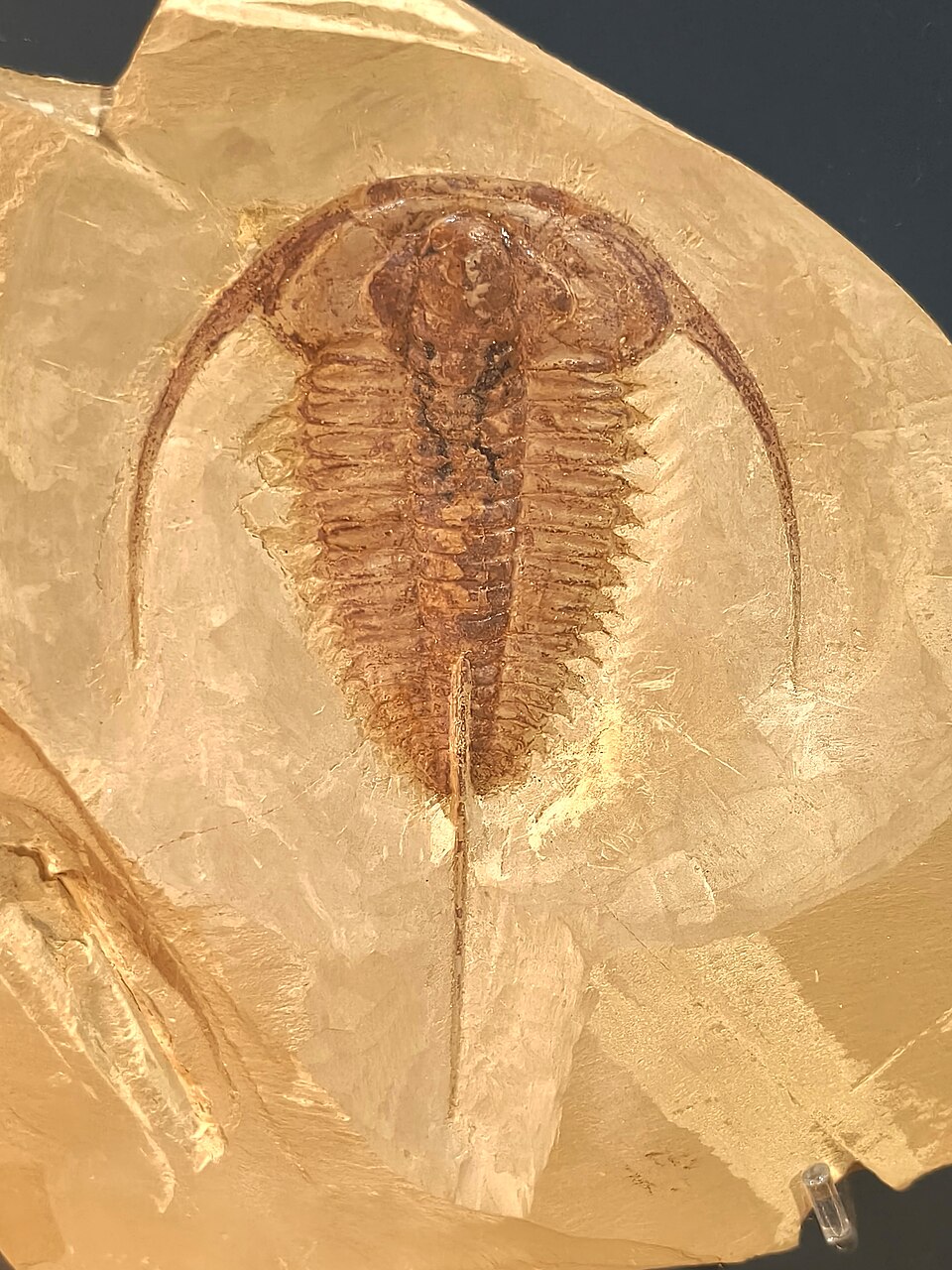

The Burgess Shale, located in the Canadian Rockies of British Columbia, was discovered by Charles Doolittle Walcott, Secretary of the Smithsonian Institution, in 1909. Over the following decades, Walcott excavated tens of thousands of specimens from the Middle Cambrian (approximately 508 million years old) Stephen Formation and assigned them to known taxonomic groups, often shoehorning them into existing arthropod and worm classifications.9 It was not until the 1970s and 1980s that Harry Whittington, along with his students Derek Briggs and Simon Conway Morris at the University of Cambridge, undertook a systematic re-examination of Walcott's collections. Whittington's landmark 1975 monograph on Opabinia regalis — with its five eyes and forward-facing proboscis — demonstrated that many Burgess Shale organisms could not be accommodated within any living phylum, representing extinct body plans of a complexity and strangeness that Walcott had not appreciated.7 The subsequent reinterpretation of Anomalocaris, Hallucigenia, Wiwaxia, and dozens of other taxa revealed that the Cambrian seas harboured a vastly greater diversity of body plans than the modern world preserves.8, 9
The preservation of the Burgess Shale fauna results from a convergence of factors specific to the early Paleozoic ocean. Organisms living near the base of the Cathedral Escarpment, a submarine cliff face, were periodically swept off the edge by turbidity currents and rapidly entombed in fine-grained mud under oxygen-poor bottom waters. Geochemical analyses by Gaines and colleagues in 2012 demonstrated that the low sulfate concentrations of the Cambrian ocean limited the activity of sulfate-reducing bacteria, while early pervasive carbonate cementation of the enclosing sediment restricted the diffusion of oxidants into the burial environment, effectively shutting down microbial decay within weeks of burial.5 The resulting fossils preserve soft tissues as thin carbonaceous films and clay mineral replicas, recording anatomical details including digestive tracts, eyes, gill structures, and the outlines of muscle blocks.6
The Chengjiang biota (also called the Maotianshan Shale biota) of Yunnan Province, China, is approximately 518 million years old — roughly 10 million years older than the Burgess Shale — and preserves a similarly spectacular assemblage of soft-bodied Cambrian organisms. Discovered in 1984 by Hou Xianguang near the town of Chengjiang, the deposit has yielded more than 250 species, including the earliest known chordates, such as Myllokunmingia and Haikouichthys, as well as a menagerie of arthropods, lobopodians, priapulid worms, and enigmatic organisms with no clear modern affinity.10 The Chengjiang fossils are preserved primarily as iron oxide and clay mineral replacements in fine mudstone, and their greater age relative to the Burgess Shale makes them the oldest window into a fully developed Cambrian marine community.10
Paleozoic Lagerstätten beyond the Cambrian
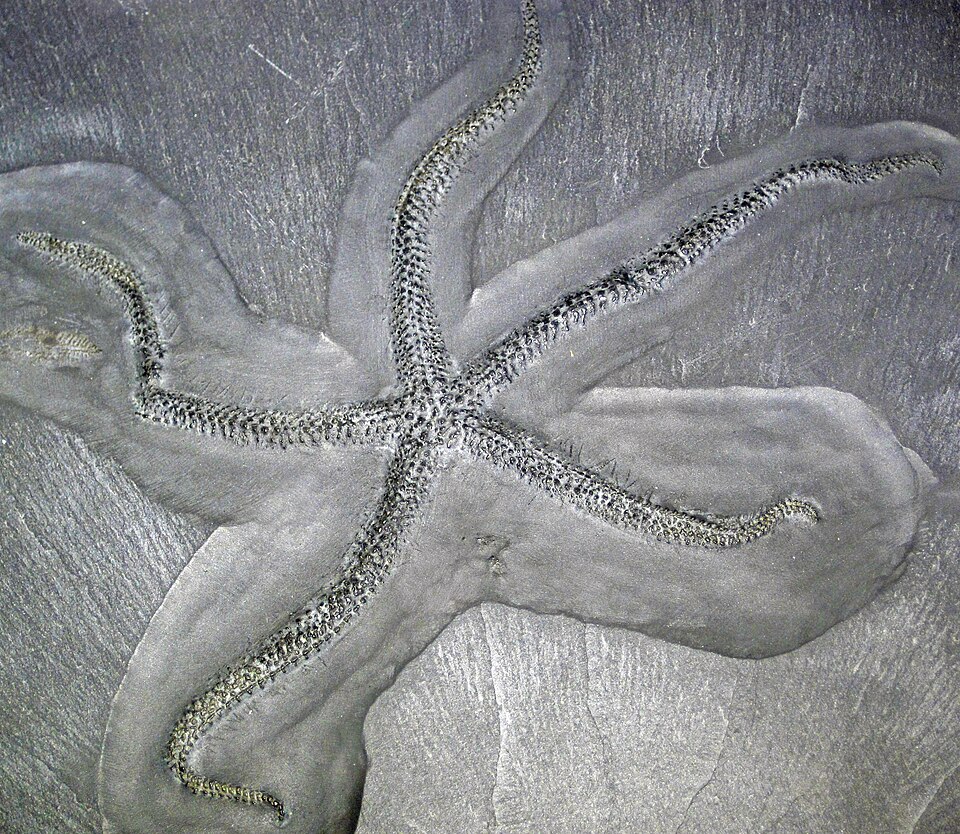
Although the Cambrian Lagerstätten are the most famous, exceptional preservation sites occur throughout the Paleozoic, each illuminating a different chapter of Earth's biological history.
_(Kaub_Formation,_Hunsr%C3%BCck_Slate_Group,_Lower_Devonian;_Budenbach_area,_western_Germany)_(40663164563).jpg)
The Rhynie Chert of Aberdeenshire, Scotland, dated to the Early Devonian (approximately 410 million years ago), is the world's oldest and most completely preserved terrestrial ecosystem. Unlike most Lagerstätten, which formed in marine or lacustrine settings, the Rhynie Chert was produced by silica-rich hot springs associated with volcanic activity in the region. Hot, mineral-laden waters periodically flooded a low-lying area inhabited by early land plants, arthropods, and fungi, and the dissolved silica precipitated as chert, permineralizing the organisms in three dimensions at the cellular level.11, 12 The Rhynie Chert preserves the internal anatomy of some of the earliest vascular plants, including Rhynia and Aglaophyton, with individual cells, stomata, and fungal hyphae visible in thin section. It also records the oldest known terrestrial arthropods, including trigonotarbid arachnids, mites, and the springtail-like hexapod Rhyniella praecursor, providing direct evidence of the earliest plant-arthropod interactions on land.12
The Mazon Creek Lagerstätte of northeastern Illinois, dated to the late Carboniferous (approximately 309 million years ago), preserves a remarkably diverse assemblage of more than 400 species of plants and animals within siderite (iron carbonate) concretions. The organisms inhabited a deltaic environment where the Francis Creek Shale was deposited; rapid burial by delta-front sediments was followed by the early precipitation of siderite around decaying remains, forming concretions that faithfully replicated soft-tissue morphology including the outlines of jellyfish, polychaete worms, and the enigmatic Tullimonstrum gregarium (the Tully monster), whose phylogenetic affinities remain debated.13 The Mazon Creek is distinctive among Lagerstätten for preserving both marine and terrestrial biotas in close proximity, documenting the transition zone between a Carboniferous coastal swamp forest and the adjacent shallow sea.13, 23
Mesozoic Lagerstätten: Solnhofen and the Jehol Biota
_(Solnhofen_Limestone,_Upper_Jurassic;_Bavaria,_Germany)_(36543746860).jpg)
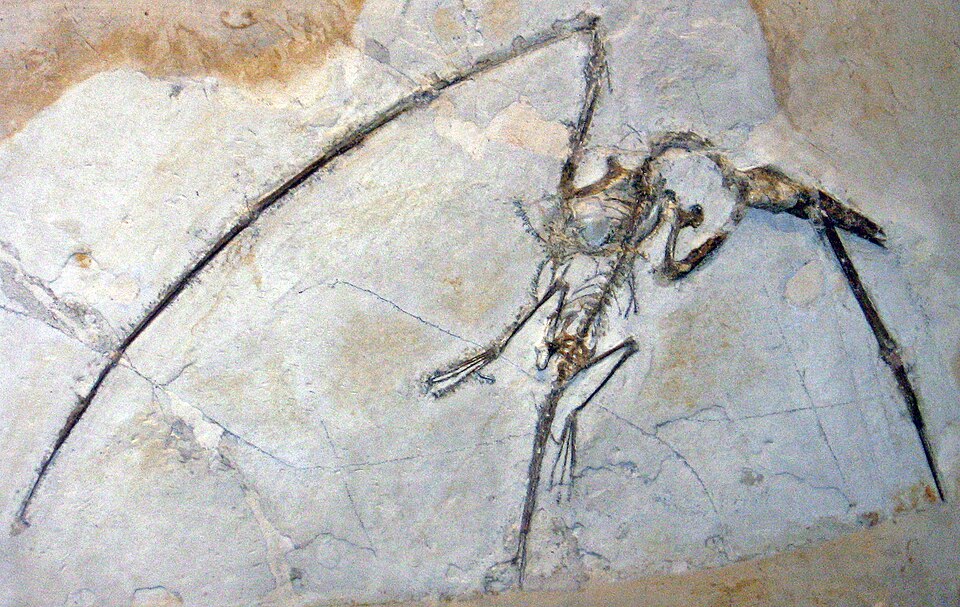
The Solnhofen Limestone of Bavaria, Germany, deposited during the Late Jurassic (approximately 150 million years ago), is one of the most historically significant Lagerstätten in paleontology. The limestone formed as fine-grained carbonate mud in a series of shallow, hypersaline lagoons separated from the open Tethys Sea by reef barriers. The high salinity and low oxygen content of the lagoon waters excluded scavengers and dramatically slowed decomposition, while the exceptionally fine grain size of the carbonate sediment recorded morphological details at a resolution approaching that of a photographic plate.23 The Solnhofen is most famous as the source of Archaeopteryx lithographica, first described in 1861, whose preservation of detailed feather impressions alongside a toothed jaw and bony tail provided compelling evidence for the evolutionary link between non-avian dinosaurs and birds.23 Beyond Archaeopteryx, the Solnhofen preserves an extraordinary marine and coastal fauna including pterosaurs with wing membrane impressions, horseshoe crabs with their death-march trackways, delicate dragonflies and other insects, jellyfish, crinoids, fish, and small theropod dinosaurs such as Compsognathus.23
The Jehol Biota of northeastern China, spanning the Early Cretaceous (approximately 133 to 120 million years ago), represents the most significant terrestrial Lagerstätte discovered in recent decades. Distributed mainly in the Yixian and Jiufotang formations of Liaoning Province and surrounding areas, the Jehol deposits have yielded an astonishing diversity of vertebrates, invertebrates, and plants preserved with a fidelity that has transformed multiple areas of evolutionary biology.14, 15 The discovery of feathered non-avian dinosaurs such as Sinosauropteryx (the first dinosaur found with filamentous integumentary structures), Microraptor gui (a four-winged dromaeosaurid with flight feathers on all four limbs), and Caudipteryx provided definitive evidence that feathers evolved in non-avian theropods well before the origin of flight.14, 15 The Jehol has also produced the earliest known eutherian mammals, primitive angiosperms (flowering plants), and a wealth of early birds that document the rapid diversification of avian lineages during the Cretaceous.15
The exceptional preservation of the Jehol Biota results from a combination of volcanic activity and lacustrine deposition. Repeated pyroclastic density currents from nearby volcanoes rapidly buried organisms in volcanic ash and debris, in a taphonomic scenario that has been compared to the burial of Pompeii. Jiang and colleagues demonstrated that these pyroclastic flows were the primary mechanism of death and rapid burial, transporting terrestrial vertebrates into lake environments where fine-grained sediments and anoxic bottom waters further inhibited decomposition.16 The result is fossils that preserve feather barbules, stomach contents, color-producing melanosomes, and even the outlines of soft internal organs.14
Cenozoic Lagerstätten: amber, lakes, and tar pits
The Cenozoic Era has produced several distinctive types of Lagerstätten, each exploiting a different preservational pathway to capture snapshots of relatively recent ecosystems.
The Green River Formation of Wyoming, Colorado, and Utah, deposited during the Eocene (approximately 53 to 48 million years ago), preserves one of the finest lacustrine fossil assemblages in the world. Three large intermontane lakes — Fossil Lake, Lake Gosiute, and Lake Uinta — accumulated fine-grained laminated sediments under conditions that periodically became anoxic, producing beautifully preserved fish (particularly the herring-like Knightia, one of the most commonly encountered vertebrate fossils anywhere), insects, plants, birds, bats, horses, crocodilians, and turtles. The annual laminations (varves) in the sediment provide high temporal resolution, and the exceptional preservation of fish with articulated skeletons, scales, and sometimes stomach contents makes the Green River Formation a world-class Lagerstätte for Eocene freshwater ecosystems.23
Baltic amber, derived from the fossilized resin of coniferous trees that grew across northern Europe during the Eocene (approximately 44 to 38 million years ago), constitutes the largest single deposit of fossil plant resin known and the single richest repository of fossil insects of any geological age. Estimates suggest that more than 100,000 tonnes of amber were produced by these Paleogene forests.24 Organisms entrapped in the resin — predominantly arthropods, but also spiders, mites, nematodes, fungi, plant fragments, feathers, and occasionally small vertebrates such as lizards and frogs — are preserved in three dimensions with remarkable fidelity, including external morphological features such as compound eyes, wing venation, and setae (bristles) that would never survive conventional fossilization. In some cases, internal structures and even subcellular features are discernible.24 Baltic amber has yielded more than 3,000 described species of arthropods, providing an unparalleled record of Eocene terrestrial biodiversity and enabling direct comparison of insect faunas across millions of years of evolutionary time.24
The La Brea Tar Pits of Los Angeles, California, represent a Pleistocene concentration and conservation Lagerstätte in which natural asphalt seeps have trapped and preserved the bones of Pleistocene megafauna over the past approximately 50,000 years. Animals became mired in the viscous asphalt, and their bones were impregnated with hydrocarbons that inhibited microbial decay, preserving original bone collagen and enabling radiocarbon dating and ancient protein analysis. The assemblage includes dire wolves (Aenocyon dirus), saber-toothed cats (Smilodon fatalis), mammoths, ground sloths, and more than 600 species of plants and animals, providing the most detailed record of a Pleistocene ecosystem in the Americas.23
Distribution of Lagerstätten through geological time
The distribution of Konservat-Lagerstätten through the Phanerozoic is not uniform. A survey by Allison and Briggs in 1993 demonstrated that exceptionally preserved biotas cluster in certain geological periods, with particularly high concentrations in the Cambrian and the Jurassic, and notable gaps elsewhere.3 This uneven distribution reflects a combination of genuine changes in the environmental conditions that favor exceptional preservation — such as the low sulfate concentrations of the early Paleozoic ocean, which promoted Burgess Shale-type preservation — and the vagaries of subsequent geological history, including erosion, metamorphism, and the destruction of potential Lagerstätten by tectonic processes.4, 5
Butterfield has argued that the concentration of Konservat-Lagerstätten in the Cambrian is not merely a preservational artifact but reflects the distinctive ocean chemistry of the early Phanerozoic, when low oxygen levels and low sulfate concentrations in seawater created conditions uniquely favorable for the preservation of soft tissues in fine-grained clastic sediments. At least six distinct taphonomic modes of exceptional preservation have been identified for the terminal Proterozoic and Cambrian, each dependent on particular geochemical circumstances that were more widespread in the early Paleozoic than at any subsequent time.4 As ocean chemistry evolved over the Phanerozoic — with rising oxygen and sulfate levels — the conditions for Burgess Shale-type preservation became progressively rarer, and other preservational pathways (amber, phosphatization, siderite concretions, lacustrine anoxia) assumed greater importance in producing Lagerstätten in younger rocks.3, 4
Major Konservat-Lagerstätten through geological time1, 3, 23
| Lagerstätte | Age | Location | Preservation mode | Notable organisms |
|---|---|---|---|---|
| Chengjiang | ~518 Ma (Early Cambrian) | Yunnan, China | Clay mineral replacement | Early chordates, arthropods, lobopodians |
| Burgess Shale | ~508 Ma (Middle Cambrian) | British Columbia, Canada | Carbonaceous films, clay minerals | Anomalocaris, Opabinia, Hallucigenia |
| Rhynie Chert | ~410 Ma (Early Devonian) | Aberdeenshire, Scotland | Silica permineralization | Earliest land plants, trigonotarbids, mites |
| Mazon Creek | ~309 Ma (Carboniferous) | Illinois, USA | Siderite concretions | Tully monster, ferns, jellyfish, insects |
| Solnhofen Limestone | ~150 Ma (Late Jurassic) | Bavaria, Germany | Fine carbonate mud, anoxia | Archaeopteryx, pterosaurs, horseshoe crabs |
| Jehol Biota | ~133–120 Ma (Early Cretaceous) | Liaoning, China | Pyroclastic burial, lacustrine anoxia | Feathered dinosaurs, early mammals, angiosperms |
| Green River Formation | ~53–48 Ma (Eocene) | Wyoming/Colorado/Utah, USA | Lacustrine anoxia, varved sediment | Knightia, insects, bats, plants |
| Baltic Amber | ~44–38 Ma (Eocene) | Northern Europe | Resin entombment | >3,000 arthropod species, plants, feathers |
| La Brea Tar Pits | ~50 ka (Pleistocene) | Los Angeles, USA | Asphalt impregnation | Dire wolves, Smilodon, mammoths |
Scientific importance of soft-tissue preservation
The scientific value of Lagerstätten extends far beyond the aesthetic appeal of beautifully preserved fossils. Soft-tissue preservation provides information about evolutionary relationships, functional morphology, ecology, and development that is simply inaccessible from skeletal remains alone.2, 4
Perhaps the most transformative contribution of Lagerstätten has been to reveal the existence of entirely soft-bodied organisms and body plans that leave no trace in the ordinary fossil record. Without the Burgess Shale and Chengjiang, the Cambrian would appear to be dominated by trilobites and brachiopods, and the existence of Anomalocaris, Opabinia, Wiwaxia, and the earliest chordates would be unknown. Because soft-bodied organisms typically constitute the majority of species in modern marine communities, the normal fossil record dramatically underestimates the true diversity of ancient ecosystems.4, 21
Lagerstätten have also been critical for resolving evolutionary transitions. The Jehol Biota's preservation of feathered non-avian dinosaurs settled a debate that had persisted since the discovery of Archaeopteryx in 1861, demonstrating that feathers are not unique to birds but evolved in a broader clade of theropod dinosaurs and were co-opted for flight from a prior function (likely display or thermoregulation).14, 15 The Rhynie Chert's preservation of the earliest land ecosystem has illuminated the transition from aquatic to terrestrial life, revealing that plant-fungal symbioses (mycorrhizae) were present from the very earliest stages of land colonization.12
At the molecular level, exceptional preservation can extend to the retention of original biomolecules over geological time. Schweitzer and colleagues reported the recovery of flexible, transparent soft tissue from the femur of a 68-million-year-old Tyrannosaurus rex, including structures resembling blood vessels and cells.17 Subsequent studies demonstrated that collagen peptides recovered from dinosaur bone localize to structurally protected regions of the collagen fibril, suggesting that the molecular architecture of structural proteins itself contributes to their selective preservation.18 While the interpretation of ancient biomolecular remains continues to be debated, the existence of endogenous proteins in deep-time fossils has opened the field of molecular paleontology and offers the prospect of extracting phylogenetic and physiological information directly from fossil tissue chemistry.17, 18
Modern techniques for studying Lagerstätten
Advances in imaging technology and analytical chemistry have revolutionized the study of exceptionally preserved fossils in recent decades, allowing researchers to extract information from Lagerstätten specimens that would have been invisible or inaccessible to earlier generations of paleontologists.
X-ray micro-computed tomography (micro-CT) enables the non-destructive, three-dimensional visualization of fossils still encased in rock, eliminating the need for physical preparation that can damage delicate specimens. By rotating a specimen through a beam of X-rays and computationally reconstructing thousands of cross-sectional slices, micro-CT produces volumetric datasets that can be digitally dissected, rotated, and measured with submillimetre precision.20 This technique has been applied to fossils in amber, chert, concretions, and limestone, revealing internal anatomy that was previously accessible only through destructive serial sectioning.19, 20
Synchrotron radiation imaging takes this approach further by using the intense, highly collimated X-ray beams produced by particle accelerators (synchrotrons) to achieve spatial resolutions at the micrometre to sub-micrometre scale. Tafforeau and colleagues pioneered the application of propagation phase-contrast synchrotron microtomography to paleontological specimens, a technique that detects differences in the phase shift of X-rays passing through a sample rather than relying solely on differences in X-ray absorption. This phase-contrast approach can distinguish structures of similar mineral density that are invisible to conventional CT, revealing features such as individual cell walls in permineralized plant tissue, the internal structure of insect cuticle in amber, and the three-dimensional morphology of organisms preserved as compressions in shale.19 Synchrotron facilities such as the European Synchrotron Radiation Facility (ESRF) in Grenoble, France, have become essential infrastructure for paleontological research, and the resulting digital datasets allow fossils to be studied, shared, and archived as virtual specimens that can be examined by researchers worldwide.19, 20
Elemental and molecular analysis techniques, including energy-dispersive X-ray spectroscopy (EDS), time-of-flight secondary ion mass spectrometry (ToF-SIMS), and synchrotron rapid-scanning X-ray fluorescence (SRS-XRF), allow researchers to map the chemical composition of fossil tissues at high spatial resolution. These methods have been used to identify original melanin pigments in fossilized feathers (enabling the reconstruction of dinosaur coloration), to detect traces of original proteins in fossil bone, and to characterize the mineral phases that replicate soft tissues in different preservational settings.2, 20 The integration of morphological and chemical data from the same specimen represents a powerful approach to understanding both the biology of the original organism and the taphonomic processes that preserved it.2
Together, these modern analytical tools have transformed Lagerstätten from static collections of beautiful specimens into dynamic sources of functional, ecological, and molecular data. What Walcott could study only by splitting shale with a hammer and examining surfaces under a hand lens, today's paleontologists can investigate in three dimensions at cellular resolution without removing a single fragment of rock, extracting orders of magnitude more information from the same irreplaceable specimens.19, 20
References
Exceptional fossil record: distribution of soft-tissue preservation through the Phanerozoic
The enigmatic animal Opabinia regalis, Middle Cambrian, Burgess Shale, British Columbia
Geological setting of the Early Devonian Rhynie cherts, Aberdeenshire, Scotland: an early terrestrial hot spring system
History and contemporary significance of the Rhynie cherts — our earliest preserved terrestrial ecosystem
The Mazon Creek Lagerstätte: a diverse late Paleozoic ecosystem entombed within siderite concretions
The Jehol Biota, an Early Cretaceous terrestrial Lagerstätte: new discoveries and implications
New evidence suggests pyroclastic flows are responsible for the remarkable preservation of the Jehol biota
Applications of X-ray synchrotron microtomography for non-destructive 3D studies of paleontological specimens
Fossil Ecosystems of North America: A Guide to the Sites and their Extraordinary Biotas