Overview
- Cosmogenic nuclide dating measures rare isotopes produced when cosmic rays strike exposed rock surfaces, enabling geologists to determine when glaciers retreated, fault scarps formed, or meteorite impacts occurred — extending geochronology to materials and timescales inaccessible to traditional radiometric methods.
- Luminescence techniques — including optically stimulated luminescence, thermoluminescence, and electron spin resonance — date the last time a mineral grain was exposed to sunlight or heat, providing precise ages for sediments, archaeological artifacts, and fossil tooth enamel spanning the last few hundred thousand to several million years.
- Fission track dating records the spontaneous nuclear decay of uranium-238 as physical damage trails in mineral crystals, and when combined with cosmogenic, luminescence, and traditional radiometric methods, these independent techniques cross-validate one another and reinforce the reliability of the geological timescale.
The geological timescale rests on a suite of dating methods far broader than the uranium-lead and potassium-argon systems most commonly associated with radiometric dating. Over the past half-century, geoscientists have developed complementary techniques that exploit entirely different physical phenomena — cosmic ray interactions with rock surfaces, the trapping and release of electrons in mineral crystal lattices, and the physical damage left by spontaneous nuclear fission — to date materials and events that conventional radiometric clocks cannot reach.1, 8, 16 These methods extend geochronology into sediments that lack radioactive parent minerals, into the shallow subsurface where exposure history rather than crystallization age is the quantity of interest, and into the critical time window of the last few hundred thousand years where much of human evolution unfolded. Crucially, where their applicable ranges overlap with traditional radiometric techniques, these independent methods consistently return concordant ages, reinforcing confidence in the reliability of the geological timescale as a whole.2, 4
Cosmogenic nuclide surface exposure dating

Earth is continuously bombarded by high-energy particles originating from supernova remnants and other astrophysical sources. When these cosmic rays penetrate the atmosphere and strike exposed rock surfaces, they induce nuclear reactions in the target minerals, producing rare isotopes that do not form through any other geological process. The accumulation of these cosmogenic nuclides in rock is proportional to the duration of surface exposure, providing a direct clock for determining when a rock surface was first uncovered — by glacial retreat, landslide, fault rupture, or erosion.1, 2
The theoretical framework for cosmogenic nuclide dating was established by Devendra Lal in the early 1990s, building on decades of nuclear physics research. Lal derived equations relating the concentration of in situ-produced nuclides to exposure time and erosion rate, demonstrating that production rates decline exponentially with depth below the surface and become negligible below roughly two to three metres in rock.1 This depth dependence is the key property that makes the method work: a freshly exposed surface starts with zero cosmogenic nuclides and progressively accumulates them at a rate that depends on latitude, altitude, and the local cosmic ray flux.
The most widely used cosmogenic nuclides are beryllium-10 (10Be) and aluminium-26 (26Al), both produced in quartz — one of the most abundant and chemically resistant minerals on Earth's surface. Quartz is ideal because it is nearly pure SiO2, minimizing interference from other elements, and because it resists weathering, preserving the cosmogenic signal over long timescales.3 Chlorine-36 (36Cl) is produced in calcium- and potassium-bearing minerals such as calcite and feldspar, extending the method to limestone and volcanic rocks that lack quartz.21 Helium-3 (3He) and neon-21 (21Ne), both stable noble gas nuclides, are used in olivine and pyroxene from basaltic lavas.4
The practical applications of surface exposure dating have transformed Quaternary geomorphology. Geologists routinely use 10Be dating to determine the ages of glacial moraines — ridges of debris deposited at the margins of glaciers — thereby reconstructing the timing of glacial advances and retreats across mountain ranges worldwide.5, 24 In the Pyrenees, 10Be dating of moraine boulders established that the maximum ice extent during the Last Glacial Maximum occurred between approximately 21,000 and 19,000 years ago, broadly consistent with marine oxygen-isotope records but revealing important regional variability in the timing of deglaciation.24 On the Tibetan Plateau, 36Cl dating of moraines has documented multiple episodes of glacial expansion spanning the last 200,000 years, providing critical constraints on the sensitivity of high-altitude glaciers to climate change.21
Beyond glacial geomorphology, cosmogenic nuclides are used to date fault scarps produced by earthquakes, lava flows, meteorite impact surfaces, and river terrace abandonment. The method is most effective for exposure durations ranging from a few thousand to roughly five million years, with the upper limit set by the half-life of the nuclide used and the rate at which surface erosion removes the accumulated signal.2, 4
Cosmogenic burial dating
A powerful extension of cosmogenic nuclide methods allows geologists to date sediments that have been buried and shielded from further cosmic ray exposure. Burial dating exploits the fact that different cosmogenic nuclides decay at different rates after production ceases. While a quartz grain sits at the Earth's surface, both 10Be and 26Al accumulate at a fixed production ratio of approximately 6.75:1. Once the grain is buried — by river transport into a cave, by sedimentation in a basin, or by volcanic cover — cosmic ray production effectively stops, and the two isotopes decay according to their respective half-lives: 1.39 million years for 10Be and 0.71 million years for 26Al.6, 7
Because 26Al decays approximately twice as fast as 10Be, the ratio of 26Al to 10Be decreases predictably with time after burial. Measuring this ratio in a buried sediment sample therefore yields the burial duration. The method was formalized by Darryl Granger and colleagues in the early 2000s and can date burial events ranging from approximately 100,000 years to roughly five million years, a window that encompasses much of the Pliocene and Pleistocene.6
Burial dating has had a particularly profound impact on paleoanthropology. In 2015, Granger and colleagues applied the 26Al/10Be burial method to sediments at Sterkfontein Cave in South Africa, one of the richest Australopithecus-bearing sites in the world. Their results indicated a burial age of approximately 3.7 million years for the fossil-bearing breccia in Member 2, significantly older than previous estimates based on biostratigraphy and flowstone uranium-lead dating.19 This revision has important implications for the chronology of early hominin evolution in southern Africa and illustrates the power of cosmogenic burial dating to provide independent age constraints where other methods are ambiguous or unavailable.
The technique requires that sediment grains received sufficient cosmic ray exposure at the surface prior to burial to accumulate measurable nuclide concentrations, and that burial was rapid and deep enough to effectively halt further production. Incomplete shielding, complex burial histories involving re-exposure, and low initial nuclide concentrations can all introduce uncertainty, but careful sample selection and multi-nuclide analyses can mitigate these challenges.7
Optically stimulated luminescence
Optically stimulated luminescence (OSL) dating exploits a fundamentally different physical phenomenon from radioactive decay or cosmic ray interactions. When ionizing radiation from the natural decay of uranium, thorium, and potassium in surrounding sediment passes through a mineral grain, it displaces electrons from their normal positions in the crystal lattice. Some of these electrons become trapped in defects within the crystal structure, where they remain indefinitely in a metastable state. The number of trapped electrons increases with time, effectively recording the total radiation dose the grain has received. When the grain is exposed to sunlight, the trapped electrons are rapidly released — a process called bleaching — resetting the luminescence signal to zero.8, 12
OSL dating measures the time elapsed since a mineral grain was last exposed to sunlight. In the laboratory, a sample collected under light-safe conditions is stimulated with a controlled light source, causing the trapped electrons to recombine with luminescence centres and emit photons. The intensity of this emitted light is proportional to the total radiation dose accumulated since the last bleaching event. By independently measuring the environmental dose rate — the rate at which the surrounding sediment delivers ionizing radiation — the burial age is calculated as the ratio of the total accumulated dose (in grays) to the annual dose rate (in grays per year).9
The development of the single-aliquot regenerative-dose (SAR) protocol by Andrew Murray and Ann Wintle in 2000 was a transformative advance. The SAR protocol allows the equivalent dose to be determined on individual sub-samples (aliquots) of only a few tens of grains, or even single grains, enabling the detection of incomplete bleaching and improving precision. The protocol involves measuring the natural luminescence signal, then administering known laboratory doses and remeasuring the luminescence to construct a dose-response curve, from which the equivalent dose corresponding to the natural signal is interpolated.9
Quartz and feldspar are the two minerals most commonly used in OSL dating. Quartz OSL is generally preferred for its simpler signal characteristics and more complete bleaching behaviour, but its useful age range is limited to approximately 150,000 to 200,000 years because the luminescence signal saturates at high doses.8 Feldspar luminescence, accessed through infrared stimulation (IRSL), can extend the range to approximately 300,000 years or more, though feldspar signals are complicated by a phenomenon called anomalous fading, in which trapped electrons escape their traps over time through quantum mechanical tunnelling, causing the measured age to underestimate the true age.10
OSL has become the standard method for dating aeolian (wind-deposited) sediments, because wind transport provides excellent bleaching conditions. Studies of sand dune systems in the Great Plains of Nebraska, for example, have used OSL to reconstruct multiple cycles of dune activation and stabilization over the past 10,000 years, revealing episodes of severe drought invisible in the historical record.22 The method is also widely applied to fluvial terraces, coastal deposits, loess sequences, and archaeological sediments.8, 10
Thermoluminescence dating


Thermoluminescence (TL) dating operates on the same fundamental principle as OSL — the accumulation of trapped electrons in mineral crystal lattices from ambient ionizing radiation — but uses heat rather than light to release the trapped charge. When a mineral is heated above a critical temperature (typically 300 to 500 degrees Celsius), all trapped electrons are evicted from their traps, producing a measurable glow of light and resetting the clock to zero. TL dating therefore measures the time elapsed since the sample was last heated to high temperature.11
This heating-reset mechanism makes TL particularly suited to archaeological applications. When ancient people fired pottery, burned flint tools, or constructed hearths, they inadvertently reset the TL signal in the constituent minerals. The TL accumulated since that firing event records the time elapsed since the artifact was last heated. Martin Aitken's pioneering work in the 1960s through 1980s established TL as the first luminescence dating method applied to archaeology, predating OSL by two decades.11
In a TL measurement, the sample is heated at a controlled rate while the emitted light is recorded as a function of temperature, producing a characteristic glow curve with peaks corresponding to different trap depths. Shallow traps, which lose electrons quickly through thermal leakage at ambient temperatures, produce low-temperature peaks that are unstable and must be disregarded. Only the signal from deep, thermally stable traps — typically those emitting at temperatures above 300 degrees Celsius — is used for dating.11, 12
TL dating has been applied to volcanic deposits as well, where the intense heat of eruption resets the signal in mineral grains within tephra layers. The effective dating range of TL extends from a few hundred years to roughly 500,000 years, depending on the mineral system and the environmental dose rate. For Quaternary sediments younger than about 200,000 years, OSL has largely superseded TL because optical bleaching is more reliably complete than thermal resetting in many depositional environments. However, TL remains the method of choice for fired archaeological materials and for volcanic contexts where heating is the relevant resetting event.10, 11
Electron spin resonance dating
Electron spin resonance (ESR) dating, also called electron paramagnetic resonance (EPR) dating, detects the same trapped electrons that luminescence methods measure but does so without destroying the signal. Instead of releasing trapped electrons through light or heat stimulation, ESR uses a microwave-frequency electromagnetic field in the presence of a strong magnet to detect the unpaired electrons directly through their magnetic resonance absorption. Because the measurement is non-destructive, the same sample can be measured repeatedly, and the trapped charge population remains intact.13
ESR dating is most commonly applied to tooth enamel, which is composed of hydroxyapatite, a mineral that develops a strong and stable ESR signal in response to ionizing radiation. When a living animal forms its teeth, the enamel contains no radiation-induced ESR signal. After death and burial, the enamel accumulates trapped charge from ambient radiation in the surrounding sediment, from internal uranium incorporated into the dental tissues post-mortem, and from cosmic rays. The total accumulated dose, divided by the dose rate, yields the age since death.14, 20
A significant complication in ESR dating of teeth is the post-mortem uptake of uranium into dentine and enamel, which increases the internal dose rate over time. The history of this uranium uptake is generally unknown and must be modelled. Rainer Grün developed the combined ESR/U-series approach, in which uranium-series disequilibrium measurements on the same tooth provide constraints on the uranium uptake history, allowing more accurate dose rate estimates and substantially reducing the age uncertainty.15, 23
The effective dating range of ESR extends from a few thousand years to several million years, significantly exceeding the upper limit of luminescence methods. This makes ESR invaluable for dating fossil teeth from early and middle Pleistocene hominin sites, where radiocarbon is far too limited in range and luminescence approaches saturation. At Tabun Cave in Israel, combined ESR/U-series dating of animal teeth from the Acheulian layers yielded ages spanning approximately 200,000 to 400,000 years, providing critical chronological control for one of the longest archaeological sequences in the Levant.15 ESR has also been applied to corals, mollusc shells, and heated flint, though tooth enamel remains the most reliable and widely used material.13, 23
Fission track dating

Fission track dating exploits the spontaneous nuclear fission of uranium-238, a process in which the uranium nucleus splits into two fragments that fly apart with enormous kinetic energy, tearing a trail of damage through the surrounding crystal lattice. These fission tracks are linear defects approximately 10 to 20 micrometres long that can be revealed by chemical etching and counted under an optical microscope. The number of tracks per unit area is proportional to the uranium concentration and the time elapsed since the tracks began to accumulate, providing a direct chronometer.16
Fission tracks are thermally unstable and anneal (heal) at elevated temperatures. Each mineral has a characteristic closure temperature above which tracks cannot be retained. For apatite, the closure temperature is approximately 100 to 120 degrees Celsius; for zircon, approximately 200 to 250 degrees Celsius; and for sphene (titanite), approximately 260 to 310 degrees Celsius.16, 17 A fission track age therefore records the time at which the mineral cooled below its closure temperature, making the method a thermochronometer — a clock that records the thermal history of a rock rather than its crystallization age.
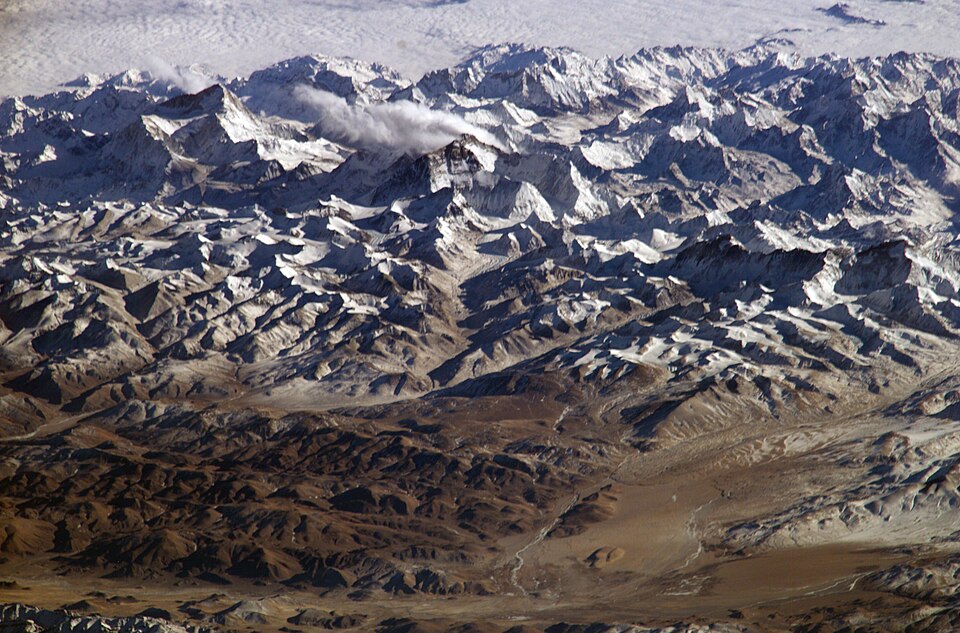
This thermochronometric property makes fission track dating uniquely powerful for studying the exhumation and uplift history of mountain belts. As tectonic forces push rocks upward and erosion removes the overlying material, the rocks cool progressively as they approach the surface. By measuring fission track ages in minerals with different closure temperatures from the same rock, geologists can reconstruct the rate at which the rock cooled and, by inference, the rate of exhumation. Fission track studies of apatite from the Himalayas, for example, have documented rapid exhumation rates of several millimetres per year over the past few million years, consistent with the ongoing collision between the Indian and Eurasian plates.17, 18
Fission track ages are calibrated against uranium-lead ages determined on the same minerals or on co-existing standards, ensuring traceability to the absolute radiometric timescale. The concordance between fission track ages and independently determined U-Pb ages on zircon standards provides a direct check on the accuracy of the method and reinforces the internal consistency of the geochronological framework.16
Applicable ranges and complementarity
Each of the dating methods discussed in this article occupies a distinct niche in terms of the materials it can date, the time range it covers, and the geological or archaeological question it is best suited to answer. No single technique spans the entire geological timescale, but collectively they provide overlapping coverage from the present to billions of years ago, with traditional radiometric methods anchoring the deep end and cosmogenic, luminescence, and trapped-charge methods filling the more recent intervals.2, 4, 8
Applicable time ranges of dating methods2, 8, 13, 16
| Method | Material dated | Effective range | What is dated |
|---|---|---|---|
| 10Be surface exposure | Quartz-bearing rock | ~1 ka – 5 Ma | Time of surface exposure |
| 26Al/10Be burial | Buried quartz sediment | ~100 ka – 5 Ma | Time of burial |
| OSL (quartz) | Sand, silt grains | ~10 yr – 200 ka | Last sunlight exposure |
| Thermoluminescence | Pottery, burned flint, tephra | ~100 yr – 500 ka | Last heating event |
| ESR (tooth enamel) | Fossil teeth, corals | ~1 ka – several Ma | Time since death/formation |
| Fission track (apatite) | Apatite crystals | ~100 ka – hundreds of Ma | Cooling below ~110 °C |
| Fission track (zircon) | Zircon crystals | ~1 Ma – billions of yr | Cooling below ~240 °C |
The complementarity of these methods is a critical feature of modern geochronology. Cosmogenic nuclide dating addresses a question that radiometric methods cannot: when was a rock surface exposed? OSL and TL date the depositional age of sediments that contain no volcanic minerals suitable for potassium-argon or argon-argon dating. ESR extends trapped-charge dating into the million-year range where luminescence signals saturate. Fission track dating bridges the gap between low-temperature thermochronometry and high-temperature U-Pb geochronology. Together with traditional radiometric techniques, these methods form an interlocking web of independent chronometers that constrain geological and archaeological ages from multiple directions.4, 10, 16
Cross-validation and concordance
The strongest argument for the reliability of any dating method is its agreement with independent techniques applied to the same geological event. Cross-validation is not merely a desirable property; it is the foundation on which the entire geochronological framework rests. When two or more methods based on fundamentally different physical principles yield concordant ages for the same sample or stratigraphic horizon, the probability that all methods are simultaneously wrong in exactly the same way becomes vanishingly small.4, 7
Numerous case studies demonstrate this concordance. In glacial settings, 10Be exposure ages of moraine boulders routinely agree with radiocarbon ages from organic material within or stratigraphically related to the same moraines, despite the two methods measuring entirely different things — cosmic ray exposure in rock versus radioactive decay of carbon-14 in plant material.5, 24 In archaeological and paleoanthropological contexts, OSL ages of sediment layers enclosing stone tools or hominin fossils agree with ESR/U-series ages of associated animal teeth, and both are consistent with paleomagnetic stratigraphy and biostratigraphic age estimates.15, 23
Fission track dating provides a particularly direct form of cross-validation because fission track ages on zircon can be compared against uranium-lead ages measured on the same crystals. The concordance between these two independent chronometers — one counting physical damage tracks from spontaneous fission, the other measuring the isotopic products of alpha decay — confirms that both the decay constants used in radiometric calculations and the production rates assumed in fission track dating are correct.16, 17
Similarly, cosmogenic burial ages at Sterkfontein Cave have been compared with uranium-lead ages on flowstones interbedded with the fossil-bearing sediments, providing an independent check on both methods. While the burial ages suggested the deposits were older than previously thought, the revised chronology was internally consistent with the stratigraphic relationships observed in the cave and with cosmogenic and paleomagnetic data from other South African hominin sites.19
This pattern of concordance across methods that rely on cosmic ray physics, crystal lattice defects, radioactive decay, and spontaneous nuclear fission constitutes powerful evidence that the geological timescale is not an artifact of any single technique or set of assumptions. Each method carries its own sources of uncertainty and potential systematic error, but because those sources differ from one method to the next, the consistent agreement among independent chronometers provides a robust, self-correcting framework for measuring geological time.2, 4, 7
Schematic time ranges covered by dating methods2, 8, 13, 16
References
Cosmic ray labeling of erosion surfaces: in situ nuclide production rates and erosion models
Production of 10Be and 26Al by cosmic rays in terrestrial quartz in situ and implications for erosion rates
Exposure dating of Late Glacial and pre-LGM moraines in the Cordon de Doña Rosa, Northern/Central Chile (~31°S)
Burial dating of sediments interleaved with fossil-bearing strata, using cosmogenic 26Al and 10Be
Introduction to Optical Dating: The Dating of Quaternary Sediments by the Use of Photon-Stimulated Luminescence
Combined ESR/U-series chronology of Acheulian hominid-bearing layers at Tabun Cave, Israel
Early Pleistocene 26Al/10Be burial age for Australopithecus-bearing sediments at Sterkfontein, South Africa
Luminescence chronology of late Pleistocene and Holocene aeolian sands in the Great Plains, Nebraska
Cosmogenic 10Be surface exposure dating of the Last Glacial Maximum and deglaciation in the Pyrenees