Overview
- Weathering breaks down rock in place through three interacting mechanisms — physical (frost wedging, thermal stress, pressure release), chemical (hydrolysis, oxidation, carbonation of silicates), and biological (root growth, lichen acids) — with chemical weathering rates controlled primarily by temperature, precipitation, and mineral stability as described by the Goldich dissolution series.
- Erosion by water, wind, ice, and gravity transports approximately 20 billion tonnes of sediment to the oceans each year under natural conditions, a figure that human agriculture, construction, and mining have increased to an estimated 75 billion tonnes per year, making Homo sapiens the dominant geomorphic agent on the modern Earth.
- The chemical weathering of silicate minerals consumes roughly 12 × 10¹² moles of atmospheric CO₂ per year, functioning as a planetary thermostat that has stabilized Earth's surface temperature within the range of liquid water for over four billion years despite a 30 percent increase in solar luminosity.
Weathering and erosion are the complementary surface processes that break down rock and transport the resulting debris, reshaping Earth's landscapes and feeding the sedimentary portion of the rock cycle. Weathering is the in-place disintegration and decomposition of rock through physical, chemical, and biological mechanisms, while erosion is the mobilization and transport of that weathered material by agents such as water, wind, ice, and gravity.17 Together they are responsible for carving valleys, reducing mountains, generating soil, and delivering approximately 20 billion tonnes of sediment to the world's oceans each year under natural conditions.7 Weathering and erosion also play a central role in regulating Earth's climate over geological timescales: the chemical weathering of silicate minerals consumes atmospheric carbon dioxide and transfers it to the ocean as dissolved bicarbonate, functioning as a planetary thermostat that has kept surface temperatures within the range of liquid water for more than four billion years.5, 6
Although often discussed as a single coupled process, weathering and erosion operate at fundamentally different scales and rates. Weathering acts at the molecular and grain scale, attacking mineral surfaces through chemical reactions and physical stresses. Erosion acts at the landscape scale, stripping material from hillslopes and channel beds and carrying it downstream to depositional basins. The interplay between the two governs the thickness of weathering profiles, the rate of landscape lowering, and the chemical composition of river water — parameters that connect surface geomorphology to global biogeochemical cycles.17, 8
Physical weathering
Physical weathering, also called mechanical weathering, breaks rock into smaller fragments without altering its chemical composition. The most important mechanism in cold and temperate climates is frost wedging (also called ice wedging or frost shattering): water infiltrates cracks and pore spaces in rock and expands by approximately 9 percent upon freezing, generating pressures that can theoretically exceed 200 megapascals — far greater than the tensile strength of most rocks.17 Repeated freeze-thaw cycles progressively widen fractures and pry blocks loose, producing angular debris called scree or talus at the base of cliffs. Frost wedging is most effective where temperatures oscillate frequently around the freezing point, as in alpine and periglacial environments.

Thermal stress weathering results from the differential expansion and contraction of mineral grains in response to temperature changes. Because different minerals have different coefficients of thermal expansion, repeated heating and cooling generate internal stresses at grain boundaries that eventually cause granular disintegration — the grain-by-grain crumbling of rock surfaces. This process is particularly effective in deserts, where diurnal temperature swings can exceed 40 °C, and on rock surfaces exposed to wildfire, where temperatures of 600–1000 °C cause rapid spalling and exfoliation.17
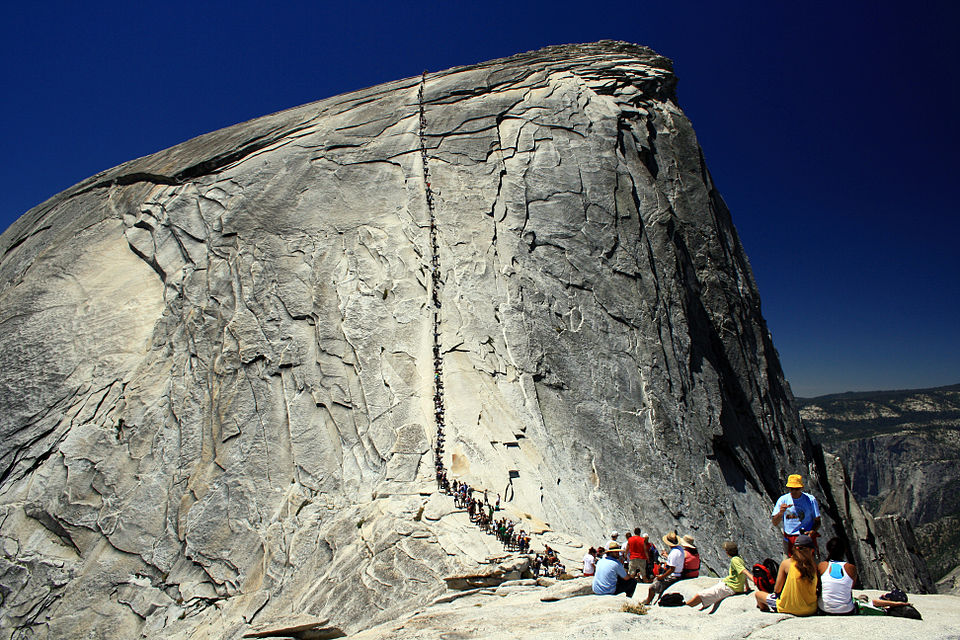
Pressure release (also called unloading or exfoliation) occurs when deeply buried rock is brought to the surface by erosion of the overlying material. As confining pressure decreases, the rock expands and fractures along planes parallel to the surface, producing curved sheets that peel away in a process visible in granite domes such as those in Yosemite National Park. The resulting exfoliation joints can extend tens of metres into the subsurface and provide pathways for water infiltration that accelerate chemical weathering.17, 19
Salt crystallization is the dominant physical weathering mechanism in arid and coastal environments. When saline water enters rock pores and evaporates, the growing salt crystals exert pressure on pore walls that can exceed the tensile strength of the surrounding rock. Repeated cycles of wetting, evaporation, and crystal growth cause progressive granular disintegration, and this process is a major factor in the deterioration of stone buildings and monuments in semi-arid regions.17
Chemical weathering
Chemical weathering transforms the minerals in rock through reactions with water, dissolved gases, and organic compounds. The principal reactions are hydrolysis, oxidation, carbonation, and dissolution, each targeting different mineral groups and producing different secondary products.3

Hydrolysis is the reaction of silicate minerals with water and dissolved carbon dioxide (carbonic acid). When feldspars — the most abundant mineral group in the continental crust, constituting roughly 50 percent of crustal volume — react with carbonic acid, they break down to produce clay minerals, dissolved silica, and cations such as potassium, sodium, and calcium that are carried away in solution.23, 3 The hydrolysis of calcium silicates is particularly significant because it consumes atmospheric CO2: one mole of wollastonite (CaSiO3) reacting with two moles of dissolved CO2 yields one mole of dissolved calcium, two moles of bicarbonate, and one mole of dissolved silica.4
Oxidation involves the reaction of minerals with dissolved oxygen. Iron-bearing minerals such as olivine, pyroxene, and biotite are particularly susceptible: the oxidation of ferrous iron (Fe2+) to ferric iron (Fe3+) produces iron oxides and hydroxides such as hematite and goethite, which give weathered rock surfaces and soils their characteristic reddish-brown colours.3, 19 Oxidation of sulfide minerals, particularly pyrite, generates sulfuric acid that aggressively attacks surrounding silicate and carbonate minerals, a process responsible for acid mine drainage in areas of exposed sulfide-bearing rock.15
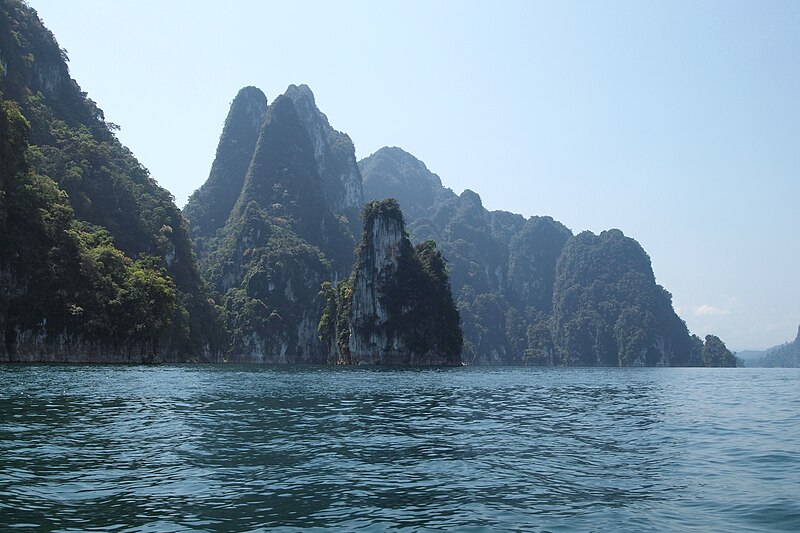
Carbonation is the dissolution of carbonate minerals (calcite and dolomite) by carbonic acid. Because carbonate minerals dissolve orders of magnitude faster than silicates under equivalent conditions, limestone landscapes are particularly susceptible to chemical weathering, producing the distinctive karst topography of sinkholes, caves, and disappearing streams found in regions such as the Dinaric Alps, the Yucatan Peninsula, and southern China.14
The Goldich dissolution series and mineral stability
The relative susceptibility of minerals to chemical weathering was systematically described by the American geologist Samuel S. Goldich in his 1938 study of weathered soil profiles and their parent rocks. Goldich demonstrated that the order in which common silicate minerals break down at Earth's surface is the reverse of the order in which they crystallize from a cooling magma, as described by Bowen's reaction series: minerals that form at the highest temperatures and pressures — olivine, calcium-rich plagioclase, pyroxene — are the least stable under surface conditions and weather most rapidly, while minerals that crystallize at lower temperatures — quartz, muscovite, potassium feldspar — are the most resistant.1
The physical basis for this relationship lies in crystal structure and bond strength. High-temperature silicates such as olivine and pyroxene have isolated or single-chain silicate tetrahedra linked by relatively weak bonds to divalent cations (Mg2+, Fe2+, Ca2+), making them vulnerable to hydrolysis. Framework silicates such as quartz, in which every silicon atom is bonded to four oxygen atoms in a continuous three-dimensional network, are far more resistant because breaking the Si–O bond requires substantially more energy.2, 3 Laboratory dissolution experiments confirm Goldich's field observations: olivine dissolves approximately 100,000 times faster than quartz at near-neutral pH and 25 °C, and quartz is estimated to require on the order of 108.6 years for complete dissolution compared to 105.5 years for olivine under comparable conditions.2
Relative weathering rates of common silicate minerals (Goldich dissolution series)1, 2
The Goldich series has important practical implications: soils derived from mafic igneous rocks (basalt, gabbro) lose their nutrient-bearing minerals relatively quickly and become deeply weathered laterites in tropical climates, while soils derived from felsic rocks (granite, gneiss) retain their feldspar and mica for longer periods. The series also explains why quartz-rich sandstones form prominent ridges in humid landscapes while adjacent shales and limestones are eroded into valleys — a relationship that is the basis of much of the topographic expression of sedimentary geology.1, 14
Biological weathering
Biological weathering encompasses the physical and chemical breakdown of rock by living organisms.


Plants contribute to physical weathering through root wedging: as roots grow into cracks and joints, they exert pressures sufficient to widen fractures and displace blocks of rock. Trees are the most conspicuous agents of root wedging, but even mosses and lichens penetrate rock surfaces with their rhizoids and hyphae, prying individual mineral grains loose in a process analogous to glacial plucking at the microscale.13
The chemical effects of biological weathering are at least as significant as the physical ones. Lichens, which are symbiotic associations of fungi and algae or cyanobacteria, are among the most effective biological weathering agents. They secrete organic acids, particularly oxalic acid, that dissolve mineral surfaces and chelate metallic cations such as aluminium, iron, and silicon, extracting them from the rock substrate.13 Plant roots and their associated mycorrhizal fungi release a suite of low-molecular-weight organic acids — citric, malic, and oxalic acids — into the rhizosphere that enhance mineral dissolution rates by one to two orders of magnitude relative to abiotic conditions.2, 16 Soil microorganisms, including bacteria and archaea, further contribute by oxidizing iron and sulfur, generating strong mineral acids, and producing chelating siderophores that solubilize iron from otherwise insoluble mineral phases.13, 2
The net effect of biological weathering is profound: the presence of a soil ecosystem with active plant roots, fungal networks, and microbial communities accelerates the chemical weathering of silicate minerals by factors of 2 to 10 compared to bare, abiotic rock surfaces, and is a critical driver of the conversion of bedrock into the regolith and soil that support terrestrial ecosystems.16, 2
Agents of erosion
Water is the dominant agent of erosion on Earth. Rainfall detaches soil particles on impact and initiates sheet erosion on exposed slopes; concentrated surface runoff carves rills and gullies; and rivers incise channels, undercut banks, and transport enormous quantities of sediment in suspension, as bedload, and in dissolved form. The world's rivers collectively deliver approximately 20 billion tonnes of solid sediment and 4 billion tonnes of dissolved material to the oceans each year under natural, pre-anthropogenic conditions.7 The Amazon alone carries roughly 1.2 billion tonnes of suspended sediment annually, while the Ganges-Brahmaputra system transports approximately 1.7 billion tonnes, reflecting the intense weathering and erosion in the tectonically active, monsoonal Himalayan source region.17
Glacial erosion reshapes landscapes through abrasion, plucking, and meltwater action. Glaciers are exceptionally effective erosion agents: measured erosion rates beneath temperate glaciers range from 1 to more than 10 millimetres per year, one to two orders of magnitude greater than typical fluvial erosion rates in non-glaciated mountain catchments.18 The distinctive U-shaped valleys, cirques, arêtes, and fjords produced by glacial erosion are among the most recognizable landforms on Earth, and the vast quantities of till, outwash, and loess deposited by Pleistocene ice sheets blanket much of the northern hemisphere.
Wind erosion (aeolian erosion) is significant primarily in arid and semi-arid regions where vegetation is sparse and sediment is dry and unprotected. Wind can transport sand-sized particles by saltation (bouncing along the surface) and finer silt and clay in suspension, but lacks the competence to move gravel or larger clasts. Nevertheless, wind is responsible for deflation hollows, desert pavements, and ventifacts (wind-sculpted stones) in desert environments, and for the transport and deposition of loess — wind-blown silt — across vast areas downwind of glacial outwash plains and desert margins. The Loess Plateau of central China, with deposits up to 300 metres thick, is the most extensive loess accumulation on Earth.17, 20
Mass wasting — the downslope movement of rock and soil under the direct influence of gravity — includes landslides, rockfalls, debris flows, slumps, and creep. Mass wasting is the primary mechanism by which weathered material is delivered from hillslopes to river channels, and in mountainous terrain it often dominates the total sediment flux. Large landslides triggered by earthquakes or intense rainfall can mobilize millions of cubic metres of material in seconds, making mass wasting one of the most geomorphically significant and hazardous erosion processes.17
Controls on weathering and erosion rates
The rates of weathering and erosion vary by orders of magnitude across Earth's surface, controlled by the interplay of climate, lithology, topography, vegetation, and tectonic activity. Climate exerts the strongest first-order control: warm, wet conditions accelerate chemical weathering reactions (which roughly double in rate for every 10 °C increase in temperature) and sustain the high runoff needed to transport weathering products, while cold or arid conditions suppress both chemical attack and fluvial transport.2, 14
Lithology determines the availability and reactivity of mineral surfaces. As described by the Goldich series, mafic rocks weather far more rapidly than felsic rocks under equivalent climatic conditions. Dessert and colleagues demonstrated that basaltic rocks, despite covering only about 5 percent of the continental surface, account for 30 to 35 percent of the total CO2 consumed by continental silicate weathering, because basalt contains highly reactive olivine and calcium-rich plagioclase.9 Limestone weathers faster than any silicate rock at the surface, but the dissolution of carbonate minerals does not produce a net drawdown of atmospheric CO2 over geological timescales because the carbon released as bicarbonate is re-precipitated as carbonate sediment in the ocean.14
Topographic relief and tectonic uplift set the pace of physical erosion. Steep slopes promote rapid mass wasting and channel incision, continuously stripping weathered material and exposing fresh rock to chemical attack. In tectonically active mountain belts such as the Himalayas and the Southern Alps of New Zealand, denudation rates exceed 1 millimetre per year — roughly 100 times the global continental average of approximately 0.016 millimetres per year inferred from the preserved volume of Phanerozoic sedimentary rock.7, 17
The relationship between physical erosion and chemical weathering is not simply additive. Maher and Chamberlain demonstrated in 2014 that hydrology — the residence time of water in the weathering zone — may exert a stronger control on silicate weathering fluxes than temperature alone, and that chemical weathering rates plateau at high erosion rates because fresh mineral surfaces are exposed faster than reactions can proceed to completion.8 A 2024 study by Bufe and colleagues confirmed this relationship quantitatively, showing that CO2 drawdown from silicate weathering is maximized at moderate erosion rates of approximately 0.06 to 0.11 millimetres per year — far below the rates found in the world's most active mountain ranges — because at higher erosion rates, the exposure of sulfide minerals (particularly pyrite) generates sulfuric acid that releases CO2 from co-occurring carbonate minerals, partially offsetting the silicate weathering sink.12, 15
Weathering and the long-term carbon cycle
The chemical weathering of silicate minerals is the primary long-term sink for atmospheric carbon dioxide, and the balance between silicate weathering (which consumes CO2) and volcanic degassing (which releases it) has regulated Earth's climate over geological timescales. In 1981, Walker, Hays, and Kasting proposed that this balance functions as a negative feedback — a planetary thermostat: when atmospheric CO2 and temperatures rise, chemical weathering accelerates (because weathering rates increase with temperature and precipitation), drawing down CO2 and cooling the planet; when CO2 and temperatures fall, weathering slows, allowing volcanic emissions to accumulate and warm the surface.5
Gaillardet and colleagues quantified global silicate weathering fluxes from the dissolved chemistry of the world's 60 largest rivers, finding that total CO2 consumption by silicate weathering is approximately 11.7 × 10¹² moles per year, with the highest fluxes concentrated in warm, wet, tectonically active regions such as Southeast Asia and the volcanic arcs of the western Pacific.4 Berner, Lasaga, and Garrels incorporated these relationships into the BLAG geochemical model, which couples weathering rates to atmospheric CO2, temperature, and tectonic degassing rates to reconstruct the history of atmospheric carbon dioxide over the past 100 million years.6
More recent work has refined the weathering-climate feedback in important ways. Brantley and colleagues demonstrated in 2023 that the temperature sensitivity of silicate weathering varies with tectonic setting and lithology, with volcanic arc regions responding more strongly than cratonic interiors.11 Penman and colleagues reviewed the dual role of silicate weathering as both a feedback (responding to climate) and a forcing (driving climate change when tectonic events expose large areas of fresh reactive rock), noting that the emplacement of large basaltic provinces such as the Deccan Traps can accelerate CO2 drawdown and contribute to global cooling over millions of years.10 Lefebvre and colleagues developed a framework for predicting global silicate weathering and CO2 drawdown rates over geological timescales, demonstrating that paleogeographic changes in the distribution of land masses and mountain belts are critical controls on the strength of the weathering thermostat.21
Soil formation and regolith development
The most direct product of weathering is regolith — the mantle of unconsolidated material, ranging from slightly altered rock fragments to fully decomposed clay-rich soil, that blankets most of Earth's land surface. The weathering profile typically grades downward from soil at the surface through saprolite (highly weathered but structurally intact rock that retains the texture of its parent) to saprock (partially weathered rock with preserved fracture networks) and finally to unaltered bedrock.16
The rate at which bedrock is converted to regolith depends on the same factors that control weathering rates — climate, lithology, topography, and biological activity — and is typically in the range of 0.01 to 0.1 millimetres per year in temperate and tropical settings. Deeply weathered regolith profiles exceeding 50 metres in thickness are found on stable, low-relief surfaces in tropical regions of Africa, India, South America, and Australia, where continuous weathering has operated for tens to hundreds of millions of years without significant erosional stripping.16 These deep weathering profiles are the source of economically important deposits of bauxite (aluminium ore), lateritic nickel, and residual iron ore, all of which concentrate as the more soluble elements are leached away.
Soil formation (pedogenesis) is the final stage of regolith development, in which biological processes — root growth, organic matter accumulation, microbial activity, and faunal bioturbation — transform mineral weathering products into the structured, horizon-differentiated material that sustains terrestrial ecosystems. Soil production rates, measured using cosmogenic nuclide methods, typically range from 0.01 to 0.1 millimetres per year and decline exponentially with increasing soil thickness, establishing a dynamic equilibrium between soil production from below and erosion from above.17, 16 Where erosion exceeds soil production — as on steep slopes, in heavily cultivated landscapes, or in regions of rapid tectonic uplift — soils thin and bedrock is exposed, initiating a new cycle of weathering.
Human acceleration of erosion
Human activities have profoundly accelerated erosion rates worldwide. Wilkinson and McElroy estimated that natural, pre-anthropogenic continental denudation delivered approximately 21 billion tonnes of sediment per year to the oceans, while modern anthropogenic sediment fluxes — primarily from agricultural soil erosion, but also from construction, mining, and urbanization — total approximately 75 billion tonnes per year, making humans the single most powerful geomorphic force operating on Earth's surface.7 The conversion of forest and grassland to cropland removes the protective vegetation cover and exposes bare soil to rainfall impact and surface runoff, increasing erosion rates by factors of 10 to 100 relative to undisturbed conditions.22
The consequences of accelerated erosion extend far beyond the loss of productive topsoil. Eroded sediment chokes rivers, fills reservoirs (reducing their storage capacity by an estimated 0.5 to 1 percent per year globally), degrades aquatic habitats, and transports adsorbed nutrients and pollutants to downstream water bodies.22 At the same time, much of the sediment eroded from agricultural land is redeposited locally on lower slopes, floodplains, and in small valleys rather than reaching the ocean, creating thick alluvial deposits that record the history of human land use at a given site.7
Paradoxically, while human activities have greatly increased physical erosion, the construction of dams has dramatically reduced the sediment load reaching the coast in many of the world's major rivers. The global sediment flux to the oceans may actually have decreased relative to pre-dam conditions in many river basins, even as erosion rates on hillslopes have increased, because sediment is trapped behind the estimated 58,000 large dams built worldwide during the twentieth century.22 The resulting sediment starvation downstream of dams contributes to coastal erosion, delta subsidence, and the loss of coastal wetlands — demonstrating that human modification of erosion and sediment transport has consequences that ripple through the entire Earth surface system.
References
Global silicate weathering and CO₂ consumption rates deduced from the chemistry of large rivers
A negative feedback mechanism for the long-term stabilization of Earth's surface temperature
The carbonate-silicate geochemical cycle and its effect on atmospheric carbon dioxide over the past 100 million years
Co-variation of silicate, carbonate and sulfide weathering drives CO₂ release with erosion
Rock to regolith conversion: producing hospitable substrates for terrestrial ecosystems
Rates of erosion and sediment evacuation by glaciers: a review of field data and their implications
A framework for predicting global silicate weathering and CO₂ drawdown rates over geologic time-scales
Soil erosion and sediment dynamics in the Anthropocene: a review of human impacts during a period of rapid global environmental change